

Партнерка на США и Канаду по недвижимости, выплаты в крипто
- 30% recurring commission
- Выплаты в USDT
- Вывод каждую неделю
- Комиссия до 5 лет за каждого referral
Смешанные упражнения.
1. Look at each underlined verb and say what kind of meaning it expresses. Is it a thought, a feeling, a fact or a repeated action?
Matthew loves sport. a feeling
Sarah often works late at the office. a repeated action
I hate quiz programmes.
We play table tennis every Thursday.
The computer belongs to Emma.
These plates cost £20 each.
I believe it's the right thing to do.
I'm hungry. I want something to eat
I usually go to work by bus.
It's OK. I understand your problem.
2. Complete the conversation. Put in the present simple forms.
Rita: (►) Do you like (you / like) football, Tom?
Tom: (►) / love (I I love) it. I'm a United fan. (1) (I / go) to all their games.
Nick usually (2) (come) with me.
And (3) (we / travel) to away games, too.
Why (4) (you / not / come) to a match some time?
Rita: I'm afraid football (5) (not / make) sense to me — men running after
a ball. Why (6) (you / take) it so seriously?
Tom: It's a wonderful game. (7) (I / love) it. United are my whole life.
Rita: How much (8) (it / cost) to buy the tickets and pay for the travel?
Tom: A lot. (9). (I / not / know) exactly how much.
But (10) (that / not / matter) to me.
(11) (I / not / want) to do anything else.
(12) (that/ annoy) you?
Rita: No, (13) (it / not / annoy) me.
I just (14) (find) it a bit sad.
3.In this exercise you have to put the verb into the correct form Examples: Water.....boils.... (boil) at 100 degrees cinema very often.
George ......doesn't go....... (not/go) to the
How many languages.. .do you speak (you/speak)
1. The swimming bath.................................. (open) at 9.00 and ----- (close)
at 18.30 every day,
2. What time ..........................................(the banks/close) in Britian?
3.I have a car but I................................(not/use) it very often.
4. How many cigarettes.............................................(you/smoke) a day?
5. 'What.......................................... (you/do)?' 'I'm an electrical engineer.'
6. 'Where ..........................................(your father/come) from?" He---
(come) from Scotland.'
7. If you need money, why.................................................. (you/not/get) a job?
8. I.....................................(play) the piano, but I ......... (not/play) very well.
9.I don't understand the word 'deceive'. What........ ( 'deceive' / mean)?
4. This time you have to read some sentences and correct them The English is correct but the information is wrong. Write two correct sentences each time.
Example: The sun goes round the earth......The sun doesn't go round the earth.
The earth goes round the sun.
l. The sun rises in the west.
2. Mice catch cats.
3. Carpenters make things from metal.
4. The River Amazon flows into the Pacific Ocean.
5. Now you have to use these sentences to make questions. Begin your question with the word(s) in brackets.
Examples: Tom plays tennis. (How often?) .....How often does Tom play tennis?
I get up in the morning. (What time/usually?) What time do you usually get up?
1. Ann watches television. (How often?) How often
2.I write to my parents. (How often?)
3.I have dinner in the evening? (What time/usually?)
4. Tom works. (Where?)
5.I go to the cinema. (How often?)
6. People do stupid things. (Why?)
7. The car breaks down. (How often?)
6..In this exercise you have to ask questions about Ed and Liz.
Examples:
(they/have/any children?) Have they got any children? 'yes, three.'
1. (they/go out very often?).................................'No, not very often.'
2. (what/Ed do for a living?) ............................... 'He's a policema.'
3. (he/enjoy his job?) ..............................................'Yes, very much.'
4. (he/arrest anyone yesterday?) ........................ 'No.'
5. (they/have/a car?) ............................................'Yes.'
6. (how much/it cost?) .........................................'3,000.'
7. (they/go/on holiday next summer?) .............' Yes.'
......................................................
7. This time you have to make questions with who or what
Examples: Somebody hit me.' 'Who. hit you............?
'I hit somebody.' 'Who did hit........?
1. 'Someone lives in that house.' 'Who.....................?
2. 'Somebody gave me this key.' 'Who.......................?
3. 'Henry gave me something.' 'What.......................?
4. 'Tom meets someone every day.' 'Who............?
5. 'I fell over something.' 'What.............................?
6. 'Something fell on the floor.' 'What................?
7. 'This word means something.' 'What...................?
8. Now you have to make negative questions. Each time you are surprised.
1.'I hope we don't meet Brian tonight.' 'Why? (you/ not/ like him?)'
2. 'Don't go and see that film.' 'Why? (it / not / be/ good?)'
9. Use these words to complete the tables.
Plays like likes play
POSITIVE
I
We l football.
You p tennis.
They
He
She l the piano.
It p the guitar.
NEGATIVE
I
We don’t l football.
You
They tennis.
He
She doesn’t p------- the piano.
It the guitar.
10. Think about your family. Write down
three things which:
all the people in the family do. only you do.
only your mother does only your father does.
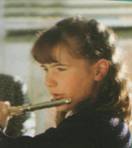
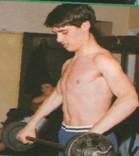
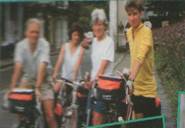
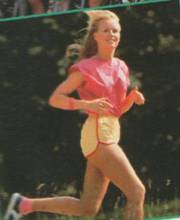
11. Look at these opening times. Read the clues below. Match the opening times to the buildings.
a.
Opening Times
Tuesday-Sunday from 10.00-6.00
closed every Monday
b. Opening Hours
Monday-Friday 9.00-12.30 and 2.00-5.30
Saturday 9.00-12.30
Sunday Closed
c. Opening hours
Monday-Saturday 8.00-8.00
Sunday 9.00-6.00
d. Hours of Business
Monday-Friday 9.30-4.30
The bank doesn't open every day.
The shop opens before the museum.
The post office doesn't open on Sundays.
The museum and the bank don't close at
lunchtime.
The bank opens for five days a week.
12. a. Look at the groups of words. Put them in the correct order to make questions.
tennis you play do?
Sue does where live?
b. Complete this chart. Use four of these words.
do likes play does plays like
I
we ------ football?
you tennis?
they
he --the piano?
She the guitar?
С. How do we make questions in the present simple tense?
13. Work in pairs. Use the cues. Ask about Casey. Then ask your partner about him/herself.
Examples Does Casey like sport? Yes, he does. Do you like sport? Yes, I do./No, I don't.
like sport
stay in bed late on Saturdays
wash the car
play football
watch TV on Saturday afternoons
work in a shop
go swimming
14.Use the cues in Exercise 13. Write three sentences for each: one about Terry, one about Casey and one about yourself.
Example
Terry doesn 't like sport.
Casey likes sport.
I like/don't like sport.
15. a. Read these questions.
1 Can sleepwalkers see?
2 What did the girl from Wales do?
3 How much sleep do teenagers need?
4 What kinds of things do sleepwalkers do?
b. Look at the text. In which paragraph will you find the answer to each question?
Sleep Sleep sleep
In a normal life a person sleeps for about twenty-five years. But why do we sleep? The simple answer is: we don't know. We need more sleep when we are young. A baby sleeps for about ten hours. A teenager sleeps for eight and a half hours and an adult for seven or eight hours. Old people need only five or six hours.
Never talk or walk in your sleep? Sleepwalkers do amazing things. They open doors and windows, they ride bicvcles and drive cars. Thev cook, they take a bath or a shower (often in their pyjamas) thev shave, they clean their teeth, they get dressed,
They dig the garden, and they get into bed with other people.
«A man in Scotland woke up in his» car two miles - from his house. He had no clothes, on. A girl from Wales woke up at five o'clock in the morning in a launderette. She had a shopping bag and the family's dog with er.
Sleepwalkers are asleep, but they have their eyes open and they can see. They can't wake up easily - If they do,
they can't remember anything. Do you ever sleepwalk?
Are you sure? Perhaps you do, but nobody sees you.
16. Right, Wrong or Don't know?
a Everyone sleeps for eight hours anight.
b Teenagers need less sleep than adults.
с Some people sleep for only one or two hours.
d The man from Scotland woke up at five o'clock in the morning.
e The girl from Wales was in her pyjamas.
f Sleepwalkers can't see.
g Sleepwalkers remember everything they do
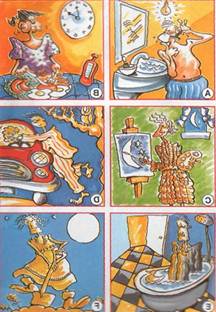
17. Which of these is not in the text?
18. Find the verbs to complete these expressions.
a a shower
b a bicycle
с your teeth
d the garden
e a car
f the door
g up
h into bed
i dressed
j the window
19. Answer these questions in full sentences.
a How long do you sleep every day?
b Can you remember your dreams?
с What do you dream about?
d Do you snore?
e Do you talk in your sleep?
f Do you sleepwalk? If yes, what do you do?
20.a. Look at this survey on housework. These are Sue's answers. Write what Sue does or doesn't do.
Example Sue tidies her room. She doesn't cook the dinner
Do you help in the house?
Do you ... Yes No
tidy your room +
cook dinner +
wash your clothes +
Iron your clothes +
clean the car +
wash up +
go shopping +
set the table +
make your bed +
babysit +
sweep the floor +
make drinks +
20.b. Give your answers to the survey. Write what you do or don't do.
21.Prepositions of time
a Study these rules.
We use 'in' for years, months and parts of the day.
Example in 1990 in February in the afternoon.
(But note: at night)
on
We use 'on' for days and dates.
Examples
on Monday on 9 September 19 78*
on 31 July* on Christmas Day
on Saturday morning on my birthday
note: we say'on the 31 st of July','on the 9th of
September 1978'.
at
We use 'at' for times of day and occasions
with more than one day.
Examples at nine o'clock
at 10.15
at the weekend
at Christmas
b Write the correct preposition in the space.
.. … Wednesday
.. . . the weekend
.... half past two
.
November
.. . Friday afternoon
the morning
…… night
2 June
......... Tony's birthday
Sunday 4 July 1990
Monday night
......... two o'clock
.........the morning
twenty past nine... Thursday
22.When?
When do you do these things?
Example / do my homework in the evening.
do your homework
play sports
get up
have dinner
get presents
watch TV
have your birthday
go to bed
stay in bed late
go on holiday
23.A verb in the simple present tense tells what is generally true or what happens in present time.
do | I you we | six seven nine | ||||
What | Tom and Mary | do | at | twelve four | o'clock every day? | |
Tom | ||||||
does | Mary | eight etc. |
Ask thirty-six questions from this table.
Answer them by changing the following commands into the simple present tense, as:
What do you do at six o'clock? I get up at six o'clock.
1. Get up. 6. Brush your teeth.
2. Put on your clothes. 7. Play football.
3. Go to school.
4. Say your prayers
5. Go to bed. 8. Eat your dinner.
9. Go to the shops.
10. Read the newspaper.
This boy The Queen That young woman | studies plays works draws reads writes | everyday. often. well. |
(i) Write twenty sentences from this table, such as: That young woman works well.
(ii) Change these into questions, such as:
Does that young woman work well?
(iii) Change them also into negative sentences, such as: That young woman does not work well.
24.
(a) I teach English, don't I?
(b) I don't teach French, do I?
(c) Do I teach English?
(d) Do I teach French or English?
(e) What language do I teach?
Yes, you do. No, you don't. Yes, you do. You teach English. You teach English.
