


Партнерка на США и Канаду по недвижимости, выплаты в крипто
- 30% recurring commission
- Выплаты в USDT
- Вывод каждую неделю
- Комиссия до 5 лет за каждого referral
Министерство высшего и среднего специального образования СССР
Московское ордена Ленина, ордена Октябрьской Революции
и ордена Трудового Красного Знамени
высшее техническое училище им.
Т. И. КУЗНЕЦОВА, Г. В. КИРСАНОВА
Утверждены редсоветом МВТУ
МЕТОДИЧЕСКИЕ УКАЗАНИЯ
ПО ОБУЧЕНИЮ ЧТЕНИЮ ТЕХНИЧЕСКОЙ ЛИТЕРАТУРЫ
НА АНГЛИЙСКОМ ЯЗЫКЕ ПО ОПТИКЕ
Часть 2
(редакция 2008 года,
только для web-сайта факультета «Лингвистика»)
Москва 1988
Данные методические указания издаются в соответствии с учебным планом.
Рассмотрены и одобрены кафедрой иностранных языков 14.10.86 г., методической комиссией факультета ОТ 22.12.86 г. и учебно-методическим управлением 29.01.87 г.
Рецензент к. т. н. доц.
Методические указания предназначены для обучения чтению и переводу научно-технической литературы. Приведены оригинальные тексты из английской и американской научно-технической литературы по оптике для развития навыков перевода, аннотирования и реферирования. Разработан терминологический словарь. Тематика методических указаний согласуется с курсом лекций, читаемым на факультете. Рекомендуется использовать для обучения студентов IV—V семестров дневного отделения. Способствует интенсификации учебного процесса.
© Московское высшее техническое училище им.
MODULE 4 LASERS Texts: A. Types and Comparisons of Laser Sources: Introduction B. Nd:YAG Laser *****by Laser C. Free Electron Laser |
Terminology:
1) to irradiate – облучать, излучать, испускать лучи; irradiation - иррадиация, лучеиспускание, излучение;
2) flashlamp – импульсная лампа, лампа накачки;
3) population inversion – инверсная населенность;
4) technique – метод, способ; excitation technique – способ, метод возбуждения;
5) optical pumping – оптическая накачка;
6) nuclear decay – ядерный распад;
7) dilute electron beam – низкоэнергетический электронный пучок;
8) to scatter – разбрасывать, рассеивать, nonlinear scattering – нелинейное рассеяние;
9) spectral tuning range – спектральный диапазон перестройки;
10. output waveform – волновой фронт, фронт волнового излучения;
11. power scalability – диапазон значений (уровень) выходной мощности
12. gain – усиление, коэффициент усиления; gain medium – усиливающая среда;
13. peak power – пиковая (импульсная) мощность; peak power density – плотность пиковой (импульсной) мощности;
14. pulse energy – энергия в импульсе.
Preliminary exercises
Read and translate without a dictionary:emission, inversion, chromium, ruby, crystal, xenon, decade, substance, neutral, gas, reaction, generate, periodic, spectral, parameter, neon, helium, unique, ensemble, electronic, dynamical, process, structural, kinetic, coherent, scheme, characteristics, ion.
Translate the word-combinations that follow:pulse duration, peak power density, beam quality, chromium ions energy levels, laser sources types, laser action, electron beam kinetic energy, magnetic field periodicity, laser gain medium, pump excitation energy.
Find equivalent phrases either in Text 4A or in the right-hand column:1) усиление света в результате вынужденного излучения | a) this spectacular set of characteristics |
2) при облучении (когда кристалл облучается) | b) to generate coherent radiation |
3) в течение следующих двух десятилетий | c) the upper laser levels |
4) во много раз | d) can be varied |
5) чтобы получить (создать) когерентное излучение | e) in the ensuing two decades |
6) путем правильного выбора значения кинетической энергии | f) rather than with simple laser oscillators |
7) можно изменять | g) listed in this table |
8) предельные значения выходных параметров | h) light amplification by stimulated emission of radiation |
9) а не с простыми лазерными генераторами | i) the extrema of laser output parameters |
10) приведенные в данной таблице | j) when irradiated with |
11) этот впечатляющий (замечательный) набор характеристик | k) by properly choosing the kinetic energy |
12) верхние лазерные уровни | l) manifold |
4. Read Text 4A and answer the following questions:
1) Какие методы используется для создания инверсной населенности?
2) Каким образом можно изменять длину волны излучения лазера на свободных электронах?
TEXT 4A TYPES AND COMPARISONS OF LASER SOURCES: INTRODUCTION
Light Amplification by Stimulated Emission of Radiation was first demonstrated by Maiman in I960, the result of a population inversion produced between energy levels of chromium ions in a ruby crystal when irradiated with a xenon flashlamp. In the ensuing two decades population inversion and coherent emission have been generated in literally thousands of substances (neutral and ionized gasses, liquids, and solids) using a variety of excitation techniques (optical pumping, electrical discharge, gasdynamic-flow, electron beam, chemical reaction, nuclear decay).
The number and types of laser sources has been further expanded manifold by utilizing one laser source (primary) to generate coherent radiation in a second medium, either by optically producing a population inversion in the second medium or as the result of nonlinear scattering in the second substance. Recently, laser action has even been achieved by passing a dilute electron beam through a periodic magnetic field (free-electron laser, or FEL). By properly choosing the kinetic energy of the electron beam and the periodicity of the magnetic field, the output wavelength of the FEL can be varied, in principle, from the ultraviolet to the far infrared spectral region.
The extrema of laser output parameters which have been demonstrated to date, and the laser media used are summarized in Table I. Note that the extreme power and energy parameters listed in this table were attained with laser systems (such as a master-oscillator-power-amplifier[1], or MOPА system) rather than with simple laser oscillators.
Table 1 Extrema of Output Parаmеters of Laser Devices and Systems
Parameter | Value | Laser medium |
Peak power | 2x10¹³W (collimated) | Nd:glass |
Peak power density | 1018 W/cm2 (focused) | Nd:glass |
Pulse energy | >104J | CO2, Nd:glass |
Average power | 105W | CO2 |
Pulse duration | 3x10-13sec, cw[2] | Rh6G dye, various gasses, liquids, solids |
Wavelength | 60nm ↔385nm | many required |
Efficiency (nonlaser-pumped) | 70% | CO2 |
Beam quality | diffraction limited | various gasses, liquids, solids |
Spectral linewidth | 20Hz (for 10-1sec) | neon-helium |
Spatial coherence | 10m | ruby |
To be sure[3], no single laser source can simultaneously provide this spectacular set of characteristics. Each laser gain medium possesses a unique ensemble of energy levels (electronic, vibrational, rotational), which are dynamically coupled to each other through various radiative and nonradiative processes. These structural and kinetic features determine laser's nominal operating wavelength(s), its spectral tuning range, its possible output waveforms, and its energy and power scalability. Laser efficiency is determined by the degree to which appropriate pump excitation energy can be generated, fed selectively into the upper laser level(s), and subsequently extracted coherently before deleterious[4] decay processes otherwise remove this excitation energy. It is the very richness of energy level schemes and transition probabilities provided in nature that results in such a large number of lasers with such a wide variety of output characteristics.
Given the considerable diversity in laser properties, it is the purpose of this introductory section to order laser sources into basic classes and to describe the principle characteristics that define the classes and their subdivisions.
3400 п. зн.
Words to be learnt:
to summarize – суммировать, подводить итоги;
to couple – соединять, сцеплять;
recently – недавно;
to date – до сих пор, до настоящего времени;
otherwise – иначе, в противном случае;
to feed (fed - fed) – подавать, питать, снабжать;
to extract – извлекать, удалять.
Exercises
1. In each group find the word that doesn’t belong:
a) minimum, maximum, datum, phenomenon, medium, extrema, spectrum;
b) coherent, neutral, efficiency, gasdynamic, nuclear, single, kinetic;
c) ultraviolet, unique, various, possible, incoherent, spectacular, infrared, optical.
2. Find a synonym for each verb below:
a) produce, enumerate, possess, use, expand, remove, link, achieve, vary, give;
b) extract, enlarge, provide, change, attain, utilize, own, list, generate, couple.
1. Complete the sentences below with the appropriate word or word-combination:
1) The output wavelength of the FEL can be varied from the ultraviolet to the far infrared spectral region by...
a) utilizing one laser source to generate coherent radiation in a second medium;
b) properly choosing the kinetic energy of the electron beam and the periodicity of the magnetic field.
2) The extreme power and energy parameters were attained with...
a) simple laser oscillators;
b) laser systems rather than with simple laser oscillators.
4. Point out the statements which do not correspond to Text 4A:
1) A single laser source can simultaneously provide a spectacular set of characteristics.
2) Light amplification by stimulated emission of radiation was first demonstrated in 1970.
3) Recently laser action has been achieved by passing a dilute electron beam through a periodic magnetic field.
5. Translate the sentences below focusing on the underlined words:
1) As the result of nonlinear scattering in the second substance the number of laser sources has been expanded. 2) The richness of energy level schemes results in a large number of lasers with a wide variety of output characteristics. 3) Light amplification by stimulated emission of radiation was the result of a population inversion produced between energy levels of chromium ions in a ruby crystal. 4) The purpose of this introductory section is to order laser sources into basic classes. 5) One laser source was utilized in order to generate coherent radiation in a second medium. 6) Table I provides the list of the extrema of laser output parameters. 7) The parameters listed in the table were attained with laser systems rather than with simple laser oscillators.
6. In each sentence below find the Subject and Predicate groups. Translate the sentences:
1) Solid state semiconductor laser materials exhibit both high heat capacities and thermal conductivities. 2) To extend the average power output substantially beyond these levels appeal is made to laser – diode arrays (линейки лазерных диодов). 3) Reference 2 is cited in the table as a key literature source dealing with lasers used to illustrate various classes and types of lasers. 4) The costs of lasers and laser systems vary widely and cannot be readily generalized. 5) The major alternative to optical pumping by incoherent sources is pumping by another laser. 6) Excitation into any of these levels decays rapidly down by nonradiative processes because of the relatively small energy gaps (energy gap – энергетическая зона) between various levels. 7) In Table 1 cw stands for continuous wave operation.
7. Answer the questions about the text:
1) Who was the first to demonstrate Light Amplification by Stimulated Emission of Radiation? 2) In what substances were population inversions and coherent emission generated? 3) What excitation techniques are used to generate coherent emission? 4) What method of generating coherent radiation resulted in the expanding of the number and types of laser sources? 5) Which is a better way of attaining the extreme power and energy parameters: using laser systems or simple laser oscillators? 6) What determines laser efficiency?
8. Write an abstract of Text 4A.
9. Read Text 4 B without a dictionary and answer the question:
Каковы преимущества лазера на алюмоиттриевом гранате, активированном неодимом (Nd: YAG laser) перед лазером на рубине?
Text 4B Nd: YAG Laser *****by Laser
The Cr3+ iron-group ion doped (to dope – добавлять) in Al2O3 is the medium in which laser operation was first demonstrated by Maiman in 1960. Cr: Al2O3 or ruby operates as a three-level system and thus, per unit volume, has a comparatively high threshold (порог). Fortunately, the thermal conductivity and mechanical strength of Al2O3 are both high, superior to any other existing laser host (основа, матрица) crystal, and thus successful operation of the ruby laser is possible. For all but (кроме) a few specialized applications the much-lower-threshold, higher-average-power-output Nd: YAG laser has replaced the ruby laser, however. Efficient frequency-doubling (удвоение частоты) techniques for 1.06 ηm radiation have in mаnу cases eliminated the need for 0.69 ηm ruby laser where visible radiation is required.
850 п. зн.
10. Translate Text 4C in writing using a dictionary (time limit 30 min.):
TEXT 4С FREE ELEGTHON LASER
In the Free Electron Laser (FEL) gain is generated by the interaction of photons with an electron beam. A freely propagating electron does not interact with an electromagnetic field. To obtain gain the electrons and photons must interact within a perturbing environment that permits the simultaneous conservation of energy and momentum; spontaneous emission from the electron is then possible. The synchrotron radiation that occurs when the trajectory of a high energy electron is bent by a magnetic field is an example of one such process.
The process that generates gain may be viewed as stimulated scattering, as stimulated “free-free” transitions between continuous states of the perturbed electron-photon system, or as the inverse of the interaction that accelerates electrons in an accelerator. If the velocity distribution of the electrons in the beam is carefully selected, the radiation emitted by each electron adds coherently to the radiation from other electrons in the beam. The wavelength of maximum gain is primarily a function of the energy of the beam. With a minimum of constraints, the operation of an FEL should be possible at any wavelength from millimeter wavelengths into the visible and near ultraviolet.
1300 п. зн.
SUPPLEMENTARY READING TASKS
469nm Fiber Laser Source
With the continued interest in development of solid-state blue laser sources we would like to show that fiber lasers and nonlinear frequency conversion are an attractive approach. Fiber sources are a good choice for nonlinear frequency conversion because of their good beam quality and high brightness. Using non-critical phase matching eliminates the problems of spatial walk off allowing for longer interaction lengths and this leads to higher conversion efficiency.
Our fiber amplifier uses the 4F3/2 - 4I9/2 transition in neodymium and because of the 3-level nature of the transition there is strong competition from the 4F 3/2 - 4I11/2 4-level transition. Optical fiber hosts have the advantage of wavelength selective loss dependent on bend diameter allowing the user to choose a fiber coil diameter to act as a variable short pass filter. In our case we were able to choose a coil diameter that will generate ~10dB of loss for the competing 4 level 1088 nm parasitic transition while generating very little loss at 938 nm.
High power levels have been achieved for this Neodymium transition in crystal hosts; however to our knowledge this is the highest power achieved for this transition in a silica fiber host. The silica host offers a broader absorption spectrum reducing the precision requirements of the pump and a broader emission spectrum (900nm to 950nm) enabling more applications. We have previously reported multi-watt operation on this transition and continue investigating power scalability.
While the idea of quasi-phase matching has been around for a long time engineered nonlinear materials are starting to gain maturity and are commonly used for nonlinear frequency conversion. A lot of progress has been made in both materials and periodic structure fabrication in recent years. Fabricating the short periods required for first order frequency doubling into the blue still remains challenging. Because of its anisotropic lattice structure KTiOPO4 (KTP) exhibits very limited domain wall spreading during the poling process leading to the ability to pole very short domain periods. Also the KTP has a coercive voltage about 10 times lower than congruent LiNbO3 enabling electric field poling of thicker materials.
(Alex Drobshoff, Jay W. Dawson, Deanna M. Pennington, Stephen A. Payne, Raymond Beach,
Lawrence Livermore National Laboratory, PO Box 808, Livermore, CA 94551; Luke Taylor, European Southern Observatory, Karlschwartzchild Strasse 2, 85748 Garching-bei-Muenchen; http://www. osti. gov/energycitations/index. jsp)
Good Fundamentals
Stephen Matthews
For most applications, the size to which a laser beam can be focused is as important a consideration as the laser output power. Frequency doubling, for example, depends on the square of the intensity of the primary laser. The depth of a hole drilled by an industrial laser depends on the laser intensity and the hole diameter is proportional to the spot size.
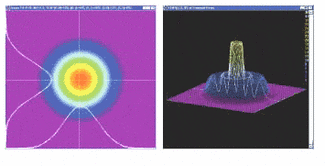
A beam profile composed entirely of five higher-order modes can look like a TEM00 beam to instruments that measure beam diameter. The figure on the left is the highest order mode in the beam, TEM21. The figure on the right is the apparent profile of the composite beam, which contains no TEM00 component.
Maintaining a consistent beam profile is usually important whether the beam is focused or not. Ophthalmic surgery uses a beam with a flat cross section (a "top hat" profile) that must remain constant during the procedure. All of these applications require a laser designed to produce a consistent and well-characterized beam. To be propagated over a long distance, a laser beam needs to have the lowest divergence possible. Telecommunications combines this requirement with a need to control the spectral content of the beam to ensure data quality. Whenever low divergence or small spot size is required, a laser with TEM00 output is specified.
What is TEM00?
It is useful to think of the light inside of a laser as formed of standing waves with distinct vibrational modes. Only a small number of modes will exist in the transverse direction. The fundamental transverse mode is designated as TEM00, where the "00" indicates no nodes appear in the beam profile. "TEM" stands for "transverse electromagnetic" and refers to the form of the standing waves. The TEM00 mode is mathematically described by the familiar bell-shaped Gaussian curve.
Higher-order modes are formed by multiplying the Gaussian by a polynomial with an exponent that corresponds to the order of the laser mode. These higher-order modes describe the number of nodes that appear in the beam—the TEM11 mode of a rectangular resonator, for example, will appear to have a dark cross in the middle of the profile. Higher-order modes add frequency components to the fundamental mode.
The Gaussian function extends to infinity in the radial direction, leaving open the question of the beam diameter. Measuring a laser beam diameter has been compared to using calipers to measure the width of a cotton ball. The accepted definition is the diameter at which the intensity has fallen to 1/e2 (13.5%) of its peak value in the center.
The 1/e2 definition works well for Gaussian modes, but is not useful for other profiles. In these circumstances the diameter is calculated using the "second moment" algorithm, a combination of integrals similar to a formula for calculating an rms (root-mean-square) value. The second-moment calculation should be used cautiously because it gives heavy weight to the edges of the beam.
Measuring beam size
Early means of determining a profile were essentially visual, such as examining the pattern of a continuous-wave (CW) beam on a lab wall or the burn marks made by a pulsed infrared beam on photographic film. It is an indication of the difficulty in measuring high-power pulses that visual techniques are still used. Instruments that measure beam profiles (profilometers) either use CCD cameras, or else scan a slit or knife-edge through the beam.
A CCD camera is a user-friendly system capable of instantly displaying the entire beam profile. It can be used with both CW and pulsed beams. The intensity distribution of the profile can be displayed as either a two-dimensional (2-D) or three-dimensional (3-D) contour plot. Charge-coupled-device cameras are superior for measuring elliptical beams, and their real-time capability is useful in production control (see Fig. 1).
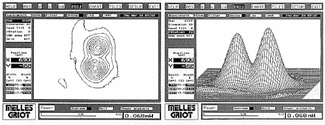
FIGURE 1. Profilometers based on CCD arrays can provide real-time displays of 3-D beam profiles.
The limitation of this instrument is its resolution, set by the pixel size of the CCD array. Currently this can be as small as 10 µm, but a pixel size closer to 20 µm is more typical. In addition, most beams must be attenuated to avoid saturating the array, and the attenuating element introduces some degree of distortion, although a new CCD array using a diamond substrate appears robust enough to measure short-wavelength pulses directly (see Laser Focus World, May 2000, p. 265). Finally, a CCD camera is not the first choice if second-moment calculations are important—the signal-to-noise ratio of the CCD array decreases at its edges.
Scanning profilometers
These instruments scan a slit or a knife-edge through the beam and correlate the measurement from a detector behind the aperture with the aperture position. Different detectors can be positioned to allow these instruments to work at almost all wavelengths. Resolution, which is limited by diffraction from the scanning edge, is on the order of the wavelength of the beam.
A scanning slit masks most of the beam from the detector, eliminating the need to attenuate the beam. It is important to choose the correct slit size for the beam diameter—a slit too wide will make the measurement appear smaller than the beam itself. The slit should be no wider than one-third of the beam, and preferably narrower.
Knife-edge profilometers have a resolution as fine as 100 nm. As the blade moves across the beam, the detected signal decreases to zero and the measurement is differentiated to obtain the profile. Some systems use the same algorithm as that used in medical tomography for MRI and CAT scans to calculate the profile. However, scanning systems are not useful for pulsed measurements.
Whatever instrument is used, the beam should be measured at a distance from the laser sufficient to allow spontaneous emission and other light noise to diverge and not pollute the measurement. Lasers that produce the profile for which they are designed, free of aberration and the like, are said to be "diffraction limited." This does not mean, however, that their output is TEM00.
Raleigh range and divergence
Gaussian wavefronts start out as planes at a location called the "beam waist" (sometimes located inside of the resonator). The wavefronts become increasingly curved as they propagate from the waist until they reach their smallest radius, after which they flatten out. The distance from the waist to the location at which the wavefront is most curved is called the Rayleigh range.
The region between the beam waist and the Rayleigh range is the near field. In the far field the beam diverges in a cone with (nearly) straight sides. Divergence is always specified in the far field, which is usually chosen to begin around 10 times the Rayleigh range.
The distance from the laser to the far field can be meters, an inconvenient distance for measurement, so a lens is often used to focus the beam, thereby forming a new beam waist. The divergence is then the beam size at the lens divided by the distance from the lens to the focus. It is important that divergence is measured in the far field, or calculations for beam parameters will be incorrect.
The propagation of a Gaussian beam is fully specified by its beam waist and its divergence. For an ideal TEM00 beam, the product of the beam waist ω0 times the divergence angle θ0 can be expressed as
ω0θ0 = λ/π . This implies that a Gaussian beam can be characterized by measuring its beam waist and its diameter at one other location. In practice it can be difficult to locate the beam waist. Modern instruments determine beam parameters from measurements taken at multiple locations.
Non-Gaussian beams
All lasers deviate to some extent from the Gaussian ideal. Many high-power carbon dioxide (CO2) lasers emit beams with rectangular profiles; diode laser arrays produce a beam that does not appear to come from a laser at all. Even lasers operating in TEM00 mode truncate the beam because of the limiting aperture in the cavity, which results in fringes in the near field.
There are limitations in choosing a beam for an application based on its correlation to a Gaussian profile. In fact, a high correlation to a Gaussian fit can be achieved by a beam that contains only higher-mode components (see figure, p. 82). The spot size to which such a beam can be focused differs significantly from what one might expect.
When the beam deviates from Gaussian, the product of the beam waist times the divergence must be increased by the "quality factor" of the beam, M2. The product of beam waist and divergence becomes ωθ = M2λ/π. M2 represents how many times wider the focused spot is than the theoretical minimum. An M2 of 2, for example, indicates that the focused beam will be twice the ideal minimum spot size, and so this beam will have only 25% of the intensity of a fundamental beam of the same power. M2 values for beams of the highest quality are <1.1, while values of M2 for multimode lasers might be around 4.
Measuring M2
The wide applicability of M2 has led the ISO to adopt it as the standard for beam quality. M2 profilometers form a new beam waist with a lens and take measurements before, within, and after the waist. According to the ISO standard, the lens must be stationary and the detector move to take the measurements. In addition, the calculations must be based on the second-moment algorithm.
For well-collimated beams, an instrument with a fixed detector and a variable lens will provide a reliable approximation of M2 (see Fig. 2). This simplifies the design of a scanning mechanism. Such instruments can provide precision measurements in applications that employ well-controlled laser sources.
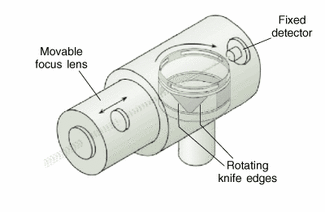
FIGURE 2. Although not designed strictly according to ISO standards for M2, a profilometer using a rotating knife-edge with an adjustable lens can make precise measurements of well-controlled beams.
Astigmatism
Another parameter that relates to diode lasers deserves mention. Most diode lasers have rectangular output facets that produce elliptical beams. In addition, the cross section of the beam in the plane vertical to the direction of propagation has a waist and divergence different from that in the horizontal plane—that is, the beam is astigmatic.
The astigmatism in a focused beam must be corrected for the beam to be useful—a cylindrical lens tilted in the direction of propagation can do the trick. The "astigmatic distance" is the distance between the two different foci, which must be eliminated in the correction. Instruments based on CCD cameras are well suited to determining the astigmatic distance.
(Stephen J. Matthews, Contributing Editor, Laser Focus World, 2002)
OMISSION
In "Back to Basics: Semiconductor Lasers" (May, p. 145), Fig. 1 on p. 149 represents technology patented by Alcatel. The author wishes to acknowledge the assistance of Alcatel in preparing the illustration.
MODULE 5 CLASSES OF LASER SOURCES Texts: A. Classes of Laser Sources B. Semiconductor Lasers C. Glass Lasers D. X-Ray Lasers |
Text 5A terminology:
1) transition – переход, electronic transition – электронный переход, vibrational transition – колебательный переход, rotational transition – вращательный переход;
2) species (sing. + pl.) – вид, разновидность, active species – активная среда, активатор, активная частица;
3) gas dynamic expansion – газодинамическое расширение;
4) dye laser – лазер на красителе;
5) solid state laser – твердотельный лазер;
6) glass laser – лазер на стекле;
7) solvent – растворитель;
8) rare earth ion – ион редкоземельного элемента;
9) гаге earth chelate laser – лазер на редкоземельных халатах;
10) spectral tunability – спектральная перестройка;
11) insulator – изолятор;
12) impurity – примесь, impurity-doped crystal – кристалл о примесями;
13) discharge – разряд, arc discharge – дуговой разряд; glow discharge – тлеющий разряд;
14) lattice – кристаллическая решетка;
15) junction – переход.
Preliminary exercises
1. Read and translate without a dictionary:
classify, classification, basic, atomic, ionic, molecular, expansion, spontaneously, organic, inorganic, chelate, trivalent, dielectric, amorphous, stoichiometry, specific, defect, differentiate, electron, injection.
1. Combine the appropriate words from the two columns to obtain terms. Translate them:
1) spectral | 5) gasdynamic | a. expansion | e. laser |
2) dielectric | 6) electrical | b. inversion | f. tunability |
3) dye | 7) impurity-doped | c. discharge | g. transition |
4) vibrational | 8) population | d. crystal | h. insulator |
2. Find equivalent phrases either in Text 5A or in the right-hand column:
1) состояние активной среды | a) electron beam excitation |
2) различающиеся по лазерному действию | b) specific types of lattice |
3) разнообразные способы возбуждение | c) differentiated by laser action |
4) возбуждение пучка электронов | d) solid state lasers have been developed |
5) вид используемого твердого вещества | e) a wide variety of excitation methods |
6) были созданы твердотельные лазеры | f) state of the active medium |
7) особые виды дефектов решетки | g) the type of solid used |
3. Read Text 5A and answer the following question:
Какие методы используются для накачки газовых жидкостных и твердотельных лазеров?
TEXT 5A CLASSES OF LASER SOURCES
Laser sources are commonly classified in terms of the state of the active medium: gas, liquid, and solid. Each of these classes is further subdivided into one or more types.
Gas Lasers. Gas lasers are conveniently described in terms of six basic types, two involving electronic transition in atomic active species (neutral and ionic), three based on neutral molecular active species (differentiated by laser action occurring on electronic, vibrational, and rotational transitions), and one based on molecular-ion active species. Gas lasers are pumped using a wide variety of excitation methods, including several types of electrical discharges (cw, pulsed, dc[5] or rf[6], glow or arc), electron beam excitation, gasdynamic expansion, electrically or spontaneously induced chemical reactions, and optical pumping using primary lasers.
Liquid Lasers. Liquid lasers are commonly described in terms of three distinct types: organic dye lasers which are most well-known for their spectral tunability, rare-earth chelate
lasers which utilize organic molecules, and lasers utilizing inorganic solvents and trivalent rare earth ion active centers. Liquid lasers are optically pumped using three basic methods: flashlamps, pulsed primary lasers, or cw primary lasers.
Solid State Lasers. Solid state lasers are subdivided by the type of the solid used - a dielectric insulator or a semiconductor. Dielectric insulators may take the form of an impurity-doped crystal or an impurity-doped amorphous material such as glass. Recently, solid state lasers have been developed using insulating crystals in which the active species has bean fully substituted into the lattice (stoichiometric materials) and using insulator crystals in which color centers (specific types of lattice defects) serve as the active centers. Lasers utilizing dielectric insulators are almost exclusively pumped optically, either with flashlamps, cw arc - lamps, or with other laser sources.
Semiconductor lasers are usually differentiated in terms of the means by which the hole-electron pair population inversion is produced. Semiconductor lasers can be pumped optically (usually with other laser sources), by electron-beams, or more commonly by injection of electrons in a p-n junction.
2300 п. эн.
Words to be learnt:
in terms of – в смысле, с точки зрения, на основании;
to involve – затрагивать, включать в себя, подразумевать;
distinct – отдельный, особый, ясный, отчетливый;
to substitute – заменять, подставлять, использовать вместо;
to exclude – исключать;
exclusive – исключительный;
exclusively – исключительно.
Exercises
1. Match synonyms:
distinct, exclusive, usual, specific, common, different, clear, convenient, particular, exceptional, comfortable, differing.
2. Complete the sentences below with the appropriate word or word-combination according to text 5A:
1) Gas lasers are conveniently described in terms of...
a) six basic types;
b) three distinct types: organic dye lasers...;
c) the solid used.
2) Laser sources are commonly classified in terms of...
a) the type of solid used;
b) the state-of-matter of the active medium;
c) six basic types.
3) Liquid lasers are pumped...
a) using a wide variety of excitation methods;
b) optically by electron beam, or by injection of electrons in a p-n junction;
c) optically by three basic methods: flashlamps, pulsed primary lasers, or cw primary lasers.
3. Bring the sentences below under the following headings:
A. Gas Lasers
B. Liquid Lasers
C. Solid State Lasers
1) These lasers are subdivided by the type of solid used – a dielectric insulator or a semiconductor. 2) They are described in terms of six basic types. 3) They are optically pumped using three basic methods: flashlamps, pulsed primary lasers, or cw primary lasers. 4) Organic dye lasers are most well-known for their spectral tunability. 5) These are pumped using a wide variety of excitation methods. 6) Dielectric insulators may take the form of an impurity-doped crystal or an impurity-doped amorphous material such as glass.
4. Complete the table below to match Text 5A:
Table 2 Classes of Laser Source
class | types of laser medium | method of pumping |
1. _________ | 1. _________ 2. _________ 3. _________ 4. _________ 5. _________ 6. _________ | 1. _____________ a) ____b)____c)____d)____e)____ 2. _____________ 3. ____________ 4. _____________ 5. ____________ |
2. _________ | 1. _________________ 2. _________________ 3. _________________ | 1. _________________________ 2. _________________________ 3. _________________________ |
3. _________ | 1. ___________________ a)_______b)_______c)_______ | 1. ___________________________ 2. ___________________________ 3. ___________________________ 4. |
2. ___________________ | 1. ___________________________ 2. ___________________________ 3. |
Text 5B Terminology:
1) carrier – носитель заряда, электрон проводимости; excess carrier – возбужденный электрон проводимости/электрон с избыточной энергией;
2) band – полоса, зона (уровней энергии); conduction band – зона проводимости; valence band – валентная зона; band-to-band transition – переход с уровня на уровень;
3) gap – зазор, промежуток, интервал; energy gap – запрещенная зона (в полупроводниках), энергетическая зона;
4) bandgap – запрещенная зона, ширина запрещенной зоны; bandgap semiconductor – полупроводник с запрещенной зоной; direct bandgap semiconductor – собственный, беспримесный полупроводник; indirect bandgap semiconductor – примесный, несобственный проводник;
5) momentum – количество движения, импульс, импульсная сила; to conserve momentum – сохранять количество движения;
6) lifetime – время жизни; radiative lifetime – излучательное время жизни;
7) internal quantum efficiency - внутренняя квантовая эффективность.
Preliminary exercises
1. Read and translate without a dictionary:
practical, photon, absorption, phonon, valence, vector, schematic, diagram, variation, technological, interest, radiative, coefficient, potential.
1. Combine the appropriate words from the two columns to obtain terms. Translate them:
1) radiative | 4) valence | a) gap | d) lifetime |
2) quantum | 5) energy | b) transition | e) carrier |
3) excess | 6) band-to-band | c) efficiency | f) band |
TEXT 5B SEMICONDUCTOR LASERS
Introduction. Semiconductor lasers consists of injection lasers, where a p-n junction or heterojunction is used to inject excess carriers into the active region, optically pumped lasers, where an external light source produces excess carriers, and electron-beam pumped lasers, which use high energy electrons to produce excess carriers. Injection lasers, which are the most practical devices, are discussed at length[7] in this review.
Operating principles. In this section, we review a few of the key concepts concerning laser action in semiconductors. Extensive theoretical treatments of this subject can be found elsewhere[8].
Direct and indirect bandgap semiconductors. In direct bandgap semiconductors (the only ones in which stimulated emission has been observed), both photon emission and absorption can occur without the need for a phonon to conserve momentum. This is because the lowest conduction band minimum and the highest valence band maximum are at the same vector (k) in the Brillouin zone[9]. Figure I shows the schematic diagram of electron energy vs. k in a semiconductor, such as GaAs, where the smallest bandgap energy Eg = Ec – Ev at k = [000].
In indirect bandgap semiconductors the conduction band minimum and valence band maximum are not at the same k value. Hence, photon emission and absorption require the participation of phonons to conserve momentum. A schematic diagram of an indirect bandgap semiconductor such as GaP or AlAs is shown in Figure 2. In these semiconductors the lowest-lying conduction band minima are along k= [100].
Lasing in indirect bandgap semiconductors is improbable because the lowest-energy band-to-band transition probabilities are much smaller than in direct semiconductors. Thus, the radiative lifetime is long. Because of the relatively long lifetime of electrons in the indirect minima, there is time for nonradiative recombination processes to occur, thus yielding low internal quantum efficiency. Furthermore, the stimulated recombination rate is related to the band-to-band absorption coefficient. Since the coefficient is lower for indirect than direct transitions, the potential laser gain is correspondingly reduced.
2200 п. зн.
Words to be learnt:
key concepts – основные понятия;
to treat – трактовать, рассматривать;
treatment – трактовка;
to yield – производить, приносить результаты, давать.
Exercises
Read the following nouns. Say which verbs they are derived from:conductor, semiconductor, conduction, conductivity; injection, emission, absorption, participation, composition, treatment, transition, recombination.
Match synonyms:absorb, conserve, combine, occur, consume, watch, mix, observe, preserve, happen.
Translate the adjectives below paying attention to the negative prefixes:direct – indirect, efficient – inefficient, convenient – inconvenient; probable – improbable, practical – impractical, possible – impossible; radiative – nonradiative, nuclear – nonnuclear, conducting – nonconducting; continuous – disсontinuous; fortunate – unfortunate; comfortable – uncomfortable.
Translate the following word combinations avoiding prepositions:внешний источник света, лазеры с накачкой электронным пучком, излучение и поглощение фотонов, зона проводимости, вероятность перехода, переход с уровня на уровень, вероятность перехода с уровня на уровень, коэффициент поглощения.
Which of the statements below are true according to Text 5B:1) In injection lasers high energy electrons are used to produce excess carriers. 2) In indirect band gap semiconductors both photon emission and absorption can occur without the need for a phonon to conserve momentum. 3) Lasing in indirect bandgap semiconductors is improbable because the lowest energy band-to-band transition probabilities are much smaller than in direct semiconductors. 4) In direct bandgap semiconductors the conduction band minimum and valence band maximum are not at the same k value.
Translate the sentences below paying attention to the functions of the words which are underlined:1) The total amount of radiation absorbed from broadband pump sources clearly increases with ion concentration in a given size host crystal. 2) The growth of the density modulation gives increasing coherence to the scattering process resulting in a growing scattered wave, which in turn increases the density modulation still further. 3) Laser diodes’ degradation manifests itself primarily in an increase in threshold current although other parameters may also change. 4) Increasing the peak-power output of a laser is constrained by the optical damage[10] properties of the laser medium itself or of the optical materials required to make the laser operate. 5) Laser - pumped glass oscillators provided wavelength versatility[11] because of their wide fluorescence bandwidth. 6) Provided the velocity distribution of the electrons in the beam is carefully selected, the radiation emitted by each electron adds coherently to the radiation from other electrons in the beam.
Translate the sentences below with a special attention to the Verbals:1) If the electron velocity is close to the speed of light, long wavelength imposed fields can be used to build FELs operating in the visible region of the spectrum. 2) As large-scale commercial applications of lasers become more numerous and mature[12], additional cost scaling models and data bases are sure to become available in the field. 3) By varying the composition of a semiconductor diode it is possible to adjust the wavelength of its spectral gain peak. 4) The purpose of these dye absorption curves is to assist the user in selecting the laser pump source which will most effectively pump the dye laser. 5) Several molecular lasers should be mentioned when discussing tunable lasers. 6) When placed in a suitable cavity[13], the device (FEL) will radiate coherently. 7) After the discovery of the dye laser by Sorokin and Landkard, numerous reports followed, most of them detailing the study of various classes of fluorescent organic materials.
Answer the questions about Texts 5A and 5B:1) What are the classes of laser sources? 2) What are the types of gas lasers? 3) What excitation methods are used to pump gas lasers? 4) What are the types and methods of pumping liquid lasers? 5) What excitation techniques are used to pump lasers utilizing dielectric insulators? 6) In what way are excess carriers produced in semiconductor lasers (injection lasers, optically pumped lasers, electron - beam pumped lasers)? 7) What is the difference between direct bandgap semiconductors and indirect bandgap semiconductors? 8) In what type of semiconductors do photon emission and absorption require the participation of phonons to conserve momentum? Why? 9) Why is lasing in indirect bandgap semiconductors improbable?
Write an abstract of Texts 5A and 5B. Use Table 2 and Figures 1 and 2 to talk about:a) Types of lasers; b) Direct bandgap semiconductors vs. indirect bandgap semiconductors.
Read Text 5C without a dictionary (time limit – 4 minutes) and answer the questions that follow:a) Каковы преимущества стекла перед кристаллическими материалами?
b) О каком недостатке стекла упоминается в этом тексте?
TEXT 5C GLASS LASERS
Lasers made from vitreous[14] and crystalline materials comprise the two classes of solid state lasers. Their different material properties are complementary for use in lasers. Because of their lower cross sections, glass lasers store energy well and thus make good short pulse lasers and amplifiers. On the other hand, crystalline materials are better for cw oscillators and amplifiers because of their higher gain and good thermal conductivity.
Glass has advantages over crystalline materials. It can be саst[15] in a variety of forms and sizes, from small fibers to meter–sized pieces. Tremendous flexibility in choosing glass and laser properties is afforded by the ability to vary the glass composition over very large ranges. Glass is also relatively inexpensive because of the shorter time required for its manufacture and the use of inexpensive chemical components. Further, large pieces of laser glass can be made with excellent homogeneity, uniformly distributed rare earth concentrations, low birefringence, and can be finished[16] easily, even in large sizes. The only major drawback of glass is its low thermal conductivity, which limits its applicability in high average power systems.
1200 п. зн.
Translate Text 5D in writing using a dictionary (time limit – 40 minutes):TEXT 5D X - RAY LASERS
Research toward advancing lasing to the X-ray spectral regions is in an early and progressive state.
The challenge of inventing and developing X-ray lasers may be approached by a) adapting familiar X-ray sources to lasing action; b) extending proven ion laser processes progressively toward shorter wavelengths, perhaps through isoelectronic extrapolation; c) discovering new pumping and emission processes more appropriate to the task.
With potential applications in the vacuum-ultraviolet spectral region seemingly limited as compared to those for the penetrating X-ray region, early thoughts were directed toward making the big leap to the X-ray and perhaps γ-ray regions. Formidable pumping problems were projected. Meanwhile advancements into the ultraviolet regions, accompanied by rising uses and interests as specific devices have emerged, seem to indicate that the more reasonable approach is the continued systematic advance toward shorter wavelengths. Indeed, over the past 12 years the so-called short-wavelength “barrier” has been pushed from 200 nm into the vacuum region - first near 100 nm, and presently it appears that 60 nm has been reached. These advances have been achieved both with cavities and in the amplified spontaneous emission (ASE) single pass mode, where the latter requires considerably higher gain.
1400 п. зн
SUPPLEMENTARY READING
Irnee D'Haenens dies; assisted Maiman in building the first laser
January 4, 2008, Los Angeles, CA--Irnee D'Haenens, a physicist who assisted Ted Maiman in making the first laser at Hughes Research Laboratory (Malibu, CA) in 1960, died December 24; he was 73. The two were the only people present when a little ruby rod emitted the world's first pulse of laser light on May 16, 1960. Later, D'Haenens called the laser "a solution looking for a problem," a joke that became common in the early years of the laser era as developers sought laser applications.
Born in Mishawaka, Indiana, the son of a service-station operator, D'Haenens spent his entire professional career at Hughes, starting while he was earning a masters degree from the University of Southern California. He received a Hughes doctoral fellowship and earned his PhD from the University of Notre Dame in 1966. As a member of the technical staff at Hughes, he worked on semiconductor physics, microwave technology, and spectroscopy as well as lasers before retiring in 1989. A long-time Hughes colleague, David Pepper, recalled D'Haenens as "as a wise and learned uncle who helped me travel along my path in life," whose first priority was always his family. He is survived by his wife Shirley, four children, 19 grandchildren, and three great-grandchildren.
(http://www. )
New camera on Subaru Telescope may directly observe exoplanets
The Subaru Telescope, located on the summit of Mauna Kea, is dedicated to exploring the cosmos, gaining a deeper and more thorough understanding of everything that surrounds us. With an 8.2-meter mirror and a suite of sophisticated instruments, astronomers at the Subaru Telescope explore nearby stars looking for planetary systems. A giant step towards this goal was made recently with the "first-light" inauguration of a new state-of-the-art camera.
Subaru uses eight innovative cameras and spectrographs optimized for various astronomical investigations in optical and near-infrared wavelengths. On the night of December 3, 2007, the High Contrast Instrument for Adaptive Optics (HiCIAO) camera was brought to life. The HiCIAO is a technologically adaptable system that will replace the infrared Coronagraphic Imager with Adaptive Optics (CIAO) unit in operation since April 2000. Both systems are designed to block out the harsh direct light from a star, so that nearby faint objects such as planets can be viewed. The new system benefits from a contrast improvement of ten to 100 times, allowing astronomers glimpses into regions never explored.
A further advantage of the HiCIAO camera is that it will be used in concert with an adaptive optics (AO) system that was recently significantly upgraded, which, in turn, increased the clarity of Subaru's vision by a factor of ten, opening up more of the night sky to observing. The new AO system uses 188 actuators behind a deformable mirror to remove atmospheric distortion, allowing the Subaru Telescope to observe close to its theoretical performance limits. In addition, a laser guide-star system was installed to enable observations of tiny regions of sky without bright stars to steady the AO system on.
The HiCIAO system, initiated in 2004, was developed by a team of scientists and engineers from the Subaru Telescope, National Astronomical Observatory of Japan, and the University of Hawaii's Institute for Astronomy. Dr. Ryuji Suzuki, a Subaru astronomer leading the HiCIAO project, says "the unique instrument was primarily designed for the direct detection of extrasolar planets and disks." The system's design allows for high-contrast coronagraphic techniques in three observing modes: direct imaging, polarization differential imaging, and spectral differential imaging. HiCIAO directly detects and characterizes young extrasolar planets and brown dwarfs, sub-stellar objects that occupy the mass range between that of large gas giant planets (e. g. Jupiter), and the lowest mass stars. With the aid of the laser guide-star AO system, HiCIAO targets dim objects including young stars, protostars, and star-forming regions.
HiCIAO is also extremely useful for detecting faint dust disks around nearby stars, and for studying small-scale and inner disk structures and dust grain properties, both of which lead to a clearer understanding of extra-solar planetary systems and their evolutionary processes. Dr. Suzuki reports that "although we already know of more than 250 extrasolar planets, they have all proven their existence indirectly by the Doppler or transit method. Because the direct imaging of an extrasolar planet has never been done, if it happens, that will be exciting." Subaru Telescope may be the first to directly observe a planet outside our solar system. (http://www. )
MODULE 6 PROPERTIES OF LASERS Texts: A. Properties of Some Important Lasers B. Soldiers in Lockstep C. Average Power Scaling |
Terminology
1) ground state – основное состояние системы; steady state – стационарный режим;
2) self - terminated operation – пичковый режим (в отличие от стационарного);
3) relaxation time – время релаксации (жизни);
4) mode – мода, тип колебаний; mode-locking –синхронизация мод;
5) to store – хранить, запасать, накапливать; storage – память, накопление;
6) Q - switching – модуляция добротности;
7) cavity dumping – затухающие колебания ;
8) curve –кривая линия; gain curve – контур усиления;
9) performance – работа, интенсивность работы, рабочие характеристики;
10) to saturate – насыщать; saturation flux – поток насыщения,
Preliminary exercises:
1. Read and translate without a dictionary:
thermal, system, stimulate, integrate, intense, alternately, nominal, radioactivity, signal, combination, diode, orange, rhodamine, collectively.
2. Translate the word-combinations that follow:
medium - laser medium, gain medium, pulse-pumped laser medium, energy-storage medium; level - laser level, ground level, lower laser level, upper laser level, three-level laser system, upper laser level relaxation time, higher-lying pump level; density - average power density, population inversion density, input (output) power density.
3. Find equivalent phrases either in Text 6A or in the right-hand column:
1.тип уширения линии (насыщения) | a. spectral gain bandwidth |
2.свойства усиливающей среды | b. saturation flux |
3.источник накачки | c. stimulated emission cross-section |
4.состояние индуцированного излучения | d. properties of gain medium |
5.накопленная энергия | e. weak pulse |
6.импульсное излучение | f. colour center laser |
7.режим действия | g. pumping source |
8.слабый импульс | h. stored energy |
9. лазер с окрашенными центрами | i. type of saturation |
10.поток насыщения | j. release in a pulse |
11. ширина полосы спектрального усиления | k. mode of operation |
4. Read Text 6A and answer the following questions:
1) От чего зависит режим действия лазера?
2) При каких условиях лазер работает в стационарном режиме?
TEXT 6A PROPERTIES OF SOME IMPORTANT LASERS
The output energy and/or power obtainable from a given laser medium are determined both by the microscopic properties of the gain medium and by its associated “scaling laws”[17].
In general terms, a laser medium is said to be a "three-level laser system" when the lower laser level is the ground state of the system, the other two levels being the upper laser level and a higher-lying pump level; it is said to be a "four-level system" when the lower laser level is a level lying above the ground level of the system (usually with sufficient energy, so that it is thermally unoccupied).
The relaxation times of the upper and lower laser levels determine the basic modes of operation possible for the laser itself. If the relaxation time of the lower laser level is much
shorter than the upper laser level relaxation time (due to stimulated as well as spontaneous processes) then the laser may be operated in the steady state with a cw output. When the inverse relation between level relaxation times is obtained, cw operation is precluded and self-terminated pulsed operation may occur.
A pulse-pumped laser medium is said to be an energy-storage medium when the lifetime of the upper laser level is much longer than the desired pulse duration of the output pulse. In this situation the upper laser level is able to integrate the power supplied by the pumping source. Stored energy can then be released in an output pulse using mode-locking, Q-switching, or cavity dumping techniques described above; alternatively, pump energy stored in a laser power amplifier can be released in an intense short pulse upon passing a weak short pulse from a master-oscillator through the power amplifier (MOPA).
The key microscopic (intrinsic) laser parameters of the gain medium are: nominal wavelength; stimulated emission cross-section; spectral gain-bandwidth and type of saturation (homogeneous/inhomogeneous); saturation fluence or flux; radiative and kinetic lifetimes of upper and lower laser levels; and the characteristic specific excitation parameters are population inversion density; small signal gain coefficient; input and output power (energy) densities.
Spectral tunability is a particularly useful property of many laser sources. Semiconductor diode lasers, organic dye lasers and colour center lasers are particularly known for this property. The nominal spectral regions these types of lasers operate in are shown below. Using several different dye types and various solvents, the spectral region from 350 to 1000 nm can be spanned with tunable dye lasers. A single dye-solvent combination typically can be tuned several hundred wave numbers (cm-1) away from the spectral peak of the gain curve. Best dye laser performance is currently achieved with the yellow – orange rhodamine dye. Power and energy availability tend to roll-off to[18] the blue and to the red, also useful amounts of energy and power can be achieved in these spectral regions.
Semiconductor lasers of various types collectively span the spectral region from 330 nm to beyond 15nm. Depending on the type of diode tuning can be accomplished using an applied magnetic field, by changing the current passing through the diode, or by applying pressure to the diode.
3400 п. зн.
Words to be learnt:
to preclude – устранять, предотвращать;
to occur – иметь место, случаться;
to release – выпускать освобождать;
to span – охватывать; покрывать (пространство, промежуток времени).
Exercises
1. In each group find the word that doesn’t belong:
a) lower, upper, smaller, power, bigger, hotter, shorter, higher;
b) associated, terminated, stored, precluded, released, unoccupied, described, tuned;
c) sufficient, different, coefficient, magnificent, fluorescent, efficient.
2. Find an antonym for each verb below in Text 6A:
lower level, longer than, output power, direct relation, occupied level, released energy, weak pulse, homogeneous saturation, above.
plete the sentences below with the appropriate word or word-combination from Text 6A:
1) When the lower level is above the ground level of the system, a laser medium is said to be...
2) When the lifetime of the upper laser is much longer than the desired pulse duration of the output pulse, a laser medium is said to be...
3) When the relaxation time of the lower laser level is much longer than that of the upper level...
4) Tuning of semiconductor lasers can be accomplished by...
5) Semiconductor lasers, organic dye lasers and colour center lasers are famous for the property of...
4. Translate the sentences below focusing on the underlined words:
1) The term laser stands for light amplification stimulated emission of radiation. 2) There are many phenomena of the interaction of light with matter, which are readily described in terms of photon. 3) Modeling of continuous systems should be analyzed in terms of modified curves. 4) In broad terms it is found that optical threshold depends on the wavelength of the incident radiation. 5) Semiconductor lasers are usually differentiated in terms of the means by which the hole-electron pair population inversion is produced. 6) Laser sources are commonly classified in terms of the state of matter of the active medium. 7) Laser oscillation is marked by dramatic narrowing of the spectral and angular distribution of the spontaneous emission radiation. This statement was first made by Maiman in 19The United States of America is a Federal Republic of 50 states done together by the pact of 17As the engine has a mechanical compression it is capable of operating under static conditions.
5. Answer the following questions:
1) What determines the output energy? 2) What is the difference between a three-level laser system and a four-level laser one? 3) How does laser operation depend on the relaxation time? 4) In what case can self-terminated pulsed operation occur? 5) What laser property allows spanning the spectral region? 6) What types of lasers are known for this property? 7) What can a semiconductor laser be tuned by?
6. Write an abstract of Text 6 A
7. Read Text 6В (time limit 3-4 min.) and answer the following questions: Почему излучение лазера имеет высокую направленность?
TEXT 6B SOLDIERS IN LOCKSTEP[19]
То understand why light from the laser is so concentrated, you must recall that light travels in waves, like ripples on a pond. The distance from the crest of one wave to the crest of the next is the wavelength. Ordinary white light is made up of many wavelengths travelling in every direction. This is known as incoherent light. Laser light, on the other hand, is coherent. It is essentially of one wavelength, with all the waves moving in one direction. Because the laser wavelengths reinforce each other, like soldiers marching in lockstep, they can remain in an unbelievably straight narrow beam for long distances instead of fanning out like a flashlight beam. Almost any substance can be forced to “lase” if you work hard with it. Gas lasers give off continuous beams of laser light, in contrast to the sharp pulses of the ruby laser. Tiny semiconductor lasers made of bits of such materials as gallium arsenide work best at ultra-cold temperatures. Many lasers give off invisible radiation, either infrared or ultraviolet. The carbon-dioxide laser, one of the most powerful yet invented, shoots a continuous beam of intensely hot but invisible infrared light.
1200 п. зн.
8. Translate Text 6C in writing using a dictionary (time limit 50 min.):
TEXT 6C AVERAGE POWER SCALING
Increasing the average power output of a laser as it is made bigger is determined primarily by the rate at which waste heat generated in the laser process can be removed from the laser medium and/or the active volume enclosed by the optical resonator. In average power producing lasers of practical interest, removal of waste heat is accomplished by either convection or conduction, the choice depending on the class of laser medium involved. For both gaseous and liquid laser media, scaling to high average power is achieved using convective flow of the waste heat (and spent laser medium) out of the active volume defined by the laser resonator. In the case of gas lasers, the flow may be supersonic (as in the C02 gasdynamic laser which has resulted in the highest average output power yet achieved) or it may be subsonic. In the case of liquid dye lasers, significant average power has been obtained using a confined transverse flow of the organic dye laser medium through the optically pumped laser volume, as well as by using a free - flowing transverse jet stream.
In the case of solid state lasers, the laser medium itself cannot be rapidly and continuously moved through the volume of space defined by the laser resonator and the cooling of the laser medium must be accomplished by conduction of waste heat to an exterior surface. This surface can then be cooled using a gaseous or liquid cooling fluid flowing across it. Crystalline materials generally exhibit relatively high thermal conductivities which are strongly temperature dependent compared to those of amorphous glasses which are essentially temperature independent.
1700 п. зн.
SUPPLEMENTARY READING
Gas-dynamic laser enters pulse-periodic mode
A group of laser researchers led by Victor Apollonov at the Russian Academy of Sciences (RAS; Moscow) has developed a modification to high-power wide-aperture gas lasers that allows emission in a high-frequency pulse-periodic mode in which very short pulses are produced at a high rate without a sacrifice in average power. The improvement can be made to gas-dynamic lasers, hydrogen fluoride/deuterium fluoride chemical lasers, and chemical oxygen-iodine lasers. Potential uses include launching and propelling spacecraft with ground-based lasers.
At output powers exceeding several kilowatts, producing short pulses based on high-frequency resonator modulation runs into several problems, caused by the wide apertures of the resonator elements. Existing schemes for beam modulation, which include magnetic modulation of gain and physical chopping of the beam, all have problems that greatly reduce average power when compared with continuous-wave (CW) operation.
FIGURE 1. An experimental 10-kW CW gas-dynamic laser is converted to a high-frequency pulse-periodic mode with pulses 0.1 to 1 µs in length, frequencies of 25 kHz or greater, and peak powers of 100 kW (top). A portion of the laser's beam is passed through a modulator and fed back into the laser, causing the output beam to become pulsed. A scaled-up version of this laser could propel a so-called Lightcraft into space. A small Lightcraft prototype is placed in its launcher by Tregenna Myrabo (bottom).
In the scheme developed by the RAS researchers, a portion of the laser's output is extracted from the resonator, modified spatially and temporally, and then returned to the resonator (see figure). Injecting return light into the paraxial region of the resonator would require that the power of the injected beam be comparable with the output laser power to efficiently control the resonator of a continuously pumped laser – an impractical solution. Instead, the researchers inject the return light into the resonator periphery, resulting in a larger number of beam interactions within the resonator and thus good control with a smaller amount of return light.
Experimental results
To confirm theoretical calculations, an experiment was done on a carbon dioxide (CO2) gas-dynamic laser with a typical optical output of 50 kW. (The gas-dynamic laser is a powerful form of CO2 laser developed in the 1960s that also uses nitrogen and water vapor. It was and is used for military experiments such as the U. S. Air Force's Airborne Laser Laboratory, developed in the 1970s and 1980s to shoot down missiles.) The unstable resonator of the RAS laser consisted of two spherical mirrors with rectangular apertures and a geometrical amplification factor of 1.45. The laser gas flowed perpendicular to the resonator axis. In CW mode, the output was lowered to 10 kW to prevent damage to the mirrors. Because the test-bench components were uncooled, the laser was not operated for more than 3 seconds at a time. Full laser power was achieved after 0.3 seconds.
About 20% of the laser output was diverted by an inclined metallic mirror to the injection-beam-formation system, which consisted of two spherical mirrors with conjugate focal planes and a modulator placed at the beam waist formed by the mirrors.
The modulator was a rotating metal disk with holes machined along its perimeter. The experiments used disks containing either 150 or 200 holes with respective diameters of 4 and 2 mm and a 0.5 filling factor. The maximum modulation frequency was 33 kHz. To measure temporal characteristics of the laser, the output beam was attenuated and allowed to strike a photodetector hooked up to an oscilloscope. Power measurements were done with a water-cooled calorimeter.
For a modulation frequency of about 27 kHz and a modulation depth (relative to the beam within the system, not the output beam) of 2% to 3%, the laser radiation exhibits intensity fluctuations in time with the modulating signal, with the peak output power departing from the average power value by a factor of three. When the modulation depth was increased to 7% to 8%, the laser shifted to the pulse-periodic operating mode. In this case, lasing took place in the form of a package of five to ten pulses within one cycle of the opened modulator state. The duration of an individual pulse was about 200 ns (recorded pulse durations were limited by the 50-MHz bandwidth of the photodetector electronics). The amplitudes of individual pulses exceeded the average value by factors of 6.5 to 11. Pulse-periodic modulation with a pulse length of 0.1 to 1 ms, a peak output power greater than 100 kW, and an average output power equal to the CW 10-kW power was experimentally obtained for the gas-dynamic laser.
The experimental and theoretical data agreed well for frequencies ranging up to 30 kHz. It may be possible to increase the modulation frequency enough that a once-CW laser can be brought to the Q-switching regime, say the researchers.
Laser-propelled spacecraft
Because they are scalable to higher powers, pulse-periodic lasers may be useful for spacecraft propulsion. The Lightcraft, developed by Leik Myrabo of Lightcraft Technologies (Bennington, VT) and tested at White Sands Missile Range (White Sands, NM), is a craft that receives a ground-based laser beam, focusing it to create a detonating plasma from the air just behind it, propelling it upward (see Laser Focus World, September 2000, p. 29). A 10-kW CO2 laser pulsed at 28 Hz and with a pulse duration of a few microseconds has propelled a small Lightcraft to a height of 128 ft.
"Victor Apollonov's regenerative-amplifier gas-dynamic-laser experiments look very promising, and particularly so for applications that demand rapid scaling into the multimegawatt level, kilohertz pulse-repetition frequencies, and submicrosecond pulse durations—all attractive for the current laser Lightcraft engine design," says Myrabo. "Also, the physics appear to be well in hand with regard to realizing full theoretical efficiency from a 100 kW-class gas-dynamic laser. However, it should be noted that the demonstration of high beam quality with this setup has yet to be accomplished, nor has the power been extended up to the 100-kW level at the present time. This will require further development and funding equal to the task." For ambitious laser-propulsion projects such as this, Myrabo believes that government funding—perhaps by NASA—is the best approach. Apollonov notes that the RAS group is interested in investors in general for its pulse-periodic laser.
(John Wallace, Quantum Electronics 33, http://www. ).
MODULE 7 LASER OPERATION Texts: A. Laser Operation B. Stoichiometric Lasers C. Laser Safety |
Terminology:
1) host crystal –матрица;
2) terminal state нижний рабочий уровень;
3) thermal excitation тепловое возбуждение;
4) phonon-assisted transition – переход с наличием фонона;
5) cavity – полость, резонатор; intracavity – кювет;
6) mirror-folded cavity design – зеркальная конструкция с изломом оси;
7) quasi continuum – квази-непрерывный;
8) coupler – выходной элемент связи;
9) flight time – время пролета;
10) losses – потери;
11) spatial coherence – пространственная когерентность.
Exercises
1. Read and translate the following words:
practice, factor, criteria (pl.) (sing. criterion), ignore, focus, horizontal, vibrational, vibronic, fluorescence, selective, microsecond.
2. Find definitions for the following concepts in Text 7A and translate them:
operation, combination, application, excitation, transition, absorption, condition, suggestion, radiation, inversion, solution, action.
3. Find equivalent phrases either in Text 4A or in the right-hand column:
1) ограниченное множество (ряд) | a) long compared to |
2) не в состоянии удовлетворить | b) with respect to |
3) лазер общего назначения | c) intracavity reflection losses |
4) идеально четырехуровневый | d) gain medium for amplification |
5) внутри резонаторные потери на отражение | e) continuously operating laser |
6) лазер с непрерывным излучением | f) high velocity jet |
7) долго по сравнению | g) fail to satisfy |
8) полностью определяется требованием | h) strict four - level |
9) струя, летящая с большой скоростью | i) limited variety |
10) среда для получения усиления | j) general purpose laser |
11) относительно чего-то | k) is entirely determined bу the requirement |
2. Read Text 7A and answer the following questions:
1) Какое условие является необходимым, чтобы отдельный ион или кристалл (матрица) действовали как активная среда? 3) Каковы рабочие характеристики лазера на красителе?
Text 7 A LASER OPERATION
General. A great many different combinations of transitions, paramagnetic ions, and host exhibited laser operation. In practice, however, only a limited variety of paramagnetic ion lasers are commonly used for either research or industrial applications. Many factors determine whether or not a given ion and host will operate effectively as a laser, and many of the lasers fail to satisfy all the necessary criteria for practical systems.
Of major importance for any system is the need for a low pump-power or energy threshold for stimulated emission. It is desirable to have a minimum initial population of ions in the desired laser level or terminal state. In strict four-level laser this population is sufficiently small such that the effect on threshold of absorption from the lower state can be ignored. At the other extreme, in a three-level laser, the terminal level is the ground state of the ion and the threshold is almost entirely determined by the requirement that more ions be in the upper laser level than the ground state. Many paramagnetic-ion lasers fall in the region between the two extremes; in some cases laser operation may be four-level in nature at low temperature, where thermal excitation of the terminal level is negligible, but tend toward three-level operation at higher temperatures. For vibronic or phonon-assisted transitions, four-level operation is obtained between two electronic levels when vibronic absorption is negligible in the vibronic emission region. This condition is achieved when the difference between zero-phonon-line energy[20] and the desired emission energy is large compared to the thermal energy.
The first suggestion that organic materials might be useful in laser applications was made by Rautian and Sobelman. After the discovery of the dye laser by Sorokin and Landkard, numerous reports followed which detailed the study of various classes of fluorescent organic materials. These lasers provide maximum user flexibility, producing cw or pulsed output across the visible spectrum and into the infrared. They are designed for convenient and reliable operation over a broad range of wavelengths and are found to be reliable sources of intense tunable laser light.
Let’s follow the excitation and relaxation processes associated with dye lasers on the General Purpose dye laser. It is a linear laser based on three mirror-folded cavity design. A fourth mirror focuses the incoming pump laser beam into a high velocity horizontal dye jet. This jet is placed at Brewster’s angle with respect to the dye laser beam to minimize intracavity reflection losses. Upon excitation with the intense pump beam, a population inversion between ground and first excited state of the complex, organic dye molecules is achieved. The dye solution then can act as a gain medium for amplification of the spontaneous emission (fluorescence) of dye molecules returning to the ground state. Since this relaxation occurs into the quasi continuum of ground state vibrational levels, the fluorescence has a continuous character and laser action can be obtained over a broad wavelength range, often 100 nm or inserting a wavelength selective element in the large intracavity space near the output coupler the dye laser can be tuned over this wavelength range with linewidths down to a few GHz. The high velocity jet restricts the flight time of dye molecules through the active area to less than a microsecond, which is long compared to the fluorescence process but is short compared to other processes like phosphorescence that would reduce the dye laser efficiency.
3800 п. зн
Words to be learnt:
desirable – желательный;
to insert – вставлять, включать, помещать;
initial – начальный, исходный;
negligible – незначительный, не принимаемый в расчет;
to restrict – ограничивать;
strict – строгий, точный;
to reduce – уменьшать, сокращать.
Exercises
1. In each group find the word that doesn’t belong:
a) tunability, mobility, availability, variety, impurity, probability, cavity, velocity;
b) effectively, entirely, sufficiently, relatively, efficiency, generally, commonly, practically;
c) initial, usual, electrical, negligible, horizontal, thermal, removal.
2. Match synonyms: act, gain, occur, large, rate, general, amplification, take place, broad, velocity, common;
and antonyms: low, simple, general, excitation, short, specific, initial, relaxation, high, long, complex, terminal.
plete the sentences below with the appropriate word or word-combination from Text 7A:
1) There are a great number of substances, operating as a laser but only some of them are effectively used for...
2) Therefore it is necessary for any system to have...
3) As for the four-level lasers the effect on the threshold of absorption from the lower state can be ignored because...
4) For vibronic transitions, 4-level operation is obtained when…
5) A population inversion in the dye laser is excited with...
6) Rautian and Sobelman were the first to suggest that...
7) The dye laser can be tuned over a wavelength range of I00nm or more by…
8) The flight time of dye molecules is restricted with...
4. Translate the sentences below focusing on the underlined words:
variety – разнообразие, ряд, множество; variation – изменение, перемена; to vary – изменять(ся), менять(ся); variable – переменная (величина), изменчивый; various (varied) – различный, разнообразный
1) Laser oscillation has been observed in a wide variety of gas systems. 2) Holes of various shapes can be cut by focused radiation of pulsed or cw lasers. 3) The ability to vary the lasing ion concentration over a wide range allows further optimization of a particular laser design. 4) Variations in the dye flow rate can cause variations in the output power. 5) The output from a radar receiver can be viewed as a random (случайный) process and the models of this process as random variables.
as - как, т. к., в качестве, по мере того, как; as well as - так же как, as well - также, тоже as for (to) - что касается
6) As for increasing the peak-power output of a laser, it is limited by the optical damage properties of the laser medium itself. 7) As shown in Figure 1 different tuning elements may be utilized in the general purpose dye laser. 8) In the dye laser both tuning elements are available as separate modules as well and can be installed in the laser at any time. 9) In order to achieve flashlamp pumping of organic dye lasers, the strictest attention must be paid to the attainment of very short pulses as well as determination of the actual limit.
5. Answer the questions about Text 7A:
1) Do many lasers satisfy all the necessary criteria for practical systems? 2) What condition is considered to be of great importance for any system? 3) Is the initial population of ions in the 4 and 3 - level lasers equal? 4) When is 4 - level operation for vibronic transitions obtained? 5) How is it possible to achieve such condition? 6) When was the study of organic materials useful for laser application begun? 7) What could you say about the dye laser performance?
6. Speak about dye laser structure and operation.
7. Write an abstract of Text 7A.
8. Read Text 7В (time limit 2 min.) and answer the following question: Чем отличаются стоихиометрические лазеры от обычных твердотельных?
TEXT 7B STOICHIOMETRIC LASERS
A stoichiometric crystal laser is by definition a laser whose gain medium contains the lasing (активный) ion as an intrinsic constituent (неотъемлемая составная часть) of the insulating crystal lattice. In such laser crystals the active ion may be partially replaced by other ions; however the pure or truly stoichiometric form of such mixed crystal must have demonstrated laser action. Although not exactly synonymous, the term ‘high-concentration’ is often used to describe such lasers. In scientific literature these lasers are frequently referred to as ‘self-activated’. The major distinction to be made between this type of laser material and the more common solid state laser crystals developed earlier is that the active ions in the latter case occur in the lattice as imparities with concentrations generally less than a few percent. The first reported stoichiometric laser was HoF3, (Гольмий Фтор3). Interest in this field was stimulated in 1972-73 by the achievement of lasing in NdP3O14, (neodymium pentaphosphate). The significance of this development lies in the utilization of Nd, a lasing ion of great practical importance but whose concentration in earlier hosts had been severely limited, since then manу other stoichiometric laser crystals have been synthesized and the potential for future development seems very promising.
1400 п. зн.
9. Translate Text 6C in writing using a dictionary (time limit 40 min.):
Text 7С LASER SAFETY
The health and safety hazards associated with the use of lasers are often broken into three general categories: laser radiation hazards, electrical hazards, and hazards from associated contaminants. This chapter is therefore divided into three sections which emphasize these three types of hazards.
The hazards from laser radiation are confined largely to the eye and, to a smaller extent, the skin. Few serious eye injuries due to lasers have been reported in the 18 years since the appearance of commercial devices. The accident rate is not that low because the ocular exposure limits are overly conservative; they are not. Instead, the possibility of accidental exposure of the eye to a collimated beam is extremely remote if a few rudimentary commonsense precautions are followed.
Electrical hazards so far have proven more serious. At least five laser workers have been electrocuted. Procedures for handling high voltages safely are to be found elsewhere.
Hazards from airborne contaminants, such as vaporized target materials, cryogenic fluids, noise and explosive mixtures are also of concern in some specialized applications and in some research laboratories. Some of the solvents used in dye solutions have the ability to carry their solutes through the skin and into the body chemistry.
I40O п. зн.
SUPPLEMENTARY READING TASKS
High-beam switcher recognizes cars
CMOS IMAGERS
Driving at night on lightly used roads and having to face the headlights of an oncoming car provokes different reactions in different people. Out of fear of annoying the other driver, some never switch on their high beams in the first place. Others decide there is no better place for a game of chicken and keep their own high beams blazing, waiting for capitulation. The most common reaction is a moderate underuse of high beams, resulting in a subtle loss of safety – a US Department of Transportation study found that, on average, drivers use their high beams less than 25% of the time during which conditions justify their use. Automatic high-beam systems have been developed that sense oncoming headlights with a photodiode and then switch the car's beams from high to low, removing the burden of decision from the driver. Unfortunately, these systems also react to streetlights.
Now a headlamp-dimming system developed by Gentex Corp. (Zeeland, MI) relies on a complementary metal oxide semiconductor (CMOS) imaging sensor rather than a single photodiode, and can discriminate between oncoming headlights and other light sources with high accuracy. In addition, the forward-facing system senses taillights up ahead, switching beams from high to low then back to high. The system responds faster than a human can—important when an oncoming car appears quickly over a rise.
A miniature CMOS imaging chip is at the heart of an automatic automobile high-beam control system. The chip, optics, and image-processing electronics are integrated into the car's rearview mirror.
The custom-built CMOS sensor was supplied by Photobit (Pasadena, CA), with the primary requirement being a very high sensitivity – enough to detect taillights at a distance of 1500 ft. The sensor uses Photobit's active-pixel photogate technology to meet these specifications. The best location for the headlamp-dimming system is inside the car within the car's rearview mirror, says Joe Stam, an electronics research engineer at Gentex and the inventor of the system. This location is roughly the same as that of the driver, has a view cleared by windshield wipers, and is protected from weather. A low-cost 16-bit microcontroller unit fits within the body of the mirror, while the sensor and inexpensive optics reside in the mirror mount, allowing the mirror position to be adjusted by the driver without changing the orientation of the sensor.
The microcontroller handles the image processing and is connected to the sensor via a specially developed serial interface that does not require a cumbersome ribbon cable. The image processing consists mostly of "blob analysis," where the size, position, centroid, and brightness of various light sources are tracked over time.
The system uses a variety of techniques to distinguish between relevant and irrelevant light sources. Although not full-color, the sensor does have color capability, differentiating between red (to identify taillights) and all other colors. To recognize and exclude streetlights, the system relies on the fact that sodium and mercury-vapor discharge lamps connected to the electricity grid run on 60-Hz alternating current, which produces a 120-Hz flicker. The CMOS sensor's windowing capability—where a subset of pixels can be caused to capture a signal at an increased rate—comes into play here. As described by Stam, the sensor and electronics pick out a light source and zoom in on it with a 3 x 3 pixel window, imaging at 480 frames per second. A Fourier analysis done on the resulting signal looks for a 120-Hz frequency component; if it is present, the light source is deemed irrelevant.
To make the transition from low to high beams and back again more esthetically pleasing, the system slowly fades the high beams on and off. When an oncoming car appears over a hill or around a corner, the system overrides the fade and turns the high beams off instantly. Those night drivers playing high-beam games of dominance can thus turn their energies to some other endeavor—perhaps a calming breathing exercise to erase that last vestige of road rage.
(John Wallace, Quantum Electronics 33, http://www. ).
Key to exercise 4 (Module 5)
Classes of laser sources
class | types | method of pumping |
Gas |
2. ionic atomic active species
4. vibrational 5. rotational (neutral molecular active species) 6. molecular-ion active species | 1. electrical discharges: a) cw b) pulsed c) glow d) e) arc dc or rf electron-beam excitation gas-dynamic ехраnsion chemical reactions 5. optical pumping by primary laser |
Liquid | 1. organic dye 2. rare-earth chelate (organic molecules) 3. lasers utilizing inorganic solvents and trivalent rare-earth ion active centers | Optical pumping by: 1. flashlamps 2. pulsed primary lasers 3. cw primary lasers |
Solid-state | 2. dielectric insulator a) impurity-doped crystal b) impurity-doped amorphous material (such as glass) c) insulating crystals (stoichiometric, color center) | Optical pumping by: 1. flashlamps 2. cw arc-lamps 3. other laser sources |
2. semiconductor | Optical pumping by: 1. electron beam 2. injection of electrons in a p-n junction |
 1. neutral electronic transitions in
 3. electronic transitions
[1] master - oscillator-power-amplifier (MOPA) – усилитель мощности задающего генератора
[2] cw - continuous wave - непрерывное излучение
[3] to be sure - несомненно, безусловно
[4] deleterious - вредный, вредоносный
[5] dc (direct current) discharge – накачка разрядом постоянного тока
[6] rf (radio-frequency) discharge – СВЧ - накачка
[7] at length – подробно
[8] elsewhere – здесь: в других источниках
[9] Brillouin zone – зона Бриллюэна
[10] damage – повреждение, дефект, разрушение
[11] versatility – разнообразие
[12] mature – зрелый, совершенный
[13] cavity – полость, резонатор
[14] vitreous – стекловидный
[15] cаst – придаватъ форму
[16] finish – обрабатывать начисто
[17] scaling law – здесь: закон распределения уровней
[18] Power and energy availability tend to roll off to… - излучаемая энергия и мощность простираются от...
[19] lockstep - сомкнутый строй
[20] zero-phonon-line energy – нулевой энергетический уровень фонона
