

Партнерка на США и Канаду по недвижимости, выплаты в крипто
- 30% recurring commission
- Выплаты в USDT
- Вывод каждую неделю
- Комиссия до 5 лет за каждого referral
Secondary School №5
“The History of the Olympic Games. The Olympics in Moscow in 1980. Popular British Sports.”

The project by Verhoturova S.,
Yuhta Y., form XI “B”
Arsenyev
2005
The table of contents:
The table of contents ……………………………………………………... 1
The History of the Olympic Games. The Olympic in Moscow.....
Sport. Popular British Sport …………………………………………….. 7-10
David Beckham …………………………………………………………….. 10-13
Literature …………………………………………………………………….. 14
The History of the Olympic Games.
The Olympic in Moscow in 1980.
We will take part in the Olympic Games
in fair competition for the honour of our
country and for the glory of sport.
The world’s greatest international sports games are known as the Olympic Games.
The Olympic idea means friendship, fraternity and cooperation among the people of the world. The Olympic Movement proves that real peace can be achieved through sport. The Olympic emblem is five interlinked rings: blue, yellow, black, green and red. Any national flag contains at least one of these colours. The emblem includes also the motto: «Faster! Above! More strongly! »
Summer and Winter Games are held separately. Winter Olympic Games first took place in 1924. There were competitions in skiing, skating, ice hockey and etc. Since 1936 the opening ceremony is celebrated by lighting a flame, which is called "The Olympic Flame".
Many people want the Olympic Games to be held in their cities, but it depends on the decision of the International Olympic Committee. The Olympic Games were held in the cities of Europe, America, Asia and Australia. Our country joined the Olympic Movement in 1952.
Long ago ancient Greeks often waged wars. Small states suffered and lost much even if they did not take any side and stayed out of wars. The ruler of such a small state, Elis, wanted to live in peace with all neighbors. He was a good diplomat because his negotiations were successful and Elis was recognized a neutral state. To celebrate this achievement, he organized athletic games.
In the beginning this feast lasted one day, but later a whole month was devoted to it. All wars and feuds were stopped by special heralds who rode in all directions of Greece.
The games were held every four years in Olympia on the territory of Elis. This four-year period was called the Olympic year or the Olympiad. The first games which later were called the Olympic Games were held about a thousand years before our era.
Usually the Olympic Games began before the middle of the summer. Best athletes arrived from many Greek states to Olympia to compete in running, long jumps, throwing of discus and javelin and wrestling. In the course of time first boxing and chariot races were also included in the Games. All athletes took an oath that they had been preparing well for the Games in gymnasiums and promised to compete honestly and keep the rules of the sacred Olympics. The athletes took part in all kinds of competitions. Winners were called "olympionics"; they were awarded olive wreaths and cups of olive oil. This tradition has survived. In our time sportsmen often get cups and wreaths for winning the first place in sports competitions.
The olympionics of ancient Greece became very popular. Best craftsmen were chosen to make honourary cups; many poets wrote and recited in public poems about the best athletes. Sculptors made their statues which were put up at the birthplace of the winners.
The Olympic Games were accompanied by arts festivals. Poets recited their poems, singers sang hymns, dancers danced and orators pronounced speeches—all this in honour of the sacred Games.
Only men could take part in the Olympic Games. Women were not allowed even to watch the competitions at the stadium under the fear of death penalty. There was a single exception, when a woman coached her son and accompanied him to the stadium in men's clothes. That brave woman was spared the penalty because her son excelled in many events. But from that time all athletes and their coaches had to compete without any clothes.
 Magnificent strong bodies inspired artists and sculptors. They painted wall pictures and made statues of marble and bronze, so now we can admire the corporal beauty of ancient and eternally young discus thrower, javelin bearer and others.
The Olympic Games had been held for about eleven hundred years, until the emperor Theodosius banned them for religious reasons in 394 A. D.
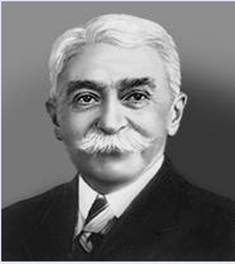
The revival of the Olympic Games began long time afterwards, in 1892, when a young French teacher Pierre de Coubertin made a public speech before the Union of French sports clubs in Paris. At that time many people in many countries practiced various kinds of sports and games. They wanted to make friends and compete with sportsmen from other lands. Pierre de Coubertin understood the importance of sports which unified peoples of the world and served the cause of peace like in ancient time.
On the 23rd of June 1894 the International Congress of amateur sportsmen made an important decision: to revive the Olympic Games and to establish the International Olympic Committee which would be responsible for the administration of the modern Olympic Games. The first Committee consisted of 12 members. Now 82 members of the International Olympic Committee control the affairs of 135 member countries which joined the Olympic movement.
The first Olympics of the modern times were held in 1896 in Athens, Greece. Thousands of spectators watched the historic event when after fifteen hundred years the Games of the first modern Olympiad were announced open. The first Games saw the competitions in nine kinds of sports: athletics, swimming, gymnastics, weight lifting, wrestling, tennis, fencing, cycling and shooting.
Winter sports made their Olympic debut in 1908, when ice figure-skating was included in the Olympic programme among summer sports. International competitions in winter sports often took place in the beginning of the 20th century, but what could be compared with the Olympic Games, the most impressive sporting event in the world? So, in 1925 the International Olympic Committee made the decision to consider the International Winter Sports Week that had taken place in 1924 at Chamonix, France, as the first winter Olympic Games and to hold them since that time on.
At first only men took part in the Games. Later rules were changed many times. Women and girls were allowed to participate in the competitions, many new sports and games were added to the Olympic programme, several sports were stricken off. One thing remains unchanged—the popularity of these international festivals of health, youth and beauty. Different cities of the world welcomed sportsmen from many countries 19 times in summer and 13 times in winter (the two world wars prevented to hold the Olympic Games in 1916, 1940 and 1944). Sometimes athletes seemed to work miracles on the sports grounds, and often the Games were called after the most outstanding sportsmen's names. Modern Olympics keep old traditions of equality, honour and justice of the international competitions. Everybody protested against the racialist policy of the South African government who did not allow the Negro sportsmen in the cast of their Olympic team, and South Africa was banned from taking part in the Games.
In 1980 the 13th winter Olympic Games were held in Lake Placid, USA. In summer the Games of the 22nd Olympiad were held in the Union of Soviet Socialist Republics. Moscow, Tallinn, Leningrad, Kiev and Minsk greeted the representatives of many countries who competed in twenty one sports and games and won 444 gold, 444 silver and 463 bronze medals.
The Soviet people did their best to prepare for the guests' arrival. New sports complexes and living quarters were built, old ones were restored. Stadiums, cycling tracks, swimming pools and hippodromes were equipped with various modern techniques, devices and computers.
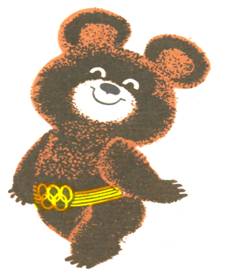
About half a million spectators were present at many breath-taking competitions; millions in the Soviet Union and abroad watched them on the television. Everywhere we saw the smile of Misha, the little bear who had been chosen as the mascot of the Games according to the tradition. For two weeks the flag with five coloured interweaved rings flew over Moscow and the fire, lit by the sun rays in Olympia, the birthplace of the Olympic Games, and was burning above it. Our Russian sportsmen won 80 gold, 69 silver and 46 bronze medals during these Games. The 22nd Olympic Games were the holiday of health, peace and friendship.
 Moscow has hospitably accepted all “Olympic family”. And it approximately 13 thousand sportsmen and persons accompanying them, more than 3 thousand heads of world sports, 3,5 thousand sports judges, up to 7800 representatives of foreign and Russian means mass Information of 1,5 hundred thousand Russian and foreign tourists.
Time of games was determined: from July, 19 till August, 3. This summer period the best in Moscow on weather conditions: not hot, almost without rains, few cloudy days. Different terms of realization of the most popular and entertainment competitions - on navigation, track and field athletics, gymnastics, volleyball, basketball, handball were determined; and their endings that interest to Games did not weaken.
The program provided also uniform loading of sports constructions and uniform distribution of transport streams on streets of city, systematic work of medical service, and TV.
In comparison with Olympic Games of 1976, on the Moscow Olympiad competitions on grassy hockey, and also competitions sports walking on 50 kilometers have increased. Into new weight categories are divided crossbar sportsmen; two classes of yachts are replaced. In a result of competition passed on 203 sports disciplines, and as much complete sets of gold, silver and bronze medals participants of Games have played.
Sports constructions of Olympic capital
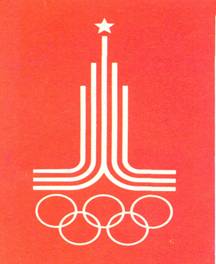 All over the world have deserved kind glory sports constructions of our capital. They famous the Participants of the championships of Europe, championships of the world and Olympiad of 1980.
Lugniki
To Olympic Games of 1980 sports constructions of Lugniki were reconstructed and modernized. On the Big sports arena solemn ceremonies of opening and closing of Olympic Games were held, competitions on football, water polo, to track and field athletics, volleyball, and final horse competitions were carried out.
The big sports arena - largest construction of Lugniki. Oval in the plan, it includes a football field, a racetrack, sectors for jumps and a throwing of shells. Tribunes contain simultaneously more than 100 thousand spectators. The football field has a natural grassy cover, and racetracks and track and field athletics sectors are covered with synthetic materials.
The biggest works on reconstruction were carried out on Small arena. On a green carpet Competitions by different kinds of summer sports were carried out, and refrigerating devices allow transforming it into an ice field for hockey and figure skating. Behind Small arena the tennis small town with courts and training walls has grown. Near to courts in 1980 the sports universal hall "Friendship" for competitions by 12 kinds of sports is erected.
Central stadium «Dinamo»
During Olympiad here passed competitions on football of which observed 54 thousand spectators. On the Small sports arena designed on 10 thousand of spectators, the artificial grassy covering for game in summer hockey was stacked.
The rowing channel in Krilatskyi
Its extent - 2300 meters, width - 125 meters. In a finishing zone are constructed protected the peak tribunes on 3400 places.
The covered bicycle track, ring bicycle line where passed Olympic competitions, and enter into a complex of sports constructions of Krilatskyi open fields where archers competed. The Olympic field for shooting from a bow is the equal lawn having almost 100 targets on distances of 30,50,60,70 and 90 meters.
Sports complex "Olympiskyi"
The covered stadium - giant "Olympiskyi" what is not present in Europe, and big Swimming pool under the same name where passed track and field athletics competitions. Refrigerating machineries of stadium quickly increased ice - and already here were carried out Hockey matches and competitions of figure skaters.
Sports complex "Izmailovo"
Includes a sports universal hall where Olympic tournament of crossbar sportsman was held; the stadium designed on 26 thousand of spectators where Olympic commands trained.
Sport. Popular British Sports.
Sport is probably as old as the humanity itself. It has been developing with the developing and growth of the mankind. All over the world people of different ages is very fond of sports and games. Sport not only helps people to become strong and to develop physically but also makes them more organized and better disciplined in their daily activities. It makes for a healthy mind in a healthy body. Sports helps people to keep in good health.
We all need to exercise. Even if you don't plan to make a career in sport you still have to practice. Regular exercises give you more energy. That is why many people who suffer from general tiredness should take more exercise than more rest. Exercise makes you feel and look better. The best exercise is one which involves in repeated movements, those are: walking, jogging or swimming. Bending and stretching will add flexibility and feeling of lightness.
A person can choose sports and games for any season, for any taste.
All the year round many people indulge in boxing, wrestling, gymnastics and track and field events. Scores of young girls and women go in for callisthenics. Over the last few years aerobics has become popular with young girls and women. Aerobics helps them to be slim, healthy and strong. The interest for it greatly increased thanks to Jane Fonda, a prominent American actress, the founder of this kind of sport. This woman may serve as an impressive example of inexhaustible health, cheerfulness and beauty. Being a great enthusiast of aerobics she has been trying to initiate many women all over the world into this sport.
Sports can be winter and summer. The most popular outdoor winter sports are shooting", hunting, hockey and, in the countries where the weather is frosty and there is much snow — skating, skiing and tobogganing. It's so nice to go to the skating-rink on a frosty sunny day. Some people prefer to be out of town in such weather and to sledge or to ski in the woods. Many people greatly enjoy figure-skating and ski-jumping.
Summer affords excellent opportunities for swimming, boating, yachting, cycling, gliding and many other sports. Badminton is very popular both with young and old. The other games that have firmly established themselves in favour in different countries are cricket, volley-ball, basketball, and so on. Among outdoor games football takes the first place in public interests; this game is played in all the countries of the world.
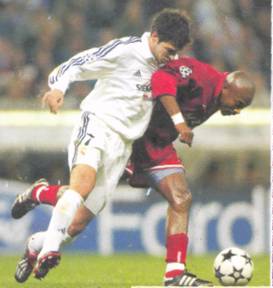 Sport plays such a large part in British life that many idioms in the English language have come from the world of sports. For example, "that's not cricket" means "that's not fair" and "to play the games" means "to be fair".
Britain is the birthplace of many popular sports such as football, rugby, cricket, golf, tennis, badminton. The most popular sports in Britain are: running, boxing, swimming, skating, hunting, fishing, horse-racing, mountain climbing, etc. The most popular spectator sport is football.
The game itself is not new. There are many records that foot-and-ball games were known and played during many centuries before our era. In old Japan and China a game like football was very popular. There winners were awarded flowers or vases and loosers... caned.
Two thousand years later in Greece a football-like game was popular among both boys and girls. Beside players there was an arbiter. When ancient Romans conquered Greece, they learned and used different Greek achievements in engineering, arts and sports too. The foot-and-ball game called "harpastum" was played all over the Roman Empire, which occupied most of Europe including England.
Football in England was widely spread among peasants. The game was cruel and dangerous, that is why football was officially banned by King Edward II and several others. In one of Shakespeare's plays we learn that "footballer" was used as a swear-word. In spite of royal orders football remained the game of. English common people. Sometimes football matches lasted for several days!
The history of modern football began in the end of the 19th century. At that time the football rules allowed to play by both feet and hands. There were arguments between players. One side demanded that only feet should be used, while the other insisted on "feet-and-hands" rules.
The argument was so hot that when the representatives of several football clubs gathered in October 1863 in London, their opinions parted. The supporters of the "feet-and-hands" rules demonstratively left the meeting, and their opponents formed their own "Football Association". A week later new rules were discussed and accepted. Those rules were changed, and many times. Almost every year there were innovations and additional rules.
The football referees appeared only in 1878. They signaled with a bell which later was changed for a whistle. The first goal nets were first seen in 1891, when sportsmen from Liverpool proposed to use them so that the ball would not fly out of the pitch. In the same year the 11-metres penalty kick was also introduced. The numbers on the players' shirts appeared only in 1939.
Football found its supporters not only in England. The first international match between the teams of England and Scotland was held in 1872. The International Football Federation (FIFA) was formed in 1904 in Paris, France. Oddly enough, but England joined ft only two years later, though English players had been the best in Europe then.
The football championships began only in 1930. Olympic championships began earlier, in 1908. Such was the dawning of the era of football — the most popular game all over the world.
Major international competitions are the World Cup, the Olympic championship, the European Cup-winners Cup, and the European Champions Cup.
Football is played on a pitch 90—120 m long and 45—90 m wide, usually covered with grass. In the middle of the shorter side is the goal made of two posts and a crossbar between their upper ends. The pitch is marked with chalk. There are the central circle, two goal areas and two penalty spots. In the corners there are four flags.
The object of the game is to drive a round (about 70 cm in circumference) leather ball into the goal. A football team has ten field players and a goalkeeper. A football match is played 90 minutes in two periods with a 10 minute interval.
Nobody, except goalkeepers, is allowed to play or even touch the ball with hands. The play begins from the centre of the pitch. The players may pass the ball to each other or drive it with feet and other parts of the body except hands. Their opponents may either intercept the ball or tackle it from the players. Tackling must be fair.
The players should not kick, hack, trip or push the opponent who has the ball. All these tricks as well as hand playing are penalized by a free kick. If the offence happened in the penalty area, the 11 m penalty kick is given. The opposing goalkeeper must stand still without moving his feet until the kick is made. Smaller offences are penalized by an indirect free kick. The goal cannot be directly scored from such a kick.
There is an important "offside" rule in football. A player is offside (out of play) if at the moment when his team-mates play the ball there is only one member of the opposing team before him. In other words a player should have no less than two opposing players between him and the goal when he gets the ball from his friends.
When the ball crosses the side or "touch" line, it is thrown back by the player opposing those who sent it out. If it crosses the goal line (except the part between the goal posts) from the attacking team's players, the defenders take the indirect free kick. If it was the defender who sent the ball over his own goal line, then the attackers take a corner kick from which the goal can be scored.
The goal is scored when the ball has passed over the goal line between the goal posts and under the crossbar. Three referees conduct the game: one in the field and his two assistants at the opposing touch lines.
The players wear jersey shirts, shorts, knee-socks and special boots with pikes on the soles. The goalkeeper's shirt should be of different colours than the shirts of field players. Besides, the goalkeeper has 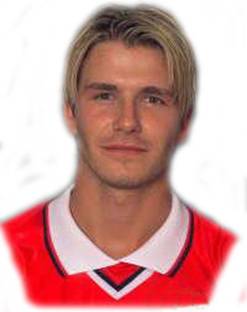 gloves for hand-protection.
David Beckham.
David Beckham was born in Leytonstone on May, 2, 1975. Pass test Layton Orient and after visiting school Tottenhem Hotspurs he has signed the contract from the MU on July, 8, 1991. Being the schoolboy, he represented school in Essex. On April, 2, 1995 David Beckham debuted in Prime-minister to League in a domestic match about Leeds United. His debut has taken place in a command two one year before when he has left on replacement on October, 1, 1992. … It was a season of a double of the MU in the championship and a cup of England 1995-96 when Beckham it was ratified in the first command. Basically playing the right halfback (though his basic position was in the center of midfield to fill Andrei Kanchelskis loss. Goals Beckham have made his name well-known in Manchester; have lifted his rating in Prime-minister to League when he has hammered in a semifinal of a cup against Chelsi and having hammered in the well-known goal from the center of a field to Wimbledon on his field in the first game of a season of 1996-97.
His game has been noticed by the trainer of modular England Glenn Hoddlom due to what his debut has taken place in combined team on September, 1, 1996 against Moldova in Kishinev. Moreover, David was the captain of the youth modular country up to 21 years. Beckham was a member successfully playing youth combined team of United which in 1992 has won Prime-minister League among youth commands. Has won medal Pontin`s Central League in 1994, having played 16 games for a reserve. In a season 1996-97 Beckham was already at that age when it is possible to become the player of a basis in England and in United. His victorious matches for Manchester during a season 1996-97 were sufficient reasons to his friends - to professionals that they voted for him in nominations of awards of Professional Football Association. He has won a rank the young player of year and became the second in Prime-minister to League the football player of England. The same year he has helped United to get in a semifinal of League of Champions UEFA. В 1998 he has been included in the list of 22 players which will go to France on the world championship. Tournament was the big emotional splash for Beckham. After he did not participate in first two games, he has hammered in a fantastic goal with penal Columbia in last match of group tournament for England and has been named the national hero of the country. However in 4 days he became the main originator of defeat of England from Argentina after him have removed in the second time of a match with this command. It was his first removal in professional career.
When to David Beckham there were 12 years he has won award Bobby Charlton on football. The awards have handed over him in day of a match on Old Trafford. It was travel on stadium Kamp of the in Barcelona. On Saturday, on February, 22 Beckham has scored a goal Chelsi. Speed of flight of a ball was 97, 9 miles at one o'clock. Idol of Beckham in a youth Glenn Hoddl was. In 1994-95 he played for the MU in League of Champions UEFA and for Preston North End in the third battalion of the championship of England.
Growth of Beckham on football ranks from a youth command up to the international level in structure of England was much shorter than a meteorite. For rather short period of time he has passed from the promising young man up to well-known sportsmen at right edge midfield. His growth to glory was his dream. Being the fan Manchester United since the childhood, Beckham for the first time has been noticed by legend of United Bobby Charlton and then has been bought by youth system of Manchester in the age of 16 years. Despite of his not so strong constitution, his potential long and short passes to partners have been noticed, when h, had fine vision of a field. Not looking that he was the successful player well-known youth combined team Manchester of 1991, him forced to observe of how Giggz and Batt broke in basis of United. It has ended by the end of 1994 when his debut on international scene began from a victory over the Galatasaray 4:0 in them not a successful season in Europe. It was memorable evening for Beckham when he has hammered in the second goal from four of United. His debut in League last the following of 5 months, till a season of 1995-96. Since this season he took already constant place in a basis of a command. It was a successful season for Beckham because in 26 games he has hammered in 7 heads, 2 of which in a match about Nottingham Forrest (5:0 – victory of United) on departure. During campaign of 1996-97 Backs a rocket has escaped in stars. In the first match of a season he has started with 60 yards a candle above the goalkeeper of Wimbledon Nile Sullivan from the center of a field. The ball has landed behind a back of the keeper. It was the catalyst for rich imagination of the form from the halfback, who has earned to itself Glenn Hoddla's call in England in September, 1997. He debuted in a match with Moldova (3:0 - a victory of England) and played without replacements in each match of a selection cycle to world championship FRANCE 98. With each following season his reputation also grew, as well as one bright goal followed another. He became the answer to searches United of the new right halfback to fill loss of Kanchelskis which has left a command 2 seasons ago. And all this in spite of the fact that with United was signed with the contract the hero of Euro 96 - Karelian Poborski.
David not such high-speed as Russian or Czech, but he compensates lacks of speed jeweler passes. His penal became essential force together with his twirled impact in contour of a wall of the goalkeeper is original trade mark Backs. The season 1997-98 was one of the most difficult for Beckham on a field and outside of him. As soon as his relation with Victoria Adams from SPICE GIRLS began to draw attention of press, he has been catcalled by fans of other commands on each exit game. On a field his season began in unfamiliar circumstances, because Trainer Alex Ferguson has decided to give him holiday after an intense season in structure of modular England on Turnoi de France. Being absent on early games, he has appeared on replacement on Cherity Shield and on his surname on football shirt there was no letter "h". However he has left on replacement to hammer in a victorious goal to Southampton in the first game of a season on Old Trafford. Has passed 8 more months before he has hammered in the second goal of a house - this time to Newcastle (1:1). Goals of Beckham were not such bright as in the last season, but, nevertheless, he managed to achieve two--place numbers in parameters on passes. As against his feats, he remained the main figure. Near to Peter Shmeihel and Fumes Neville he has played the greatest in a season amount of matches for the MU. His creativity and dexterity were useful to the MU during a season, emphasizing his value for a command now and in the future.
Literature:
Gurina T. Y.“55 oral themes” – “Drofa”, 1999
Shalaeva G. P., Haskin V. P.“Reference book of pupil” – “Slovo”, 1997
Troshin A. S.“Olympic Sports and Games” – “Prosveshcheniye”, 1982
Disk “ The papers and the compositions”, 2003 “400 oral themes” – “Drofa” Bakanova I. Y., Beregovay N. V., Brysova N. G.“600 oral themes” – “Drofa”, 1999
