


Партнерка на США и Канаду по недвижимости, выплаты в крипто
- 30% recurring commission
- Выплаты в USDT
- Вывод каждую неделю
- Комиссия до 5 лет за каждого referral
План урока
Работа с текстом при подготовке к ЕГЭ.
(Учитель МНОУ «Лицей» )
Одной из основных учебно-методических единиц обучения иностранному языку является учебный текст. Поскольку целью обучения чтению является формирование умений просмотрового, ознакомительного и изучающего чтения, т. е. умений извлекать информацию в нужном объеме для решения конкретной речевой задачи, то и на экзамене чтение проверяется именно с данных позиций.
Отличительной чертой экзамена по иностранному языку является то, что экзаменационные тексты – аутентичны и представляют разные жанры. При подготовке к ЕГЭ следует читать газетные и журнальные статьи, путеводители, брошюры, объявления, рекламу. Следующие типы заданий по чтению используются на ЕГЭ: задания на установление соответствия между заголовками, задания на множественный выбор, восстановление текста.
Приведенные ниже инструкции помогут учащимся успешно справиться с перечисленными заданиями. (См. презентация 2)
Задания на множественный выбор (Multiple Choice)
n Прочитайте вопросы, затем текст, к которому они относятся. В тексте найдите фрагменты, к которым относится каждый из вопросов. Помните, что эти фрагменты могут быть разной длины: это может быть одно слово, выражение, целое предложение или абзац.
n Определите два неверных ответа. Помните, что в обычном тексте на множественный выбор содержатся два совершенно неверных ответа, которые легко определить. Обращайте внимание на детали – неверные ответы могут содержать иную грамматическую форму или слегка измененную информацию из текста.
n Отметьте верный ответ и проверьте его правильность. Например, найдите и подчеркните то место в тексте, которое подтверждает ваш ответ. Обратите внимание на тот факт, что правильный ответ должен содержать информацию, данную в тексте.
n Если вы хотите удостовериться, что ваш ответ верный, обратите внимание на различие между основной идеей и второстепенной информацией. Большое количество ошибок в тестах на множественный выбор предопределено наличием второстепенной информации в тексте.
n Когда вы убедились, что ваш выбор правильный, обратите внимание на то, что сформулировано четко и на то, что только подразумевается. Некоторые ответы в тесте на множественный выбор основаны на намерениях и мнениях автора.
Установление структурно-смысловых связей текста. Восстановление текста (Gapped Text)
n Читая текст, содержащий пропуски, постарайтесь сразу же определить, что может содержать каждый пропуск. Самые распространенные типы пропусков: пропущенная фраза, предложение или короткий фрагмент текста. Помните, что необходимо обращать внимание на слова до и после пропуска.
n В этом задании очень важно хорошее понимание структуры предложения и текста. Читая текст, определите его тип, а затем задайте себе следующие вопросы: что можно в него вставить и где; какие из данных фраз больше всего сочетаются с фрагментами до и после пропуска. Вместе с этим, обратите внимание на содержание и логику текста.
n Если пропуски в тексте охватывают целые предложения, прочитайте текст еще раз, опуская пропущенные части, и постарайтесь понять как можно больше. Помните, что содержание пропущенной части текста может относиться к различным местам текста.
n Правильность заполнения пропусков может зависеть от типа и стиля текста. Постарайтесь проанализировать текст с учетом данного аспекта.
n Задание на восстановление текста может содержать сложные лексические и грамматические структуры. Обратите внимания на инверсию, связующие слова и выражения, соединяющие части предложений, идиоматические выражения.
Задания на множественные соответствия (Multiple Matching)
n В задании такого типа вам необходимо соединить с текстом различные элементы, такие как заголовки, фразы, вопросы, утверждения, комментарии к тексту. Каждый из этих элементов требует особого подхода при выполнении задания:
- заголовки и фразы – постарайтесь быстро определить основную идею текста или его частей;
- вопросы – постарайтесь найти в тексте место, к которому относится вопрос;
- утверждения – найдите в тексте ту же информацию, которая иначе выражена;
- комментарии – постарайтесь определить тип текста и его функцию. Если вы соединяете, например, краткие комментарии с различными частями текста, постарайтесь быстро определить тип текста (например, справочная информация) и какую функцию выполняет каждая из его частей.
n В этом типе текстов могут намеренно содержаться один или более дополнительных заданий, которые не подходят для данного текста. В этом случае определите, какие задания соответствуют тексту, а какие нет.
n Иногда в таком тексте вам нужно соединить различные задания не с одним, а с несколькими отдельными текстами. В этом случае необходимо быстро определить типы этих текстов. Если среди них вы находите, например, рекламное объявление или письмо, их характерные черты помогут вам соединить соответствующие элементы.
n В некоторых случаях такого рода тексте вам нужно сгруппировать задания и соединить их с несколькими различными текстами. Начните выполнять задания с чтения вопросов задания и их смысловой группировки. Затем приступайте к чтению текста. Понимание содержания и стиль вопросов задания поможет быстрее соотнести их с соответствующими текстами.
n Постарайтесь соединить элементы, которые кажутся подходящими для различных текстов. После такого предварительного отбора будет легче прочитать текст и убедиться, что ваш выбор правильный.
Тип: урок обобщения и систематизации знаний.
Вид: традиционный.
Целью предлагаемого ниже урока в 11 классе является совершенствование навыков чтения и аудирования при подготовке к ЕГЭ.
Задачи:
Практические:
1. Активизировать употребление ЛЕ по теме «Защита животных».
2. Ввести новые ЛЕ на основе чтения текста.
3. Ознакомить с разговорными фразами типа (In my opinion, to my mind, I agree, I disagree, that can’t be true)
4. Тренировать в чтении и аудировании текста с полным пониманием
Образовательные:
1. Совершенствовать навыки поискового чтения.
2. Совершенствовать навыки аудирования.
3. Совершенствовать навыки употребления разговорных фраз, выражающих мнение.
Развивающие:
1. Способствовать развитию логического мышления.
2. Совершенствовать способность к продуктивной речевой деятельности.
3. Совершенствовать навыки монологической речи.
Воспитательные:
1. Способствовать формированию экологической культуры.
2. Способствовать воспитанию толерантности.
Ход урока.
Topic “The world around us”.
The aim of our lesson is to learn to understand the audio and written text.
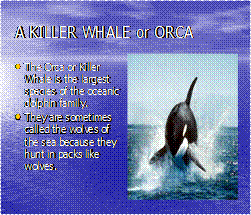
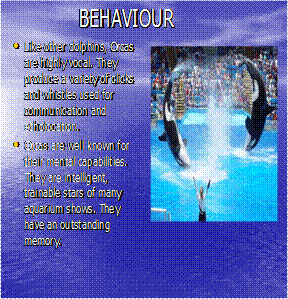
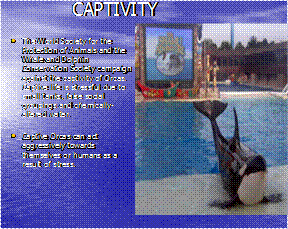
Before we start working on the text, look at the picture, please.

What can you see? What do you know about this animal?
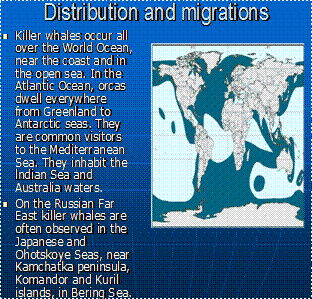
I’ll give you some more information about а killer whale. There are 3 questions on the board:
1. Where are killer whales observed? 2. How much do calves at birth weigh?
3. How long do killer whale males and females live?
But you will be able to answer only 2 of them. While listening to my presentation, decide what information is missing. Make notes if you need. Power Point presentation: (см.презентацию “A Killer Whale or Orca”)
The title of the text you are going to listen to and then to read is “Fight to Free the Sad Whale”. What do you think the text might be about?
Look at the list of collocations. Which ones do you expect to hear? (См. презентацию)
Intelligent animal, Barcelona Zoo, time-consuming process, marine show, under stress, the success of the project, to release, captive whale, renewal of animal life, zoo administrators, signs of aggression, to aid submarine, commission of scientists, commercial success, to adjust to life in the wild, a five-year sentence, regional government.
Listen to the text for the first time and check if your initial guesses were correct. (Файл с записью, Unit 5, part 3, время 19 мин.46 сек.)
Listen to the text for the second time and decide if the sentences are true, false or there is no information in the text.
a) Ulysses lives in the zoo.
b) Ulysses is very happy.
c) Ulysses is 7 meters long and weighs 8 tons.
d) He has a large pool area.
e) British experts want to free Ulysses.
f) Ulysses couldn’t adjust to the life in the wild.
g) Ulysses eats 250 kg of food each day.
h) A commission of scientists will decide Ulysses’ future.
Key:
a) T b) F c) No d) F e) T f) F g) No h) T
This time you are going to read the same article. Open your books.
Look through the text quickly.
Fight to Free the Sad Whale
Ulysses, a sixteen-year-old killer whale, has been the top attraction at Barcelona Zoo for nine years. Winning the hearts of millions of visitors with his good nature, he even allows keepers to put their heads and hands inside his giant jaws
They are also the most intelligent animals in the oceans.
However, Ulysses has recently been showing signs of unhappiness and frustration.
2 ( ) He is under stress, bored, lonely and desperate for a mate.
He has already begun to show sudden mood changes and signs of aggression
As a result keepers no longer risk their heads among Ulysses’ 50 teeth.
A team of scientists has warned that Ulysses could turn dangerous because of constant stress and being on show in his tiny pool. Despite the warnings, zoo administrators only intend to send him on a three-year rest to a marine show in the United States.
4 ( ) They are also going to ensure that he returns to Barcelona with a mate.
However, British experts have recommended that Ulysses should be returned to his native Icelandic seas. The regional government believes that the good publicity generated by such an action would benefit Barcelona and the zoo itself. On the other hand, zoo authorities have said they will fight animal protection groups to keep their star attraction.
The recommendation to return the huge animal to the sea has caused problems between the zoo and the local government
Ulysses, however, would be the perfect candidate as he seems capable of adjusting to life in the wild.
The procedure of his release is very simple. First he would be taken to an Icelandic bay and taught how to catch live fishWhen they have been located, Ulysses will be released and an attached electronic device will follow his progress.
The recommendation to free Ulysses, made by the British Society for the Protection of Whales and Dolphins, seems quite logicalHis future will now be decided by a commission of scientists.
Agree or disagree with my statements using the conversational formulae: (см. презентацию)
In my opinion, to my mind, I agree, I disagree, that can’t be true, I’m absolutely sure, I think so too, I hold a different view, surely not, there’s no doubt about it, I still insist that, on the one hand, on the other hand, I have no idea, I think that’s wise.
1. It would be best to keep Ulysses at Barcelona Zoo.
2. He would be much happier if zoo administrators built a bigger pool and brought a female whale to the zoo.
3. The only reason why zoo administrators don’t want to free Ulysses is that he is their star attraction and he makes lots of money for the zoo.
4. Ulysses could become dangerous unless freed.
5. It would be easier for Ulysses to adjust to life in the wild if he joined his “family”.
You are going to work in groups.
The first group has to read and choose from the sentences (A-H) the one which best fits each gap (1-7):
А. Ulysses’ dissatisfaction in captivity makes releasing him the obvious thing to do.
B. Zoo authorities, aware of the possible dangers, have increased safety measures.
C. The problem has arisen because there is the possibility that Ulysses would be unable to adjust to sea life and eventually die.
D. Scientists believe that this behavior could have been caused by the fact that he has outgrown his pool.
E. Then his “family” will be located, which should not be difficult as Icelandic whales are well-monitored.
F. No captive whale has ever been returned to the sea.
G. While he is away, they can build a new, bigger pool by the sea.
H. This proves that, contrary to popular belief, killer whales are not necessarily aggressive.
These strategy points will help you to fulfill the task. (см.презентацию «Strategy Points»)
STRATEGY POINTS
n Read the text through and decide what information is missing.
n Read the list of missing sentences.
n Match the topic of the missing paragraph with the paragraph before and after each gap.
n Remember to look for reference words (it, that, he) or linking words before and after each gap.
n Check that your option fits the gap grammatically.
n Read the text through to see if it makes sense.
Key:
1. H; 2. D; 3. B; 4. G; 5.C ; 6. E; 7. A.
The second group has to read and for questions (1-6) choose the answer A, B, C or D which you think fits best according to the text.
Ulysses has won the hearts of millions of visitors witha) a variety of clicks and whistles he produces
b) striking appearance
c) good nature
d) trainability
Why has Ulysses been showing signs of unhappiness and frustration?a) He is dissatisfied with the food.
b) He is badly treated.
c) He has got ill.
d) He has outgrown his pool.
One of the main arguments against freeing Ulysses is thata) he makes lots of money for the zoo
b) no captive whale has ever been returned to the sea
c) he is too aggressive to be free
d) the regional government protests against it
The regional government believes that freeing Ulyssesa) would help him find his family
b) would help him catch fish
c) would help release other whales in captivity
d) would benefit Barcelona and the zoo itself
5) What has caused the problem between the zoo and the local government?
a) The building of a bigger pool
b) The recommendation to release Ulysses
c) Ulysses’ signs of aggression
d) Bad food at Barcelona zoo.
6) What does “they” in line 4 of paragraph 7 refer to?
a) Scientists
b) Zoo authorities
c) Ulysses’ family
d) Animal protection groups
Keep in mind the following strategy to understand the text.
STRATEGY POINTS
n Read the text quickly to get a general idea.
n Look at the question and find the part of the text the question refers to.
n Go through the choices and underline the key words.
n Choose the answer that best fits the place.
n Check that other answers are not appropriate.
n Check your answer against the text.
n
Key:
1. c; 2 d; 3 a; 4 d; 5 b; 6 c.
I’ll give you 5 minutes.
Checking up.
Look at the list of words.
Match the words with their definition: (см.презентацию)
1) Frustration a) related to the sea
2) Commission b) people running an organisation
3) Regional c) act of setting sb/smth free
4) Constant d) concerning an administrative area
5) Generated e) becoming accustomed
6) Administrators f) continuous
7) Adjusting g) made to exist
8) Marine h) groups of experts with a particular purpose
9) To release i) state of annoyance caused by an inability to do sth
10) Sign j) to run away, usually from danger
11) To free k) indication that sth is a certain way or is happening
Key:
1 – I; 2- h; 3-d; 4- f; 5- g; 6- b; 7- e; 8- a; 9- c; 10- k; 11- j.
Follow – up Activities.
Do you think it is cruel to keep animals in zoos? Look at the list of advantages and disadvantages and discuss the question with your partner.
Advantages and disadvantages of living in zoos:
n plenty of food and water;
n specially trained vets to take over of the animals;
n not their natural habitat;
n protection from hunters and other dangerous animals;
n living in concrete prisons;
n the only way to prevent many species from becoming extinct;
n dependence on humans, so less chances to survive in the wild;
n the chance to see and learn about animals which you would probably never see.
Write an article for your school magazine entitled “Animals in captivity”.
Список используемой литературы:
1. , State Exam Maximiser. Английский язык: подготовка к
экзаменам. Pearson Education Limited, 2007.
2. V. Evans, J. Dooley. Mission 1 Coursebook. Express Publishing, 1996.
