


Партнерка на США и Канаду по недвижимости, выплаты в крипто
- 30% recurring commission
- Выплаты в USDT
- Вывод каждую неделю
- Комиссия до 5 лет за каждого referral
МОРСКОЙ ГОСУДАРСТВЕННЫЙ УНИВЕРСИТЕТ
ИМ. АДМ. Г. И. НЕВЕЛЬСКОГО
МЕЖДУНАРОДНАЯ ОБЩЕСТВЕННАЯ ОРГАНИЗАЦИЯ «ФЕДЕРАЦИЯ МИРА И СОГЛАСИЯ»
при участии
Приморского краевого отделения Международной
общественной организации "Российский фонд мира"
Приморского краевого отделения Общероссийской
общественной организации "Российский комитет защиты мира"
Приморского краевого общества Дружбы с Японией
ЯПОНИЯ:
ШЕСТЬ ДЕСЯТИЛЕТИЙ
БЕЗ ПРАВА НА ВОЙНУ
Материалы научно-практической конференции,
24 – 30 апреля 2008 г., г. Москва – г. Владивосток
Владивосток
2008
УДК 341.
ББК Х401.212:Д
Я 69 Япония: шесть десятилетий без права на войну. Материалы научно-практической конференции, 24 – 30 апреля 2008 г. / Москва – Владивосток : МГУ им. адм. Г.И.Невельского, 2008 с.
Я 69 Japan: six decades without right to war. Scientific Conference Proceedings, April 24 – 30, 2008 / Moscow – Vladivostok: Maritime State University after Adm. G. I.Nevelskoy, 20pp.
ISBN © Морской государственный
университет им. адм. ,
Центр международных исследований, 2008
ОГЛАВЛЕНИЕ | |
| Право на мир: предисловие к материалам конференции 7 |
А. Кавасаки | Глобальное влияние статьи девять.................................... 10 |
| «Новый курс» японской политической элиты в отношении мирных положений конституции страны........................ 16 |
| Девятая статья конституции и Силы самообороны Японии...................................................................................... 22 |
| Российская оценка «мягкой силы» Японии и меняющегося американо-японского союза безопасности...................... 27 |
| Конституция Японии как важный элемент регионального механизма безопасности..................................................... 39 |
| Япония на пути милитаризма и реванша, пересмотра девятой статьи конституции и итогов второй мировой войны на Дальнем Востоке.................................................. 48 |
Д. Ротхаузэр | Девятая статья, американский подарок Японии............. 61 |
| Битва за Окинаву в памяти окинавцев............................... 66 |
| Историческая память в российско-японских отношениях.................................................................................................... 78 |
| Особенности новой военной политики Японии в восточноазиатском регионе............................................. 83 |
| «Маленькие» хитрости большой военной политики Японии на современном этапе.......................................... 92 |
| Основные тенденции современной военной политики Японии...................................................................................... 97 |
| Роль и место Японии в формировании системы коллективной безопасности в Северо-Восточной Азии............................................................................................... |
| Современные японо-северокорейские отношения: взгляд из России................................................................ |
| Проблема «северных территорий» и интерпретация исторических фактов японскими и российскими историками......................................................................... |
| Проблема «северных территорий» в японской внешней политике (2000-20.......................................... |
| О распространении информации о девятой статье конституции Японии в Приморском крае России...... |
| Япония и японцы в общественном сознании населения юга Дальнего Востока России........................................ |
| О роли региональных печатных средств массовой информации в формировании отношения населения Сахалинской области к Японии..................................... |
| Сравнительный анализ интересов и ценностей Российской и японской молодежи ( г. Владивосток – г. Осака ) ........................................... |
| Развитие скоростного железнодорожного транспорта Японии и Дальнего Востока России............................. |
| Россия и Япония: сравнительная оценка налоговых систем............................................................. |
Приложение 1 | Взаимные приветствия от имени председателей организационных комитетов владивостокской и московской секций конференции............................. |
Приложение 2 | Всемирное заявление по статье 9 в интересах запрещения войн....................................... |
Приложение 3 | Итоги социологического опроса................................... |
Приложение 4 | Фотографии........................................................................ |
Приложение 5 | Аннотации докладов........................................................ |
CONTENTS | |
V. Gaponenko | Right to peace: preface to the conference proceedings....... 7 |
A. Kawasaki | Global influence of Article 9...................................................... 10 |
D. Streltsov | “New Deal” of Japanese political elite with regard to pacifist provisions of the Constitution of the country......................... 16 |
S. Smirnov | Article 9 of the Constitution and Self-Defense Forces of Japan ..................................................................................................... 22 |
S. Sevastyanov | Russia’s assessment of “soft power” of Japan and changing USA – Japan security alliance................................................. 27 |
D. Konoplyov | Japan Constitution as an important element of regional security mechanism.................................................................. 39 |
B. Tkachenko | Japan on the path of militarism and revenge, review of the Article 9 of the Constitution and World War II outcomes in the Far East...................................................................................... 48 |
D. Rothauser | Article 9, the American gift to Japan........................................ 61 |
Zh. Bazhenova | Battle of Okinawa in memory of Okinawa residents.............. 66 |
O. Shcherbakov | Historical memory in Russia-Japan relations......................... 78 |
L. Areshidze | Features of new defense policy of Japan in East Asian region ..................................................................................................... 83 |
G. Gleba | “Little” tricks of big defense policy of Japan at the present stage......................................................................................... 92 |
A. Gubin | Main trends of the current defense policy of Japan.............. 97 |
L. Rasputnaya | Role and place of Japan in formation of the collective security system in Northeast Asia................................................... |
L. Zabrovskaya | Japan – North Korean relations today: The view from Russia ............................................................................................... |
N. Alepko | The problem of “northern territories” and interpretation of historical data by Japanese and Russian historians....... |
E. Shapovalova | The problem of “northern territories” in foreign policy of Japan (2000-20............................................................. |
V. Buraya | On dissemination of information on Article 9 of the Constitution of Japan in Primorsky region of Russia....... |
E. Plaksen | Public opinion in the southern part of Russian Far East on Japan and Japanese.......................................................... |
P. Ryachapova | On the role of regional printed media in shaping public attitude in Sakhalin region toward Japan.......................... |
L. Larina | Comparative analysis of interests and values of Russian and Japanese youth ( Vladivostok - Osaka )........................................................ |
V. Garbuzova | Development of high-speed railroad transport in Japan and Russian Far East................................................................. |
L. Kolesova | Russia and Japan: comparative evaluation of tax systems............................................................................................... |
Appendix 1 | Mutual greetings on behalf of the convenors of Vladivostok and Moscow sections of the conference.......................... |
Appendix 2 | World declaration on Article 9 for the prohibition of wars ............................................................................................... |
Appendix 3 | Opinion poll results.............................................................. |
Appendix 4 | Photos................................................................................... |
Appendix 5 | Annotations of presentations............................................. |
ПРАВО НА МИР:
ПРЕДИСЛОВИЕ К МАТЕРИАЛАМ КОНФЕРЕНЦИИ
В мае 2007 года отмечался 60-летний юбилей национальной конституции Японии, содержащей уникальную статью, в которой японский народ добровольно отказывается от права опираться на военную силу при разрешении международных споров. Вызовы современности меняют региональную геополитическую конфигурацию, и, спустя 60 лет, в Японии все чаще слышен призыв отказаться от "мирной" конституции и стать "нормальной" страной.
Вместе с тем, японские пацифисты считают что понятие "нормальная" страна должно ассоциироваться, прежде всего, не с правом государства на войну, а с тем, что страна имеет "мирную" конституцию. В 1999 году вдохновленная "Гаагским воззванием к миру" и заявлением на "Всемирном форуме в поддержку мира" в Ванкувере стартовала "Всемирная кампания по статье 9 в интересах запрещения войн". Сегодня к миротворческой инициативе присоединились сотни организаций и тысячи граждан Японии, Республики Корея, России, Монголии, Нидерландов, Германии, Франции, Испании, Греции и США (всего более 40 страна мира)[1].
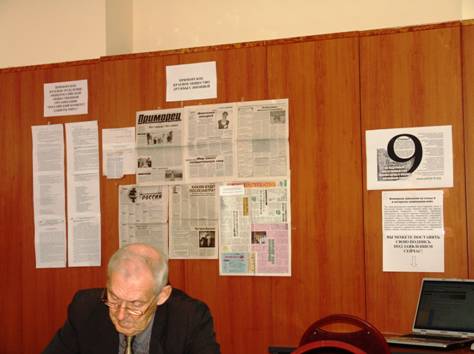
Поддерживая кампанию по 9-й статье, активисты проводят мирные демонстрации, акции протеста, публикуют статьи, собирают подписи в защиту "мирной" конституции. В 2005 году, году в котором человечество отметило 60-ю годовщину окончания Второй мировой войны, в двенадцати газетах различных стран вышли общественные уведомления о проведении глобальной акции солидарности против пересмотра конституции Японии и отмены девятой статьи[2]. Кульминацией многолетней миротворческой работы по защите 9-й статьи стала "Всемирная конференция по статье 9", которая прошла в Токио с 1 по 6 мая 2008 года[3].
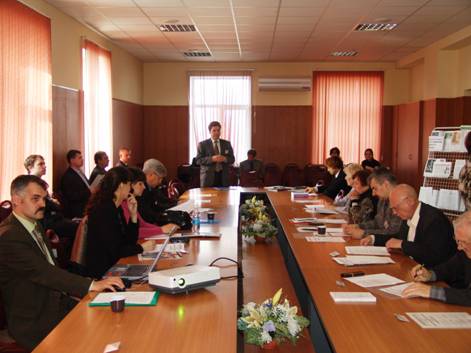
Как повлияла 9 статья конституции на послевоенное развитие страны? Какая она, современная Япония: милитаристская, пацифистская или реалистичная? Что знают о Японии россияне, и как она отражается в зеркале общественного мнения, какие темы привлекают сегодня внимание российских японоведов, и что ожидают от Японии российская политическая элита и крупный бизнес в ближайшем будущем и, наконец, существует ли необходимость, и если так, то каковы перспективы заключения мирного договора между нашими странами? Эти вопросы были предложены для обсуждения участникам конференции "Япония: шесть десятилетий без права на войну", секции которой прошли в Москве и во Владивостоке. Обсуждение началось в столице, откуда несколько дней спустя эстафетная палочка была передана в дальневосточный регион страны[4]. Московское заседание прошло в конференц-зале Международной общественной организации «Федерация мира и согласия»[5], Владивостокская секция открылась в зале Ученого совета Морского государственного университета имени адмирала [6].
Ученые представлявшие учреждения Российской академии наук, сотрудники вузов, представители общественных организаций и СМИ собрались, чтобы провести коллективное осмысление различных аспектов социального, экономического и политического состояния современной Японии, в контексте формирования системы многосторонней безопасности в Северо-Восточной Азии и перспектив российско-японского двухстороннего сотрудничества. Результаты этой работы представлены в сборнике материалов конференции.
9 статья Конституции Японии и ее роль в послевоенном развитии страны, эволюция политики Японии в оборонной сфере, проблемы исторической памяти, а также роль и место Японии в формировании системы коллективной безопасности в Северо-Восточной Азии – главные темы, вокруг которых развернулась научная дискуссия. Также исследователями были затронуты вопросы отношений Японии с КНДР и Россией. В обсуждении ситуации в российско-японских отношениях ключевое место занял территориальный спор.
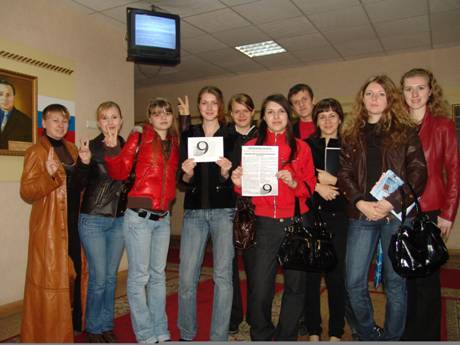
Ко дню проведения конференции в г. Владивостоке была приурочена общественная акция по сбору подписей под Заявлением в поддержку 9 статьи Конституции Японии[7], которая проходила в рамках "Всемирной кампании по статье девять в интересах запрещения войн". Под Заявлением подписались 426 человек, включая большинство участников конференции.
На конференции был поднят вопрос корректности участия россиян в вопросах относящихся к суверенному праву японцев, – рассуждать какой должна быть конституция Японии. Ответ на этот вопрос дан в статье активиста японского миротворческого движения Акиры Кавасаки "Глобальное влияние статьи девять", которую он попросил опубликовать для русскоязычных читателей, не принимая очного участия в конференции.
Директор Центра международных исследований Морского государственного университета
им. адм.
Приложение 4
ФОТОГРАФИИ


АННОТАЦИИ
ANNOTATIONS
A. Kawasaki
Global Article 9 impact
The presentation covers Global influence of Article 9. In the beginning of the presentation the presenter introduces historical background that led to the ratification of the Article 9 of Japan constitution. As the world situation has changed and Article 9 is viewed as increasingly irrelevant. As a result, the disputes around the pacifist Article 9 arise. The author explains the reasons for debates on alteration of Article 9, as well as the attitude toward it in Japan and all over the world, the activity of supporters and opponents of the Article 9. In author’s opinion, pacifist Article 9 could remain unchanged just if the governments of other countries ratified similar provisions in their Constitutions, thus supporting an idea of peace and prohibition of wars.
D. Streltsov
“New Deal” of Japanese political elite concerning
pacifist provisions of the country Constitution
The presentation covers main features of Japan foreign policy nowadays. The author gives brief introduction of the historical background for Article 9 of Japan Constitution and describes new political challenges Japan faced. Now one of the key trends in Japan's foreign policy is to shift away from the experience of non-military power and as a result, to review related commitments and agreements. "New Deal" of Japanese political elite associated with the rejection of the pacifist provisions of the Constitution and aimed to strengthening military potential of the country, though not explicitly, but is supported by West, especially by the USA. Nevertheless, as opinion poll results show there is ambiguous attitude toward the Article 9 of the Constitution in Japan. Today there are increasing concerns in Japan related to the growth of arms race in APR, China’s military buildup and development of Pyongyang nuclear program. These factors can push Japan to abandon its pacifist status in order to ensure its national security.
S. Smirnov
Article 9 of the Constitution and Self-Defense Forces of Japan
The occupation of Japan was unique and carefully planned operation of political reorganization of the state, controlled from outside. Article 9 of Japan Constitution is considered as controversial. The author refers to historians who believe that it was a kind of compromise to preserve the institution of the emperor in postwar Japan. Existence of this Article is the reason for problems of Japanese military rather than other categories of people. It is well known that Japan Self-Defense Forces are highly competitive with those of the leading Asian countries from the point of combat capability. The main problem is related to the moral state of Japan Self-Defense Forces personnel. Today the status of the Japanese military in society is low. Japan is known as a country with millennial traditions of the military class and samurai code of conduct. It is really difficult for Japan to give up everything that is connected with militarism.
The author concludes if Japan saves its Article 9 of the Constitution, it will show the rest of the world how to remove the notion of “sovereign right to war” from international law in the XXI century.
S. Sevastyanov
Russia’s assessment of Japanese “soft power”
and changing USA – Japan security alliance
The article describes some of Russia's approaches to the “soft power” of Japan and changing USA – Japan security alliance. The author analyzed contemporary Russia-USA and Japan-Russia relations and concluded that the “soft power” of Tokyo is not sufficient for effective handling foreign policy objectives of Japan in East Asia and all over the world. The presence of Article 9 of the Constitution, fixes status quo and image of Tokyo in the region as a junior partner of Washington, thus blocking the establishment of permanent peace in the region. According to the author, if Tokyo agreed on a compromise approach to the problem of so-called “northern ter ritories”, Moscow could support Tokyo steps to achieve status of a “normal” state, including the cancellation of Article 9, although it is the people of Japan who have the last word in this argument.
D. Konoplev
Japan Constitution as an important element
of regional security mechanism
Nowadays Japan is in the top five most developed world economic powers. For half a century it has accumulated immense scientific and technical potential, particularly in military sector. During the post-war development the country had a slogan “affluent country, week armed forces”. After the defeat in World war II Japan officially abandoned the so called policy of remilitarization. However in the conditions of forming a new world order many of the Japanese politicians started to appeal to necessity of gaining a leading political role that was adequate to economic strength of the country. Wherein they accentuated the need to revise even up to repeal of the 9th article of the Japanese constitution. How far the Japanese élite is going to come “in stiffing the nation spirit” no one knows. Hopefully our countries will adhere peaceful foreign policy, which is needful for reciprocal collaboration and regional stability too. Most probably putting a sharp military slant on the policy the Japanese government can frighten not only country associates but the Japanese people too. It’s doubtful whether Japan is ready to waive its economic prosperity for the sake of dangerous ambitions.
B. Tkachenko
Japan on the path of militarism, revenge and review of the Article 9 of the Constitution and World War II outcomes in the Far East
After breaking down USSR was derivated geopolitical vacuum on all the Euroasian room from Baltic up to Pacific. It boosts potentially extremely dangerous for Russia growth of activity of such Far East center of force, what Japan is.
Official Tokyo for a long time obtains a possibility for a justification of depositing in the Constitution of country of variations producing of Japan the right to involve the armed forces behind its limits. In 2001, the parliament of Japan has accepted the parcel of the acts as the relevant premise for a consequent heightening of a military role of Japan not only in Asian-Pacific region, but also all over the world. The speech goes about revision of limitations on usage of "right to self-defense" (9-th paper of the Constitution of Japan).
As is known, the state, which one existed in Japan till September 2, 1945, in a post-war period was disassembled. The new state in Japan, and in its new boundaries, was created in a post-war period under check of the conquered mandatory powers — USA, USSR and Great Britain. The unconditional surrender meant disassembly of military and political patterns of the Japanese state, termination by them of the imperious authorities, and also partial loss by it of the sovereignty. Under check of the allied mandatory powers-winners the new constitution and new state structure of Japan was created. According to a paper 9 these Constitutions, Japan dropped a right to declare war and to have the applicable armed forces for a solution of foreign-policy problems.
In the Potsdam declaration from July 26, 1945 the ultimatums to Japan were pushed, which one envisioned killing militarism in Japan (paper 6), killing of capacity of Japan to conduct war " (paper 7), was prohibited to have a defense industry (paper 11).
For legal decor of modern military ambitions, the cabinet council of Japan has received in 2001 to the ministry of the justice of Japan to study indispensable legal aspects of waiving of 9-th paper. The majority of the population of Japan completely maintains government in this problem.
The laws, accepted in 2001, on support American "of antiterrorist operation" will be utillized Tokyo for removal of self-restraints in military sphere and gradual extension of a zone of Japanese military influencing. In these purposes the Japaneses try to involve the marine forces to harden, first of all, in proximate to country probable theatre of act of war — the Southern-Chinese sea. Thus, Japanese forces of self-defense actually I acquire "police functions" in region of Southeast Asia. In armed forces of country the opening-up for support of battle operatings with usage of modern aspects of a weapon of mass destruction, in particular biological is unrolled.
The revision of 9-th paper of the Constitution of Japan can reduce not only in revival of militarism in Japanese company, but also that Japan will appear in a role of a source of military tension and reason of destabilising of a situation in region, the consequences that now are difficult for forecasting.
D. Rothauser
Article Nine, America’s Gift to Japan
The present article describes the political situation in post-war world and peculiarities of relations between Japan and USA during that period. Soon after the ratification of peace Constitution of Japan, in 1950, USA tried to make Japan drop Article 9 as they wanted Japan to fight for the U. S. against North Korea. Instead of dropping it, Japan preferred to embrace Article Nine as though it was a gift from heaven. As a result, Japan has prospered as one of the world’s economic giants and more importantly has lived in peace for 62 years. If Japan had dropped Article Nine in 1950, it most certainly would have gone to war against North Korea—then China, Vietnam. The problem is that Japan has lived for 62 years under the illusion of American security until 9/11. Now America can no longer protect her friends and allies, she is even incapable of protecting her own people. But Japan has a real advantage - the Peace Constitution, which made Japan the world leader for peace. Now Japan has an opportunity to inspire other nations to embrace the idea of peace as an organizing principle where non-violence and peace become one and the same. Now she has the power to become independent from the illusion of American security, to urge abolition of nuclear weapons and support its Article Nine and Peace so doing Japan will become a beacon of hope to the world.
The initiative to drop Article Nine should be seen as a warning. It is necessary to urge USA Administration to take a new initiative to support the Japanese Peace Constitution as a model for world peace. It is not Japan alone who needs Article Nine. It is the world. Now in America there is a bill before Congress to create a Department of Peace in USA government, which will become an inspiration and a challenge to America as a true super power to lead the way to a world free from the weapons of mass destruction. As a second step the author proposes that America amends its Constitution to include its own version of Article Nine. The leadership of Japan has an opportunity to lead by example.
O. Shcherbakov
Historical memory in Russia-Japan relations
The present article covers the impact of historical memory aspects on relations between Russia and Japan. The author considers that the connection of historical memory with communicative and cultural memory is essential. Relations between Japan and Russia have developed since the end of the XIXth century. Historical memory of Asian nations related to the developments of past is represented by different models, structures and is studied from different *****ssian researchers, who don’t speak Japanese, do not take into account basic principles and positions of Japan. Japanese researchers who don’t speak Russian also do not study principles of Russian party. Each party considers historical memory of another one on the basis of its own national psychology. In order to solve the problems caused by different types of memory, the author proposes the following: to carry out the contacts between leaders of two of three powers, as well as the contacts in the range of public diplomacy. Moreover, the two nations have one goal: to prevent military conflicts. Representatives of Japanese and Russian societies carry out joint peacekeeping operations.
Zh. Bazhenova
The Battle of Okinawa in Memory of Okinawans
The article explores remembrance of the Battle of Okinawa for Okinawans. Many Okinawans reject orthodox Japanese interpretations of the battle. The most controversial issue explores the Japanese military’s brutal treatment of the Okinawan people. The facts of the massacres, mass suicides are described. A strong sense of identity/identification and belonging/alienation under-scores the memory of the wartime. Nowadays Okinawa has championed the peace movement drawing on the human experience of suffering as the means of communicating the evils of war.
L. Areshidze
Features of new defense policy of Japan in East Asian region
It is worth notice how R20;pacifist JapanR21; who proclaimed the three non-nuclear principles only in midst of the Cold War in the second half of XX century now transforms itself in the military country with the up-to-date war technology and nuclear aspirations and does it when the Cold War was over. Simultaneously the foreign policy of Japan also becomes belligerent including the policy toward Russia. On August 2007 the senior official of Russian Foreign Ministry Mr. Kamyinin stated as a very dangerous trend that Tokyo tried to politically load the territorial problem between Russia and Japan and was going to revise the results of the Second World war. It is quite natural that the new military policy of Japan today is going along with the militant foreign policy.
The new Pattern of Military policy of Japan consists of some new striking trends. The author analyses the following 5 new features of it. First - Japan clearly demonstrates the preparations to alter the Constitution in order to revise its Article 9 which includes R20;the refusal of taking part in a WarR21; into a new one including the measures for fortifying the National Defense. Second R11; the Parliament of Japan has adopted the missions of Japanese army abroad and permitted to take part in the confrontations battles. The third R11; Japan has become more active in its intelligence service activity abroad. The forth R11; Japan is expanding the works of constructing the national anti-missile system and provides its territory for disposition of the American anti-missile system. The fifth R11; Japan is preparing its infrastructure to become a nuclear state and she uses its supercomputer that produces 10 quadrillions per second to simulate the nuclear explosions. Japan is going to use arm plutonium as the main material for producing the nuclear bombs.
All those new features of the military policy of today Japan is of our great concern. The article examines the stated above problems in details.
G. Gleba
“Little” tricks of big defense policy of Japan at the present stage
The analysis of last steps in the field of defense of Japan allows to draw a conclusion that official Tokyo, giving a close attention to the "defensive" policy, aspires to involve practically the military-political potential saved up to the present time within the limits of strategic installation on increase of the status in asia-pacific region and behind its limits.
Japanese any more do not hide the intentions to result a military-political role of the country of «rising sun» in the world in conformity with their economic and technological power. Japan more and more persistently apply for expansion of the participation in the decision of the international problems both global, and local character. The tendency on revision of the constitution of the country which main objective is distinctly was outlined not to admit revival of the Japanese militarism. Known article 9 of the basic law answered aspirations of post-war Japan to assign to itself image of the country deserving the international trust, and to uncooperative altitude overcoming to it of the countries which have become by its victims aggressive and a colonial policy.
A. Gubin
The main trends of the current defense policy of Japan
In the terms of changing paradigm of the global security Japan has to confront new challenges and be more adequate in regional context especially in protecting national interests. Tokyo craves to abandon peaceful status and use military power and military influence both in world politics and world economy. First of all, it needs valuable and self-efficient Department of Defence with broad competences and rich capabilities. Japan strongly reforms its defence potential balancing to adopting offence concept that was proved by sending maintenance troops to Iraq and deploying supply sea patrol in the Indian Ocean. Furthermore, new plans of building strong fleet and system of anti-ballistic missile defence are estimated in neighbour countries (especially in PRC) as evidently destabilizing. Nevertheless, Japan cannot afford to confront openly with China so they try to create new areas of mutually profitable economic cooperation.
L. Rasputnaya
Role and place of Japan in formation
of the collective security system in Northeast Asia
One of the main reasons of periodical tension flares in Northeastern Asia is a nuclear crisis on the Korean peninsula. Japan is a single country in the world, that became a victim of a nuclear hit, therefore, people here most sharply and anxiously apprehend the nuclear ambitions of Pyongyang. The nationalistic forces of the country step forth activating military policy, denying the three non-nuclear principles and nuclear arming of Japan. The high scientific and technical potential of Japan - in case of making a corresponding political step - lets the country create a nuclear weapon in short period, countable in months. But there’s a huge rank of factors, telling, that the possession of nuclear weapon, won’t give guarantees of safety to Japan, along with the safety in the region. That is why, in response to the North Korea nuclear blackmail, the policy of Japan’s government is directed to leading in the strong sanctions against North Korea. Japan accepts the existing point that the non-nuclear status of the Korean peninsula needs to be saved.
L. Zabrovskaya
Japan – North Korean relations today: the view from Russia
The presentation highlights the process of transformation of Japan relations with DPRK and other countries of East Asia. The author considers the history of DPRK as a state that passed the way from dependent country relying on the external support to the assertion of its identity and independence in domestic and foreign policy. The balance of powers on the Korean peninsula in 60-s and 70-s is also described in this presentation. The author also reveals explicit and covert political goals of each party of the six-party talks. The advantage of Russia’s position in these talks is that it can become open-minded coordinator of the process of nuclear conflict peaceful resolution. USA and DPRK convergence will become the main challenge for the mediator of the talks. If Japan and DPRK make mutually acceptable decisions in the course of the talks, and official partnership ties are established, it will significantly ease the strains in military and political relations in East *****ssian public believes that Article 9 of Japan Constitution can become the basis for collective security in East Asia and Japan pacifist experience can be used by other countries.
N. Alepko
The northern territories issue and interpretation of historical data by
Japanese and Russian historians
The article deals with the problem of the Northern Territories which is a matter unsettled. It influences the formation of Japanese views of Russia and the course of foreign trade and policy towards Russia in the end of the 18th century and the 19th century. The events of the 18th century and the beginning of the 19th century furthered activity of Japanese exploration and development of the Northern Territories. Meiji government of Japan adhered to this course in the second pert of the 19th century.
E. Shapovalova
The northern territories issue in foreign policy of Japan ()
The article is devoted to the Northern territories problem in the foreign policy of Japan during the period. According to the analysis of Policy Speeches by Prime Ministers of Japan, official statements, documents and publications the steps towards the settlement of the territorial conflict between Japan and Russia are shown.
V. Buraya
On dissemination of information on Article 9 of the Constitution of Japan
in Primorsky region of Russia
The present article covers the role and activity of non-governmental organizations in dissemination of information on Article 9 of the Constitution of Japan among citizens of Primorsky region. Being a country with unique Constitution, Japan should share its pacifist experience with other countries in order to prevent armed conflicts on global level.
E. Plaksen
Public opinion on Japan and Japanese
in the southern part of Russian Far East
The author analyzes public opinion on Japan and Japanese in the southern part of Russian Far East. When RF emerged as a result of democratic and market reforms new Russia – Japan relations development started. One of the challenges is to overcome the problems of the past in order to develop bilateral relations respecting international law and principles of justice and legality. The author of the presentation analyzed perception of modern Japan through the prism of public opinion of the Russian Far East southern part population and concluded that Russians estimate Japan much higher than Japanese estimate Russia and USSR. The USSR collapse attracted increased interest in our country and promoted higher estimation. Alteration of Japanese Constitution is concern of Japan, but we can express our wish to keep Article 9 of our neighboring country Constitution unchanged. We should also focus on following Article 9 of joint Soviet-Japanese Declaration of 1956.
P. Ryachapova
On the role of regional printed media in shaping public attitude
in Sakhalin region toward Japan
The present article covers the role of regional printed media in shaping public attitude in Sakhalin region toward Japan. The author considers that the absence of peace treaty with Japan do not prevent Russia from development of mutually beneficial trade and economic parative analysis of materials published in mass media in 1946 and 2006 revealed a number of general and specific features of printed media activity shaping public attitude in Sakhalin region toward Japan. Having examined the content of articles about neighboring country, the presenter notes that thematic scope of articles forming Sakhalin reader opinion on Japan has significantly changed for six decades. Now the readers have an opportunity to form their opinion on Japan after having read about its culture, life of Japanese people and joint Russia-Japan activities.
L. Larina
Comparative analysis of interests and values of Russian and Japanese youth
( Vladivostok - Osaka)
The article represents a comparative analysis of Russian and Japanese students’ interests and values made on the basis of questionnaire conducted in some Vladivostok and Osaka (Japan) Universities in 2007. The research demonstrates the common features as well as different approaches of the two countries’ young people to the main problems of their societies and their individual perceptions of present world and the future.
V. Garbuzova
Development of high-speed railroad transport
in Japan and Russian Far East
The article is about the development of passenger’s railway transportation in Japan and in the Russian Far East, and also outlooks and factors, influencing the lever of its development.
L. Kolesova
Russia and Japan: comparative evaluation of tax systems
The peculiarities of tax system of Japan have been parative analysis of Russian and Japan taxation systems has been made.
[1] Подробнее о "Всемирной кампания по статье 9 в интересах запрещения войн" можно узнать на сайте http://www. article-9.org (на английском и японском языках) и сайте Центра международных исследований МГУ им. адм. http://cis. ***** (на русском языке).
[2] Копии вырезок из газетных публикаций представлены на внутренней стороне обложки сборника.
[3] Информация о токийской конференции представлена на сайте
http://www. article-9.org/en/conference/A9.html (на английском и японском языках).
[4] Взаимные приветствия от имени председателей организационных комитетов московской и владивостокской секций конференции в приложении 1.
[5] О Федерации мира и согласия см. на сайте http://www. *****
[6] О Морском государственном университете имени адмирала см. на сайте http://www. *****
[7] Текст заявления в приложении 2
