


Партнерка на США и Канаду по недвижимости, выплаты в крипто
- 30% recurring commission
- Выплаты в USDT
- Вывод каждую неделю
- Комиссия до 5 лет за каждого referral
МИНИСТЕРСТВО ОБРАЗОВАНИЯ РОССИЙСКОЙ ФЕДЕРАЦИИ
ВСЕРОССИЙСКИЙ ЗАОЧНЫЙ ФИНАНСОВО-ЭКОНОМИЧЕСКИЙ ИНСТИТУТ
АНГЛИЙСКИЙ ЯЗЫК
Сборник текстов
для дополнительного чтения
с методическими указаниями
Для студентов 1 курса, по направлениям
521600 «Менеджмент» (бакалавр),
521600 «Экономика» (бакалавр)
МОСКВА 2009
Учебно-методическое пособие составила:
кандидат педагогических наук, доцент
Учебно-методическое издание одобрено на заседании
Научно-методического совета ВЗФЭИ
Проректор, председатель НМС, профессор
СОДЕРЖАНИЕ
Введение…………………………………………………………………….4
Виды чтения………………………………………………………….……..5
Методические приёмы грамматического анализа
сложных предложений ……………………………………..…………..….7
Литература…………………………………………………………………25
Введение
В Концепции модернизации российского образования на период до 2010 года определена основная цель профессионального образования – подготовка квалифицированного работника соответствующего уровня и профиля, конкурентоспособного на рынке труда, компетентного, ответственного, свободно владеющего своей профессией и ориентированного в смежных областях деятельности, способного к эффективной работе по специальности на уровне мировых стандартов, готового к постоянному профессиональному росту, социальной и профессиональной мобильности; удовлетворение потребностей личности в получении соответствующего образования.
Одной из главных задач современного образования Концепция называет обеспечение владения будущими специалистами как минимум одним иностранным языком на уровне функциональной грамотности. Действующий учебный план ВЗФЭИ предусматривает изучение иностранного языка под руководством преподавателя в течение первого курса, в то время как профилирующие дисциплины в программу первого курса не включены. Студенты приобретают первичные знания по своей специальности в процессе изучения профессионально ориентированного курса иностранного языка; таким образом, обучение иностранному языку включает не только общеобразовательный, гуманитарный аспект, но и формирует основы профессиональной компетенции будущих экономистов. Для решения такой двойственной задачи в содержание курса иностранного языка должны входить сведения о стране изучаемого языка, этикете, международных отношениях, экономике в целом; кроме того – начальные сведения по избранной специальности.
Представленные в данном пособии тексты для дополнительного чтения помогут будущим менеджерам приобрести первичное представление о своей специальности, сформировать основу профессиональной компетенции. Вопросы и задания к текстам стимулируют развитие творческого мышления, способности к самообразованию.
В пособии приводятся сведения о различных видах чтения, а также излагаются основные методические приемы грамматического анализа сложных предложений.
Приступая к дополнительному чтению, ознакомьтесь с общими принципами и методическими приемами работы с текстами на иностранном языке и постарайтесь применить их на практике.
Виды чтения
В зависимости от целевой установки различают просмотровое, ознакомительное, изучающее и поисковое чтение. Зрелое умение читать предполагает как владение всеми видами чтения, так и легкость перехода от одного его вида к другому в зависимости от изменения цели получения информации из данного текста.
Просмотровое чтение предполагает получение общего представления о читаемом материале. Его целью является получение самого общего представления о теме и круге вопросов, рассматриваемых в тексте. Это беглое, выборочное чтение, чтение текста по блокам для более подробного ознакомления с его «фокусирующими» деталями и частями. Оно обычно имеет место при первичном ознакомлении с содержанием новой публикации с целью определить, есть ли в ней интересующая читателя информация, и на этой основе принять решение — читать ее или нет. Оно также может завершаться оформлением результатов прочитанного в виде сообщения или реферата.
При просмотровом чтении иногда достаточно ознакомиться с содержанием первого абзаца и ключевого предложения и просмотреть текст. Количество смысловых кусков при этом гораздо меньше, чем при изучающем и ознакомительном видах чтения; они крупнее, так как читающий ориентируется на главные факты, оперирует более крупными разделами. Этот вид чтения требует от читающего довольно высокой квалификации как чтеца и владения значительным объемом языкового материала.
Полнота понимания при просмотровом чтении определяется возможностью ответить на вопрос, представляет ли данный текст интерес для читающего, какие части текста могут оказаться в этом отношении наиболее информативными и должны в дальнейшем стать предметом переработки и осмысления с привлечением других видов чтения.
Ознакомительное чтение представляет собой познающее чтение, при котором предметом внимания читающего становится все речевое произведение (книга, статья, рассказ) без установки на получение определенной информации. Это чтение «для себя», без предварительной специальной установки на последующее использование или воспроизведение полученной информации.
При ознакомительном чтении основная коммуникативная задача, которая стоит перед читающим, заключается в том, чтобы в результате быстрого прочтения всего текста извлечь содержащуюся в нем основную информацию, то есть выяснить, какие вопросы и каким образом решаются в тексте, что именно говорится в нем по данным вопросам и т. д. Оно требует умения различать главную и второстепенную информацию. Так мы читаем обычно художественные произведения, газетные статьи, научно-популярную литературу, когда они не представляют предмета специального изучения. Переработка информации текста совершается последовательно и непроизвольно, ее результатом является построение комплексных образов прочитанного. При этом намеренное внимание к языковым составляющим текста, элементы анализа исключаются.
Темп ознакомительного чтения не должен быть для английского и французского языков ниже 180 слов в минуту, для немецкого—150, для русского—120 слов в минуту.
Изучающее чтение предусматривает максимально полное и точное понимание всей содержащейся в тексте информации и критическое ее осмысление. Это вдумчивое и неспешное чтение, предполагающее целенаправленный анализ содержания читаемого с опорой на языковые и логические связи текста. Его задачей является также формирование у обучаемого умения самостоятельно преодолевать затруднения в понимании иностранного текста. Объектом «изучения» при этом виде чтения является информация, содержащаяся в тексте, но никак не языковой материал. Изучающее чтение отличается большим количеством регрессий, чем другие виды чтения,— повторным перечитыванием частей текста, иногда с отчетливым произнесением текста про себя или вслух, установлением смысла текста путем анализа языковых форм, намеренным выделением наиболее важных тезисов и неоднократным проговариванием их вслух с целью лучшего запоминания содержания для последующего пересказа, обсуждения, использования в работе Именно изучающее чтение учит бережному отношению к тексту.
Хотя изучающее чтение и разворачивается в неспешном темпе, следует указать на его примерный нижний предел, который составляет 50—60 слов в минуту.
Поисковое чтение ориентировано на чтение газет и литературы по специальности. Его цель — быстрое нахождение в тексте или в массиве текстов вполне определенных данных (фактов, характеристик, цифровых показателей, указаний). Оно направлено на нахождение в тексте конкретной информации. Читающему известно из других источников, что такая информация содержится в данной книге, статье. Поэтому, исходя из типовой структуры данных текстов, он сразу же обращается к определенным частям или разделам, которые и подвергает изучающему чтению без детального анализа. При поисковом чтении извлечение смысловой информации не требует дискурсивных процессов и происходит автоматизирование. Такое чтение, как и просмотровое, предполагает наличие умения ориентироваться в логико-смысловой структуре текста, выбрать из него необходимую информацию по определенной проблеме, выбрать и объединить информацию нескольких текстов по отдельным вопросам.
Овладение техникой чтения осуществляется в результате выполнения предтекстовых, текстовых и послетекстовых заданий.
Методические приёмы грамматического анализа сложных предложений на иностранном языке
♦ Бегло просмотрите текст и постарайтесь понять, о чем идет речь.
♦ При вторичном чтении определите тип непонятного предложения и функции всех его составляющих по внешним признакам.
♦ При наличии сложносочиненного или сложноподчиненного предложения разделяйте его по формальным признакам на самостоятельные и придаточные, выделяйте инфинитивные, причастные и деепричастные обороты.
♦ Если в предложении есть служебные слова, используйте их для членения предложения на смысловые группы.
♦ В каждом отдельном предложении сначала находите сказуемое или группу сказуемого, затем подлежащее или группу подлежащего. Если значение этих слов неизвестно, обращайтесь к словарю.
♦ Глагол-сказуемое обычно стоит на втором месте. Сказуемое можно найти а) по личным местоимениям; б) по вспомогательным и модальным глаголам в личной форме; в) по неправильным глаголам; г) по суффиксам.
♦ Подлежащее стоит слева от сказуемого. Помните, что существительные употребляются в функции подлежащих только без предлогов.
♦ Найдя подлежащее и сказуемое, проверьте, согласуются ли они в лице и числе. Поняв значение главных٠ членов, выявляйте последовательно второстепенные, сначала в группе сказуемого, а затем в группе подлежащего.
♦ Если предложение длинное, определите слова и группы слов, которые можно временно опустить для выяснения основного содержания предложения. Не ищите сразу в словаре все незнакомые слова, а заменяйте их вначале неопределенными местоимениями и наречиями (кто-то, какой-то, как-то, где-то и др. ).
♦ Внимательно присмотритесь к словам, имеющим знакомые вам корни, суффиксы, приставки. Попытайтесь установить значение этих слов. При этом обратите внимание на то, какой частью речи являются такие слова, а затем подбирайте соответствующее русское слово.
♦ Слова, оставшиеся непонятными, ищите в словаре, соотнося их значение с контекстом.
TEXTS
PART I
TEXT 1
FUNDAMENTALS OF ENTREPRENEURSHIP
AND MANAGEMENT
Task 1.
Без помощи словаря постарайтесь понять смысл однокоренных слов: enterprise, enterprising, entrepreneur, entrepreneurial, entrepreneurship. Проверьте правильность перевода по словарю.
Task 2.
Прочитайте и переведите тексты «The Entrepreneurial Process», «Identifying and Evaluating an Opportunity», «Opportunity Analysis», «Developing a Business Plan», «Resources Required», «Managing the Enterprise». Выпишите выделенные в текстах слова в словарь экономических терминов.
TEXT 1
THE ENTREPRENEURIAL PROCESS
Answering the question whether it is worth starting your own business a person should consider entrepreneurship as a process. The entrepreneurial process involves more than just problem solving in a typical management position. An entrepreneur must find, evaluate, and develop an opportunity by overcoming the strong forces that resist the creation of something new. The actual entrepreneurial process itself has four distinct phases:
(1) identifying and evaluating an opportunity;
(2) developing a business plan;
(3) determining the resources required;
(4) managing the resulting enterprise created.
While these phases form a logical sequence, none is dealt with in isolation or is totally completed before work begins on factors in a sequential phase. For example, to successfully identify and evaluate an opportunity, an entrepreneur must have in mind the type of business desired.
TEXT 2
IDENTIFYING AND EVALUATING AN OPPORTUNITY
This is a very difficult task. Most good business opportunities do not suddenly appear, but rather result from an entrepreneur being alert to possibilities (constant search for new ideas) or, in some cases, by establishing mechanisms to identify potential opportunities. For example, one entrepreneur asks at every party if anyone is using a product that does not adequately fulfill its intended purpose (that it is inconvenient to use). This person is constantly looking for a need and opportunity to create a better product. Another female entrepreneur always watches children at play and which toys they like best and why. She may be a manager of an enterprise producing toys for children and this is her way of searching for any unique toy product for a new venture.
Most entrepreneurs do not have formal mechanisms for identifying business opportunities. Conversations with consumers, business associates, members of the distribution system, and technical people are often fruitful. Consumers, such as business associates purchasing products to fit a certain life-style, are often the best source of ideas for a new venture. You may hear someone comment: "If only there was a product that would..." This comment occasionally results in the creation of a new business.
As a result of their close contact with the user, trade workers of the distribution system also identify product needs. One salesman in a bookstore after hearing students complain about the high cost of books and the lack of service provided on campus started a college bookstore. Many other entrepreneurs have identified business opportunities through a discussion with a retailer, wholesaler, or manufacturer's representative.
Finally, technically-oriented individuals are likely to have ideas for business opportunities when working on other projects.
After the opportunity is identified, each opportunity must be carefully evaluated. This analysis allows the entrepreneur to assess if the specific product or service will have returns for the resources required. This evaluation process involves looking at the creation and length of the opportunity (length of time when the product or service are supposed to be in demand), its real and perceived value, its risks and returns, its fit with the personal skills and goals of the entrepreneur, and its advantage in its competitive environment.
It is important that the entrepreneur understand the factors creating the opportunity. Is it technological change, market shift, government policy, or competitive change? These factors and the resulting opportunity have a different market size and time for the product to be in demand (time dimension).
The market size and the length of the opportunity are the primary basis for determining risks and rewards. The risks reflect the market, competition, technology, and amount of capital involved. The amount of capital forms the basis for the returns and rewards. The methodology for evaluating risks and rewards indicates whether an opportunity offers either a financial or personal nonfinancial reward compared with the risks involved. The return and reward of the present opportunity needs to be viewed in light of any possible subsequent opportunities as well. Follow-on products (potential opportunities) become very important for a company expanding or diversifying in a particular channel. Many distribution firms prefer to do business with multi-product rather than single-product firms.
Finally, the opportunity must fit the personal skills and goals of the entrepreneur. It is particularly important that the entrepreneur be able to put forth the necessary time and effort required to make the venture succeed. An entrepreneur must believe in the opportunity so much that the necessary sacrifices will be made so that the resulting organization will succeed.
TEXT 3
OPPORTUNITY ANALYSIS,
DEVELOPING A BUSINESS PLAN
Compared to a business plan, the analysis period should be shorter, focus on the opportunity, not the entire venture; and provide the basis to make the decision on whether to act on the opportunity.
Opportunity analysis includes the following: a description of the product or service; an assessment of the opportunity; an assessment of the entrepreneur and the team; specifications of all the activities and resources needed to translate the opportunity into a viable business venture; and the source of capital to finance the initial venture as well as its growth. The most difficult and most critical aspect of opportunity analysis is the assessment of the opportunity. This requires answering the following questions:
* What market need does it fill?
* What personal observations have you experienced or recorded with regard to that market need?
* What social conditions underlies this market need?
* What market research data can be arranged to describe this market need?
* What patents might be available to fulfill this need?
* What competition exists in this market? How would you describe the behavior of this competition?
* What does the international market look like?
* What does the international competition look like?
* Where is the money to be made in this activity?
A good business plan must be developed in order to make the opportunity a reality. This is perhaps the most difficult phase of the entrepreneurial process. An entrepreneur usually never prepares a business plan and often does not have the experience to do a good job. The preparation of the business plan is going to be discussed later. The major sections of the plan are: marketing plan, financial plan, and organization plan. A good business plan is not only important in developing the opportunity, but is also essential in determining the resources required, obtaining those resources, and successfully managing the resulting venture.
TEXT 4
RESOURCES REQUIRED,
MANAGING THE ENTERPRISE
The resources needed for the opportunity must also be assessed. This process starts with an evaluation of the entrepreneur's present resources. Then, any resources that are critical must be distinguished from those that are just helpful. Care must be taken not to underestimate the amount and variety of resources needed. The negative risks associated with insufficient resources should also be assessed.
Acquiring the needed resources in a timely manner, while giving up as little control as possible, is the next and quite difficult step in the entrepreneurial process. An entrepreneur should strive to maintain as large an ownership position as possible, particularly in the start-up financing stage. As the business develops, more funds will probably be needed to finance the growth of the venture, requiring more ownership to be relinquished. Every entrepreneur should reluctantly give up their ownership position in the venture only after every other alternative has been explored. Not only must alternative suppliers of these resources be identified but also their needs and understanding resource supplier needs, the entrepreneur can make a deal that enables the resources to be acquired at the lowest possible cost and loss of control of his/her business.
After the resources are acquired, the entrepreneur has to put them into action through implementation of the business plan. He or she also has to deal with the current problems of the growing enterprise. This involves implementing a management style of structure. Problem areas should be identified and carefully monitored. For some entrepreneurs it is easier to create a new venture than to manage the venture they created. That is the difference between entrepreneurial and managerial decision making.
Task 3:
What is entrepreneurship?
Task 4:
Дайте определение понятиям «менеджмент», «менеджер» на русском языке, вспомните все, что вы знаете о менеджменте. Как вы представляете себе различие между предпринимателем и менеджером? Сопоставьте свое мнение с содержанием текстов «Тhe Difference between an Entrepreneur and a Manager», «What is a Manager?» Выделите в данных и в последующих текстах экономические термины и запишите в словарик.
TEXT 5
THE DIFFERENCE BETWEEN AN ENTREPRENEUR AND A MANAGER
Strategic Orientation. In terms of strategic orientation, the entrepreneur is oriented toward a search of new opportunities (ideas). This orientation is most important when the output falls due to rapid changes in technology, consumer demand, social values or political rules. When the use of planning systems which control current resources is the strategic orientation, there is more pressure for the administration (manager). This is a peculiar feature for many businesses.
Commitment to Opportunity is the second key business point of difference. The two domains vary greatly in terms of the length of this commitment. Entrepreneurs have a short time span in terms of commitment to opportunity. They have to act and make decisions very quickly. They may have no advisers. They should be able to assume risk. Managers, on the contrary, are slow to act on an opportunity. When action is taken, the commitment is for a long time span, perhaps too long in some cases.
Commitment to Resources. An entrepreneur, as a rule, introduces resources at periodic intervals, often based on certain tasks or objectives that are supposed to be reached. These resources, often acquired from others, are usually difficult to obtain from lenders or investors. Therefore, the entrepreneur often achieves significant results with very few resources. This allows the resource providers to have as small a level of risk as possible at each stage of business development. While funding for managers may also be in stages, the commitment to die total amount of resources needed is in the administrative domain. Managers have to effectively use the resources in order to receive as many rewards as possible (bonuses to salary).
Control of Resources differs in the same way. Since the manager's salary depends on effective resource control, he often takes interest in owning or accumulating as many resources as possible. The pressures of power, status, and financial rewards cause the administrator to avoid rental or other periodic use of the resources. The opposite is true for the entrepreneur who, under the pressures of limited resources (funding), risk of obsolescence, need for flexibility, and the risks involved, strives to rent or achieve periodic use of the resources only when they are badly needed.
Organization Structure. In the administrative domain, the organization structure is formalized due to the need for clearly defined lines of authority and responsibility based on management theory and the reward system. The entrepreneur, true to his or her independence, employs a flat organization structure based on informal personal contacts.
Ответьте на вопросы:
1. Why do you think that some successful entrepreneurs have had difficulty in managing their companies beyond the startup stage?
2. How could entrepreneurial education help this problem?
TEXT 6
WHAT IS A MANAGER?
A number of different terms are used for «manager», including «director», «administrator» and «president». The term «manager» is used more frequently in profit-making organizations, while the others are used more widely in government and non-profit organizations such as universities, hospitals and social work agencies.
What, then, is a manager?
When used collectively the term «management» refers to those people who are responsible for making and carrying out decisions within the system.
An individual manager is a person who directly supervises people in an organization.
Some basic characteristics seem to apply to managers in all types of organizations; they include hard work on a variety of activities, preference for active tasks, direct personal relationships.
Almost everything a manager does involves decisions. The reason for making a decision is that a problem exists. In decision-making there is always some uncertainty and risk.
Managing is a hard job. There is a lot to be done and relatively little time to do it. The engineer can finish a design on a particular day, and the lawyer can win or lose a case at a certain time. But the manager's job just keeps going.
How is 'Manager' defined? Section 1 of the Employment Standards Act Regulation says a "manager"is:
(a) a person whose primary employment duties include supervising and directing other employees, or
(b) a person employed in an executive capacity.
It is not enough to say a person has the authority of a manager. This authority must have been used by that person. To determine if an employee is a manager, the Director considers:
(a) the amount of time spent supervising and directing other employees,
(b) the nature and amount of the person's other (non-supervisory) duties,
the degree to which the person exercises the kind of power and authority typical of a manager, the reason for employment; and the nature and size of the business.
Typically, managers have a power of independent action, autonomy and discretion. They have the power to make final decisions, not simply recommendations, relating to supervising and directing employees or to the conduct of the business. Managers may also make final judgments about:
(a) hiring and firing staff,
(b) disciplining staff,
(c) authorizing overtime, time off or leaves of absence,
(d) calling employees in to work,
(e) laying them off,
(f) altering work processes,
(g) establishing or altering work schedules and
(h) training employees.
If there are no other employees, there is no manager. If there are no duties consisting of supervising and directing other employees, and the person is not employed in an executive capacity, the person is not a manager, regardless of the importance of their duties to the operation of the business.
Executive Capacity: A person is said to be in an executive capacity when she or he makes key decisions which are critical to the business, such as :
(a) how many employees are to be employed,
(b) what product should be purchased or produced,
(c) what services should be provided,
(d) from whom should supplies be purchased, and
(e) at what price should produce be sold.
They are the controlling mind of the business. They need not be the owner. They are sometimes given titles such as General Manager, Manager of Operations, Comptroller, or Director of Store Development.
An executive is the person who decides that a store should be opened in a particular shopping mall; approves the size and location of the store, and authorizes the number of employees to work there. A manager is the person who directs the employees who work at that store, schedules shifts, approves leaves, authorizes overtime, and monitors performance.
What the Director does not consider:
(a) When determining who is a manager, the Director does not take into account:
(b) The title given to a position,
(c) The fact that other employees refer to that person as a 'manager',
(d) The form of payment of wages, (eg salary, hourly wage, commission);
(e) The responsibility to open and close the business, or the ability to make special arrangements with customers as to price or delivery of products or services.
An employee who is not a manager is entitled to the full range of entitlements including premium wage rates for overtime and statutory holidays with pay.
Ответьте на вопросы:
Comprehension Questions
1.What does the word ‘manager’ stands for?
2. What are the main responsibilities of a manager?
3. Can a manager create a new products line? Explain why or why not.
4. Can a manager order new equipment for his employee?
5. What are the main differences between the manager and the director?
PART II
Task 1:
Проанализируйте происхождение слова «маркетинг». Прочитайте и переведите тексты «Marketing Management», «Marketing» и диалог к тексту «Marketing» Выполните упражнения к тексту и диалогу «Marketing».
TEXT 1
MARKETING MANAGEMENT
Management, by definition, is a function of planning, organizing, coordinating, directing and controlling. Any managerial system, at any managerial level, is characterized in terms of1 these general functions.
Management is revealed in a variety of specific activities. Marketing management refers to a broad concept covering organization of production and sales of products, which is based on consumer requirements research. All companies must look beyond their present situation and develop a long-term strategy to meet changing conditions in their industry. Marketing management, therefore, consists of evaluating market opportunities, selecting markets, developing market strategies, planning marketing tactics and controlling marketing results.
Strategic planning includes defining the company's long-term as well as specific objectives, such as sales volume, market share, profitability and innovation, and deciding on financial, material and other resources necessary to achieve those objectives.
In problems of market selection and product planning one of the key concepts is that of the Product Life Cycle. That products pass through various stages between life and death (introduction — growth — maturity — decline) is hard to deny. Equally accepted is the understanding that a company should have a mix of products with representation in each of these panies can make far more effective marketing decisions if they take time to find out where each of their products stands in its life cycle.
However, the concept of the product life cycle seems frequently forgotten in marketing planning, which leads to wrong decision-making. This may well be seen in the following story.
A supplier of some light industrial equipment felt that the decline in the sales of his major product was due to the fact that it was not receiving the sales support it deserved. In order to give extra sales support to this problem case a special advertising campaign was run. This required cutting into marketing budgets of several promising products that were still in their «young» growth phase. In fact, the major product has long since passed the zenith of its potential sales, and no amount of additional sales support could have extended its growth. This became quite clear in the end-of-year sales results which showed no improvement. The promising products, however, went into gradual sales decline.
In short, management has failed to consider each product's position in its life cycle.
TEXT 2
MARKETING
Marketing includes all the business activities connected with the movement of goods and services from producers to consumers. Sometimes it is called distribution. On the one hand, marketing is made up of such activities as transporting, storing and selling goods and, on the other hand, a series of decisions you make during the process of moving goods from producer to user. Marketing operations include product planning, buying, storage, pricing, promotion, selling, credit, traffic and marketing research.
The ability to recognize early trends is very important. Producers must know why, where, for what purpose the consumers buy. Market research helps the producer to predict what the people will want. And through advertising he attempts to influence the customer to buy. Marketing operations are very expensive. They take up more than half of the consumer's dollar. The trend in the USA has been to high mass consumption. The construction of good shopping centers has made goods available to consumers. It provided a wide range of merchandise and plenty of parking facilities.
TEXT 3
DIALOGUE
(Sally and Don work in the Marketing Department of a company that makes different meal products)
Don | Hey, Sally, look at these figures. The price of sugar is going up 10% during the next year. |
Sally | Oh, that's bad. That means trouble for our jam line. |
Don | I think so too. Sugar is the main ingredient, you know. What's your opinion? |
Sally | Well, we are not the price leaders in the field and jam is a very price sensitive item. According to our marketing research information consumers aren't particularly brand loyal about jam. |
Don | I have a brilliant idea. You know, this could be a great marketing opportunity for us. |
Sally | What do you mean? |
Don | Well, because of the price rise in sugar we know that the price of jam will go up too. The increase will pass on the consumer, won't it? |
Sally | Right. |
Don | Imagine, we find the possibility of changing the ingredients in the jam so that we wouldn't have to raise the price. |
Sally | Then we wouldn't trouble about the price rise on sugar because we'll be able to sell the jam at the same price. The idea is that we could market less expensive jam. What a promotional campaign we could have! |
Don | Sure. If we do it right we'll sell more and become the leader in the market. |
Sally | Now the first thing is to talk to Research and Development. |
Don | Right and we’ll see when they’ll have some samples of new formulars ready. |
Sally | What about marketing research? I think we should schedule some tests for responses to the R & D samples. |
Don | Well, there is a lot to do. I think we should also change packaging. Now, Sally, that would be great. |
Sally | Oh, Don, let's hope for the best. If we don't lose the chance, the competitors products will stay on the supermarket shelves. |
Don | Oh, it's time for lunch. Let's discuss our business in cafeteria. |
Sally | Oh, sure, we've got a lot to discuss - distribution, advertising... |
Comprehension Questions
1. What does marketing mean?
2. What activities does marketing consist of?
3. What do marketing operations include?
4. Why is it so important for the producer to predict the trends?
5. How was mass consumption possible in USA?
Vocabulary Practice
Choose the necessary word, and put it in the sentence:
a. predict
b. influence
c. promote
d. marketing
e. trends
f. distribution
g. market research
h. product
i. consumer
1. One of the goals of market research is to indicate new... among people.
2. Advertising must... the consumer and make him buy the goods produced.
3. Often marketing is called...
4. In order to sell a new product, a producer has to consider how to... it.
5. The goods of this company are not sold very well, they must think about....
6. Sometimes it is difficult to influence... through advertising.
7. If you what to produce something new, you should start with....
8. A producer wants to... the new trends and then tries to influence them.
9. ... includes product development and pricing among other things
Vocabulary Practice
Choose the necessary word, and put it in the sentence:
a. go up
b. schedule
c. packaging
d. competitor
e. price leader
f. price-sensitive item
g.
1.If the price on this product … nobody will buy it.
2. They should... some tests and pass the results to R. D.
3. This company is the... in this field, they can sell this product at the lowest price
4. Customers do care about the price on this product, it is a very....
5. ... influences the desire of a customer to buy.
6. Our... has become the price leader in selling computer programmes
Comprehension Questions
1. Who is the price leader in your business?
2. How can you become a price leader? What should you do for this?
3. How should one start a promotional campaign?
4. Why is it dangerous to produce price sensitive goods?
5. Why is it important to have competitors in business?
6. What should you do to leave your competitors behind?
7. What knowledge must you have to be good at marketing?
TEXT 4
LINE AND STAFF POSITIONS
In business, organization structure means the relationship between positions and people who hold the positions. Organization structure is very important because it provides an efficient work system as well as a system of communication.
Historically, line structure is the oldest type of organization structure. The main idea of it is direct vertical relationships between the positions and tasks of each level, and the positions and tasks above and bellow each level. For example, a sales manager may be in a line position between a vice-president of marketing and a salesman. Thus a vice president of marketing has direct authority over a sales manager. A sales manager in his turn has direct authority over a salesman. This chain of command simplifies the problems of giving and taking orders.
When a business grows in size and becomes more complex, there is a need for specialists. In such case administrators may organize staff departments and add staff specialists to do specific work. These people are usually busy with services, they are not tied in with the company product. The activities of the staff departments include an accounting, personnel, credit and advertising. Generally they do not give orders to other departments.
Organizational chart of the company
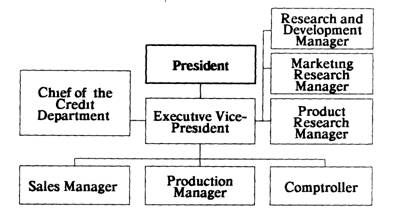
What line and staff positions can you discern? Speak about the organizational structure of this enterprise.
TEXT 5
PRESCRIPTION FOR A SUCCESSFUL RESUME
Don't be vague, and be sure to customise your resume for each employer. The inability to do this online accounts for some of the low return rate online applications. Anytime you try to do a "one size fits all" approach (by agency, computer, or just passing a resume around an organisation courtesy of a friend) you lose the all-important opportunity to craft the resume to fit a particular position.
Don't be long-winded. Be pithy and keep it to one (preferably) or two pages unless you want a job in academia, research or the arts.
Don't confuse a resume and a curriculum vitae. The latter is for employers who will want to know all about what you've studied, taught, written, researched, exhibited. Resume readers want a quick summary of what you've done with just enough detail to let them know the depth of your skills. The rest they'll find out in the interview. If you drown them in verbiage, you'll never get to the interview.
Students and recent graduates: put your education up top and include relevant courses.
Find out which skills the employer is seeking and be sure to showcase them. If you're short on actual job experience, include a HIGHLIGHTS or SKILLS SUMMARY section to "editorialise" about yourself a little.
Be clear about what you want. If you intend to be both a full-time student and a full-time employee, it might be a turnoff for some employers.
Use verb phrases - "conceived campaign for student elections", "created online student newspaper", "initiated weekly meetings for minority students", "lead charity drive" -- not sentences; this is not an essay or an obituary you're writing.
Use dates to show when you did things, not just the vague "one year".
NEVER overlook spelling errors or typos. That's a one-way trip to the circular file. Check and recheck. Typos and spelling errors usually occur when you try to do something at the last minute. So leave enough time!
For new graduates without much work experience, have an "EXPERIENCE" section rather than one called "EMPLOYMENT," because you can include traineeships, class projects and independent study under the former, but not the latter.
Tailor the objective to a given position or leave it out altogether. Objectives are helpful when you're trying to show the relationship between your skills and a particular position, but they merely annoy when they say inane things like "a challenging position suited to my education and skills." What position? What skills? Resume readers will give yours, on average, seven seconds; don't make them cranky with filler.
We had an entry from a poet. Poets don't write resumes, they write and rewrite poems, enter contests, and try to sell them. Better to start there.
VШ. Прочитайте и переведите текст «Interview guide, or how to impress recruiters for higher paying jobs». Составьте и разыграйте на практическом занятии диалог между работодателем и претендентом на должность.
TEXT 6
INTERVIEW GUIDE
You must prepare for an interview!
The job interview is where you can assess a company and it is where you have to sell yourself and your skills. This requires the use of an effective job interview technique.
Our interview guide, The Master Interviewer, takes you from job interview preparation to the follow-up. The guide has been written by human resource professionals. Below are some quick job interview tips that show you how to interview in an astute and effective manner.
Your goal in an interview: The interview is your chance to communicate your ability and skills directly to the potential employer. An interview is an opportunity for both parties to get to know each other and to determine if there is potential for a match. Because interviewing is a skill, anyone can learn to interview effectively. Most people find interviewing to be a terrifying prospect. Remember that the key to a successful interview is preparation and careful listening.
Before the Interview: Make sure your hair is neat - get a haircut if possible. Dress in conservative business attire, composed of a dark suit, polished shoes, white shirt or blouse, and, for men, a conservative tie. All clothes should be neat clean and pressed. Avoid excessive jewelry, makeup, cologne or perfume.
Learn pertinent facts about the company such as annual sales revenue, principal lines of business and locations. Know yourself and know your resume and be able to easily provide examples of your selling points, skills, values, and strengths.
During the interview, sit up straight in the chair or lean forward slightly and DO NOT slouch! Establish yourself as a self confident and assertive person without being confrontational, cocky or aggressive. Remember to be yourself but to also present a professional, polished version of yourself.
Answer job interview questions directly. Be confident without being arrogant. At the same time, admit to your weaknesses if they are brought up, but do not bring them up. Instead, concentrate on your strengths. Demonstrate energy, determination, enthusiasm, motivation and passion for your work.
Prove that you are genuinely interested in the company by showing that you have researched the organization. You should always ask the interviewer a few good questions.
Answering interview questions: answer tough interview questions honestly and completely - but be wary. Do not dwell on negatives and you should avoid mentioning them. Sell yourself on your true capabilities and qualifications without exaggerating your abilities. If you are asked a technical question and you do not know the answer, do not bluff. If your bluff fails, your candidacy will be seriously threatened. Instead, say "I do not know the answer, but if I were to venture an educated guess I would say...". Never speak negatively about another person or company.
The Master Interviewer contains a complete list of questions to prepare for including some of the most difficult questions you can be asked and the appropriate responses.
The questions that you ask are just as critical as the responses that you give. Asking thoughtful questions demonstrates your intelligence, common sense and your interest in the position to the posing good questions to an interviewer, you will gain additional useful information about the opportunity.
Concentrate on the broad view of the company and on specific details about the position at hand. Focus on four areas during your job interview: the company, the job opportunity, the interviewer and the closing. The Master Interviewer gives specific and insightful questions you can ask in each of these four areas.
After the Interview: keep them interested. After the interview, you should send a short thank you letter to refresh the employer's memory of your candidacy and to reaffirm your interest in the position.
Allow the employer five to ten days to contact you after receiving your letter. If you still have not heard from an employer, you should follow up with a phone call.
Practice interviewing. Have a friend ask you questions that you may encounter during an interview. If you have a VCR, videotape your mock interview and try and identify any of your negative factors, traits, habits, and actions. The Master Interviewer, contains a full list of these negative factors evaluated by an interviewer that you should look to avoid.
Important Do's and Don'ts:
The Master Interviewer contains a more complete list, but these are some of the most important ones.
DO
Arrive 10 minutes early.
Greet the interviewer with a warm, confident "Hello" and a firm handshake.
Be well rested.
Dress and groom yourself with perfection (Appropriate business attire, make-up, deodorant).
Maintain good posture.
Emphasize positive things about yourself.
DO NOT
Bring a friend or relative with you.
Arrive late.
Ask about the salary unless the interviewer brings it up.
Speak negatively about a former employer or past co-workers.
Smoke, even if the interviewer does and offers you a cigarette. Do not chew gum.
Answer with a simple "yes" or "no." Explain whenever possible. Describe those things about yourself that relate to the situation.
The Master Interviewer will ask you, How much stress can you manage? And then will put it all in perspective. The high point of any job search campaign is landing the job interview. However, the job interview can also be a very stressful situation. Will you say the right thing? Will you look appropriate? Will the interviewer like you and be impressed with your qualifications? Will you trip over your own two feet walking in the door?
Effective interviewing is a skill, not an art. You can gain that skill. It takes research, alertness and practice to be effective in an interview. The job interview is too important to do a mediocre job. Be prepared!
Литература:
1. FUNDAMENTALS OF ENTREPRENEURSHIP
AND MANAGEMENT – “English”, еженедельная газета издательского дома «Первое сентября», №14, 2002
2. THE DIFFERENCE BETWEEN AN ENTREPRENEUR AND A MANAGER - “English”, еженедельная газета издательского дома «Первое сентября», №14, 2002
3. WHAT IS A MANAGER? – “Учебник английского языка для делового общения”: 2-ое изд., т.6/ и др. – М.: AVERS, 1994.- стр.96
4. DEFINITION OF A MANAGER – http://www. labour. gov. bc. ca
5. MARKETING MANAGEMENT – “Учебник английского языка для делового общения”: 2-ое изд., т.6/ и др. – М.: AVERS, 1994.- стр.86
6. LINE AND STAFF POSITIONS - “English”, еженедельная газета издательского дома «Первое сентября», №14, 2002
h. PRESCRIPTION FOR A SUCCESSFUL RESUME – http://resume. . au
i. INTERVIEW GUIDE – http://www.
