


Партнерка на США и Канаду по недвижимости, выплаты в крипто
- 30% recurring commission
- Выплаты в USDT
- Вывод каждую неделю
- Комиссия до 5 лет за каждого referral
Type | Age, months | Mature cow | ||||
3-4 | 5-8 | 9-12 | 13-15 | 16-24 | ||
in/animal | ||||||
Self feeder Hay or silage Mixed ration or grain Once-a-day feeding Hay, silage, or ration | 4 12 12 | 4 12 18 | 5 15 22 | 6 18 26 | 6 18 26 | 6 18 26-30 |
Cold housing
Cold housing is the recommended system for raising replacement animals. Cold housing building systems provide a dry and draft-free environment in winter, and wind ventilation and shade in summer. The building is usually uninsulated and has natural ventilation designed as an integral part of the building. Indoor temperature follows outside temperature very closely.
Advantages of a cold housing are:
Ø Less expensive to build.
Ø Less expensive to ventilate and heat.
Ø Better disease control.
Ø During cold weather, disadvantages of a cold housing are:
Ø Freezing can make manure handling difficult.
Ø Waterers must be protected from freezing.
Ø Frostbite of calves ears may be a problem.
Ø Increased feed required to maintain body heat.
Warm housing
A warm housing system is less desirable for raising replacements. Typically environmentally controlled systems are improperly managed resulting in health and growth problems. The buildings are typically insulated heavily and a controlled mechanical ventilation system delivers fresh outside air. Properly designed inlets allow fresh outside air to be evenly distributed throughout the entire structure.
Design mechanical ventilation systems in calf barns to provide minimum continuous exchange of air, Table 7. Because the number of calves and young heifers in a facility vary, design mechanical ventilation systems for a range of stocking rates.
Calf housing (up to weaning)
Calves and young heifers are very susceptible to respiratory illness and other diseases. Keep calves less than two months old in clean, dry, draft-free facilities with adequate space, bedding and fresh air. Separate calves to reduce disease transfer from nose-to-nose contact. Separate calf groups from older animals to minimize exposure to disease organisms. Keep calves in individual pens in an enclosed building or individual hutches until weaning. After weaning they can be moved to small group pens.
Hutches in Cold Housing
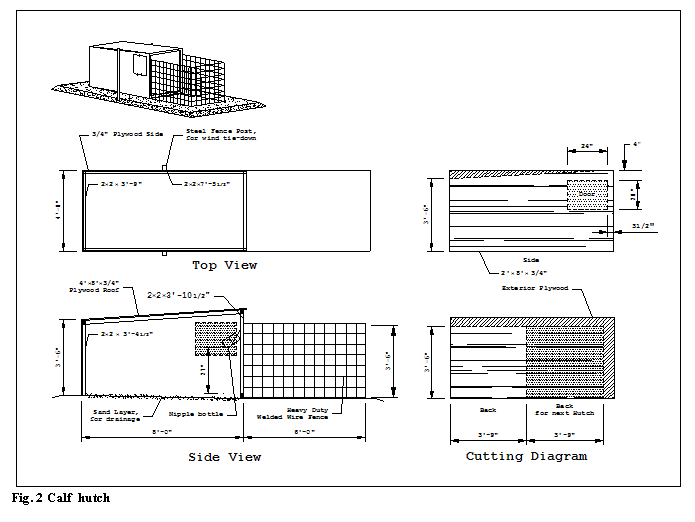 |
Calf hutches have proven to be an excellent way to house calves. Only one calf occupies each hutch. Typical hutches are 4'x8'x 4'. Fig 2 illustrates plywood construction. Leave one end of the hutch open and provide a wire fence enclosure so the calf can move outside. Optional tethers can be used where predators are not a problem. Seal tightly all other sections of the hutch, except for the front and bottom, to reduce the wind blowing through the hutch in winter. During summer, the rear of the hutch can be blocked up 6" to allow for cross ventilation or design an opening in the rear of the hutch with a tight fitting door.
There are also a variety of prefabricated plastic/fiberglass hutches on the market. Hutches made of a translucent material require shade in summer. Summer shade reduces heat stress on all types of hutches. Provide enough shade to allow hutches to be moved.
Hutch management
 Face hutch fronts south or east to provide draft protection during winter and sun exposure during the day. Provide enough hutches to allow a minimum of two weeks resting period after a calf is removed. Locate hutches on a well drained area. Crushed rock or sand base provide a solid base for bedding and lessen the possibility the hutch will freeze to the ground in winter. After removing the calf, move the hutch to a clean site to break disease cycles. Use enough bedding to keep calves clean and dry and to insulate calves from the ground. To provide operator comfort, hutches may be placed inside a well ventilated shed or structure, in effect providing a cold housing environment in winter and shade in the summer, Fig 3.
Individual Pen in Cold Housing
Individual calf pens, Fig 4, can be used inside a cold housing building. Pens are typically 4'x7' and removable. They provide isolation for each calf. Solid partitions between pens and beyond the front of the pen prevent nose-to-nose contact. A hover or cover on the back half of the pen gives the calf additional protection in especially drafty locations. Pens use building space more efficiently than do calf hutches, although increasing animal density increases ventilation requirements. Place pens on a crushed rock base or concrete floor to provide a base for bedding. Individual pens require the same type of management as calf hutches.
Individual Stall in Warm Housing
Use individual 2'x4' stalls only in warm housing. This system requires the least space per calf, but must be used in insulated, environmentally controlled buildings with mechanical ventilation and supplemental heat.
 |
Drafts, which occur in elevated stalls with open floors for drainage, are detrimental to calf health. The incidence of calf disorders increases in warm housing facilities after several years, due in part to warm temperatures. Warm temperatures increase viability of disease organisms. The facility must be adequately ventilated and sanitized on a routine basis. Good ventilation, proper sanitation and careful observation of calves are especially essential in warm housing systems to reduce disease.
Table 7. Dairy ventilating rates. Size the system based on total building capacity.
Ventilating rates | |||
Animal | Cold Weather[8] | Mild Weather | Hot weather |
cfm/animal | |||
Calves 0-2 months Heifers 2-12 months 12-24 months Cow 1,400 lb | 15 20 30 50 | 50 60 80 170 | 100 130 180 470 |
Room | Cfm | ||
Milkroom Milking parlor, cfm/stall | — — | — 100 | 600 400 |
Transition housing (3-5 months)
Moving a newly weaned calf from an individual pen to a small group environment is an abrupt change or transition. The combination of stresses due to new social interactions with other calves, competition for feed and water, and a new housing system can seriously affect calf growth and performance.
Giving special consideration to the calf's environment can make this transition less stressful as the calf adjusts to group living and learns to compete. Monitor calves for adequate dry feed and water intake and make sure calves are disease free before moving them into a group pen.
Provide transition housing for calves from weaning to 5 months of age. Maintain small groups of 4-5 calves per group with a small range in size or age (I month maximum). Provide  well bedded pens that allow 25-30 ft2 of resting space per calf. Have fresh water available at all times. Transition housing should provide an environment similar to calf hutches only in a group setting. Depending on herd size and the ability to observe an individual calf, the maximum group size would be 20 calves.
 Calf Shelter or Super Hutch
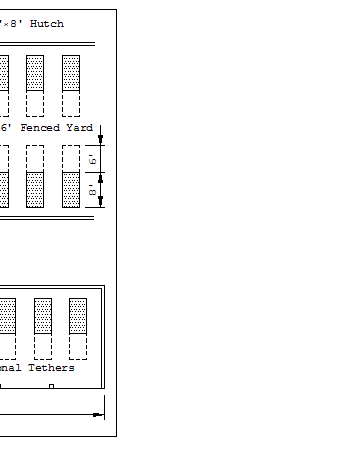
Portable shelters or super hutches can provide transition housing for calves from cold housing. A super calf hutch is designed for up to six calves, Fig 5. An optional paved lot and addition of a fenced area can be used with the super hutches, Fig 6. Keep the shelter well bedded and alternate the hutch site between groups of calves. In a pasture system the super hutch can be rotated on the pasture, Fig 7. Waterers can be centrally located or moved with the hutch site.
 Transition Barn
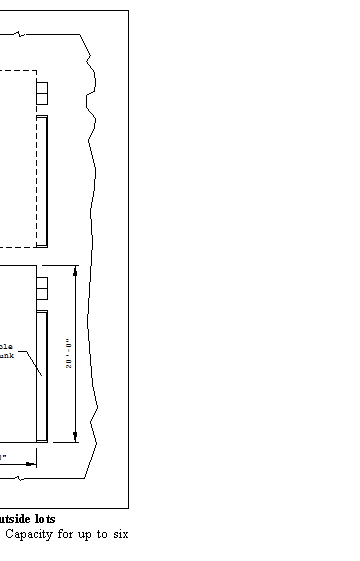
For herds greater than 100 milking cows, a series of 10'x24' pens can be used in a «transition barn» for calves up to six months old, Fig 8. Capacity for this arrangement is six animals if the feed alley is scraped and eight animals if the entire pen is bedded.
Transition barns commonly have a 3:12 single slope roof with no insulation. The barns should open to the south or east to take advantage of the sunlight. The eave in the back wall is open to aid in moisture control in the winter. During summer remove fabric or other coverings on the back and endwalls for natural ventilation. Extend both ends of the barn 4' beyond the pen fronts to minimize wind effects at the corners of the barn during cold weather. Locate waterers in the feed manger line to minimize splashed water in the bedded area.
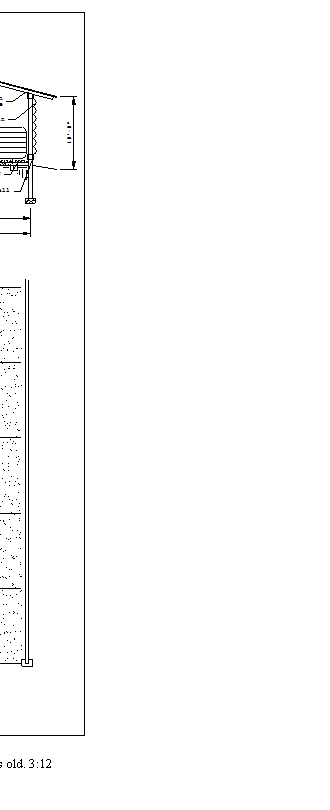 To minimize excessive drafts in long barns, attach plywood to gates and hang fabric from the underside of the roof down to the gate between alternate pens. During cold weather, place straw bales along the bottom edge of the gates to stop drafts. Remove bales during warm weather.
Calf Barn
Calf barns combine individual pens, Fig 4, and transition group pens for calves into one building design, Fig 9. A full open sidewall with curtain provides cross ventilation in summer and draft protection in the winter. The upper half of the building can be a pivot door or curtain for draft protection in winter. The lower part of the wall can have removable panels for better summer ventilation. Air movement through the building should be sufficient to maintain inside temperature only slightly above outside temperature in the winter and slightly below outside temperature in summer.
Use solid partitions between calves to prevent nose to nose contact. Wire fences on fronts and backs of pens allow better air circulation during warm weather, but arrange pens to keep calves from contacting each other. In winter, use solid pen backs to provide draft protection. Hovers may be needed in winter. Choose or construct pens that are easily dismantled for manure removal.
 Heifer housing (6-24 months)
There are several options for housing heifers after transition housing. Regardless of housing type, group animals according to a management plan considering nutritional, health and reproductive needs of each group. At a minimum, a logical break in grouping is a breeding age group and a bred heifer group.
The primary functions of heifer housing are to:
Ø Minimize animal handling for treatment.
Ø Allow for animal breeding.
Ø Allow for animal observation.
Even though heifers can tolerate more stress as they grow older, they still must be protected from wet conditions, drafts, and poor environment. In open front housing, provide group pens of sufficient depth to protect heifers from winter winds. Solid pen partitions help reduce drafts.
Freestall Housing
Young heifers are grouped in freestall housing with stalls sized according to age or size of heifer, Table 4. Freestall housing requires considerably less bedding than bedded pack housing. Frequent manure removal is required (once or twice a week), unless floors are slotted. Frozen manure can be a problem in cold barns, but is manageable.
There are several different layouts that can be used in freestall housing. Each alternative is suited to particular feeding and manure handling situations. Each alternative has adequate feedbunk space, Table 6. Freestalls can be inside with outside lots for exercise and feeding. The trend is having freestalls and feeding included under the building roof or confined area. Outside exercise lots may still be provided for use during periods of good weather.
 |
Two-row freestall barn
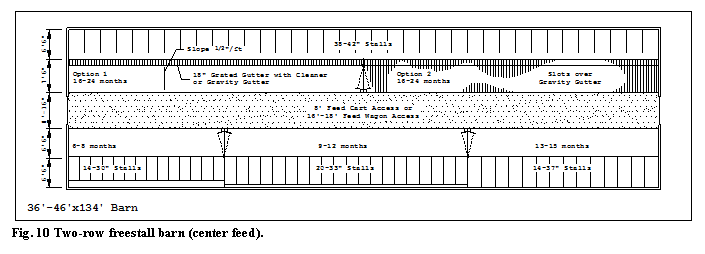
Two-row freestall barns are typically used for up to 100 heifers, Fig 10. Freestall length for each group in Table 4 is sized to provide maximum comfort for the size of animal in the group. Heifers are grouped in pens around the perimeter of the building.
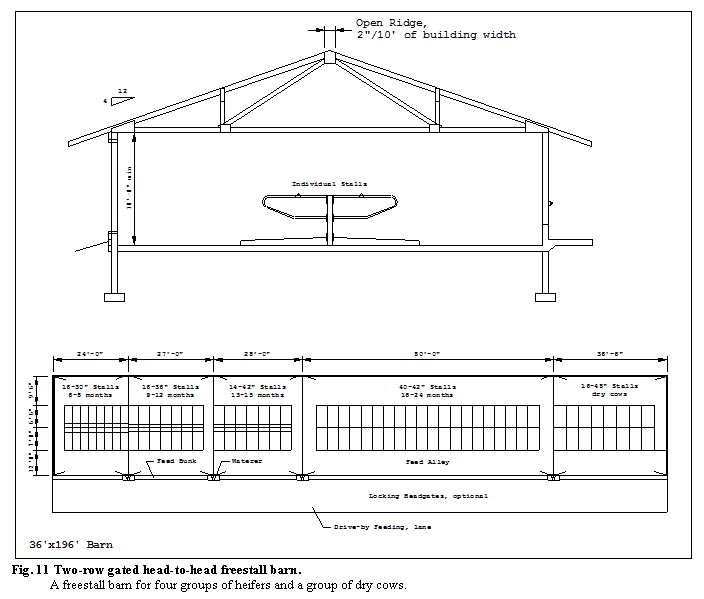 |
Manure is either scraped automatically, the alley is slotted or flushed, because it is not possible to move animals during tractor scraping. When animals have access to outside runs, tractor scraping can be accomplished. Build an 8' alley when a feed cart is used. For drive-through feeding, a 16'-18' alley is required.
Two-row graduated freestall barn
A two-row graduated freestall barn changes the length of the freestall in the pen by placing the curb at an angle to the side of the building. Stalls at one end of the building are shorter than at the other end of the building. The alley floor is sloped toward the freestall where a grated gutter is used to remove manure. The floor slope provides a self-cleaning floor. Stalls are bedded with chopped bedding to allow movement of the manure and bedding through the grate. Gravity gutter, flush gutter or barn cleaner can be used to remove manure. Building temperatures must remain above freezing most of the time to prevent frozen manure in gutters. This type of building requires a controlled natural ventilation system.
 |
Two-row gated freestall
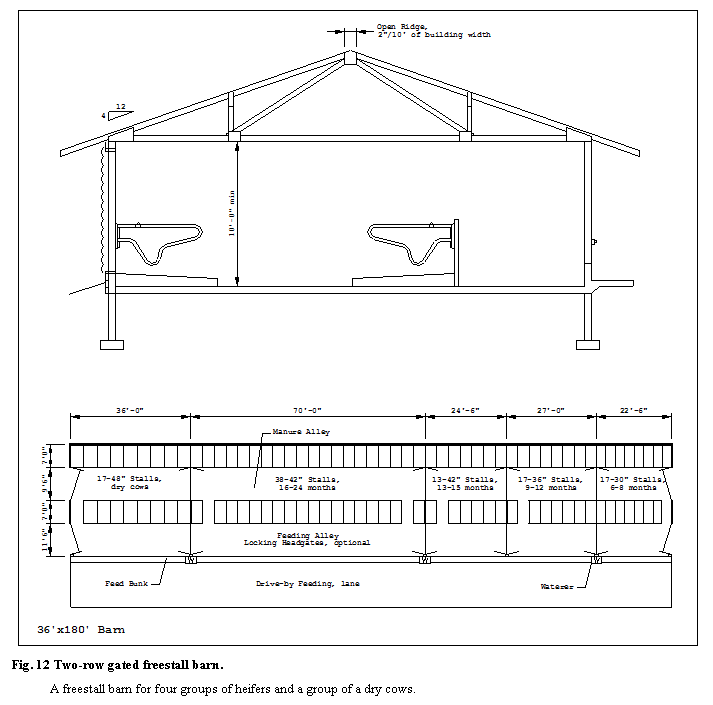
A two-row gated freestall barn can provide good housing, Fig 11. Two rows of freestalls along one side of a single bunk, all under roof, provides flexibility in feeding system design. Depending on the particular layout, feeding may be accomplished with a feed cart, mechanical bunk or mobile scale mixer. In three-row barns, there is limited bunk space; when feed is always available, competition for feed can be managed.
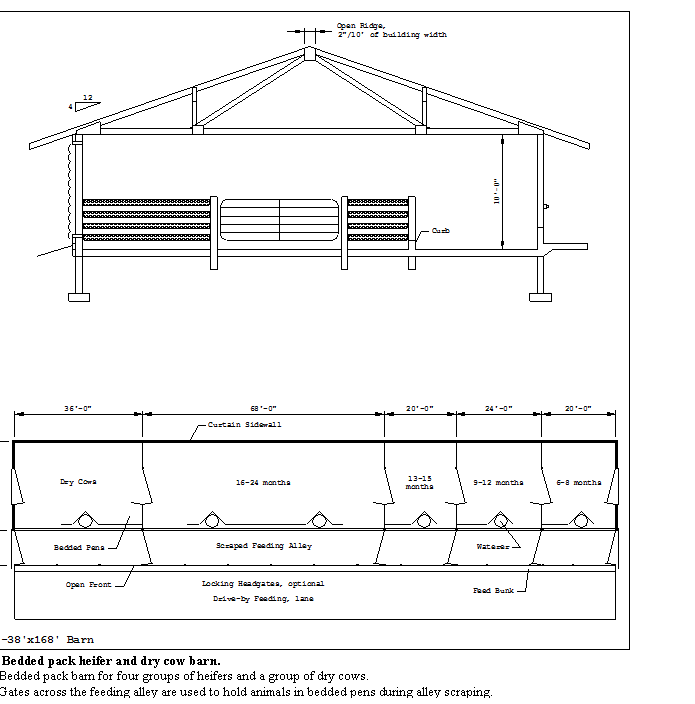 Two-row gated freestalls with optional outside exercise lots, can be used in good weather, Fig 12. Manure in the gated freestall system is easily removed by a tractor-mounted scraper. Cows are fenced in one alley while the other alley is cleaned. When the feed bunk is located on the south or east side in a cold barn, the bunk side of the building may be left open. In warm housing, 4"-8" wide slats are an alternative for manure handling. Slats could be placed over gravity channels to separate manure from animals.
Drive-through gated freestall
Gated freestall barns can be expanded for larger herds by using a common center feed alley. Stall rows are located on both sides of the feed alley. Feeding can be accomplished with drive-through feeding alleys sized for a feed wagon or feed cart.
Bedded Pack
Bedded pack housing is commonly used in conjunction with an outside feeding and exercise area, Fig 13. However, there are advantages of roofing the entire area including the scrape and feeding alley. Provide enough space for each group of animals in the bedded resting area, Table 3. The bedded area is roofed and provides a warm, draft-free resting surface. Bedded pack barns are often sized to allow installation of a scrape alley and freestalls at a later date.
Macadam or crushed rock surface can be used under the resting area pack. If concrete is used, provide drainage by sloping to the scraped manure alley. Add bedding to the upper end of the resting area pack as needed. Remove manure and bedding as a solid 2-4 times a year. A substantial amount of bedding is required to keep animals clean and dry.
Paved feeding alleys are typically scraped 2-3 times per week. Extending the roof over this area reduces runoff. To provide for a system with an outside lot, the feeding alley is extended away from the building and is generally not *****noff must be controlled to prevent surface water and groundwater contamination.
Outside drive-by feeding can be done or the feed platform can be roofed under the same building when a scrape alley is used. The bunk can be roofed separately when an outside lot is used. Bunk space may be limited in this type of housing so feed should be available at all times to limit competition.
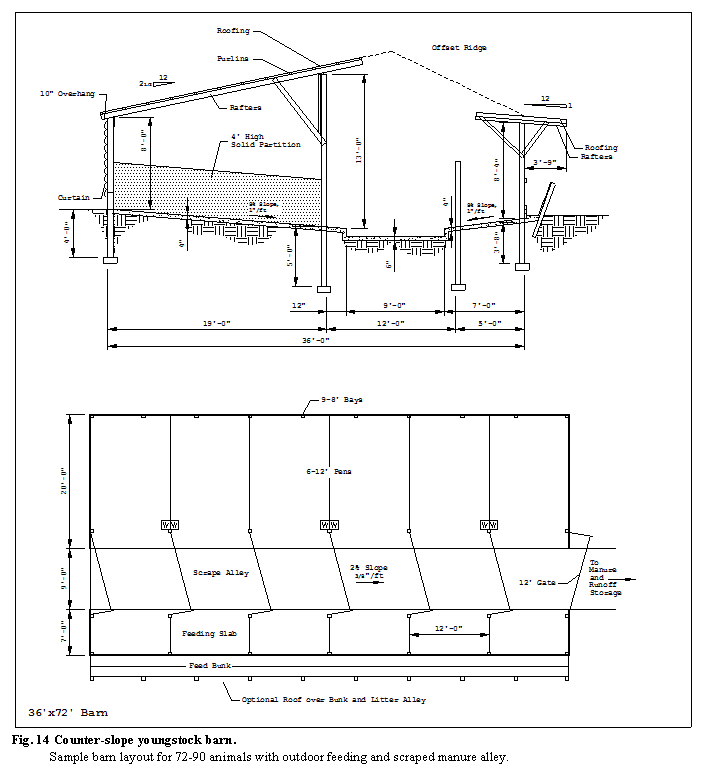
Counter-sloped barn
The counter-sloped barn, a relatively low cost facility, is based on a sloped resting and feeding floor separated by a tractor scraped alley, Fig 14. The resting floor and feeding floor are sloped 8% (l"/ft) toward the center scrape alley and are self-cleaning. Size the resting area of the pens to allow for a self-cleaning resting area. Table 3.
Runoff from uncovered alleys must be controlled to prevent stream and groundwater pollution. The building can also be designed to be completely under roof to control water entry. This system is not recommended for heifers younger than six months or bred heifers during the last three months of pregnancy because of bedding and the larger group sizes.
 |
Optional outside lots
Optional outside lots can sometimes be incorporated into building design when desired. Outside lots can help reduce manure accumulation in the building, but must be cleaned and managed properly. Outside lots may be of some benefit in reducing foot and leg problems in dry cows. Pasture is sometimes used as part of the feed ration. Animal density is low to allow the pasture to recover after grazing. Pasture can be rotated to provide rest and recovery of vegetation. Pasture that is too heavily grazed becomes a dirt lot over time and can cause problems when not managed properly.
Dirt exercise lots tend to have a high animal density and typically have little or no vegetative cover. They become muddy in wet weather and can cause environmental mastitis in heifers before they enter the milking herd. Use dirt lots only when weather permits.
Concrete paved exercise lots can be incorporated into building designs either as an exercise area or an integral part of the building *****noff from lots must be controlled and handled as part of the manure handling and storage system. Additional labor is required to scrape lots and dispose of manure. Consider the cost of a runoff control system in the total system cost. Also consider water quality issues in the overall design of the housing option.
По мере того как подрастает ремонтный молодняк, изменяются его потребности. Под этим подразумевается необходимые изменения в среде обитания животного. Когда телки подрастают, они изолируются от других животных для уменьшения риска заболевания. По мере того как телка растет, она группируется с другими животными, чтобы повысить сопротивляемость болезням и подготовить животного к введению в стадо. В конечном счете, животное вводится в стадо, а затем и в дойное стадо.
Каждый из этих этапов требует строго соответствия жилья физическим потребностям животного.
Факторы управления. Воздействие на проект.
Помещения ремонтных животных размещаются в отдельных объектах, изолированно от дойных стад, чтобы способствовать здоровой среде для каждой группы. Хорошо разработанное и правильно управляемое помещение для ремонтного животного позволяет применить наилучшую практику управления, в настоящее время рекомендуемую. Проектируйте пространство, оборудование, окружающую среду, продовольствие, и старайтесь удовлетворить потребности каждой группы. Управляйте ремонтом в группах согласно их специфическим требованиям. Проект объекта должен предусмотреть наиболее простое воплощение плана управления для каждой группы. При проектировании помещения для ремонтных животных, обеспечьте:
Ø Требуемый отдых и выгульную площадку.
Ø Покрытую, сухую и проветриваемую область отдыха.
Ø Хороший и свежий воздух.
Ø Необходимое пространство для кормления и поения.
Ø Пространство для группировки животных по размерам или возрастным признакам.
Ø Чистые участки для поддержки соответствующих санитарных условий.
Ø Помещения для изоляции больных животных.
Ø Помещения для осмотра животных.
Ø Средства обработки.
Ø Пространство для обработки и ограничения животных.
Плохо запланированное или неправильно управляемое помещение для животных увеличивает риск заболеваний или травм. Высокая влажность особенно вредна для здоровья животного. Пневмония, понос и другие болезни могут постоянно травмировать жизненно важные органы и уменьшать потенциальную молочную продуктивность животного. Телята и нетели находящиеся в неблагоприятной окружающей среде, никогда не смогут достигнуть их полного генетического потенциала молочной продуктивности.
Средства управления
Для здорового, высокопродуктивного ремонтного молодняка, обеспечивают помещение высокого качества и план управления, который обеспечивает потребности животных. Хорошее управление, понимание производимых операций и последовательное их воплощение по графику, является важным ключом к успеху любой системы размещения. Санитария, обслуживание стойла, подстилка, управление вентиляцией, кормление, оздоровление стада, обработка, тщательное наблюдение являются крайне важными методами управления. Молодым животным может понадобиться подготовка и/или время, чтобы привыкнуть к использованию боксов. Ежедневные или обычные хозяйственные работы, такие как, например кормление, обслуживание стойла или удаление навоза должно быть сделано по возможности удобным, чтобы убедиться, что они были выполнены качественно и своевременно.
Размеры и структура стада.
В стадо может входить любое количество дойных или стельных коров, как сухостойных, так и дойных. В этом руководстве, размер стада определяется числом взрослого скота.
Типичная структура стада, принимая во внимание постоянный круглогодичный отел, дана в Таблице 1. Числа в таблице не отражают определенного состава нетелей или телят. Используйте эту таблицу, чтобы определить помещение, необходимое для каждой группы управления. Обеспечьте:
Ø Размещение теленка (0-2 месяца).
Ø Переходное помещение (3-5 месяцев).
Ø Размещение нетелей:
ü 6-8 месяцев
ü 9-12 месяцев
ü 13-15 месяцев (возраст размножения)
ü 16-24 месяцев
Таблица 1. Типичные категории управления стадом.[9]
Эта таблица указывает лишь общее направление управления. Она указывает лишь категории, а не конкретные размеры групп.
Размер стада = общее количество коров | 75 | 100 | 250 | 400 |
Телята и нетели 0-2 месяцев, 68 кг 3-5 месяцев, 113 кг 6-8 месяцев, 181 кг 9-12 месяцев, 272 кг 13-15 месяцев, 363 кг 16-24 месяцев, 454 кг | 75 6 9 9 14 9 29 | 100 8 12 12 18 12 38 | 250 20 30 30 45 30 95 | 400 32 48 48 72 48 152 |
Сухостойные коровы Переход (первые 4-14 дней) Последующие 40 дней (Делите на 2 группы) Стельные коровы (2-3 предродовых недели) | 13 0-4 8-9 2-5 | 17 1-5 11-12 3-6 | 43 4-9 28-30 8-15 | 68 5-16 45-48 16-24 |
Материнство (Индивидуальные загоны) | 3-5 | 4-6 | 10-16 | 16-24 |
Отелившиеся коровы (из 0-7 послеродовых дней) | 1-3 | 1-4 | 3-10 | 4-12 |
Двухлетки (305 дней)[10] | 18-24 | 26-30 | 65-75 | 104-120 |
Трехлетние и старше (305 дней) 10 Элитные производители (120 дней и менее) Средние производители Плохие производители | 44 15-18 12-15 12-15 | 58 20-24 16-20 16-20 | 145 50-60 40-50 40-50 | 232 80-96 60-72 60-72 |
Больные коровы | 0-4 | 0-5 | 0-13 | 0-20 |
Число ремонтных животных, которые будут размещены, зависит от числа дойных коров и разводимых телок. По мере того как размер стада увеличивается, тоже происходит с количеством ремонтного молодняка. Увеличение размера стада без расширения средств для его ремонта, в результате уплотнения может привести к увеличению количества травм, передачи болезни, и снизиться темпы прироста.

|
Из за большого объема этот материал размещен на нескольких страницах:
1 2 3 |
