



DANCE FESTIVAL IN CATALONIA
Festival de Danza de Cataluña/ “DANCE FESTIVAL IN CATALONIA”- is a choreographic contest of international scale, it is evaluated by competent international jury. Participants of the Festival receive awards from the state of Spain, different cultural funds and the organizers of the contest. After the contest competent jury certainly conduct “blame storming”. This contest gives possibility to young artists to put their dreams into reality, to show other people their abilities. That is why this festival organized by us is a big creative laboratory for children and teenagers. International Festival-Contest Festival de Danza de Cataluña/ “DANCE FESTIVAL IN CATALONIA” in the Kingdom of Spain is a cultural event that introduces creative works of choreographic groups. The main purpose of the Festival is a demonstration of art to audience and also exchange of experience among directors of groups.
 SENSATION!
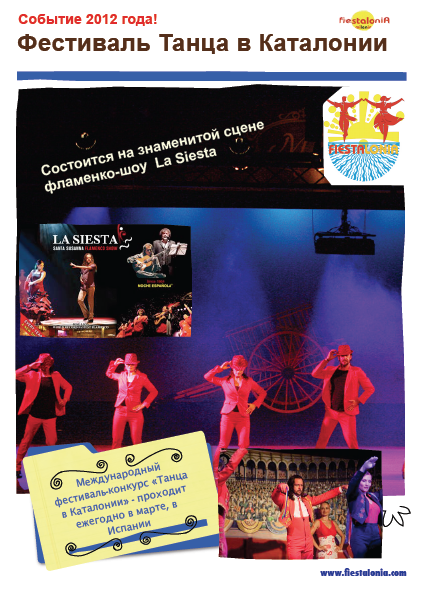
In March 2013 the DANCE FESTIVAL IN CATALONIA on a famous stage La Siesta. Since 1960 and currently La Siesta is considered to be one of the best dance-halls in Spain. The festival will be opened by tenor Sam and a famous flamenco dancer Jose Leon who holds the world record for the fastest flamenco dancer. He has never been beaten since 1967 and 1989 for the amount of steps with his feet in one second and one minute.
The advantage of our festivals is that we choose the best European stages to hold them. The groups have an opportunity to show themselves, their achievements, skills and talent to the audience. Co-founders of our festivals are always state organizations that render comprehensive support in organization of international festivals. These are not only performances, competitions and rewards, but first of all, we try to make a program of sojourn in a country very interesting and cognitive. For the participants of the festival and their escort cognitive excursions, intellectual games, carnivals, technical views, master-classes and entertainment programs are provided. We acquaint the participants of the festival with history, give an opportunity to find something new and unexplored.
DATES:
23-30 March 2013
22-29 March 2014
SPAIN
POSTER:
SOUNDTRACK:
BROCHURES::
SCENE
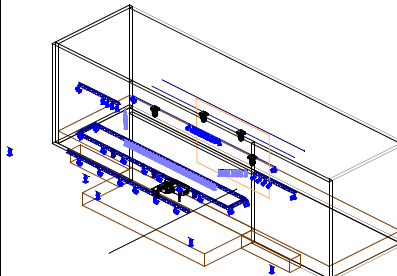
14 m. X 7 m.
12 m. X 4,5 m.
WE INVITE DANCERS ON SUCH GENRES AS::
 Classic dance, ballet
Modern choreography (Jazz, Modern, Neo-Classic, Hip-Hop, Disco, Techno, Street, Electric Boogie, Break Dance, Pop Locking and other street dance styles)
Folk choreography
Theatres of Dance
Ballet choreography (ensembles and shows)
Oriental Dance
Flamenco
Mix choreography
INFORMATION SUPPORT:
▪ The festival is announced in Spanish newspapers, on radio and television;
▪ Interview with teachers;
▪ The results of the festival will be published in Spanish, Italian, French, Russian, Ukrainian, Bulgarian, Kazakh and other Media;
▪ Interview with teachers.
Sponsors of participants have an opportunity of special advertising campaign (e-mail us to get more information: *****@***com)
AIMS AND TASKS:
▪ To support creative initiatives those have particular cultural and social importance for society.
During the competitions we create favorable psychological atmosphere – the atmosphere of joy, comfort, friendship and popularization of healthy lifestyle.
▪ To strengthen mutual understanding and friendship between children and youth from around the world.
▪ To support and develop amateur art of children and youth.
▪ To share experience and art achievements of creative groups from around the world.
▪ To raise the professional level of teachers.
▪ To develop interethnic, interregional and international relations in the field of arts.
▪ To create the atmosphere of unforgettable art holiday.
ORGANIZATIONAL AND TECHNICAL DEMANDS:
▪ Each team must present 2 competitive dances 2-5 minutes in length each. Each soloist - one composition up to 4 minutes in length.
▪ All compositions must be burnt on CD media. Providing each backing track on an individual CD disc is obligatory. Reserve tracks on flash are welcomed.
▪ You should indicate in the application whether it is necessary to split turns or the work will be done in one block.
▪ It is obligatory to indicate soloists, duos and small groups of three to five people in the application.
JURY:
Cultural workers of Spain, France, Italy, the USA, Canada, Russia and other countries serve the jury of the Festival. Organizers of the festival form the international jury. Participation in gala concerts for all the participants is not guaranteed, and it is asserted up to results of the previous festival performances up to the decision of the organizing committee and the jury.
▪ SCORING SYSTEM CRITERION:
▪ Performance art- the movements technique;
▪ Dance performance composition;
▪ Theatrical effectiveness (plastique, costume, stage property, performance culture );
▪ Selection and accordance of musical and choreographic material;
▪ Artistry and disclosure of artistic image.
CATEGORIES:
▪ Classical dance
▪ Modern choreography- pop choreography, sports choreography (Hip-Hop, Disco, Techno, Street, Electric Boogie, Pop Locking and other street dance styles)
▪ Folk choreography
▪ Oriental Dance
AGE GROUPS:
▪ 1st – up to 12
▪ 2nd – 13 to 16
▪ 3rd – 16 to 25
▪ 4th – from 25
▪ Mixed groups
*age of the team is determined by the most of participants.
AWARDS:
▪ AWARDS FOR CONTESTANTS:
Professional judges define winners of awards, prizewinners 1, 2, 3 classified and Grand Prix Cup of the festival. Dance groups are awarded with trophies, certificates and memorable prizes from the organizers as well as from the Kingdom of Spain, and a special prize - a fascinating tour of the most beautiful places of Catalonia.
▪ AWARDS FOR TEACHERS:
In addition special prizes for teachers according to the performance level of their groups are possible: “The best Choreography”, “The best Choreographer of the Festival”, “The best Teacher “, “Award to the National Cultural Traditions preservation” and “Award to Help and Assistance during the Festival”. Choreographers who won previously mentioned degrees fromFiestalonia Milenio and those who desire to hold master-classes will get special certificate fromInternational Dance Council underUNESCO.
PRICES:
▪ Accommodation in a room for 3 is 390 euro per person – extra day is 40 euro per person
▪ Accommodation in a double standard is 435 euro per person - extra day is 65 euro per person
▪ Accommodation in a single standard is 500 euro per person - extra day is 78 euro per person
▪ Extra payment for soloists is 50 euro
▪ Extra payment for duos is 40 euro per duos
▪ Extra payment for small groups of 3 to 5 people is 30 euro per group
▪ Extra payment for those who participate in two categories is 10 euro per person (is paid on the spot while register).
FOR TEACHERS:
If there are more than 25 people in group, accommodation, transfers and full board and lodging for a teacher is paid by the organizers of the contest!
WITHIN THE PACKAGE:
▪ Accommodation in no less than three-star hotel
▪ Half board (breakfast and dinner)
▪ Accommodation in double room for teachers does not require extra payment
▪ Transfer: Barcelona - Lloret de Mar (Costa Brava)- Borispol Airport
▪ *an excursion to walled city Tossa de Mar for groups of more than 50 individuals is free
▪ Procession through the city
▪ Certificates registered in representatives of Spain.
▪ Special metal-based certificates from the city’s authority.
▪ Thank- you - letters for teachers and sponsors on State numbering Stamped paper of the Kingdom of Spain.
▪ Every 25th person in a group is free of charge.
▪ Festival’s taking;
▪ Entertainment program;
▪ Master - classes on choreography;
*transfer to a place where the festival takes place is paid separately, about 25 euro per person.
STAY PROGRAM:
Day1 Arrival at Barcelona, transfer to Lloret de Mar, hotel accommodation, 13:00- lunch, 20:00-dinner; 21:00- FOR TEACHERS ONLY - a meeting with the organizers of the Festival in lobby. Festival contestants ‘ registration.
Day 2 8:00- breakfast, 9:00- tour program presentation: 13:00- lunch; 14:30- Acquaintance Day. Group’s presentation (a song, dance or staging, you can show your imagination! The aim is to present your city, country, group.). 17:30- rehearsal; 20:00- dinner at hotel.
Day 3 8:00- breakfast, 10:00-departure for the visit of the most picturesque city of Costa Brava - Tossa de Mar (for extra payment). Visit to a medieval walled town of Villa Velia, founded in 17th century. It is noteworthy that people still live in this walled town.) 13:00- lunch; 14:30- a dress rehearsal in a concert hall; 18:00- the beginning of the festival - contest; 20:00- dinner; 22:00- a meeting with the organizers at hotel.
Day 4 8:00- breakfast; 10:00- visit to Barcelona (for extra payment). 13:00- lunch; 18:30- return to the hotel, rehearsal; 2 1:30- dinner. Day 5 8:00- breakfast, 9:00- alternatively, if you prefer a visit to Girona+ Figueres+ Salvador Dali Museum (for extra payment). 13:00- lunch; 16:00- return to the hotel; 18:00- Gala concert - rewarding; 21:00- dinner.
Day 6 8:00- breakfast, 9:00- departure to Montserrat (for extra payment) to visit monastic complex Montserrat, excursion around Montserrat; 19:00- return to the hotel, dinner.
Day 7 8:00- breakfast, 8:00- departure to Carcason (France) if you prefer/or to La Roca for shopping (for extra payment); 13:00- lunch; 20:00- dinner; 21:00- Flamenco-show “La Siesta” with dinner and wine (for extra payment).
Day 8 Breakfast; 07:00- transfer to the airport.
*Attention, the program may be adjusted! * If you can’t go to lunch because of an excursion or a concert, order “Picnic” (ration) the day before on a reception in a hotel.
MORE TOURS:
▪ Barcelona review
▪ Girona + Dali Museum
▪ Montserrat
▪ Tossa de Mar (walled town)/ for groups with more than 50people in this excursion is free!
▪ Carcason (France)
▪ Joust
▪ Siesta with dinner
HOW TO ARRANGE A TRIP:
To arrange a trip to a Festival contact us Our e-mail: *****@***com
Telephone: +34 // +34
And we will refer you to an authorized travel agent in your country
APPLICATION DEADLINE:
▪  Applications are accepted until May 1st.
▪ Payment deadline is May 30th 2012.
TO DOWNLOADAN APPLICATION:

COMPLETED APPLICATIONS SEND TO: *****@***com
TO DOWNLOAD STATUTE:

OUR FESTIVALS HELP TO:
Cultivate tolerance. To direct energies to popularization of peace, friendship, brotherhood and solidarity of the peoples of the world by means of art of dance and music, by means of rich revered folk standards of self-expression and intercourse. Associating by means of imagination and art, the representatives of various nations of the world meet and share the most secret: the works of cultural and artistic expression.
Consolidate the image of their own country, republic or city. Just by means of popularization of culture, skills demonstration, our young artists the world will learn your country, nation and even a small settlement…
Self-discipline. Every festival of ours has its own regulations and program, its own features and level of complexity of scoring system. Deviation from the program without agreement with Organizing Committee is not allowed. Clear communication between the Organizing Committee and the teachers, clear adherence to the rules by all the participants of the festival is required.
Mutual help. You should offer your help to producers and teachers because it is a big festival world and during the festival we all are one, big family regardless of the competition on the stage!
Information value. It is advisable to prepare information booklets about your group, to bring souvenirs typical to your country or city because you will be met by officials and some souvenirs will fall into a special museum of “Fiestalonia”. Be ready for the interview with foreign media!
Motivation. The main idea of our festivals is to give an opportunity to boys and girls (schoolchildren and students of Institutes or Universities) to put their dreams into reality, to show other people their abilities, to demonstrate their skills to audience, to enable teachers to share experience! That is the reason why the festival organized by us is big art laboratories for children and youth. Festival is a cultural event that presents work of various groups of the world!
MORE INFORMATION ON EXCURSIONS:
Barcelona - is a capital of Catalonia, a city, which can’t be forgotten if you have visited it at least once. Various styles and epoch mixed in a diverse and unique architecture of this world famous city. A famous, full of majestic antiquity, Barrio Gotico – a Gothic area is situated in a centre, whose highest point is Barcelona Acropolis, here there is a Cathedral which was erected within six centuries. On the northeast from the Gate of Peace, cleaving an old city, a famous boulevard La Rambla, that absorbed all charm, grandeur and immortality of Barcelona’s soul extends. Here at art school studied Pablo Picasso, Catalans Joan Miro, Bunuel and Antonio Gaudi – a genius architect, who never in his life left his Barcelona, who put his dreams and love, all his life in it, who created truly unique city. … Park Guell, Casa Mila, Palacio Episcopal, El Capricho de Gaudi, La Pedrera, Casa Batllo, balustrades, bowers, all sorts of gratings, fencings, stained-glasses!… After all the Sagrada Familia church – one of the most unbelievable and fantastic structures of the 20th, that has become unofficial symbol of today’s Barcelona. You will never regret the time spent in this city, which is quite often called “the pearl of Catalonia”!
Montserrat as the phenomenon, where nature, culture, self-perception, symbol (Natura, Cultura, Identity, Simbol) are seeking for their unique combination. The whole world of futility is left below. You should only take nutrition, boys with unbroken voice, before their voices change, for a choir accompanied by organ. Every day at noon, the hymn to God’s Mother - a famous in Catalonia psalm “Virolai” (лат. Virolai de Montserrat) sounds in a church, performed by the boys’ choir who study at musical school at monastery «Escolania de Montserrat». Well-known all over the world musical school was founded in the 13th century and is one of the most ancient educational institutions of Europe. The boys’ choir will take part in all solemn liturgies. Organ’s music here is like breath of «dissected» space itself (Montserrat – jagged mountain), forge bellows (organ-pipes) are larynxes and lungs of these speechless towered mountains, that gave their voices to a little man at the keys. He, this small fry, is allowed to voice all this power and not to fall to pride. It is not an easy task to place all power of Nature that was sanctified by God, within the limits of prayers, choirs and religious performances. The first mention of Montserrat monastery is dated 880 year. In the 11th century four small secluded monasteries were there, one of them was devoted to God’s Mother. In 1025 Benedictine Abbey in Romance style was laid here. By 12th century there was a modern architectural ensemble of monastery. During his second travel Christopher Columbus named in honor of Montserrat monastery an island in an archipelago of Lesser Antilles, the British colony now. In 1522 the founder of the Jesuits order Ignacio de Loyola made pilgrimage in Montserrat. In 1592 consecration of a new Cathedral, constructed in style of the Renaissance with the Gothic style elements, was carried out. The Cathedral was notable for its big size, especially if take into account, that it was situated on a rocky precipice. In 1811 the monastery was set on fire and destroyed by Napoleon’s armies. Only the Romance portal of the cathedral and the rests of the Gothic cloister remained from the original buildings of the monastery. Benedictine Abbey was in ruins and desolation. In 1844 monastery restoration, that took about a hundred years, began with Benedictine community and Catalans support. In the 20th century Montserrat became the most tangible symbol of Catalonia and support at a hopeless time in its history. Only inside the cathedral of Montserrat, Masses and weddings in forbidden then Catalan language were held at the time of Franco’s dictatorship. Montserrat monastery keeps national shrine of Catalonia — a statue of God’s Mother with the baby on her laps of the 12th century, which attracted pilgrims from around the world to the monastery. Because of its dark color 95-centimetric statue made from a black poplar in golden clothes was named «Notre Dame», and Catalans gently name it «La Moreneta» (cat. «Swarthy»). Thanks to care of believers’, who hid it, the statue escaped destruction during monastery’s plunder in 1811. In a Throne room, a queue rise to the sanctuary to warship the saint patroness of Catalonia, to touch her with a hand. According to the legend a miraculous statue of the Virgin Mary was found by settlers in one of the caves at the time of the Reconquista. Girls in Catalonia are named Montserrat in honor of the Virgin of Montserrat (Montse for short). For example, a famous soprano Montserrat Caballe has this name.
Tossa de Mar - is one of the most picturesque towns of Costa Brava, that was glorified by poets and that was an inspiration source of many artists that was famous as a holiday resort of rich Europeans at the beginning of the late twenties of the last century. An extensive town’s beach on one side borders indented rocky shore, where sea rocks form deep mainsails, narrow straits and isolated bays that attract dreamers, romantics and the underwater world explorers. One of the most famous national monuments of Costa Brava a fortified medieval town Villa Vella is situated on the other side of the town’s beach. It was founded in the 12th century and is surrounded with battlemented stone walls with three tall cylindrical towers, this medieval citadel gives particular charm to the whole town. Almost all perimeters of the fortification and the most part of the guard road have remained up to now. One of the most favorite by tourists walking rout passes a stone ladder, and gradually rises to this fortified town and to its twisting footways, that were specially made for visitors. At the highest point of the fortress an admirable view of the sea and the nearest environs opens, and numerous restaurants and cafes, located on the way, invite all interested persons to rest, to listen to colorful Spanish tunes and to taste local delicacies.
Girona+Figueres+Salvador Dali Museum – Girona - is a romantic and mfairy city, where one begins to believe in miracles walking its medieval streets you still in the twilight. According to the legend, the city’s name came from a three-headed monster Gerio, which came here from the south of Spain. Gerio fell in love with the local beauty called Pyrene, who ran away into the woods surrounding the city. Gerio, who got furious with her recalcitrance and burnt the forest. Pyrene died in a fire. Hercules being the legendary founder of Spain, was also in love with Pyrene and therefore avenged her death and slew Gerio. Thereafter he buried his beloved and piled a huge mountain of stones on her grave – that’s how Pyrenees were formed. Gerio’s three sons in honor of their father founded a triangle citadel on the bank of the river Onyar and called it Girona. For romanticists Girona is a real treasure. Almost every street, every house has a legend: there s a witch here, who frighten children, a two-tailed mermaid with luxuriant hair, a sly imp who help to get rid of debts, a fool who once heroically amused citizens in a dying from epidemic city and paid with his life for it. Generally accepted habit to throw a coin in a fountain to return, in Girona is substituted with original ritual. There is a proverb in the city “Who doesn’t kiss a back of lioness (leon), won’t be able to become a citizen of Girona”. Now for those who desire to come here once again there is a ladder that is put against the lioness’ back and formerly they had to climb a pillar. Nowadays some of the buildings and old churches are used as theatres and practice rooms of universities, but an ancient bell is still beats time on the bell tower of the city’s Cathedral that is considered to be the widest in the world, built in Gothic style. Not far from there, there is a half-ruined tower Gironeya, which reminds heroic scene of city’s defense against Napoleonic soldiers. Girona is called three times immortal for a good reason – three times Napoleon tried to take the city, one third of citizens died and only when Girona lost its defendants, French were able to enter fuming ruins. Then they restored the city and planted plane-trees in a city park among which it is still a great pleasure to walk at any season. Figueres – can boast of the biggest fortress in Europe and Dali Theatre-Museum. A building under a transparent cupola with eggs on its top was built by Dali’s project on the ruins of the Municipal Theatre, which was destroyed by bombing in the Civil War. Museum’s exposition, if it is possible to call this attraction, was created by Dali: from Cadillac where snails creep on two mossy mannequins in artificial rain in front of the entrance, to the last optical illusion inside. As a matter of fact Dali’s paintings in the museum is not as many (none of them is famous). The grave of the painter in a crypt under the museum is a part of exposition - in spite of the fact that he wanted to be buried next to his wife in her castle in Pubol, he himself even made a gravestone there.
LA SIESTA – a Spanish Night – is a performance of Spanish dances and Flamenco which is successfully held before any public. Spanish Flamenco play is an evolution of artistic art, which has been improved in La Siesta during the recent years, which has been seen and applauded by thousands of spectators every year. LA SIESTA is not a simple performance of flamenco, but a work of art, which is distinguished by the highest quality level, an excellent choreography and a large variety of costumes, lighting effects and stage decorations. Our show is the big riches of music and typical dances of Spanish folklore. The show begins with classical Spanish dances performance like Pasodobles and Zarzuelas, next are Flamenco dances with drumbeat percussion carried out with rhythm using boxes, followed by “bulerias” and “solo de pies” or zapateado (akin to tap dance) and ends with livelier and festive dances like Sevililanas and La Rumba Catalana.
