

Партнерка на США и Канаду по недвижимости, выплаты в крипто
- 30% recurring commission
- Выплаты в USDT
- Вывод каждую неделю
- Комиссия до 5 лет за каждого referral
банковский форум
МЕЖДУНАРОДНЫЙ БАНКОВСКИЙ ИНСТИТУТ
INTERNATIONAL BANKING INSTITUTE


International Youth Banking Forum
Международный молодежный
банковский форум
Санкт-Петербург
2008
 МЕЖДУНАРОДНЫЙ БАНКОВСКИЙ ИНСТИТУТ
INTERNATIONAL BANKING INSTITUTE

International Youth Banking Forum
Международный молодежный
банковский форум

Санкт-Петербург
2008
УДК
ББК 65.262.1
М 43
Печатается по решению Ученого совета
Международного банковского института
М 43 International Youth Banking Forum: Материалы II Международного молодежного банковского форума / Под ред. канд. экон. наук, доцента и преподавателя кафедры иностранных языков . – СПб.: Изд-во МБИ, 2008. – 29 с.
Дайджест содержит материалы 2 тура Международного молодежного банковского форума – Апофеоз-форума.
В форуме принимали участие студенты и аспиранты МБИ, студенты MBA, сотрудники банка «Райффайзен» и многие другие.
Издание предназначено для студентов и аспирантов банковских вузов России и зарубежных государств, а также преподавательского состава факультетов вузов, готовящих специалистов для банковской сферы, преподавателей, реализующих инновационные образовательные проекты, специалистов, работающих в банковской сфере.
В издании сохранен авторский стиль изложения материалов.
УДК
ББК 65.262.1
М 43
© Коллектив авторов, 2008
© АНО ВПО «Международный банковский
институт», 2008
contents
introduction..... 4
Organising Committee..... 5
SALUTATORY LETTER..... 6
Forum Apotheosis reports.... 7
DEVELOPMENT OF MORTGAGE BANKING IN SAINT PETERSBURG...... 7
COMPLEXITY OF MERGERS AND ACQUISITIONS.... 12
FOREIGN INFORMATION SYSTEMS IN RUSSIAN BANKING...... 15
Impact of Basel II on banking system....... 17
Cash Management and Working Capital Improvement
for Russian medium-size company..... 22
introduction
A significant event in the history of the higher education in general and the International Banking Institute in particular took place on November 1, namely: International Youth Banking Forum. The forum was arranged in two stages:
stage 1: (November 1-14, 2007) Internet Forum «European banking system: present-day situation, challenges and development trends»;
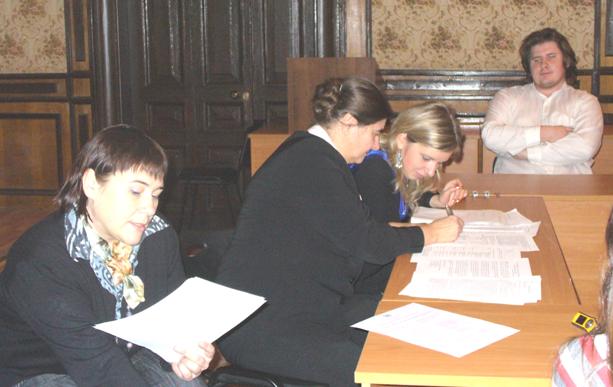
stage 2: (November 28, 2007) Forum Apotheosis.
The Forum granted its participants interesting opportunities: to make known their professional viewpoints on the mentioned aspects, to discuss and substantiate their opinions in exciting discussion with students of Russian and foreign higher schools, their post-graduates and young banks’ employees.
The Internet Forum was organized as on-line discussion on the web-site of the International Banking Institute, the Forum’s language being English. 37 participants took part in this event. Among them were students and post-graduates of the International Banking Institute, St. Petersburg State University of Aerospace Instrumentation, St. Petersburg State University of Economics and Finance and other higher-schools, Russian State Pedagogical University named by Herzen, employees of «Raiffeisen» bank.
Thus, Youth Banking Forum really became international.
The main subjects of the Forum were:
§ Corporate governance in banking and strategic management;
§ Bank risk management: new approaches;
§ Corporate ethics and bankers’ code of conduct;
§ Foreign banks and banking systems;
§ Mortgage and consumer lending;
§ Innovation in banking;
§ Current problems of career development in banking.
35 participants took part in the First Part of the Forum and 5 the most active and knowledgeable of them joined the Forum Apotheosis.
The program of the Forum Apotheosis in terms of its participants and topics covered was as follows:
· I. Blokhina (International Banking institute, post – graduate and MBA trainee)
DEVELOPMENT OF MORTGAGE BANKING IN SAINT PETERSBURG
· S. Nikulina (International Banking institute, a 5th year student)
COMPLEXITY OF MERGERS AND ACQUISITIONS
· R. Andreev (International Banking institute, a 5th year student)
FOREIGN INFORMATION SYSTEMS IN RUSSIAN BANKING
· L. Kurzineva (International Banking institute, Student of MBA)
IMPACT OF BASEL II ON BANKING SYSTEM
· E. Petrova, E. Sinyakova (International Banking institute, MBA trainee)
CASH MANAGEMENT AND WORKING CAPITAL IMPROVEMENT FOR RUSSIAN MEDIUM-SIZE COMPANIES
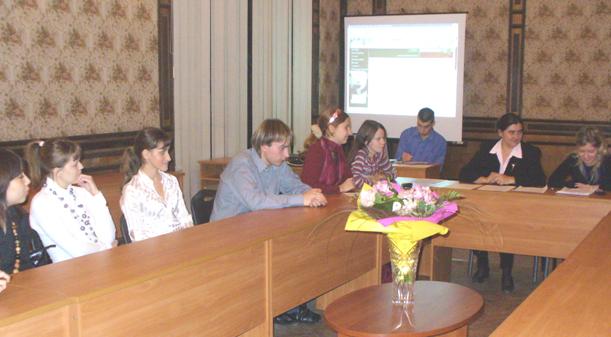
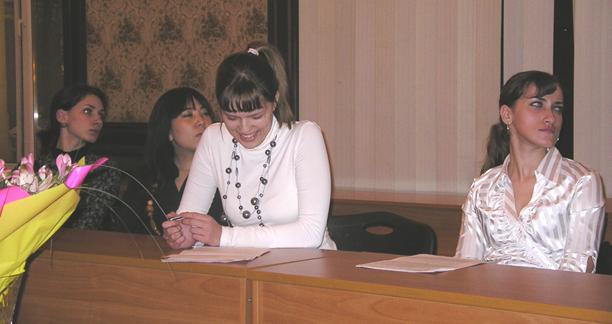
Tatiana V. Lebedeva, PhD, MBA, associate professor, the dean of the International and Master Programs Faculty and Zhanna Misheladze, the 5th year student, the Chairperson of IBI Council of Students’ Economic Scientific Society were the masters of the ceremony.
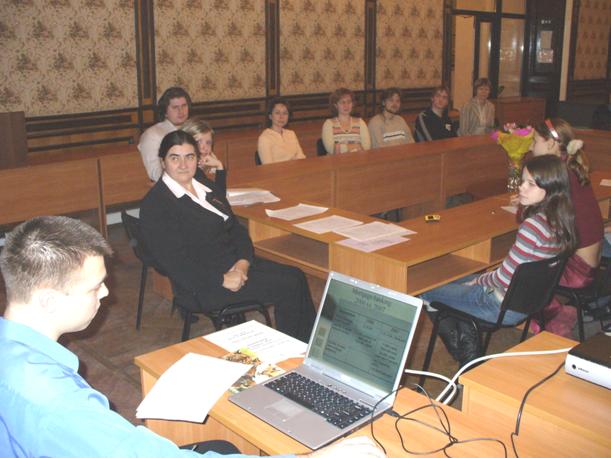
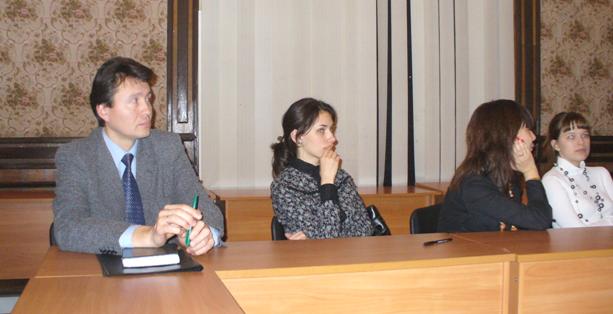
Apotheosis was held in the International Banking Institute and was transmitted via Internet on Institute’s web site. Apotheosis Forum reports were interpreted into Russian.
Successful experience of running International Youth Banking Forum gave the idea to make the event on annual basis. In future it is planned to attract more participants from the International Banking Institute and other higher schools and employees of banks and other financial institutions.
According to opinion of the Organizing committee’s members it was decided to publish materials of The Forum. The publication includes Forum Apotheosis reports.
Organising Committee
Tatiana V. Lebedeva – PhD, MBA, associate professor, the dean of the International and Master Programs Faculty.
Zhanna Zhuravleva – the Chairperson of IBI Council of Students’ Economic Scientific Society. SALUTATORY LETTER
Salutatory letter of Tatiana V. Lebedeva, PhD, MBA, Associate Professor, the dean of the International and masters Programs Faculty
Dear Participants of II International Youth Banking Forum. We are glad that our Forum became an annual event. We hope that the body of participants will be wider with each coming year. In 2007 we have not only students of the International Banking Institute and other Institutes among participants, as it was in 2006, but people with MA, and PhD students even MBA and Executive MBA degrees. The organizers became more experienced and Technical assistance became more professional and it gives good prospective to broaden the frame of discussion. In 2008 we decided to choose the five most interesting topics for more profound discussion. Please send us your offers till the 10th September. We hope to see you among the participants of The III International Banking Forum that will take place from 1 November till 14 November 2008.
ПРИВЕТСТВИЕ УЧАСТНИКАМ
Дорогие участники II Международного молодежного банковского форума.
Мы рады, что наш форум стал ежегодным, и надеемся, что круг участников будет расширяться с каждым годом. В 2007 году в форуме приняли участие не только студенты Международного банковского института и других высших учебных заведений, как было в 2006 году, но и магистранты, аспиранты и даже слушатели программ МВА и Executive MBA. Набирают опыт и организаторы форума, техническое сопровождение становится более профессиональным и позволяет расширить рамки дискуссий. В 2008 году мы решили выбрать пять наиболее интересных тем для глубокого и всестороннего обсуждения. Присылайте нам свои предложения до 10 сентября. Надеемся увидеть Вас в числе участников III Международного молодежного банковского форума, который пройдет с 1 по 14 ноября 2008 года.
, к. э.н., МВА,
декан факультета международных и магистерских программ
Forum Apotheosis reports
The masters of ceremonies:
- Tatiana V. Lebedeva, Dean of the International and Master Programs Faculty, PhD, MBA, Associate Professor of the Banking Department;
– Zhanna Zhuravleva, International Banking Institute, 5th year student, the Chairperson of IBI Council of Students’ Economic Scientific Society.
Ведущие:
- , декан факультета международных и магистерских программ, к. э.н., MBA, доцент;
- , студентка 5 курса МБИ, председатель экономического научного общества студентов МБИ.
I. Blokhina
International Banking Institute, MBA trainee, holder of a master's degree
Блохина Ирина
Международный банковский институт, слушатель программы MBA, магистрант
DEVELOPMENT OF MORTGAGE BANKING IN SAINT PETERSBURG
The volumes of mortgage lending in Russia continue to grow. Banks have not only started mortgage lending, but they aggressively increased the volumes of granted credits and their share in their loan portfolios and that is done, because the terms of mortgage lending are constantly changing. In this paper some banks’ and mortgage programs in Saint-Petersburg are examined.
Объёмы ипотечных кредитов, предоставляемых в России, продолжают увеличиваться. Банки не просто начали предоставлять такую услугу, а уже в высоких темпах увеличивают количество ипотечных кредитов и долю таких кредитов среди всех кредитов, предоставляемых банками. Это стало возможным из-за постоянного улучшения условий кредитования. В этой работе я рассмотрела некоторые банки Санкт-Петербурга и систему ипотечного кредитования в этом городе.
Dramic development of the mortgage lending is accompanied by significant increase in the number of competing credit institutions realizing the programs of mortgage lending: nowadays over 600 Russian banks are engaged in the business. Terms and conditions for the access to mortgage loans have been considerably changed resulting in essential increase of the range of bank’s services associated with above process. One more trend being presently observed is the rapid development of mortgage lending in the regions.
New products, making the mortgage loans more accessible for the population, have received a wide recognition in 2006–2007. They include for example, crediting the suburbian real estate, mortgage loans for the purchase of a room in a municipal apartment, various modifications of mortgage credits on the pledged real estate, lombard credits with the option of the subsequent increase in the amount of the credit and mortgage credits secured with real estate already possessed by the loan applicant, etc.
We are witnessing an active process of refinancing mortgage transactions and the rise of sophisticated sales patterns of real estate on collateralized basis. Crediting at the early stage of housing construction is getting more widespread firstly due to the steep rise in real-estate prices (apartments are much cheaper at the early stage of construction), secondly due to the acute shortage of real estate in the secondary market and thirdly due to unwillingness of sellers to have anything in common with mortgage transactions during the sale of apartments.
The distinctive feature of the Russian mortgage market was its early segmentation and specialization. It was at the beginning of 2006 when the first mortgage brokerages started up, the process being strictly controlled by both banks and realtors.
2006 was characterized by the outstanding events which gave the Russian system of mortgage banking the finishing touch, namely: the first transactions on securitization by the «City Mortgage Bank», Vneshtorgbank (transboundary securitization), and also «Sovfintrade» (the issue of mortgage bonds in Russia by Sovfintrade). Earlier transactions on securitization of automobile loans (bank «Soyuz») and housing construction credits were completed. Private mortgage conduit «Russian mortgage acceptance company» (RuMAC) was created in Russia for the first time. It is a special purpose company to assemble mortgage loans into a large pool and issue pass-through or pay-through securities in its own name to investors.
In Russia the volume of mortgage loans granted in 2006 has exceeded 10 billion dollars (11 % from them – in Northwest Federal region), with the respective figure for 2007 being two times more and reaching USD 12bn.
What about Saint Petersburg? In 2006 11,081 mortgage loan agreements were signed for a total sum of 19.2 billion rubles. For the 1-st quarter of 2007 the volume of mortgage transactions has exceeded the respective figure for previous year 4 times. It is interesting to note, that CIT Finance Investment Bank ranks first by the number of granted loans in Saint Petersburg while the Northwest Bank of the Sberbank which was the unconditional leader in Saint Petersburg within several years ranks second.
In the first half of the current year about 7,000 loans have been granted to the SPB citizens (compared with 5,200 credits for the total sum of 5.5 billion rubles in the first half of 2006). Taking into account that the second half-year is usually accounts for 60–70 % of annual volume of concluded transactions, so it is possible to assume that Saint Petersburg will reach the figure of over 20 thousands for 2007. Thus the annual doubling of volumes of mortgage loans which according to the opinion of many analysts should stop, most likely, will again take place in the current year.
The number of the banks engaged in mortgage lending in Saint Petersburg continues to increase which, on the one hand, gives citizens an opportunity to choose the most attractive option, and on the other hand – sets up the competitive environment, resulting in the decrease of interest rates and search of other resources for attracting potential clients on the part of the banks.
If in the beginning of 2007 there were about 40 credit institutions in Saint Petersburg granting mortgage loans under their own programs, now there are about 50 of them. The banks, which appeared on the Petersburg mortgage loans market in 2007 were «Svyaz-Bank», «BashEconomBank», «IncredBank» «OrgresBank», «PrimSotzBank», «RosEuroBank», «SeverGasBank», Hanty-Mansiysky Bank, «Home Credit and Finance Bank», «Electronika» and SwedBank. Up to the end of 2007 at least 2 banks should start the mortgage loan programs – «Bank Russian Standart» and GE Money Bank. The coming on the Saint Petersburg’ mortgage loan market of «Citibank», «International bank of Saint Petersburg» and commercial bank «NorthernSeaWay» is not yet certain. Banks prepare carefully this step: frequently before the official announcement of new service they set up the mortgage loans centers, train specialists in this field, and devise every aspect of the loan with due consideration.
Liberalization of conditions of mortgage loans granting continues to please borrowers. So, for example, if the annual ruble rate on mortgage loans in 2003 was 18–20 % p. a., in 2004–2005 it has been reduced to 13–16 %, in 2006 the rate of interest has come nearer to a record low of 11 %, and in 2007 has stepped over this figure, approaching with the interest rate in dollars: 9.3–9.8 % (in the offers of Bank VTB 24, CIT Finance Investment bank, «RosEuroBank»). However the interest rate on mortgage loans cannot be lower than the rate of refinancing (10 %), established by the Central Bank of the Russian Federation, otherwise lending will not be profitable to bank. Therefore even in conditions of acute competition banks don’t begin to credit under the rate lower 9–9.5 %. If the declared figure is lower, most likely, the bank will balance a situation with the introduction of the latent interests.
It is interesting to note, that commercial banks have to compete not only with other credit institutions, but also with the state program. This makes them offer the similar conditions of crediting as those of the «Agency for mortgage loans». Therefore, when in 2007 the Agency has lowered the interest rate to 10.75 %, the majors of the mortgage market followed suit in some months, both ruble and foreign interest rates having been reduced. However, super conservative banks remain, which don’t want to lower the rate below 13–14 % on ruble credits.
As to the loans in dollars, all banks which are «seriously» engaged in the mortgage loans, try to establish the minimal dollar rate at the level of 10 % and less. So, for example, the competitive minimum annual interest rate in dollars for the end of the first half of 2007 makes up approximately 9.75 %. The minimum rate in dollars is about 9 %. p. a.
Nevertheless, despite the tendency to reduce the interest rate, mortgage loans in Russia still remain expensive.
The necessary amount of self - financing is also reduced – the most frequent being 10 %, but many banks reduced the initial payment to 0 %. Long-term credits redeemable within 25–30 years have been introduced.
Today creditors are quite cooperative in considering the loan applications. Flat refusals take place only in case of very aggravating reasons. Credit institutions demand from the borrowers only a copy of the passport, a work-book and also some references. The speed of consideration of applications for loans and prompt granting of credits is the most distinctive feature in the conditions of real estate price rise: banks have done much in this direction – terms of application’ consideration are reduced, procedures of official registration of documents are accelerated. The standard term of waiting for the bank’s approval is a week (or maximum two weeks). There are some banks which have reduced this term in 2006 to 3 days (Absolute bank, Bank DeltaCredit and «City Mortgage Bank»).
Banks favour the policy of the minimum commissions. The approach of credit institutions to the consideration of borrowers’ solvency is now more flexible: they agree to take into account the cumulative income of several co-borrowers, not only relatives, banks began to compute the maximum sum of the credit and allow the borrower to pay 60 % of the their monthly income instead of earlier 30 %.
However, despite these changes, there is very interesting fact, that according to survey of the Foundation «Public Opinion», 47 % of respondents would not take mortgage loan even if they were given the chance and only. 31 % of respondents would apply for the credit. Among the main reasons of the negative attitude to the mortgage are high interest rates, low disposable income and uncertainty of those, lack of money for the down payment and soaring prices for the real estate. Moreover there still remains traditional mistrust to banks resulting in misunderstanding subtleties of mortgage loans.
S. Nikulina
International Banking Institute, a 5th year student
Никулина Светлана
Международный банковский институт, студентка 5 курса
COMPLEXITY OF MERGERS AND ACQUISITIONS
Presently a lot of companies focus their attention on mergers and acquisitions. M&A deals were quite impossible to imagine just two decades ago but now business media swarm with them. The processes are quite intricate by their very nature and require persistant effort to fully understand their subtleties.
На сегодняшний день множество компаний уделяют огромное внимание слиянию и поглощению других компаний. Хотя сделки подобного рода были достаточно редки 20 лет назад, сейчас они уже стали привычными для нас. Но они намного сложнее, чем может показаться на первый взгляд.
Only two decades ago, few companies made acquisitions the core element of their strategy; they were often an afterthought or just episodic. Today, the world has changed. Some companies do 25 deals a year, and others strive to achieve 50 percent or more of their growth by acquisitions. A recent Accenture/Economist Intelligence Unit global survey shows that 70 percent of senior executives are either now undertaking or planning M&A transactions within a year. The above substantiates the trend for mergers and acquisitions to revive. The combination of low interest rates, debt and private equity finance venture capital, cash infusions from initial public offerings and the perceived lack of organic growth opportunities has led to an increasing use of acquisitions as a bona fide growth strategy. (Fifty-four percent of survey respondents view mergers and acquisitions as being part of their companies’ growth strategy for value creation.) Yet even with this increase in the number of deals, investors continue to be skeptical about mergers and acquisitions (M&A) as a value creator. Appropriately, companies are focusing more attention on the process used to ensure that acquisitions create not only growth, but measurable value. To fuel the right kind of growth and shareholder value creation, Accenture has found that high-performing businesses are willing to more actively pursue selected M&A and alliance transactions as supplements to organic growth. (Indeed, in contrast to the heady days of megamergers, the survey showed that 74 percent of respondents planned to acquire smaller companies.) The most successful acquirers are those that are capable to extract value from the transaction and more effectively integrate and realize synergies thereof.
Certainly along with positive of effects synergy the companies management should be ready to confront all complexities of merger or acquisition. The following example shows that sometimes these processes can be ambivalent and extremely complex.
The dispute on merger between two large international banks ABN AMRO and Barclay started in March 2007 after a letter written on February 20 by TCI, a hedge fund holding 2 % of the former bank’s shares, to ABN AMRO, informing that a break-up or sale of the bank’s assets should be considered at the annual general meeting on April 26. British Barclay, Europe’s seventh biggest bank made an all-share bid that amounted to 64 bn euro for ABN AMRO of the Netherlands, the 11th biggest bank. Each of two banks has businesses spanning global equity and capital markets and asset management. The two banks have complementary parts: Barclay’s is strong in Britain, Africa and Asia, and in debt-capital markets. ABN AMRO has retail operations in Brazil, North America, Italy and the Netherlands, as well as a global-corporate arm. But Barclays was mainly interested in ABN AMRO’s wholesale branch.
After March 20 when the pair announced outlines of their preliminary discussion, ABN Amro’s share price rose by 3,5 % by the end of the day and those of Barclays’ followed suit.
During the go-stop period offered by TCI another company made a bid for AMRO. It was a consortium made up of Royal Bank of Scotland (RBS), Spain’s Banco Santander and Fortis, a Belgian-Dutch group. The offer was a cash-rich one valued at 71.1 billion euro. The consortium was also interested in ABN AMRO’s wholesale business. If the trio won, ABN AMRO would be carved up with Santander getting Banco Real in Brazil and Antoveneta in Italy, Fortis taking charge of ABN AMRO’s commercial and retail business in the Netherlands with 1.1 billion euro of annual profit and RBS seizing the bank’s global wholesale arm with 65 million euro of annual profits.
But the Dutch Regulators represented by the Dutch Central Bank declared a break-up bid to be too risky and complicated. It was going to examine whether the consortium should hold additional regulatory capital to compensate for the higher perceived risk of its break-up plans. Before the Dutch Central Bank approved the transaction, it could not be settled.
Meanwhile the ABN AMRO’s board which was for merger with Barclays unlike its shareholders, who were mostly professional investors, pressed Barclays to raise its bid by adding cash. The thing was that its all-share bid was 3 euro a share lower than that of the RBS0-led consortium. But the question was how Barclays was going to find more capital while keeping its own shareholders happy. There were several ways. Barclays could potentially add about 20 billion euro of cash in its 64 billion euro offer. The bank could introduce quasi-equity such as convertibles. Secondly it could also change its use of 12 billion euro cash coming back from the sale of ABN’s US operator La Salle. Barclays could also consider non-core disposals at ABN, which could bring in a further 4-5 billion euro. Then it could consider attracting a Middle Eastern or Asian investor to take a strategic stake in itself, which could help stabilize its share price.
The consortium announced on October 8 that 86 % of ABN's shareholders had accepted its € 72 billion ($ 101 billion) offer. Pending formalities, this will be the world's biggest-ever banking transaction so far. But the real significance of the deal lies not in its enormous size but in its timing, its politics and, above all, its structure. The consortium, which beat out a rival bid from Barclays, a British bank, has had to raise record amounts of money in the teeth of a credit crisis. It has not been easy. The consortium members have had to offer higher rates of interest to borrowers and turn to docile retail investors for funds.
R. Andreev
International Banking institute, 5th year student
Андреев Роман
Международный банковский институт, студент 5 курса
FOREIGN INFORMATION SYSTEMS IN RUSSIAN BANKING
Today, different information systems are used in all banks. Many foreign banks prefer I-Flex, the leading IS in the world. But for some reasons most Russian banks prefer domestic products. I would like to dwell on some reasons thereof.
На сегодняшний день все банки используют различные информационные системы. Многие зарубежные банки предпочитают I-Flex – ведущую информационную систему в мире. Но большинство российских банков по некоторым причинам отдают предпочтение отечественным ИС. Вот об этих причинах я и хотел бы поговорить.
Nowadays every bank uses information systems (IS) in its operating activities. There are a lot of companies, producing such software, but in Russia domestic products are preferred, which seems rather strange because of the mass popularity of foreign products. So let’s try to clarify this situation. It is said that there were no successful applications of foreign IS in Russia. E. g. I-Flex, which the world leading IS and is widely subscribed by hundreds of banks all over the world, cannot be introduced properly in Russia. This is believed to be true due to the following reasons.
1. The central bank rules and regulations
They are believed to be too complex and are changed too often. So even if a bank manages to introduce a foreign IS, the producer is not interested in regular updating it. Even if he is, he won’t be able to do it as quick as our companies do. They usually have informal relationships with the Central Bank, so they have an advantage – they get information quicker. Moreover, our systems are usually easier to change, because their producers got used to work in conditions of instability.
2. Cost
Foreign systems are more expensive, than ours. Sometimes this feature is being used for deception. Top managers buy an expensive foreign IS. This fact increases capitalization. So they sell a bank and earn good money.
3. Foreign IS are not as good as they believed to be
This feature also has a lot to do with stability of economics. Some of foreign IS architectures were not changed since 1980’s. So it is hard to claim that they are up-to date.
4. Integration
Most of the banks do not use just one IS. Even if they do, there are external systems with which a bank has to interact. Although such things as XML protocol can solve this problem, some specialists stress that it is hard to integrate foreign IS with ours.
5. Reports
It is said, that foreign systems do not have flexible mechanisms for reports creating. And here we come back to the point 1. Some of central bank directives are not so easily parameterized, so the IS must be updated to meet central banks requirements. Some banks have the following solution (it is common for foreign banks branches): they use a foreign IS for operating activities and a Russian one for reports creating and domestic transactions. But here we meet point 4. The problem is usually solved by integrative software such as IBM WebSphere or Oracle Fusion.
So we can see that introduction of foreign IS in Russia is not worthwhile. The problem is very closely interrelated with the banks’ authorities’ policies or with their respective staff incompetence.
L. Kurzineva International Banking Institute, MBA trainee
курзинева Любовь Международный банковский институт, слушатель программы MBA
Impact of Basel II on banking system
There are a lot of risks that each bank, whether foreign or Russian are exposed to. Due to this fact a statutory act called “Basel Capital Accord” was created in 1988. But by the middle 90s it was clear that its principles of regulating should have been improved, and Basel’s Committee completed that work in 2004, when Basel II was created. This agreement does not only regulate the banking sector but also lays claim to a minimum bank’s capital.
Существует множество рисков, которым подвержены как отечественные, так и зарубежные банки. Их наличие привело к созданию нормативного акта «Basel Capital Accord» в 1988 г. Но к середине 90-х возникла необходимость улучшения его принципов регулирования, и в 2004 г. был создан Basel II. Это соглашение не только регулирует деятельность банков, но и предъявляет требования к минимальному банковскому капиталу.
Banks have multiple roles, which are highly important and beneficial for the economy as a whole:
· They provide payment services.
· They intermediate capital by providing a range of savings instruments and extending various forms of credit to borrowers.
· They handle and transform risks.
Some of these functions are by their very nature particularly vulnerable to disturbances. For instance, loans usually have a longer duration than deposits. Hence, in certain situations a bank may lose a large proportion of its deposits rather quickly while its loans remain outstanding. Such a situation may impose severe liquidity crisis for the bank, and subsequently its collapse.
In some of the functions, banks have a monopoly or dominant role, with few alternatives. Only banks may receive deposits that are protected by the Deposit Guarantee Scheme. Banks have a dominant role in lending to small and medium-sized companies. Banks and their affiliates have a dominant role in the payments system.
These three factors – that certain banking activities are intrinsically vulnerable, that even minor disturbances can threaten overall financial stability through contagion, and that the banks are the dominant providers of some key services – form the rationale for regulating banks and for doing so partly differently from other companies. All regulations should ideally pass a cost/benefit test. The total benefit to society of any regulation must exceed its total cost of society. This includes direct financial as well as other costs and benefits. A substantial potential cost to society is the expense of having to deal with a crisis in the financial system. Since an individual bank has no commercial reason to take this systemic cost into account, society has to ensure, e. g. through regulation and monitoring, that banks do not behave in ways that unduly increases the systemic risk.
There are many good reasons why banks, as well as non-banks and non-financial companies, should maintain an adequate risk-related amount of capital. However, the «special nature» of banks makes it more important to have regulatory requirements for the capital in banks than in other companies. Capital is needed:
· To reduce the risk that volatility in bank earnings, e. g., stemming from macroeconomic developments, leads to its bankruptcy.
· Because in the event of a bank failure, equity capital is hit first, thereby reducing the residual cost to other parties, including tax-payers.
· To encourage prudence among bank owners because it is their own capital which is at stake.
· Because, although capital requirements should not prevent banks from taking risks, the cost of capital for covering risks will lead to a more risk-aligned pricing of risks and to a conservative strategy for taking risks.
· Because capital requirements will promote the development of common, «integrated», management processes and policies within a bank group – across entities, countries, risks, and operations.
In 1988, the Basel Committee introduced regulation stipulating how a bank’s minimum acceptable capital base is to be calculated, i. e. the size of the capital that banks are required to hold as a buffer against future losses on their assets (e. g. the credits on their loan portfolios). The purpose of the Accord was, and still is, to promote security and stability in the banking sector.
In most countries, the law requires banks to hold a certain amount of capital, primarily in the forms of share capital and some quasi-capital debt instruments.
Insufficient risk protection and the possibilities of arbitrage in the present regulations are important reasons behind the Basel Committee’s revision of the capital adequacy rules. Its revision can also be seen as a natural consequence of the rapid developments in recent years in credit risk management and credit risk per se. Banking instruments and operations have changed significantly since the inception of the present capital requirements, so an updated regulation is needed.
The 1988 Accord focused on the total amount of bank capital, which is vital for reducing the risk of bank insolvency and the potential cost to depositors of a bank’s failure. Building on this, the intent of the new framework is to improve the safety and soundness of the financial system by placing more emphasis on a bank’s own internal control and management, the supervisory review process, and market discipline. In practice, this means that the rules will be a compromise solution in which credit risk models are allowed, indirectly, to serve as the basis for determining buffer capital via the banks’ internal risk classification systems.
One of the major achievements in relation to Basel I, which was purely quantitative is that Basel II also includes comprehensive rules for:
· Bank’s management of risk and capital, encompassing all material risks, not just covered by capital requirements under pillar 1.
· Supervisors, who may demand additional capital or restrict operations in individual banks.
· Public disclosures of bank information.
Basel II is intended to exert pressure so that the whole bank is managed in an integrated fashion, with fine corporate governance. Banks’ Board of Directors must set the overall strategies for risk and capital, deciding which systems for risk management and controls are to be used in the bank. In addition, they must monitor on regular basis the bank’s compliance with these systems and their strategies. Any member of a bank Board ought to know that risk and yield are closely linked.
Basel II also forces supervisors to develop processes to understand and monitor in depth how each bank actually operates. Under Basel II supervisors will:
· Endorse and validate individual banks’ systems for risk, capital and internal audit.
· Check the actual application of these systems throughout the bank.
· Assess all material risks including concentration, and interest rate risk in the banking book.
· Assess risk in relation to the available capital and take corrective action when needed, including requiring additional capital for individual banks.
The increasing complexity of banking operations, instruments and organizations means that traditional supervision, such as focusing on individual transactions is no longer effective, or indeed, feasible. Also, development in financial instrument and markets have made it possible for banks to shift their risks as well as their assets and liabilities more rapidly than before. Even if they were to receive somewhat enlarged resources, supervisors would not be able to monitor the banks with a commensurate frequency.
The Basel II approach: gives more responsibility to banks themselves to strengthen internal corporate governance; gives more powers to supervisors to ensure that banks establish robust management systems and operate in accordance with the rules, not only as they are written but also in line with their spirit; and gives external stakeholders increased means to analyse banks. Through this approach supervisory work will be facilitated and supported by the bank’s internal monitoring as well as by the monitoring conducted by external stakeholders. This should mean that each bank’s behavior is scrutinised on a broad and frequent basis.
Supporting market discipline by information disclosures is also an important part of Basel II. Basel II seeks to increase market discipline by requiring bank to publish more substantive and frequent information than presently about their risks, capital and other aspects. Banks must not only publish the actual numbers but also explain their strategies, management methods and governance structures.
The New Basel Capital Accord tries to achieve the following objectives:
· Use three mutually reinforcing pillars to more closely align regulatory capital with economic capital;
· Encourage integration of risk assessment into the management process;
· Achieve greater credit risk sensitivity;
· Create flexibility in selecting approaches to setting regulatory capital;
· Establish dynamic risk measurement methods for setting regulatory capital;
· Reward institutions that adopt more sophisticated risk assessment techniques in order to assess the risk more adequately;
· Apply an explicit capital charge for operational and all other risks, and thus reduce the need for capital reserves;
· Maintain competitive equity between banks and non-banks and across instrument types and national jurisdictions.
Some degree of regulation and supervision of banks is beneficial to society as a whole because banks on their own may not take external considerations fully into account. On the other hand, excessive regulation is not desirable because it stifles development and diversity in the banks. Moreover, all regulation should ideally be constructed so that it steers banks towards a behavior that is beneficial for society, while not restricting its development.
Basel II tries to achieve these goals by closely linking capital and risk; by strengthening corporate governance in banks; by giving supervisors more instruments to address weaknesses in banks; and by increasing market discipline. To a much greater extent than hitherto, Basel II will enable banks to be flexible in using their own methods and systems, when adequate, to fulfill the regulatory requirements.
The implementation of Basel II will increase the financial stability both of banks and of financial systems. This is beneficial for macroeconomic growth in general.
Elena Petrova
International Banking Institute, MBA trainee
Elena Sinyakova
International Banking Institute, MBA trainee
Петрова Елена
Международный банковский институт, слушатель программы MBA
Синякова Елена Международный банковский институт, слушатель программы MBA
Cash Management and Working Capital Improvement for Russian medium-size company
This paper provides some explanations of cash management – one of the services of banks for corporate clients that allows to reduce expenditures and to manage finances effectively - and aims to provide medium-sized Russian corporations with some relatively simple ideas, tools and examples to improve their cash management.
Рассмотрена услуга управления денежными средствами – одна из банковских услуг для корпоративных клиентов, которая позволяет уменьшить расходы и эффективно управлять финансовыми показателями. Здесь также даны некоторые представления, средства и примеры, нацеленные на улучшение управления денежными средствами в средних российских компаниях.
Introduction
Cash management is relatively simple and available bank service for customers of western banks offered for all the multi-branch companies or a group of the companies without any problems and restrictions.
Recently cash management has become a popular topic with Russian companies and their bankers. Whether this growth of interest is the result of banking industry marketing, multinational competition, or a real concern for controlling cash flow and expenses is not quite clear, but it is not very important.
What is clear is the fact that faced with growing competition, tighter profit margins, a rapidly changing marketplace, and advancements in the Internet and e-commerce, most Russian companies want every competitive advantage they can get, and knowledge of cash management technique has become an immediate concern.
However, many companies in the regions and even in Moscow and Saint –Petersburg still ask questions, such as: «What is cash management exactly and why is it so important?» «What is its relevance to our business?» «Is it about minimizing costs, maximizing profits, controlling cash flow, and / or monitoring risks?» «Who should be involved?» «What are the cash management services offered by banks?» «What technology is required?» «What are the costs versus the benefits?»
That is why it seems quite reasonable to investigate the problem and to improve the quality of finance management of Russian Companies using cash management service available in the country.
Part 1 «Theoretical overview»
There are four core existing aspects of cash management.
· Liquidity management.
· Working capital management.
· Accountant management.
· Invoice and payment processing.
Cash management is closely associated with professional terms defined by different names such as: liquidity management, financial supply chain management and working capital management.
The above terms prove the important idea that cash management is not only a set of bank services. It is rather a set of certain rules for best practice in financial management.
It seems appropriate to investigate that aspect of cash management which is connected with working capital. It is clear that introducing cash management service has a vital role to play in reducing the working capital requirements. It is necessary to stress the fact of availability of cash management service on the Russian bank market. And then make Russian companies, especially medium-size ones perfectly aware of the above fact, the more so as large companies have already introduced and contentedly use the service.
The aim was to research the influence of cash management service in working capital improvement for Russian medium-size companies.
Stage 2 «The research»
The special questionnaire for Russian companies was worked out to investigate the necessity of cash management for them. The results are presented in the table.
Table 1
«The interview with Russian companies»
The questions | CFO of medium-size Swedish telecommunications companies providing CWDM and DWDM based optical solutions with subsidiaries in several countries | CEO of Small retail Rus-sian com-pany. | CFO of medium-size group of compa-nies. Produc-tion of furniture. The group includes production company, wholesale, retailing company, purchasing company. | CFO of group of compa-nies: medium-size retail business with many outlets in regions. | CFO of group of companies: medium-size retail business with many outlets in the same city. | CEO of group of companies: medium-size transporta-tion corporation with 3 divisions: logistic, sales, service. | CFO of group of compa-nies: medium-size group of IT and computer - companies with subsidia-ries in China. |
What do you know about Cash Management? | + | – | + | + | + | – | + |
Which services of Cash Management are necessary for your company/group of companies? | Netting between our subsidiaries | – | Zero-balance cash-pooling with one master account | Notional pooling | Master-account | – | The pooling |
Does your bank offer any services of Cash Management? | + | – | + | + As «consolidated balance» | – | – | – |
Do you use any services? | + | – | + overdraft | +overdraft | + overdraft | – | +the ordinary overdraft |
What benefits does your company have of using cash management? | + | + | + | ? | ? | ||
What difficulties do you confront with? | The subsidiaries reduce efficiency of managing receivables. They know they always can receive money. | ? | ? |
Web sites of the largest Russian banks were also investigated to target the market offering cash management services. The results are shown in the table.
Table 2
The list of Russian banks with offered service
Bank | Offered service | Original model |
Alpha-bank | Umbrella Overdraft Facility – that means the unified terms of overdraft for group of companies | |
Interest compensation – bank gives back part of the spread between debit and credit rates | Notional pooling (interest netting) | |
Zero Balancing – creating master account | Zero-balance pooling | |
Citibank Russia | Unified terms of overdraft for group of companies | |
Interest compensation - | Notional pooling (interest netting) | |
Zero balance pooling | Zero-balance pooling | |
MDM bank Moscow | Unified terms of overdraft for group of companies | |
Interest compensation - | Notional pooling (interest netting) | |
Zero balance pooling | Zero-balance pooling | |
Raiffaizenbank Austria | Unified terms of overdraft for group of companies | |
Interest compensation – | Notional pooling (interest netting) | |
Margin compensation | Notional pooling (margin pooling) | |
International Moscow bank | Zero Balancing – creating master account | Zero-balance pooling |
Promsvyazbank | Unified terms of overdraft for group of companies | |
Sberbank RF | Unified terms of overdraft for group of companies |
Stage 3. «Calculations»
As mentioned above, the aim of the research is to consider a typical Russian medium-size retail outlet (using overdraft facility).
Companies proved to benefit from unlocking working capital after using cash management techniques available with Russian banks.
The necessary data for the research was the quarterly balance sheet, the Income Statement and the cash flow on the bank accounts for the same period. On the base of this information the reconstruction of the balance sheet is made and unlocked working capital and basic financial ratios calculated:
· Working capital = current assets –current liabilities.
· Current Ratio = current assets/current liabilities.
· Cash Ratio = cash / current liabilities.
· Current asset turnover = sales / current assets.
· Accounts receivable turnover =sales / accounts receivable.
· Accounts payable turnover =cost of goods sold / accounts payable.
· Inventory turnover = cost of goods sold / inventories.
· Debt-Equity Ratio =Total debt/Total equity.
Besides, the process of multilateral business improvement was investigated.
Conclusions
After all necessary calculations the following results were obtained:
Business | Current debt at the end of period | Working capital | Current Ratio | Cash Ratio | Cur-rent asset turno-ver | Accounts recei-vable turnover | Accounts payable turnover | Inven-tory turnover | Debt-Equity Ratio |
Retail outlet (using overdraft) | ↓ | ↑ | ↑ | ↑ | ↓ | No | ↑ | ↓ | ↓ |
From the above, the following conclusions can be made:
· Businesses do not have sufficient knowledge about the subject.
· Slow expansion of Cash management as a customary bank service.
· At the outset the first stage of cash management introduction will probably bring in some increase of the staff.
· The more concentration of power the less profit resulting from application of pooling.
· Changes in working capital.
Научное издание
International Youth Banking Forum
Международный молодежный банковский форум
Корректор
Технический редактор
Директор РИЦ МБИ
Подписано в печать 12.09.08 г.
Усл. печ. л. 1,8. Тираж 100 экз. Заказ 417.
РИЦ МБИ
Санкт-Петербург, Невский пр., д. 60
тел. (8
