Партнерка на США и Канаду по недвижимости, выплаты в крипто
- 30% recurring commission
- Выплаты в USDT
- Вывод каждую неделю
- Комиссия до 5 лет за каждого referral
Средняя общеобразовательная школа
с углубленным изучением английского языка
при Посольстве РФ в Республике Кипр
РЕФЕРАТ
History and development of British Rock
Выполнил ученик 10 класса
Димитриадиc В. В.
Руководитель: учитель английского языка
Никосия
2012
Nowadays a lot of young people around the world are involved in rock music. First rock appeared in 1964 with the "British Invasion". Since then it is being spread around the world and has its fans almost in every country. For example, in Russia and in European countries people love rock because in many rock-songs there are philosophical sense. As for me, I`m also a big rock fan. At first, I just enjoyed listening, but now I, as many of my peers, am deeply involved in the history and development of this musical trend.
As rock music is widely spread all over the world and so many people enjoy it; as it has been up-to-date for so many years, I consider this theme to be very actual for my research.
The aims of my research:
In this work I`ll try to find out and to tell you:
1. how and where rock music began and developed; and how it is being developed nowadays,
2. what influence rock music has on other musical trends and on the world culture,
3. why so many people are involved in it and what influence it has on people`s minds.
Of course, I`ll start my research dealing with British rock. I`ll show steps of its development :
- early British rock,
- rock in the 1960s and early 1970s,
- electronic rock in the early 1980s,
- nowadays rock
I`ll try to describe a wide variety of musical forms made in the United Kingdom by “ The Beatles”. I can`t miss "British Invasion” to the United States as British rock music has had a considerable impact on the development of American music.
Where does the term “rock”and "roll" come from? They usually refer to the music derived from the blues-rock and other genres that emerged during the 1960s. This term is often used in combination with other terms to describe a variety of hybrids or sub-genres, and is often contrasted with pop music, with which it shares many structures and instrumentation. Rock music has tended to be more oriented toward the albums market, putting an emphasis on innovation, virtuosity, performance and song writing by the performers.
Although rock is considered to be a genre in itself, it has initiated or significantly developed many of the most influential sub-genres, including beat music, progressive rock, heavy metal music, punk, post punk, new romanticism, and indie rock.
Early British rock & roll
The initial response of the British music industry was to attempt to produce exact copies of American records. These were often recorded with session musicians and, even if note perfect, lacked the energy and spontaneity that characterised American rock and roll. They were often fronted by teen idols co-opted an attempt to break into the suddenly emerging youth market. In 1958 Britain produced its first "authentic" rock and roll song and star, when Cliff Richard and the Drifters reached number 2 in the chart with "Move It", which managed to combine a bluesy rock and roll riff with respectable lyrics and attitude. Amid the limited vitality of late 1950s and early 1960s British rock and roll there were some more dynamic acts. The only act to create what has been described as "a pre-Beatle rock classic", were Johnny Kidd & The Pirates, whose song "Shakin' All Over" managed to become a rock and roll standard.
British Invasion
British Invasion is an American term used to describe the many rock and roll, beat, rock, and pop performers from the United Kingdom who became popular in the United States during the mid-1960s. Also during this time were organized “Beatlemania”. “Beatlemania” is a term that originated during the 1960s to describe the intense fan frenzy directed toward The Beatles during the early years of their success.
Psychedelic rock
Psychedelic rock is a style of rock music that is inspired or influenced by psychedelic culture and attempts to replicate and enhance the mind-altering experiences of psychedelic drugs. It often uses new recording techniques and effects and draws on non-Western sources such the ragas and drones of Indian music. It was pioneered by musicians including The Beatles, The Byrds and The Yardbirds, emerging as a genre during the mid 1960s among folk rock and blues rock bands in United States and the United Kingdom, such as Grateful Dead, Jefferson Airplane, The Jimi Hendrix Experience, Cream and Pink Floyd. It reached a peak in between 1967 and 1969 with the Summer of Love and Woodstock rock festival, becoming an international musical movement and associated with a widespread counter-culture, before beginning a decline as changing attitudes, the loss of some key individuals and a back-to-basics movement, led surviving performers to move into new musical areas. Psychedelic rock influenced the creation of psychedelic pop and psychedelic soul. It also bridged the transition from early blues- and folk music-based rock to progressive rock, glam rock, hard rock and as a result influenced the development of sub-genres such as heavy metal. Since the late 1970s it has been revived in various forms of neo-psychedelia.
Progressive rock
Progressive rock (also referred to as prog rock or prog) is a subgenre of rock music that developed in the late 1960s and early 1970s as part of "a mostly British attempt to elevate rock music to new levels of artistic credibility
Progressive rock bands sometimes used "concept albums that made unified statements, usually telling an epic story or tackling a grand overarching theme. "Progressive rock developed from late 1960s psychedelic rock, as part of a wide-ranging tendency in rock music of this era to draw inspiration
from ever more diverse influences. The term was initially applied to the music of British bands such as Pink Floyd, King Crimson, Yes, Genesis and Emerson, Lake & Palmer, reaching its peak of popularity in
the mid 1970s. Although retaining considerable popularity, progressive rock sales were in the decline by the end of the 1970s as disco and punk rock gained popularity. Elements of the genre are present in 1980s neo-progressive rock as well as 1990s and 2000s progressive metal and new prog.
Heavy metal
Heavy metal (often referred to simply as metal) is a genre of rock music that developed in the late 1960s and early 1970s, largely in the Midlands of the United Kingdom and in the United States. With roots in blues rock and psychedelic rock, the bands that created heavy metal developed a thick, massive sound, characterized by highly amplified distortion, extended guitar solos, emphatic beats, and overall loudness. Heavy metal lyrics and performance styles are generally associated with masculinity and machismo.
The first heavy metal bands such as Led Zeppelin, Black Sabbath and Deep Purple eventually attracted large audiences, though many were critically reviled (with the notable exception of Led Zeppelin), a status common throughout the history of the genre. In the mid-1970s Judas Priest helped spur the genre's evolution by discarding much of its blues influence;[4][5] Motörhead introduced a punk rock sensibility and an increasing emphasis on speed. Bands in the New Wave of British Heavy Metal such as Iron Maiden followed in a similar vein. Before the end of the decade, heavy metal fans became known as "metalheads" or "headbangers".
Punk Rock
Punk rock is a rock music genre that developed between 1974 and 1976 in the United States, the United Kingdom, and Australia. Rooted in garage rock and other forms of what is now known as protopunk music, punk rock bands eschewed perceived excesses of mainstream 1970s rock. Punk bands created fast, hard-edged music, typically with short songs, stripped-down instrumentation, and often political, anti-establishment lyrics. Punk embraces a DIY ethic; many bands self-produced recordings and distributed them through informal channels.
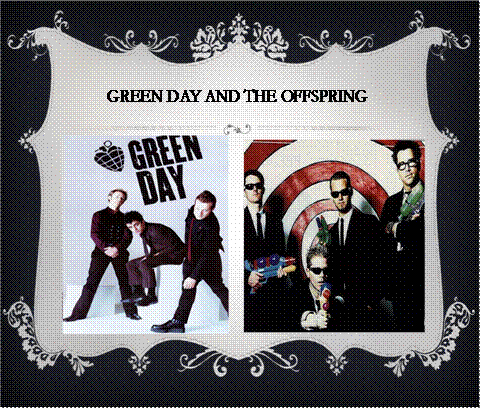
By the beginning of the 1980s, faster, more aggressive styles such as hardcore and Oi! had become the predominant mode of punk rock. Musicians identifying with or inspired by punk also pursued a broad range of other variations, giving rise to post-punk and the alternative rock the turn of the century, pop punk had been adopted by the mainstream, as bands such as Green Day and The Offspring brought the genre widespread popularity.
Indie Rock
Indie rock is a genre of alternative rock that originated in the United Kingdom and the United States in the 1980s. Indie rock is extremely diverse, with sub-genres that include indie pop, grunge, jangle pop, among others. Originally used to describe record labels, the term became associated with the music they produced and was initially used interchangeably with alternative rock. In the 1990s, it came to be used to identify those acts that retained an outsider and underground and less testosterone-driven perspective. In the 2000s, as a result of changes in the music industry and the growing importance of the Internet, a number of indie rock acts began to enjoy commercial success, leading to questions about its meaningfulness as a term.
Influence of the British rock on Russian musical culture
British rock culture has made great influence on the development of Russian rock culture. Such British bands as “The Levellers”, “Oysterband” gave huge impulse on growth of such Russian rock bands as “The King and the Fool” (“Король и Шут”) and” The Mill” ( “Мельница”). Also many people in Russia think that rock is very emotional music. General theme of Russian songs in the USSR’s rock bands was the opposition to the state system.
Thanks to the British Rock, Rock and Roll became known in the Soviet Union in the 1960s and quickly broke free from its western roots. According to many music critics, its “golden age” years were the 1980s (especially the era of perestroika), when the Soviet underground rock bands could release their records officially. The great majority of the bands perform in the Russian language.
The first rock bands in the Soviet Union appeared on the scene in the early sixties in Moscow, and they were heavily influenced by “The Beatles”
Conclusion
Doing my research I found out the history and development of the British Rock. I began since early British Rock in 1950s, studied the changes of it in the , described new appeared sub - genres in the 1970s and in the early 1980s, and, of course, up-to-date trends of rock and roll music. In my work I tried to describe the wide variety of musical forms created in the United Kingdom by “ The Beatles” and "British Invasion” in the United States. I also showed that British rock music has had a considerable impact on the development of American music. I found out where the term “rock” and “roll” came from. I learnt that Rock music has tended to be more oriented toward the albums market, putting an emphasis on innovation, virtuosity, performance and song writing by the performers. The most important part of my work I consider the last chapter, when I speak about the influence of the British rock on Russian musical culture. To sum up, I`d like to say that it was very interesting for me to do such kind of a research. Working with a lot of information it was useful to enrich my knowledge in the world of rock music. So, listen to rock music and try to know about it as much as possible. Be sure, it`s really interesting!