

Партнерка на США и Канаду по недвижимости, выплаты в крипто
- 30% recurring commission
- Выплаты в USDT
- Вывод каждую неделю
- Комиссия до 5 лет за каждого referral
IVANOVSKY RESEARCH INSTITUTE FOR VIROLOGY
RUSSIAN ACADEMY OF MEDICAL SCIENCES
REPORT
Study of Killevir preparation activity against human immunodeficiency virus
Moscow 2006
APPROVED
____________________
D. K. L’vov, RAMS Academician,
Director of Ivanovsky Research Institute for Virology
December 26, 2006
REPORT
Study of Killevir preparation activity against human immunodeficiency virus
Testing facility
Ivanovsky Research Institute for Virology, RAMS
(Gamaleya str. 16, Moscow, Russia, tel/fax +7 499
Immunodeficiency Viruses Laboratory
Testing Center for Expert Assessment of Antiviral and Disinfection Preparations
Study Director
Prof. D. N. Nosik, MD, Head of IV Laboratory
Responsible personnel
L. B. Kalnina, PhD (Biology), Senior Researcher
I. A. Kiseleva, PhD (Biology), Senior Researcher
M. S. Bochkova, PhD (Biology), Senior Researcher
Study objective
Study of anti-HIV activity of Killevir in combination with Retrovir.
Introduction
Fight against HIV infection is one of the most urgent problems of modern medicine. In early 80s, wide-spread of earlier unknown infectious agent – human immunodeficiency virus (HIV) that caused acquired immunodeficiency syndrome (AIDS) - has lead to infection and deaths of millions of people (1-6).
Despite dozens of new drugs active against HIV have been developed within the shortest time, the intricate nature of the virus allows to find various ways to adapt to the drugs’ exposure. Besides, resistant strains of viruses are emerging; this requires increasing the drugs’ doses and using them in combinations.
Taking into account that the majority of medicines are to some or other extent toxic for humans and often have side effects, search of new formulations that would be less toxic but active against different viruses is still an urgent task. At the same time, it is also important that the price of the medicines is affordable for different social groups.
In terms of assessment of anti-viral and viricidal effects of anti-HIV drugs, the most adequate method is the use of the virus-infected human cell models. When testing anti-viral effect of the preparation, the virus-cell system is subjected to exposure.
Materials and methods
Cells. Re-inoculated human lymphoblast cells MT-4 and monolayer cells HeLa with built-in HIV marker from collection of human cell cultures of Ivanovsky Research Institute for Virology, RAMS. The cells were cultivated in RPMI 1640 and DMEM media, respectively (produced by Research Institute for Poliomyelitis and Viral Encephalitis, RAMS) with 10% of fetal bovine serum (produced by Research Institute for Poliomyelitis and Viral Encephalitis, RAMS); 100 µg/ml of gentamicin (Pharmachim, Bulgaria).
Viruses. As a source of virus, HIV-1BRU strain from collection of HIV strains of Ivanovsky Research Institute for Virology, RAMS, was used.
Preparations. A specimen of Killevir preparation in powder produced by the sponsor, ZAO Desco was tested. Killevir® is a fullerene polyhydropolyaminocaproic acid. As an anti-retroviral reference preparation Retrovir (azidothymidine) (manufacturer – GlaxoSmithKline, Belgium) was used.
Study design
Cells added with the test preparation were infected by virus in dose 0.01-0.05 TCD50/cell and incubated (5% CO2, 37oC, humidity 98%, 5-6 days). Then the cells were counted by staining with tetrazolium (Sigma, USA, MMT method) and by spectrophotometry (5, 7).
References
1. Barre-Sinoussi F., Cherman J. C., Rey P. et al. Isolation of a N-lymphotropic retrovirus from a patient at a risk for acquired immune deficiency syndrome (AIDS)//Science, 1983 – v.220 p.868-871.
2. Novokhatsky A. S., Drynov I. S., Sergiev V. P. Acquired immune deficiency syndrome, M., VINITI, 1987, 180 p.
3. Carpenter CCJ, Fischi M. A., Hammer S. M. et al. Antiretroviral therapy for HIV infection in 1997, JAMA, 1997, v.227, p..
4. Zhdanov V. M., Gaidamovich S. Ya. General and particular virology. M., Medicina, 1982, 520 p.
5. Nosik D. N., Nosik N. N. HIV infection: occupational risk and express prevention. M., Issued by Bakoulev Scientific Center for Cardiovascular Surgery of the Russian Academy of Medical Sciences, 2004, 55p.
6. Nosik D. N., Kalnina L. B., Zlobin A. Yu. et al//. Characterization of HIV strains isolated from HIV-infected people on the territory of the USSR// Voprosy virusologii, 1992, #1, p.24-27.
7. Guidance on pre-clinical trials of preparations. RF Pharmacological Committee, Moscow, 2000, 359 p.
Study results
Cytotoxicity studies of the preparation
The data obtained demonstrated that Killevir in concentration 0.1-10 µg/ml and 0.µg/ml of Retrovir, as well as their combinations did not cause noticeable cytotoxic effects on the test monolayer and suspension human cell cultures.
Study of antiviral effect of the preparation
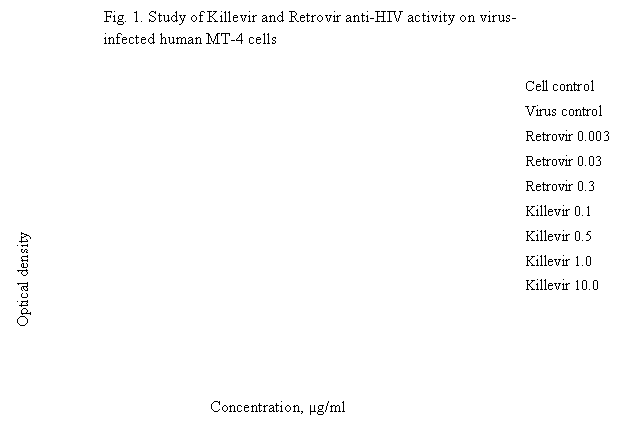
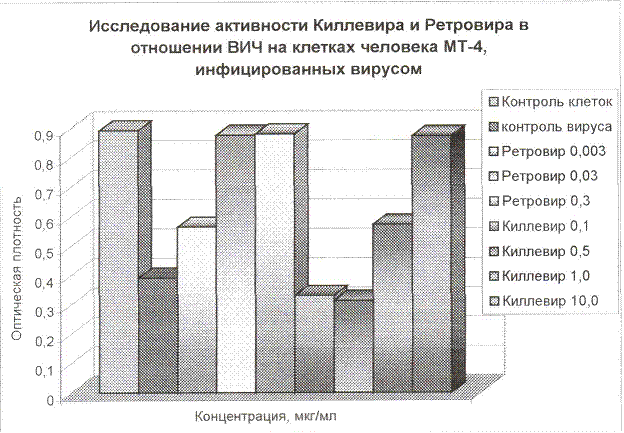
In the studies of anti-HIV activity of Killevir on human MT-4 cells infected by the virus antiviral effect of the preparation is established in concentration 1-10 µg/ml (Fig 1). The highest activity is noted at concentration 10 µg/ml.
The study of Killevir anti-HIV activity in combination with Retrovir (0.03 µg/ml) revealed additive effects in doses 0.5 and 1.0 µg/ml (Fig.2). At higher concentration of Killevir – 10 µg/ml this effect was likely to remain, however, it was hardly differentiated because of individual protection of cells by only Killevir.
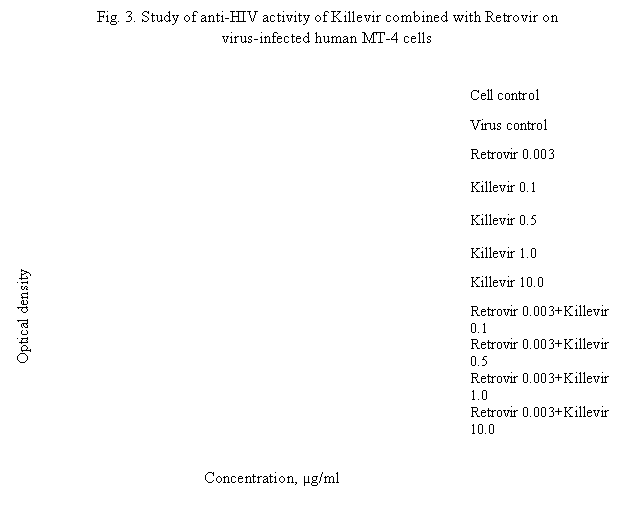
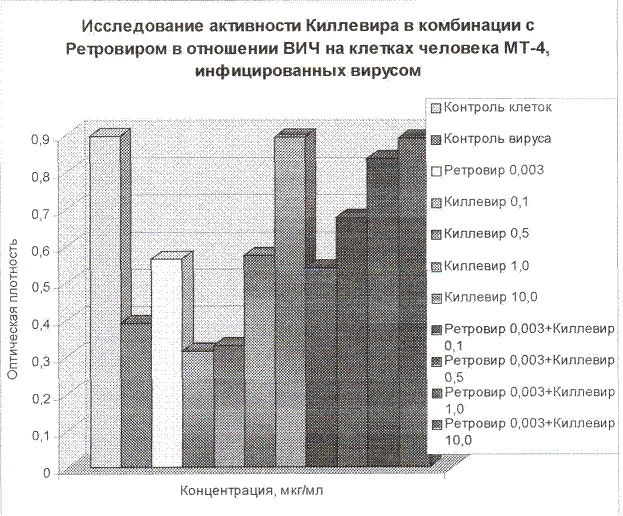
The use of a lower dose of Retrovir (0.003 µg/ml), which at individual application of Retrovir provided a slight protection of virus-infected cells, made this effect more evident at Killevir concentration 0.5 and 1.0 µg/ml (Fig. 3).
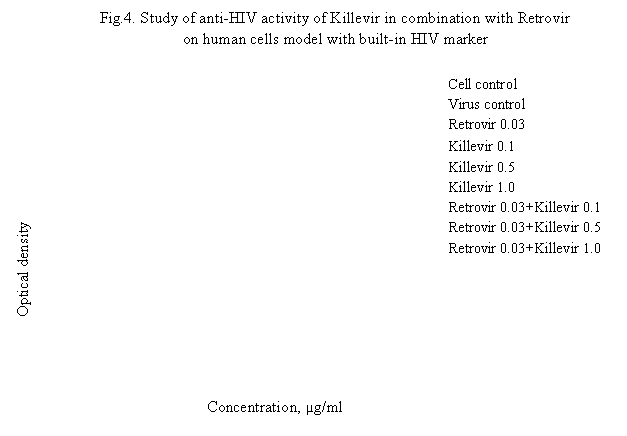
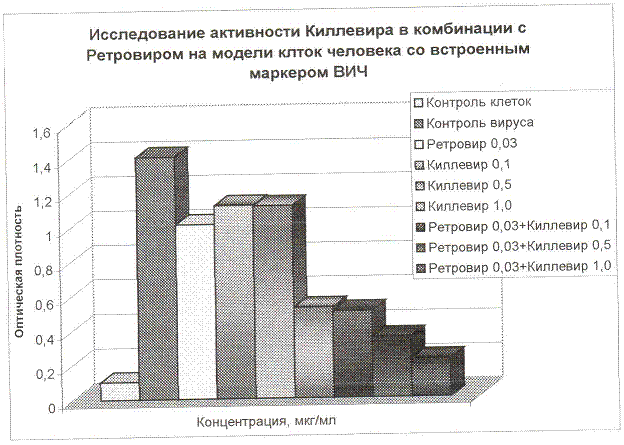
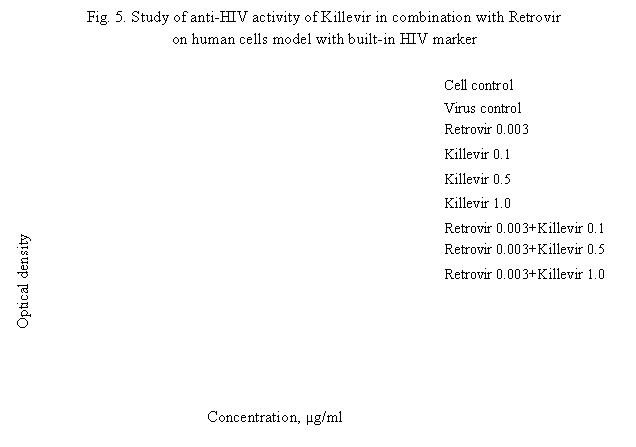
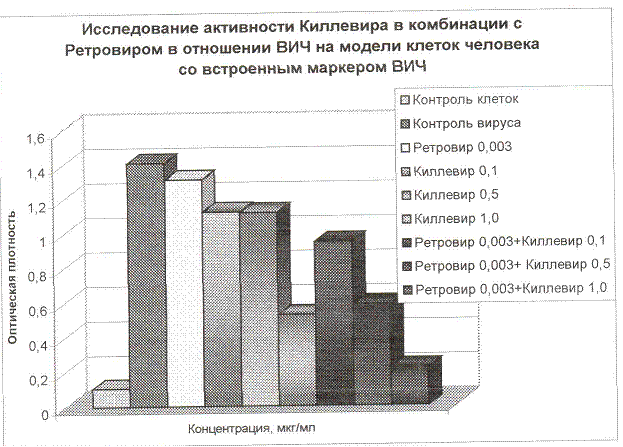
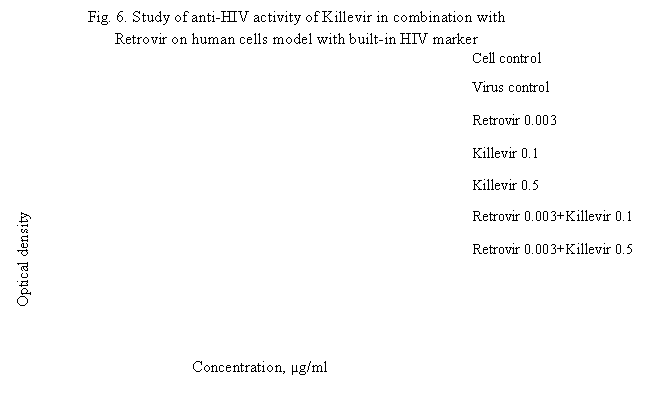
Study of anti-HIV activity of Killevir in combination with Retrovir on human cells with built-in HIV marker not only demonstrated the presence of additive antiviral effect at concentration of Killevir 0.5 and 1.0 µg/ml, but also revealed such effect at dose of Killevir 0.1 µg/ml (Fig.4). At concentration of Retrovir 0.003 µg/ml and Killevir 0.5 and 1.0 µg/ml synergetic effect is suspected (Fig.5). This is also evidenced by the data obtained at a lower virus-infecting dose (Fig.6).
Note: multiplicity of infection 0.05 TCD50/cell

 Note: multiplicity of infection 0.05 TCD50/cell
Note: multiplicity of infection 0.05 TCD50/cell
Note: multiplicity of infection 0.05 TCD50/cell
Note: multiplicity of infection 0.05 TCD50/cell
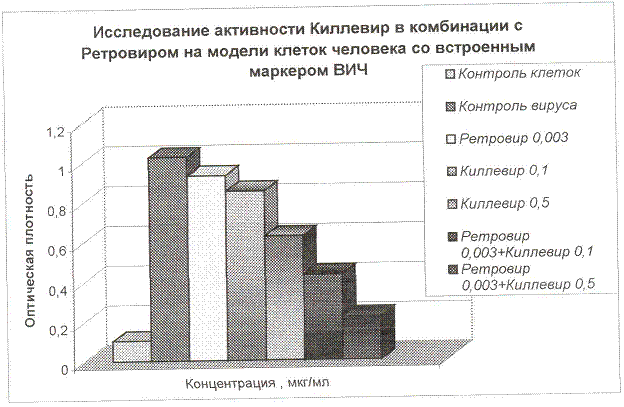
Note: multiplicity of infection 0.01 TCD50/cell
Conclusion
Study of anti-HIV activity of Killevir in combination with Retrovir on model of human cell cultures has revealed the additive and synergetic antiviral effects. This allowed to achieve a higher effect at lower concentrations of each preparation than at their individual application.
This fact suggests a possible decrease of clinical doses of the preparations at their combined application in clinics thereby decreasing their toxic effects.
Prof. D. N. Nosik, MD
Head of Immunodeficiency Viruses Laboratory and Testing Center for Expert Assessment of Anti-Viral and Disinfection Preparations
