

Партнерка на США и Канаду по недвижимости, выплаты в крипто
- 30% recurring commission
- Выплаты в USDT
- Вывод каждую неделю
- Комиссия до 5 лет за каждого referral
Knowledge Management and Innovation:
What Must Governments Do to Increase Innovation?
Alfredo Federico Revilak De la Vega Senior Researcher, IKI, The George Washington University Washington DC, USA *****@***edu | Michael Stankosky Professor, EMSE The George Washington University Washington DC, USA *****@***edu |
Abstract
This research assesses the relevance of Knowledge Management initiatives to a government’s role in promoting innovation. Today governments at all levels (Federal, State and Municipal) have started projects with the goal of fostering innovation to promote economic growth. Nevertheless, most of those efforts are incomplete, not standardized, diverse and not in compliance with certain needs. The research locates and evaluates the Knowledge Management components that were successful in fostering innovation and were implemented by the corresponent governments. In addition, this study will use empirical methods to identify the existing elements that prompt innovation in countries with low research and development investment, since it is predictable that financial capabilities will be a significant factor in promoting innovation.
2 INTRODUCTION
Knowledge, and the ability to create, access and use it effectively, has long been a tool of innovation, competition and economic success and a key driver of economic and social development. Traditional economist [1], contemporary authors [2] and multilateral organizations [3] agree that innovation represents the engine that brings motion to the economy and growth to nations. However, the theoretical attempt to incorporate innovation as a formal systematic method into a national or supranational economy is only a recent preoccupation[4].
Knowledge is being developed and applied in new ways. The information revolution, supported by the technical advances in information and communication Technologies (ICT), has expanded academic, scientific and community networks and provided new opportunities for accessing data, information and knowledge in a timely manner[5]. It has also created new opportunities for generating and transferring all kinds of knowledge artifacts such as manuals, interviews, processes and business procedures. Knowledge management and sharing of information have demonstrated increase in innovation output[6].
Today, a typical government is engaged in many innovation activities with the complexity of understanding the nature, mechanics, and expected results from these. Examples of these activities include multi agency budgeted R&D, grant funds for education sector, fiscal breaks, new innovation institutions, innovation clusters, deployment of new technology, and so on.
However, these programs are not yet standardized or validated, and many of them lack a formal framework to apply and assure an adequate level of success. Governments will keep ignoring them if there are not methodically studied, identified and assessed them and incorporate them in an existing KM framework to be of use in future innovation policy setting situations
There are a set of existing knowledge related best practices used by some governments with success in some countries that helped to leverage the innovation output, and those knowledge management practices are not identified nor accounted for. This research aims to identify such practices and provide policy makers a blueprint for developing, monitoring and measuring national efforts to enhance innovation.
3 INNOVATION
According to websters, innovation means “bringing into effect new and more effective products, services, or approaches”[7]. Studies from contemporary economic authors agree that Innovation “is the process through which economic or social value is extracted from knowledge”[8].
3.1 Types of Innovation
Innovation may be classified by type in two different ways. While Schumpeter [1] refers to innovation as an entity taking different forms as later on explained. Others authors like Mensch [9] introduce a critical distinction regarding the impact of innovation: basic innovation and incremental innovation. According to Mensch, basic innovation creates a new type of human activity, whereas the improvement innovation furthers develop an established human activity.
For other researchers innovation may take the form of a new device, a better delivery method, or a new means of providing a service. In a seminal work, remarkably relevant to present times, Schumpeter [1] distinguished between five different types of innovation:
· New products
· Methods of production
· Sources of production
· New markets
· Business organization.
Since innovation may take any of this forms, governments should establish mechanism and support infrastructure to foster any type of flourishing innovation.
3.2 Models of Innovation
To facilitate the representation of the innovation process, two models have been widely used with different characteristics. The first one, “linear innovation” identified by earlier versions of the OECD Oslo manual[10], sees innovation as a process of discovery which proceeds via fixed and linear sequence of phases. In this view, linear innovation begins with new scientific research, progresses sequentially through stages of product development, production and marketing, and terminates with the successful sale of new products, processes and services.
However, as other authors explain, innovation can assume many forms, including incremental improvements to existing products, applications of technology to new markets, and uses of new technology to serve an existing market. This process is not completely linear. Innovation requires considerable communication among different actors – firms, laboratories, academic institutions, and consumers – as well as feedback between science, engineering, product development, manufacturing, and marketing.
In 1986, Kline & Rosenberg [11] presented an integrated model of the innovation process, called the "chain-linked model". The biggest difference between this new model and the linear one was that there is not just one major path of activity in the innovation process. Innovation can take many different routes.
The chain-linked Innovation model achieved wide popularity among innovation and R&D researchers, since it facilitated the understanding of managing the process of innovation as a system in which several orderly elements interact to reach a specific goal.
Abrunhosa [12] sustain that the ability of the chain linked model to recognize the interactions and interdependencies between the different components of the innovation process, and the complexity and uncertainty of the process, made easier to understand the concept of National Innovation Systems to the decision-maker.
However, there are still separate policies for research, education, innovation, industry, commerce, competition, etc. Having in account the complexity, multiplicity of elements involved in the innovation process and the importance that the production, diffusion and adoption of innovation/knowledge have for growth and development, a coordination and integration of policies.
3.3 Innovation Measurement
Understanding the nature and causes of innovation requires analysis of its activity; it means that despite the difficulties to measure it, it is necessary to quantify the results and characteristics with hard, objective data.
Measurement indicators must be capable of reflecting Innovation of all types of tangible and intangible activity. Under these complicated circumstances, the reality is that the performance of an innovation environment is hard to measure. A complete method able to translate and display the rate in which knowledge is created, shared, used, and transformed in innovation has been a topic of research and discussion.
Rogers [13] established that innovation measurement indicators may be classified in two: inputs and outputs. Inputs could consist of number of researchers, amount of expenditures, outputs could be new products, publications and so on; this idea is expanded by Varga [14] stating that there are three measurements have been applied in innovation studies.
· Research & Development expenditures.
· Literature-based innovation output indicators
· Patent based measures
3.3.1 Measurement By Patents
Patents are probably the most widely used indicator of innovation[15]. Patent citation data is used in a growing body of economics and business research on innovation[16]. Many countries and organizations have adopted the ratios of patents per inhabitants and patents by time.
Although this indicator provides the best existing documentation of innovation activity, it has some shortcommings. Duguet (2003) shows that patent citations are indeed related to companies' statements about their acquisition and dispersion of new technology. However, the strength and statistical significance of this relationship varies across geographical regions and across channels of knowledge diffusion.
An issue that generates different positions is the quality of patents and technological exhaustion. A clever solution to that problem is proposed by Lanjouw et al. [17] with the index of patent 'quality' using detailed patent information and showing that using multiple indicators substantially reduces the measured variance in quality.
4 KNOWLEDGE MANAGEMENT
Organizations have always managed knowledge, even without noticing it. But in today’s competitive environment, organizations realize that is necessary to engage in a systematic approach to capture, store and share organization knowledge in order to become more competitive.
Stankosky [18] defines Knowledge Management as: the systematic leverage of intellectual capital to improve Organizational performance.
As Knowledge Management became an important area of study, the richness of concepts encompassing KM such as knowledge itself, process, codification, human resources, learning, leadership and technology management has unfortunately made the discipline hard to manipulate. In order to alleviate this problem, Stankosky [18] proposed the Knowledge Management Framework in a holistic view associating all the components in four spheres or dimensions. These dimensions contain several factors affecting the knowledge management “system.”
This framework proposed by Stankosky was revisited and validated by Calabrese[19]. His work found through empirical demonstration that the model was valid and added to the framework the four model pillar depicted in figure 1.
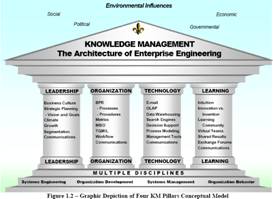
Figure 1. Knowledge Management Framework by Stankosky and Calabrese (2001)
In a recent study[20], Knowledge Management was identified as a positive variable to increase innovation inside organizations. The research consisted of a pilot evaluating the Knowledge Management influence on patent production inside organizations in France which included more than 5,500 companies.
The present study will extend the reach of this line of investigation by trying to establish the same relation between Knowledge Management and innovation— not just considering the corporation, but the national level.
5 RESEARCH METHODOLOGY
In this study, the research objective is to reveal if there exists a correlation between the establishment of knowledge management initiatives by local governments and innovation performance in companies. It is worth mentioning that a great effort to start addressing this problem is found in the so called “Innovation Policy Terrain” developed by the Organization for Economic Cooperation and Development [10] in which a framework is presented with the variables associated to be taken into consideration to develop policies regarding innovation. Nevertheless, the study keep a general tone and leaves the ability to establish rules to connect innovation systems and foster knowledge sharing to local governments.
To reach our goal, we proposed to answer the following research question: Do Government’s Knowledge Management Initiatives affect positively an Innovation Environment?
In order to answer the research question we established the research preamble with the following elements:
1. A validated Knowledge Management Framework that allows the incorporation in a systematic manner of the aforementioned knowledge elements, in this case The George Washington University Four Pillar Framework (GWUFPF).
2. A selection of thirteen (13) of the Government’s Knowledge Management factors that represent the closely represent the GWUFPF from the countless number of economic, environmental, health, financial, variables found in the International arena. The KM indicators are shown in appendix A.
3. The sample of this research is composed of fifty one (51) successful National Innovation Systems (Countries with more than 100 patents filled at the United States Trademark and Patent Office). The countries are selected from the table 1 presented in appendix B.
4. Correlation analysis was performed to corroborate and measure the impact of the 13 selected KM factors controlled by the Government. This research also executed Factor analysis to test the validity of the GWUFPF in the level of National Innovation System.
6 RESULTS
The results of this study point out that at least 10 of the 13 Governments KM factors selected shown influence on the number of patents produced in Countries. Such KM Factors ordered by weight of impact are in table 1:
Table 1:
Knowledge Management Factor | r | p |
Size of Information and Communications Sector | .66*** | <.0005 |
e-Government maturity | .62*** | <.0005 |
Intellectual Property Rights Enforcement | .61*** | <.0005 |
Researchers per 1,000 Total Employment | .59*** | <.0005 |
Government Effectiveness | .48*** | <.0005 |
Government’s Support in R&D | -.46*** | 0.001 |
Collaboration between Companies | .42*** | 0.002 |
Impact of Gov reg. on business competitiveness | .37** | 0.007 |
Quality of Public Education | .37** | 0.008 |
ICT Expenditures as percentage of GDP | .29** | 0.037 |
Government prioritization of ICT | 0.27 | 0.058 |
Population enrolled in tertiary education | 0.2 | 0.153 |
SME Activity by Country | 0.13 | 0.354 |
Four principal KM factors showed significant positive relation to production of patents per 1,000 residents in a Country: Size of ICT sector, e-Government maturity, Intellectual Property protection and the ratio of researchers to employees in a Country. The Government effectiveness is also significant and positive to predict patents in a Country.
What it was unexpected is the negative and statistically significant relation of the Government’s funds to support R&D to the number of Patents. This translates to a illogical but real fact: when Countries assign more funds to public R&D the resulting number of patents decreases. A suggested explanation would be that when Government invest more in R&D the private sector stays latent waiting for the Government to produce new knowledge. Other explanation could be that the least developed Countries (without many patents filled) are the ones engaged in supporting large pieces of their GDP to R&D from the Government, thus in the long run the situation may switch to observe a logical result.
The second part of the study carried out a Factor Analysis with the intention to test the GWUFPF in a national level. The GWUFPF has been validated by Calabrese in an Organizational level. The test consisted in locate the underlying components from the 13 KM factors selected. The expectation of the study is that the components found would bear a resemblance to the four pillars mentioned (Leadership, Organization, Technology and Learning Organization).
A principal component analysis with varimax rotation was performed on the 13 KM indicators in an attempt to validate the four-pillar model. The results of this analysis (varimax rotated principal component loadings) are shown in Table 2.
Table 2:
Component Number | |||||
1 | 2 | 3 | 4 |
| |
e-Government Maturity Index | .59 | .57 | .39 | .26 |
|
Intellectual Property Protection | .85 | .27 | .28 | .14 |
|
Research and Development | -.20 | -.30 | -.26 | -.69 |
|
Government Effectiveness | .62 | .34 | .58 | .00 |
|
SME Funding | .28 | .49 | .02 | -.64 |
|
Collaboration between Companies | .85 | -.07 | .07 | .26 |
|
Impact of Government Regulations | .60 | .26 | .54 | -.12 |
|
Size of Info. and Comm. Sector | .71 | .56 | .31 | .09 |
|
ICT Expenditures | .27 | .12 | .02 | .70 |
|
Government Prioritization of ICT | .15 | .02 | .88 | .21 |
|
Quality of Public Education | .37 | .51 | .51 | .06 |
|
Proportion with Tertiary Education | .00 | .86 | .02 | .06 |
|
Proportion of Employees who are Researchers | .45 | .68 | .31 | .16 |
|
| |||||
Sum of Squared Loadings | 3.61 | 2.69 | 2.16 | 1.63 |
|
| |||||
Percentage of Variance Explained | 27.75 | 20.70 | 16.61 | 12.51 |
|
A partial validation of the GWUPFP is observed with this particular set of 13KM factors. Here is a possible interpretation to the results obtained:
Component number one may be related to the Leadership pillar since it is strongly supported by Intellectual Property Protection and Collaboration between Companies.
Component number two may be linked to the Learning Organization Pillar since it is sustained by the people in the tertiary level and the number of researchers in a Country.
The Technology pillar is supported by component number three but it is also sustained by component number one, this has a possible high correlation between variables.
The Organization pillar is not sustained by this specific rotation and set of KM factors, although the presence of the IPR and collaboration has a cross sector influence in the Leadership pillar.
Nevertheless, the results are open to interpretation since factor analysis is used here to study the patterns of relationship among many dependent variables. Thus the answers are more hypothetical and tentative than when independent variables are observed directly.
The present research was restricted by the availability of data. The number of Countries and KM factors were limited by the availability. Unfortunately there is a trade off between these two elements. With fewer Countries (let’s say 20) the study could have used more representative and complete KM variables (such produced by the European Innovation Scoreboard, or OECD), but the study would reflect the reality of only a small group of developed Countries. In the other hand if less KM variables were to be used (lets say 4 or 5) a very subjective result would have been presented with gaps for interpretations and with no real application. In the other side, with many Countries, the constraint becomes the availability of data.
This research also has been restricted by the measurement of Innovation. Patents are not the best yet but the most used measurement stick for Innovation. It is generally accepted that Innovation exists in many other forms other than Patents, and patents sometimes are not equal to Innovation (some patents never get to the market). But until we could articulate a better measurement indicator Patents are to be used in the scientific world as a synonym of Innovation.
7 REFERENCES
[1] Schumpeter, J., Economic Theory and Entrepreneurial History, Change and the Entrepreneur., ed. T. Publishers. 1949.
[2] Porter, M. E., The Competitive Advantage of Nations, ed. F. Press. 1989, New York, USA.
[3] OECD, The Knowledge Economy. 1995.
[4] Fagerberg, J., Innovation: A guide to Literature, in Handbook of Innovation, Oxford, Editor. 2003.
[5] Economist, T., Reaping the benefits of ICT, Europe's productivity challenge, T. E.i. unit, Editor. 2004: London.
[6] OECD, , The significance of Knowledge Management in the Business sector, in OECD Observer, OECD, Editor. 2004, OECD: Paris.
[7] Webster's, Websters's New World Dictionary, ed. W. books. 1987.
[8] Freeman, C., The Economics of Industrial Innovation. 1982.
[9] Mensch, G., Stalemate in Technology: Innovations overcome the recession, ed. B. Press. 1979, Cambridge, Massachsetts.
[10] OECD, Oslo Manual: Proposed guidelines for Collecting and Interpreting Technological Innovation Data. 1997, Paris: the measurement of Scientific and technological Activities, 1997.
[11] Kline SJ, a. R.N., An Overview of Innovation. The Positive sum Strategy - Harnessing Technology for Economic Growth, ed. L. R.R. N. 1986, Washington DC: National Academy Press.
[12] Abrunhosa, A. The National Innovation Systems Approach and the Innovation Matrix. in Creating, Sharing and Transfering Knowledge. 2003. Copenhagen, Denmark.
[13] Rogers, M., The Definition and Measurement of Innovation, M. Institute, Editor. 1998, Melbourne Institute of Applied Economic and Social Research, The University of Melbourne.
[14] Varga, A., Time-Space Patterns of US Innovation: Stability or Change? in Innovation, Networks and Nocalities, M. M.F. L.S.-V. M. Steiner, Editor. 1999, Springer: Berlin.
[15] Griliches, Z., Ariel Pakes, and Bronwyn H. Hall, The Value of Patents as Indicators of Inventive Activity, in Economic Policy and Technological Performance, D. a. Stoneman, Editor. 1987.
[16] Coombs, R. N., P, Richards A., A Literature Based Innovation Output Indicator. Research Policy, 1996. 25: p. 403-413.
[17] Lanjouw, J. O.a. S., Mark A, Patent Quality and Research Productivity: Measuring Innovation with Multiple Indicators. Economic journal, 2004.
[18] Stankosky Michael A., B. C., A systems approach to Engineering a KM System. 2001: Washington DC.
[19] Calabrese, F. A., A suggested framework of key elements defining effective enterprise knowledge management programs, in SEAS. 2000. The George Washington University.
[20] OECD, Knowledge Management: Innovation in the Knowledge Economy: Implications for Learning and Education. Knowledge Management, ed. CERI. 2004, Paris, France.
