

Партнерка на США и Канаду по недвижимости, выплаты в крипто
- 30% recurring commission
- Выплаты в USDT
- Вывод каждую неделю
- Комиссия до 5 лет за каждого referral
Federal agency for public health
and social development
Volgograd State Medical University
Obstetrics & Gynecology Department
MANUAL IN OBSTETRICS
for students’ practical training
for fourth year students of general medicine department
in the English - speaking medium
Volgograd 2006
Authors: Dr. Elena V. Zhebrun, MD, PhD,
Dr. Elena P. Shevtsova, MD, PhD
Reviewed by:
Professor Ludmila V. Tkachenko, Chief, Department for Obstetrics & Gynecology post-graduate studies, Volgograd State Medical University
Professor Igor A. Salov, Chief, Department for Obstetrics & Gynecology, Saratov State Medical University
Special thanks to Ms. Zhanna S. Martinson, teacher of the English language, Department for foreign languages, Volgograd State Medical University
Summer practical training plays an important part in teaching obstetrics. The medical students have practical training upon completion of practical classes in obstetrics.
During summer practical training the students should use and enrich their theoretical knowledge and practical skills of obstetrics they gained in the course of their studies.
The main objectives of summer practical training are the following:
· Familiarizing themselves with the work of the obstetrical in-patient department.
· Drawing up medical records.
· Familiarizing themselves with the main stages of diagnostics and management of parturient women.
· Mastering practical skills.
· Formation of a clinical way of thinking.
· Sanitary education about delivery among pregnant and parturient women.
The order of practical training
1. At an organization meeting the students will be instructed in the arrangement of their practical training in maternity hospitals.
2. The head of Gynecology and Obstetrics department appoints three persons responsible for practical training.
3. The students who have practical training outside Volgograd should be registered. They get their appointment at practical training department.
4. The instructor in charge of practical classes in obstetrics will make a list of students on duty.
5. The students will work under the guidance of doctor on night duty (from 19 p. m. till 8 a. m.) or at day-time on holidays or weekends. Thus, the students’ working time amounts to 14 or 24 hours, respectively.
6. The total time of practical training for students of General Medicine Department is 96 hours.
7. The student works in the capacity of a doctor under the supervision of a doctor on duty, the leading doctor of the ward, and the head of the department. These practical training supervisors coordinate, direct, and monitor the student’s work.
8. All necessary medical manipulations are to be conducted by the student independently under the supervision of a doctor on duty.
9. The student is required to maintain a written journal of his or her work (Appendix 1). For each day on duty, the student must obtain the signature of a doctor on duty.
10. After the journal is complete, it has to be submitted for review to the course instructor. The student, then, is given a written report of his or her performance signed by the instructor.
11. Upon the completion of the practical training and submission of the journal, the student provides a report regarding his or her work and receives a grade, which is recorded in the roster, the student’s practical training journal, and the student’s record book. The schedule for the academic training exam is developed by the Department of Obstetrics and Gynecology, and is authorized by the office of the Academic Training Dean’s Office of the VolSMU.
Diary template
I. Title-page
II. Maternity clinic. Departments of maternity home
III. Obstetric statistics in maternity home
IV. Theoretical part
- clinical examination of pelvis, average dimensions of the normal pelvis
- abdominal palpation - Leopold's maneuvers
- diagnosis of pregnancy in the 1-st half and 2-nd half
- vaginal examination, assessment of cervix
- mechanism of normal labor with vertex presentation
- preprocessing of the newborn
- assessment of newborn by Apgar score
- amniotomy, indication and technique
- episiotomy, indication and technique
- caesarean section
- manual removal of the placenta
- delivery with forceps
- blood grouping and Rhesus factor
V. Description of night watching or day care with doctor's signature
VI. Forms of recording labor and delivery (Appendices 2, 3, and 4). Students in the Faculty of General Medicine are required to make a record of 8 deliveries, one of which is a surgical delivery. The student has to write a pre-surgery report (Appendix 5) for pregnant women who delivered or are scheduled to deliver by surgery, which includes the diagnosis, reasons for surgery, anesthesia, nature of the surgical intervention, forecasted complications, life prognosis, expected operation of the future menstrual function and childbearing capabilities, and the woman’s expected future ability to work. In addition, the student is required to maintain a detailed record of the surgical operation procedure (Appendix 6), as well as the period of post-surgical recovery (no less than 3 journals).
prehensive table of practical skills (Appendix 7)
VIII. Student reference (Appendix 8)
" Appendix 1
Volgograd State Medical University
Obstetrics & Gynecology department
DIARY of PRACTICAL STUDY in OBSTETRICS
of fourth year student of general medicine department
in the English - speaking medium__________ group
_________________________________________
_________________________________________
Period of practicals _____________________________
Teaching hospital: Maternal clinic____________________________
Volgograd 2006
" Appendix 2
Obstetric sheets and examination
1. Personal History
Name ___________________________________________________ Age _____________
Marital status: married since ___________________, divorced, single _________________
Occupation ____________________________________________________ or house wife
Address (no details) _________________________________________________________
Husband data (name, age, occupation) __________________________________________
2. Family History (e. g.: hypertension, diabetes, tuberculosis, hepatitis, consanguinity, hereditary disease, twins) _____________________________________________________
__________________________________________________________________________
__________________________________________________________________________
3. Life History
Blood group ________________ Rh-factor ___________________ Hb ____________ gr/l
Gynecological diseases ______________________________________________________
Surgery in past history _______________________________________________________
Antibiotic therapy, allergic reactions to any antibiotics ______________________________
Allergic reactions to any drugs ________________________________________________
Hormone therapy in past history; indications for it _________________________________
Transfusion of blood or blood substitutes; reaction to transfusion _____________________
Patient’s harmful habits (smoking, alcohol or drug abuse) ___________________________
Spouse’s (partner’s) harmful habits _____________________________________________
4. Menstrual History:
Age of menarche ____________________ Cycle: regular or not _____________________
Rhythm: every _____________________days Duration: for _____________________ days
Amount: average, scanty or excessive Intermenstrual discharge ______________________
1st day of last menstrual period (LMP) __________________________________________
5. Number of pregnancies (number of deliveries regardless of outcome: whether living or dead, full term or preterm, vaginal or operative, single or twins, weight, neonatal jaundice, anomalies, postpartum period, lactation, ectopic pregnancy, abortion - spontaneous or induced, gestational age, complications) _________________________________________________
__________________________________________________________________________
__________________________________________________________________________
__________________________________________________________________________
__________________________________________________________________________
N. B. History of previous pregnancies in chronological order, their outcomes!
Number of living children now ________________________________________________
6. Present History (Detailed analysis of the complaint – its onset, course, duration, medical consultation, investigations and their results, treatment administered): _________________
__________________________________________________________________________
__________________________________________________________________________
__________________________________________________________________________
__________________________________________________________________________
N. B. Present history should begin at the time when the patient started complaining!
7. History of current pregnancy:
Extragenital diseases during pregnancy: ___________________________________________
Dynamics of changes of body weight, BP, laboratory test _____________________________
___________________________________________________________________________
___________________________________________________________________________
Fetal condition _______________________________________________________________
____________________________________________________________________________
Quickening __________________________________________________________________
Warning symptoms: vaginal bleeding, vaginal discharge, severe headache
8. General examination of the patient
Height _________ Body weight ________ Body build and gait _________________________
Blood pressure ____ Pulse ____ beats/min. Temperature ____ Respiratory rate _____ per/min.
Pigmentation _________________________________________________________________
Blurring of vision _____________________________________________________________
Chest or heart symtoms ________________________________________________________
Edema of ____________________________________________________________________
Varicosities or deformities ______________________________________________________
Back: _______________________________________________________________________
Vomiting, epigastric pain _______________________________________________________
Presence of enlarged lymph nodes: _______________________________________________
9. Pelvimetry:
Distantia spinarum – the interspinous diameter __cm
Distantia cristarum - the intercristal diameter ___cm
Distantia trochanterica - ___cm
Conjugata externa – the external conjugate ___cm
Conjugata vera – the true conjugate ___cm
10. Measuring the abdomen:
Measurement of the circumference of abdomen ___cm
Measurement of the height of the uterus ____cm
Soloviov’s index ___cm
Doctor’s signature _______________________
" Appendix 3
Management of labor and delivery
Date of attendance: ___________________ Admission time: _______________________________
The patient was referred to maternity hospital from antenatal clinic or brought to maternity hospital in an ambulance or came to maternity hospital herself
Complaint (in the patient's own words) ________________________________________________________________
__________________________________________________________________________________________________
__________________________________________________________________________________________________
Obstetric status:
Uterus is in normal tone or uterus is irritable
Contractions of uterus every ___________min, duration ______________ sec. or absent.
Labor pains: present ________________________________________________ or absent.
Fetal membranes is present or absent from _______hrs______min|____________________________
Palpation of the lower segment: painless or painful or difficult ______________________________
Fetal lie: transverse or longitudinal or oblique or unstable
Fetal presentation: cephalic or breech __________________________________________________
slightly pressed to the pelvic inlet or above the pelvic inlet
Fetal heart sounds: clear, rhythmic, unclear FHR _______________________ beats/min
Fetal movement: ____________________________________________________________________
Vaginal discharge: __________________________________________________________________
Estimated gestational age according to:
§ last menstrual period _____________________________________weeks
§ fetal movement first felt (quickening) _______________________ weeks
§ first visit to antenatal clinic ________________________________weeks
§ ultrasound scan __________________________________________weeks
§ maternity leave __________________________________________weeks
Estimated fetal weight: _______________gram Permitted blood loss: ____________ml
Vaginal examination: External female genital organs are properly developed or _________________
Vagina is wide or narrow, mucous membrane is ___________________________________________
Cervix of the uterus is effaced or length of cervix_____________ cm.
Cervical dilatation __________ cm. Edges of cervix thin or thickened or pliable.
Membranes: intact or ruptured.. Liquor: clear or turbid or meconium-stained (slightly, green) or blood-stained or ___________________________________________________________________
Fetal presentation ___________________________ Position __________________ Station ________
Fontanelle _________________________________. Exostosis: present or absent _______________
Promontory: accessible or inaccessible. Diagonal conjugate _____________________________ cm.
Diagnosis: ________________________________________________________________________
__________________________________________________________________________________
__________________________________________________________________________________
Plan: Delivery is planned to be: vaginal or operative, if operative, planned or urgent
· with prevention of anomalies of uterine contraction
· with prevention of intrauterine fetal hypoxia
· with prevention of postpartum hemorrhage of risk degree ______________
" ---- Appendix 4
LABOR PROGRESS NOTES
The 1st stage of labor
Onset of labor. Dynamics of *****pture of membranes (amount and color of the fluid). Analgesia in labor. Fetal plications of the 1st stage of labor, their management and treatment.
The 2nd stage of labor – delivery of the baby
Onset of pushing efforts. Biomechanism of labor. Fetal plications of the 2nd stage of labor, their management.
The 3rd stage of labor – delivery of the placenta
Signs of delivery of the placenta. Examination of the placenta, membranes and umbilical cord. Postpartum hemorrhage (should be recorded in ml). The course of early postpartum period. Examination of the cervix, vagina, perineum.
Clinical manifestations of postpartum period
Partogram
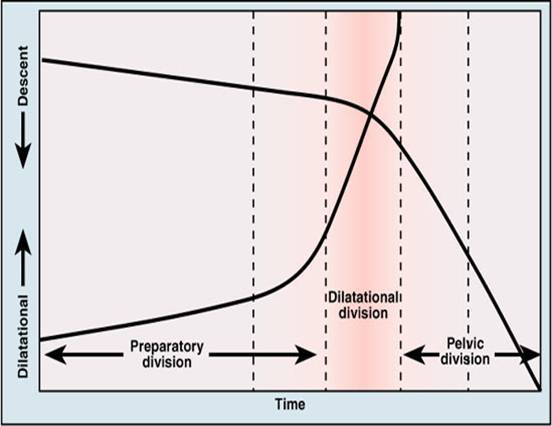
" Appendix 5
Preoperative report
Patient ________________________________________ was prepared for urgent or planned surgery.
Diagnosis: _________________________________________________________________________
__________________________________________________________________________________
Operation __________________________________________________________________________
__________________________________________________________________________________
Indications for operative delivery: ______________________________________________________
__________________________________________________________________________________
Extragenital diseases _________________________________________________________________
History of allergy: absent or present (indicate)_____________________________________________
__________________________________________________________________________________
History of hemotransfusion ____________________________________________________________
Anesthesia ______________________________________________ agreed with anesthetist.
Blood group _____ Rh-factor _____ Hematocrit _____ Hb __________ of “___” __________200__ .
Prognosis for mother and child is expected to be favorable or unfavorable.
Patient’s consent for surgery was obtained in written form.
Surgeon ___________________________________________
Assistant ___________________________________________
___________________________________________
Anesthetist ___________________________________________
" Appendix 6
OPERATIVE NOTES
(underline if necessary)
Date_________________________________ Time________________________________
Name of patient _____________________________________ Age ___________________
Operation __________________________________________________________________________
Indications _________________________________________________________________
Anaesthesia __________________________________________________________________________
Technique of caesarean section: ___________________ Lower Segment Caesarean Section
The peritoneal cavity is opened by Pfannenstiel or vertical subumbilical incision. The peritoneum (plica vesicouterina) over the lower segment is incised transversely for about 10 cm. A wide Doyen's retractor is inserted into the lower end of the wound and the bladder is pushed gently down off the lower segment. The lower part of the lower segment is incised transversely in the middle about 2 cm long and deepened until the membranes bulge. The two index fingers are slipped into the incision and extended to about 10 cm in length. The membranes are ruptured. The head or breech is delivered by slipping a hand below it and applying moderate pressure on the fundus or applying blade of forceps through the uterine incision. In shoulder presentation, the hand is introduced through the uterine incision to grasp a foot and the fetus is extracted gently as a breech. The umbilical cord is cut between 2 kochers. Delivery of fetus on___________min. The infant is handed over to the midwife and the mouth and pharynx are cleared of fluid with a soft catheter attached to suction apparatus. Sol. Oxytocini 1 ml is given intravenously or ____________________________. The placenta is allowed to separate spontaneously or manually removed. Location of placenta __________________________________. The placenta and membranes are removed through the wound. The uterine incision is sutured in two layers with catgut or any absorbable suture. Peritonization with the uterovesical pouch (the 3rd layer). Haemostasis sucured. The peritoneal cavity is cleared of blood clots and liquor amnii. The abdominal incision is closed in layers. Skin sutured subcuticularly (cosmetically ) and dressed with aseptic gauze.
Estimated blood loss :___________ ml.
Postoperative catheterization of bladder done ______________ ml, clear or blood-stained
Surgeon ___________________________________________
Assistant ___________________________________________
__________________________________________
Anesthetist __________________________________________
Scrub nurse __________________________________________
" Appendix 7
Comprehensive table of practical skills
Approxi-mate amount | Done independently | ||
1. | Measurement of Soloviov’s index, circumference of abdomen, height of the uterus, lumbosacral Michaelis rhomboid | 10-15 | |
2. | Estimation of fetal weight | 8-10 | |
3. | Estimated date of delivery (EDD) | 10-12 | |
4. | Leopold maneuvers | 10-15 | |
5. | Pelvimetry | 10-15 | |
6. | Diagnosis of the onset of labor. Assessment of contraction of uterus | 10-15 | |
7. | Assessment of cervix (length, extent of opening in cm, edges of the cervix, its position) by score of “maturity” of the cervix | 2-3 | |
8. | Management of labor and delivery | 6-8 | |
9. | Primary toileting of the newborn | 3-5 | |
10. | Examination of the placenta, membranes, umbilical cord and estimating the blood loss | 5-8 | |
11. | Caesarean section. Observation. | 2-3 | |
12. | Repair of laceration of perineum and vagina. Assistance | 3-4 | |
13. | Manual removal of placenta | 2 | |
14. | Assessment of newborn by Apgar score | 10-11 | |
15. | |||
16. | |||
" - Appendix 8
STUDENT REFERENCE
Student of fourth year ______ group ______________________________ had a training period at teaching hospital _________________________________from __________ to ____________.
______________________________________________________________________________
______________________________________________________________________________
______________________________________________________________________________
______________________________________________________________________________
______________________________________________________________________________
______________________________________________________________________________
______________________________________________________________________________
______________________________________________________________________________
______________________________________________________________________________
______________________________________________________________________________
______________________________________________________________________________
______________________________________________________________________________
______________________________________________________________________________
______________________________________________________________________________
____________________________________________uõõß______________________________
______________________________________________________________________________
Instructor’s signature ______________________________
N. B.
The reference should contain an assessment of the student’s knowledge and skills, his/her contribution when participating in therapeutic and diagnostic procedures, his/her way of keeping the diary.
Questions
I. Methods of examination in obstetrics
1. Anatomy of the fetal skull
2. Estimate of fetus’ weight
3. Anatomy of the newborn
4. Methods of fetus condition during pregnancy and during labor
5. Anatomy of external female genitals
6. Anatomy of internal female genitals
7. Blood supply and innervations of female genitals.
8. The pelvic floor.
9. Abdominal obstetrical examination
10.Leopold maneuvers.
11.Michaelis rhomboid.
12.Anatomy of the normal female pelvis
13.Pelvimetry of mayor pelvis
14.Pelvimetry of minor pelvis.
15.Vaginal obstetrical examination
16.Diagnosis of early pregnancy
17.Diagnosis of late pregnancy
18.Estimation of the expected date of delivery
19.Assessment of cervix by score of “maturity” of cervix.
20.Assessment of uterus contraction. Fetoscope
21.Cardiotocography during pregnancy and labor.
22.Department of labor and delivery.
23.The second department of maternity clinic.
24.Postpartum department.
25.Department of pathology of pregnancy. Prenatal diagnosis.
26.Antenatal clinic.
27.Blood grouping and Rhesus-factor pregnant women.
28.Blood grouping and Rhesus-factor newborn.
29.Obstetric statistics. rhesus-factor The neonatal mortality rate. The maternal mortality rate. Methods to establish gestational age.
30.Diagnosis of fetus condition during pregnancy and during labor.
II. Physiological obstetrics
31.The causes of the onset of labor.
32.Differentialting contractions of true and false labor
33.The first stage of labor. Management and prevention of complication.
34.The second stage or labor. Management and prevention of complication
35.Mechanism of labor with anterior vertex presentation.
36.Mechanism of labor with posterior vertex presentation.
37.The third stages of labor. .Management.
38.Sings of placental separation.
39.Obstetric hemorrhage. Prevention.
40.Prenatal diagnosis.
41.Management of the 2nd stage. Care of the perineum. Signs of threat of perineum laceration.
42.Breech presentation. Diagnosis.
43.Assessment of cervix by score of “maturity” of the cervix.
44.Mechanism of labor with breech presentation.
45.Breech presentation. Management and prevention of complication.
46.Multiple pregnancy. Diagnosis. Intrapartum management.
47.Face presentation.
48.Brow presentation.
49.Breech presentation. Management. Birth of the after coming head.
50.Preprocessing of the newborn.
51.Apgar score.
52.Routine care of the newborn.
53.Postpartum period. Clinic. Management and prevention of complication.
54.Health care for women.
55.The third stages of labor. Sings of placental separation.
56.Amniotomy. Indication and technique.
57.Multiple pregnancy. Diagnosis. Management.
58.Anesthesia during labor. Analgesia in labor and delivery. Analgesic and anesthetic agents.
59.Advice to the patient during pregnancy
60.Breast - feeding.
III. Pathological obstetrics
61.Diagnosis of late gestosis.
62.Management of the labor with gestosis.
63.Eclampsia. Clinic, diagnosis. Condition of fetus.
64.Placenta praevia. Clinic, diagnosis
65.Antepartum hemorrhage. Abruptio placentae. Clinic, diagnosis.
66.Abruptio placentae during labor.
67.Prolonged labor.
68.Anomaly of the labor. Discoordinated labor.
69.Fetal malposition and malpresentation.
70.Hypoxia of the fetus. Diagnosis, treatment.
71.Contracted pelvis.
72.Contracted pelvis. Management of the labor.
73.Clinical small pelvis.
74.Hypoxia of the fetus during 1st stage of labor. Management of the labor.
75.Hypoxia of the fetus during 2nd stage of labor. Management of the labor.
76.Asphyxia of the newborn
77.Postpartum endomentritis.
78.Hemorrhage in the first stage of labor.
79.Hemorrhage in the third stage of labor.
80.Postpartum hemorrhage. Uterine atony.
81.Laceration of the perineum. Diagnosis of dander of rupture of perineum.
82.Perineotomy. Episiotomy. Indications. plications.
83.Repair of laceration of the perineum degree I - II.
84.Repair of laceration of the cervix degree I - II.
85.Caesarean section. Care of sutures after caesarean section.
86.Manual removal of the placenta. Indications. Anesthesia. Technique.
87.Outlet forceps. Indications, conditions, anesthesia necessary for the application of forceps. plications.
88.Management of preterm labor.
89.The very small infant. Principles of special care.
90.Aseptics and antisepsis in obstetrics. Prevention of HIV – infection.
Bibliography
1. Beck William Obstetrics and gynecology, 1998.
2. Beek W. W. Obstetrics and Gynecology, 1994.
3. Evans A. T., Niswander K. R. Manual of Obstetrics. Philadelphia, 2000.
4. Mishell D. R. The Year Book of Obstetrics and Gynecology, 1992.
5. Stuart Campbell, Christoph Lees Obstetrics by Ten Teachers. Malta, 2003.
6. William. Beck Obstetrics and gynecology, 1998.
7. Абрамченко ведение родов. С.-Пб., 19с.
8. Айламазян . С.-Пб., 1997. – 494с.
9. , Серов по безопастному материнству. М.,:"Триада-Х", 2000.-530с.
10. Малиновский акушерство. М. Медгиз, 1972.
11. Акушерство справочник калифорнийского университета / Пер. с англ. – М.: Практика, 1999
12. Савельева . М., 2000.
13. Чернуха блок. М.,:"Триада-Х", 2001Methods of examination in obstetrics
