


Партнерка на США и Канаду по недвижимости, выплаты в крипто
- 30% recurring commission
- Выплаты в USDT
- Вывод каждую неделю
- Комиссия до 5 лет за каждого referral
Филиал государственного образовательного учреждения
Высшего профессионального образования «Санкт-Петербургский государственный инженерно-экономический университет» в г. Вологде
СЦЕНАРИЙ ЗАНЯТИЯ
С ПРИМЕНЕНИЕМ АКТИВНЫХ МЕТОДОВ ОБУЧЕНИЯ
4 КУРС
ТЕМА: “ Social Networks”
Разработала ,
канд. филол. наук,
ст. преподаватель
кафедры иностранных языков
Вологда
2010
Тема занятия: Social Networks
Цель: Развитие коммуникативных навыков и умений английского языка у студентов с использованием активных методов обучения.
Задачи:
1. Формировать у студентов навыки изучающего чтения, умение ориентироваться в источниках информации: умение находить, критически осмысливать информацию, интерпретировать и понимать ее суть, формировать способность к активному восприятию информации.
2. Развивать навыки активного слушания.
3. Тренировать навыки разговорной речи.
4. Формировать у студентов умение выражать собственное мнение по предложенной проблеме и высказывать обоснованные аргументы.
5. Повышать учебную мотивацию студентов и активизировать их познавательную активность при изучении английского языка.
Активные методы обучения английскому языку, использованные в ходе проведения занятия:
1. При работе с текстом используется один из приемов технологии креативного мышления – инсерт. Авторы – Воган и Эстес. Это прием такой маркировки текста, когда обучаемые значками отмечают то, что известно, что противоречит их представлениям, что является интересным и неожиданным, а также то, о чем хочется узнать более подробно. Прием очень эффективен при работе над формированием навыков изучающего чтения. Данный прием делает зримым процесс накопления информации: от уже известной к новой.
2. Просмотр видеофильма с последующим заданием.
3. Дискуссия.
Ход занятия
I. Организационный момент
II. Фонетическая зарядка
III. Работа с текстом
По традиции на обложке последнего номера американского журнала “Time” размещается фото человека года, а также в номере публикуется материал об этом человеке. В 2010 году человеком года был признан Mark Elliot Zuckerberg, создатель первой в мире социальной сети Facebook. Со временем Интернет наводнили ее аналоги, и почти все мы сегодня имеем свои странички в этих сетях.
Почему же социальные сети так популярны сегодня? В чем успех первой социальной сети?
Задание: внимательно прочитайте текст и сделайте на полях следующие отметки:
«V» – я это уже знал
«+» – это новая для меня информация
«-» – думал иначе
«!» - хотел бы узнать об этом больше
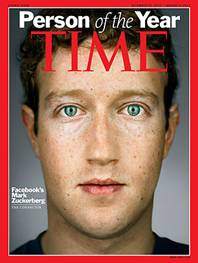


Person of the Year 2010
For connecting more than half a billion people and mapping the social relations among them, for creating a new system of exchanging information and for changing how we live our lives, Mark Elliot Zuckerberg is TIME's 2010 Person of the Year.
At only 26 years old, Facebook’s founder and CEO becomes the youngest person to win this award since US pilot Charles Lindbergh in 1927.
In 2003, Mark Zuckerberg was a 19-year-old Harvard student who began an “an online directory” that connected “people through social networks at colleges.” A mere 7 years later, he has built a social (and monetary) empire, and has gone to become of one the youngest billionaires and most influential people in the world. This year, Facebook friended its 500 millionth user, began competing head-to-head with Google for Web domination, accounted for 1 in every 4 page views in the US, and the story behind its success has already become the stuff of legend (Hollywood legend, of course).
“For connecting more than half a billion people and mapping the social relations among them,” TIME says, “for creating a new system of exchanging information; and for changing how we all live our lives, Mark Elliot Zuckerberg is TIME’s 2010 Person of the Year.”
Just a month ago, Zuckerberg was only tenth on the list, which was being led by comedians Jon Stewart and Stephen Colbert (fresh from their “Restoring Sanity” rally in Washington, DC). But finally Zuckerberg rose to the top, beating, among others, the Tea Party, WikiLeaks’ founder and revolutionary Julian Assange, and the 33 Chilean miners. No small feat in the least, though since TIME readers’ themselves voted for their favorite person online, it is not difficult to think that Facebook might have been on their minds more than the president of Afghanistan.
About Facebook’s future, Zuckerberg told the magazine: “If the last five years was the ramping up, I think that the next five years are going to be characterized by widespread acknowledgment by other industries that this is the way that stuff should be and will be better.” It seems Mark is just only getting started.
What just happened? In less than seven years, Zuckerberg wired together a twelfth of humanity into a single network, thereby creating a social entity almost twice as large as the U. S. If Facebook were a country it would be the third largest, behind only China and India. It started out as a lark, a diversion, but it has turned into something real, something that has changed the way human beings relate to one another on a species-wide scale. We are now running our social lives through a for-profit network that, on paper at least, has made Zuckerberg a billionaire six times over.
Facebook has merged with the social fabric of American life, and not just American but human life: nearly half of all Americans have a Facebook account, but 70% of Facebook users live outside the U. S. It's a permanent fact of our global social reality. We have entered the Facebook age, and Mark Zuckerberg is the man who brought us here.
Обсуждение текста с учетом тех помет, которые сделали студенты при его прочтении:
Answer the questions
1. What facts did you know before? (Какие факты были вам известны ранее?)
2. What information is new for you? (Какая информация новая для вас?)
3. Were you surprised by any facts? (Вас удивили какие-либо факты?)
4. What would you like to know else about Facebook and its creators? (что бы вы еще хотели узнать о Facebook и ее создателях?)
IV. Просмотр видеоролика: фильм о социальной сети Facebook с элементами интервью с ее создателем.
Предварительное задание:
Посмотрите фильм о социальной сети Facebook и ее создателях. Подумайте, есть ли в фильме информация о том, о чем вы хотели узнать больше после прочтения текста?
Дополнительные вопросы к фильму:
1. How was the social net Facebook developed?
2. What famous people use Facebook?
3. Why is Facebook so profitable? What are the main sources of its revenues?
4. Are there any problems with this social net? What are they?
5. Did Mark Zuckerberg make a great impression upon you?
V. Дискуссия
We have read in the article: “We are now running our social lives through a for-profit network. We have entered the Facebook age…”
Will you answer the following questions:
1. Do you use Facebook or other social nets?
2. What information do you usually change with your friends through the social nets?
3. Will you find the advantages and disadvantages of the social nets?
(Последний вопрос для работы в группах: первая группа выделяет все преимущества социальных сетей, соответственно, вторая группа – недостатки (минусы) социальных сетей. В конце обсуждения предполагается решить: больше положительного или отрицательного принесло нам появление социальных сетей).
VI. Подведение итогов.
Источники:
Lev Grossman. Person of the Year 2010 // Time. - Dec. 15, 2010.
