


Партнерка на США и Канаду по недвижимости, выплаты в крипто
- 30% recurring commission
- Выплаты в USDT
- Вывод каждую неделю
- Комиссия до 5 лет за каждого referral
1. INTENDED USE
A solid-phase enzyme immunoassay for the quantitative determination of pork in food.
This kit is designed for measurement of pork in food. For possibility of use with other sample types, please, refer to Application Notes (on request). The kit contains reagents sufficient for 96 determinations and allows to analyze 43 unknown samples in duplicates.
2. SUMMARY AND EXPLANATION
Consumption and handling of pork meat is strictly prohibited by certain religious and/or legal prescriptions. Pork meat may also cause allergy and food intolerance. PORK EIA test is based on immunometric determination of porcine specific proteins by highly specific monoclonal antibodies. The test is highly sensitive and detects trace amounts of pork meat. Sensitivity does not depend on culinary processing - it is roughly the same for fresh pork meat and for prepared pork meat, including boiling, frying, stewing, smoking.
3. PRINCIPLE OF THE TEST
This test is based on two-site sandwich enzyme immunoassay principle. Tested specimen is placed into the microwells coated by specific anti-pork-antibodies. Antigens from the specimen binds to the antibodies fixed on the microwell surface. Unbound material is removed by washing procedure. Second antibodies directed towards another epitope of pork and labeled with peroxidase enzyme, are then added into the microwells. After subsequent washing procedure, the remaining enzymatic activity bound to the microwell surface is detected and quantified by addition of chromogen-substrate mixture, stop solution and photometry at 450 nm. Optical density in the microwell is directly related to the quantity of the measured analyte in the specimen.
4. WARNINGS AND PRECAUTIONS
4.1. For professional use only.
4.2. This kit is intended for in vitro diagnostic use only.
4.3. Avoid contact with stop solution containing 5,0% H2SO4. It may cause skin irritation and burns.
4.4. Wear disposable latex gloves when handling specimens and reagents. Microbial contamination of reagents may give false results.
4.5. Do not use the kit beyond the expiration date.
4.6. All indicated volumes have to be performed according to the protocol. Optimal test results are only obtained when using calibrated pipettes and microplate readers.
4.7. Do not smoke, eat, drink or apply cosmetics in areas where specimens or kit reagents are handled.
4.8. Chemicals and prepared or used reagents have to be treated as hazardous waste according to the national biohazard safety guidelines or regulations.
4.9. Do not mix reagents from different lots.
4.10. Replace caps on reagents immediately. Do not swap caps.
4.11. Do not pipette reagents by mouth.
4.12. Specimens must not contain any AZIDE compounds – they inhibit activity of peroxidase.
4.13. Safety Data Sheet for this product is available upon request directly from XEMA Co., Ltd.
4.14. The Safety Data Sheet fit the requirements of EU Guideline 91/155 EC.
5. KIT COMPONENTS
5.1. Contents of the Kit
Symbol | Description | Qty | Units | Colour code | Stability of opened/diluted components | ||
1 | SORB MTP | PORK EIA strips, 8х12 wells | polystyrene microwells coated with specific anti-pork antibodies | 1 | pcs | until exp. date | |
2 | CAL 1 - 5 | Calibrator set, 0.8 ml each. The set contains 5 calibrators: 0; 10; 30; 100; 300 U/ml | pork diluted in TRIS buffered preservative - 0,01% Bronidox L, 0,01% 2-Methyl-4-isothiazolin-3-one-hydrochloride; also contains red dye | 5 | pcs | red (C1 - colourless) | 2 months |
3 | CONJ HRP | Conjugate, 11 ml | aqueous solution of antibodies to another epitope of pork coupled with horseradish peroxidase diluted on phosphate buffered solution with casein from bovine milk and detergent (Tween-20), contains 0,1% phenol as preservative and red dye | 1 | pcs | red | until exp. date |
4 | DIL | EIA buffer 11 ml | phosphate buffered saline with casein from bovine milk and detergent (Tween-20), contains 0,1% phenol as preservative; contains blue dye | 1 | pcs | blue | until exp. date |
5 | SUBS TMB | Substrate solution, 11 ml | ready-to-use single-component tetramethylbenzidine (TMB) solution. | 1 | pcs | colourless | until exp. date |
6 | BUF WASH 21X | Washing solution concentrate 21x, 22 ml | aqueous solution of sodium chloride and detergent (Tween 20), contains proClin300 as a preservative | 1 | pcs | colourless | Concentrate - until exp. date |
7 | STOP | Stop solution, 11 ml | 5,0% vol/vol solution of sulphuric acid | 1 | pcs | colourless | until exp. date |
8 | N003 | Plate sealing tape | 2 | pcs | N/A | ||
9 | K366I | Instruction PORK EIA | 1 | pcs | N/A | ||
10 | K366Q | QC data sheet PORK EIA | 1 | pcs | N/A |
5.2. Equipment and material required but not provided
- Distilled or deionized water;
- Automatic or semiautomatic multichannel micropipettes, 100-250 µl, is useful but not essential;
- Calibrated micropipettes with variable volume, range volume 25-250 µl;
- Calibrated microplate photometer with 450 nm wavelength and OD measuring range 0-3.0.
- Preservative for samples (XEMA Cat. # S075Z) – optional
- Balance with precision of 0.1 g (for weighting meat products)
5.3. Storage and stability of the Kit
Store the whole kit at 2 to 8 °C upon receipt until the expiration date.
After opening the pouch keep unused microtiter wells TIGHTLY SEALED BY ADHESIVE TAPE (INCLUDED) to minimize exposure to moisture.
6. SPECIMEN COLLECTION AND STORAGE.
Specimens may be stored for up to 48 hours at 2-8 °C before testing. Freezing/thawing should be avoided.
7. TEST PROCEDURE
7.1. Reagent Preparation - All reagents (including unsealed microstrips) should be allowed to reach room temperature (+18 to +25 °C) before use. - All reagents should be mixed by gentle inversion or vortexing prior to use. Avoid foam formation. - It is recommended to spin down shortly the tubes with calibrators on low speed centrifuge. - Prepare washing solution from the concentrate BUF WASH 21X by 21 dilutions in distilled water. 7.2. Procedural Note: It is recommended that pipetting of all calibrators and samples should be completed within 3 minutes. 7.3. Assay flowchart See the example of calibration graphic in Quality Control data sheet. 7.4. Assay procedure
7.5. Sample processing Sample preparation procedures are essentially different for lump meat (for which only SUPERFICIAL contamination with pork antigens may be suspected) and processed meat products (which may contain pork antigen inside). An isotonic buffer solution with neutral pH (e. g., 0.1 M phosphate buffer with 0.15 M NaCl) should be used for sample preparation (extraction buffer). If extracts should be stored for more than 24 hours, it is recommended to add a preservatrive (e. g., sodium azide in 0.1% final concentration). We recommend to use our special Sample Preservative (Cat. # S075Z) which may be ordered separately. For preparation of some sample types, the following disposables are required: cotton swabs (e. g., ear swabs) plastic spatula (e. g., those used for mixing of beverages) disposable blade or scalpel plastic tubes with screw caps for 15-50 ml (e. g., Sarstedt, Cat.# 60.732.001) ATTENTION: for all sample manipulations, only disposable materials should be used. For bulky objects, sampling should be made in disposable gloves which should be changed for EACH OBJECT. Table M
8. QUALITY CONTROLIt is recommended to use control samples according to state and federal regulations. The use of control samples is advised to assure the day to day validity of results. The test must be performed exactly as per the manufacturer’s instructions for use. Moreover the user must strictly adhere to the rules of GLP (Good Laboratory Practice) or other applicable federal, state, and local standards and/or laws. This is especially relevant for the use of control reagents. It is important to always include, within the test procedure, a sufficient number of controls for validating the accuracy and precision of the test. The test results are valid only if all controls are within the specified ranges and if all other test parameters are also within the given assay specifications. 9. CALCULATION OF RESULTS9.1. Calculate the mean absorbance values (OD450) for each pair of calibrators and samples. 9.2. Plot a calibration curve on graph paper: OD versus pork concentration. 9.3. Determine the corresponding concentration of pork in unknown samples from the calibration curve. Manual or computerized data reduction is applicable on this stage. Point-by-point or linear data reduction is recommended due to non-linear shape of curve. 9.4. Below is presented a typical example of a standard curve with the XEMA Co. Not for calculations!
10. EXPECTED VALUES
11. PERFORMANCE CHARACTERISTICS11.1. Analytical specificity / Cross reactivity A high specificity of the test is provided by monoclonal antibodies to pork skeletal muscles (a specific part of the tropomyosin complex) used. The test does not detect meat antigens of the following animals and poultry: cow, sheep, horse, reindeer, other deers, rodents, hen, turkey, duck, goose, rabbit – as well as trace amounts of human blood. By the date of issuing this instruction (version 005), there is no data regarding possible cross-reactivity to camel and kangaroo. ATTENTION: this test can not be used for detection of trace amounts of cardiac and smooth muscles, fatty tissue and skin of swine – for such samples, test gives positive results only in case of admixture of swine skeletal muscles.
|
11.2. Analytical sensitivity
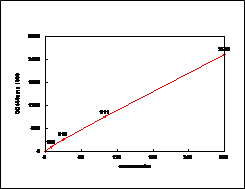
The limit of quantification, or analytical sensitivity of the test is not more than 5 U/ml for ready extract (see “Sample preparation for different sample types”). According to the results of our preliminary biochemical analysis, this value corresponds to ca. 25 ng/ml of the target antigen. However, we recommend to express results in arbitrary Units, as the correspondence of immunoreactivity to the weight of the target antigen is highly variable

|
Из за большого объема этот материал размещен на нескольких страницах:
1 2 3 |
