

Партнерка на США и Канаду по недвижимости, выплаты в крипто
- 30% recurring commission
- Выплаты в USDT
- Вывод каждую неделю
- Комиссия до 5 лет за каждого referral
 ТЕМА: ІСТОРИЧНИЙ ХАРАКТЕР ФІНАНСІВ
THE HICTORICAL CHARACTER OF FINANCES

Кеу words: finances, economic relations, objects and subjects of allocation, tax, tribute, domain and regalia, budget, state revenues, state expenditures, special fumds, state credit.
Виникнення фінансів пов'язане з існуванням держави і товарно-грошових відносин. Держава для виконання покладених на неї функцій потребувала певних грошових коштів, які могла отримати в результаті розподілу суспільного продукту. Фінанси як об'єктивна економічна категорія виражають економічні відносини з приводу розподілу й перерозподілу валового внутрішнього продукту. Суть фінансів незмінна, однак форми їх використання постійно вдосконалюються. На певних історичних етапах розвитку суспільства під фінансами розуміли форми і методи залучення державою грошових коштів на фінансування соціальних та економічних програм. Зародкові форми фінансів виникли в період розпаду первісного ладу у вигляді натуральних податків, зборів, повинностей на користь князя, імператора, короля. Податки з часом почали сплачувати в грошовому вираженні. Отже, вони виступають найпростішою первинною формою фінансових відносин між громадами і владою у процесі утворення централізованого фонду грошових коштів. Домени були доходом від державної власності та експлуатації земель, лісів, надр, ведення торгівлі, рибної ловлі, тобто вони надходили від усіх ресурсів, що знаходилися у власності короля, правителя. Система, у якій формування доходів держави відбувається за рахунок доходів від власності короля (держави), отримала назву доменіального устрою. Крім доменів, королі збирали з населення добровільні тимчасові збори — субсидії, які поступово трансформувалися в примусові збори (податки). У кінці XIX ст. фінанси визначали як відносини, що виникають у процесі утворення централізованих грошових коштів і призначені на суспільні потреби. З розвитком товарно-грошових відносин до фінансів, крім державних, стали відносити фінанси суб'єктів господарювання, фінансовий ринок, міжнародні фінанси. Ринкова економіка, наявність різних форм власності, інтеграційні процеси вимагають залучення нових форм і методів перерозподілу валового внутрішнього продукту для забезпечення всіх суб'єктів фінансовими ресурсами, достатніми для ефективної діяльності. Так, у Радянському Союзі фінанси підприємств характеризувалися такими ознаками: суворе регулювання фінансових відносин із затвердженням виробничих і фінансових показників; лише фондова форма формування і використання грошових коштів; значна участь держави через бюджети у фінансуванні капітальних вкладень, приросту нормативу власних оборотних коштів, покриття планових збитків; значний перерозподіл коштів у межах об'єднання, галузі, держави. Соціалістичний спосіб виробництва і розподілу національного доходу в Союзі PCP виявився неефективним і криза в економіці, фінансах, політиці призвела до його руйнування. З проголошенням переходу до ринкової економіки в Україні відбувається застосування нових більш досконалих форм фінансових відносин. | The historical character of finances The historical character of finances is connected with the existence of the State and commodity-money relations. To fulfil its functions the State needed certain money facilities (funds, assets, resources, means) which it could get as a result of social product allocation. Finances as an objective economic category reflect the economic relations concerning the allocation and re-allocation of the Gross Domestic Product. The core of the finances does not change but the forms of their use constantly improve. At certain stages of the society development finaces were considered to be forms and methods of attracting money assests by the state to finance social and economic programmes. The embryonic forms of finances appeared at the period of the downfall of the primitive order in the form of natural taxes, duties and charges for the benefit of the prince, emperor, king. In time taxes were paid in money. So, they are the simplest primitive form of the finance relations between community and the authority in the process of forming centralized money funds. The domains were income from state property and exsploitation of land, forests, mineral wealth, trade, fishery, i. e. they came from all resources which were the king’s, lord’s property. The system in which the state income is formed by the income from the king’s property (state) was called domain order. Besides domains, kings levied willing temporary duties – subsidies, which step by step transformed into compulsory duties (taxes). At the end of the XIXth finances were defined as relations which arose during the process of forming the centralized money funds allocated for social needs. With the development of product-money relations besides state finances the finances started to include finances of market participants (transactors, economic agents), the financial market, international finances. Market economy, different property forms, integration processes require attraction of new forms and methods of the GDP allocation for providing all the market participants with resources, enough for effective activity. Thus, in the USSR enterprise finances were characterized by the following features: hard control of the financial relations along with the approvement of the production and financial indices; only the fund formation and use of the money assets; the significant share of the state by means of budget in financing capital investments, insreasing the standard of the own circulating (current) assets, recovering planned losses; significant re-allocation of assets within the association, branch, state. The socialist order of production and allocation of the national wealth in the USSR turned out to be inefficient (=ineffective) and the crises in the economy, finances, politics led to the USSR’s collapse. After declaraing the transition to the market economy in Ukraine application of new more perfect forms of the financial relations took place. |

Task 1. Translate the questions into English and answer them in writing.
1. | На якій стадії суспільного відтворення виникають фінанси? | |
2. | Які грошові відносини виражають фінанси? | |
3. | З чим пов'язане виникнення фінансів? | |
4. | Що було первинною формою фінансів? | |
5. | Що таке доменіальний устрій? | |
6. | Назвіть чинники, що впливають на фінанси та їх розвиток в Україні. |



The text for supplementary reading.
Виникнення фінансів пов'язане з існуванням держави і товарно-грошових відносин. Держава для виконання покладених на неї функцій потребувала певних грошових коштів, які могла отримати в результаті розподілу суспільного продукту. Фінанси як об'єктивна економічна категорія виражають економічні відносини з приводу розподілу й перерозподілу валового внутрішнього продукту. Суть фінансів незмінна, однак форми їх використання постійно вдосконалюються. Зародкові форми фінансів виникли в період розпаду первісного ладу у вигляді натуральних податків, зборів, повинностей на користь князя, імператора, короля.
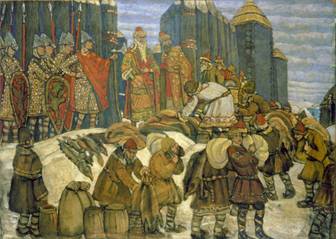
Poliudie, by Nicholas Roerich, 1908 (Moscow). Податки з часом почали сплачувати в грошовому вираженні. Отже, вони виступають найпростішою первинною формою фінансових відносин між громадами і владою у процесі утворення централізованого фонду грошових коштів. З розвитком держави сформувалися державні доходи і державні видатки, які склали більш загальну фінансову категорію — державний бюджет, і доповнилися категоріями "позабюджетні фонди", "державний кредит". Розвиток суспільного відтворення викликав необхідність включення до складу фінансових категорій фінансів підприємств, організацій, а це в свою чергу вимагало перерозподілу фінансових ресурсів і сприяло виникненню фінансових ринків, міжнародних фінансів. Історичний характер фінансів виявляється не тільки у створенні нових форм фінансових відносин із розвитком суспільства, а й в еволюції кожної форми зокрема. В окремих країнах розвиток фінансів має свої особливості залежно від економічної політики, ролі та функцій держави, пропорцій розподілу валового внутрішнього продукту, економічного та соціального стану, національних традицій тощо. Розглянемо важливу первинну форму фінансів — еволюцію податку. У Київській Русі виникли зародкові форми фінансів, необхідні для утримання князівської та помісної влади. Система оподаткування була примітивною і здебільшого представлена даниною, що сплачувалася як у натуральному (хутром, шкірою, медом, зерном, худобою), так і в грошовому вираженні. Спочатку данина виступала у формі воєнної контрибуції, тобто характер фіску мав риси "фінансового насилля" і застосовувався до підкорених і поневолених народів. З часом данина набула форм прямого державного податку з переорієнтацією державного скарбу на внутрішні джерела доходів. Одиницею оподаткування були "плуг”, "рало", що вказувало на основних платників — землеробів. З кінця XI ст. об'єктом обкладання стає кожне господарство (соха). (Соха означала розмір земельного наділу, до якого приписувалися селяни. Господарства, включені в соху, несли колективну відповідальність за сплату податків.) Важливим видом доходів було мито, що пов'язано зі значним розвитком внутрішньої та зовнішньої торгівлі. Для цього історичного етапу розвитку нашої країни характерна заміна прямих податків натуральними повинностями на будівництві доріг, мостів, фортець, що свідчило про нерозвинутість товарно-грошових відносин. Подальший розвиток податків характеризувався такими особливостями: 1) збільшення кількості податків та багаторазовість їх стягнення (наприклад мита); 2) запровадження різних об'єктів оподаткування на окремих територіях (поголовщина, воловщина); 3) встановлення диференційованих ставок податків залежно від платника (привілейовані особи платили менше); 4) наявність доменів як важливого джерела доходів держави, альтернативи оподаткування. Домени були доходом від державної власності та експлуатації земель, лісів, надр, ведення торгівлі, рибної ловлі, тобто вони надходили від усіх ресурсів, що знаходилися у власності короля, правителя. Система, у якій формування доходів держави відбувається за рахунок доходів від власності короля (держави), отримала назву доменіального устрою. Крім доменів, королі збирали з населення добровільні тимчасові збори — субсидії, які поступово трансформувалися в примусові збори (податки). Доменіальний устрій був необхідним і важливим в умовах недостатньо розвинутих грошових відносин та державного управління. З часом він занепав у результаті продажу державної власності через династичне дроблення чи марнотратство, а також під тиском буржуазії, яка вимагала переведення державної (королівської) власності у приватну. Поступове зменшення державної (королівської) власності привело до скорочення доходів від експлуатації доменів, а тому королі компенсували нестачу коштів у державній скарбниці введенням спеціальних зборів (плата за проїзд мостами, річками), монопольних цін на продукцію та торгівлю, яку вони монополізували. Якщо раніше король продавав продукцію з власного господарства на загальних підставах, отримуючи лише середній прибуток, подібно до будь-якого іншого підприємця, зайнятого цією діяльністю, то монополізація діяльності в руках держави давала можливість формувати додаткові монопольні прибутки. Методи формування доходів державної казни, що базувалися на особливих привілеях і правах держави, отримали назву регалій. Держава мала виключне право на експлуатацію землі, надр, повітря, виробництво окремих товарів, що давало їй право на отримання доходів від цього. Найбільш поширеними були такі регалії: судова, митна, лісова, монетна, мисливська, річкова, морська, поштова, телеграфна, гірнича, винна, тютюнова та ін. Регаліям властиві риси податків (мають примусовий характер) і зборів (збираються за певну послугу, іноді мають цільове призначення). Однак за своєю економічною природою регалії — державні монополії на ведення певної діяльності або торгівлі окремими видами товарів. Їх існування стає можливим лише завдяки застосуванню державного примусу щодо обмеження конкуренції та прав власності. У подальшому багато видів регалій трансформувалися у непряме оподаткування (акцизи на сіль, сірники, тютюн, цукор тощо). З поступовим розвитком капіталістичного способу виробництва такі форми доходів держави, як домени і регалії, стали перешкоджати конкуренції й розвитку приватного підприємництва. Відбувся перехід до податків — основного джерела державних доходів. У податковій системі XVII—XVIII ст. регалії змінюються непрямими податками, переважно на товари широкого вжитку, які сплачували всі соціальні групи населення. На початку XX столітті продовжуються кардинальні зміни у податкових системах всіх країн щодо зміни ставок податків, їх диференціації залежно від доходів, застосовуються неоподаткований мінімум, окремі пільги тощо. Так, із приходом до влади більшовиків у Росії податкова система розвивалася за такими напрямами: широке застосування одноразових надзвичайних революційних податків (контрибуцій), перебудова системи непрямих податків шляхом підвищення ставок і запровадження нових, організація строгого обліку і контролю за стягненням прямих податків. Податкова політика була спрямована на досягнення централізації грошових коштів, встановлення нових принципів розподілу національного доходу, економічну боротьбу з приватними підприємцями. До 1929 р. налічувалося 86 платежів у бюджет, що ускладнювало їх стягнення. Податкова реформа 1930—1931 рр. запровадила двоканальну систему платежів у бюджет і дала змогу вдало поєднати прямі та непрямі податки: для державних підприємств — податок з обороту і відрахування від прибутку, для кооперативних організацій — податок з обороту і по-дохідний податок. Нова система платежів у бюджет дала стійкий дохід державі у формі податку з обороту, в якому було уніфіковано 53 платежі, стимули підприємствам у розвитку госпрозрахунку (cкорочення: господарський розрахунок – діяльність, заснована на самоокупності та самофінансуванні), а також можливості проведення ефективного фінансового контролю. Податок з обороту зберігся майже на 60 років, маючи на це реальні підстави: адміністративне управління і тверді ціни. Соціалістичний спосіб виробництва і розподілу національного фонду, всезагальність державної форми власності, адміністративно-командне управління не давали реальних підстав для економічного зростання і забезпечення добробуту населення. Влада з певною періодичністю проводила економічні реформи, які стосувалися і внесення змін у систему оподаткування. Так, рішеннями господарської реформи 1965 р. були запроваджені нові прямі податки з юридичних осіб у бюджет: плата за фонди (прообраз податку на нерухомість), фіксовані (рентні) платежі, вільний залишок прибутку. З проголошенням незалежності України розпочалося реформування її податкової системи. Так, податок з обороту було скасовано, а в умовах розвитку ринкових відносин та вільного ціноутворення запроваджено податок на додану вартість і акцизний збір. З прямих податків найбільше значення мають податок з прибутку підприємств і податок з доходів фізичних осіб. Податки разом з іншими надходженнями формують державні доходи, які мають бути достатніми, щоб забезпечити виконання державою своїх повноважень, тобто відповідати державним видаткам. | The historical character of finances The historical character of finances is connected with the existence of the Sstate and commodity-money relations. To fulfil its functions the State needed certain maney facilities (funds, assets, resources, means), which it could get as a result of social product allocation. Finances as an objective economic category reflect the economic relations concerning the allocation and re-allocation of the Gross Domestic Product. The core of the finances does not change but the forms of their use constantly improve. The embryonic ajrms of finances appeared at the period of the downfall of the primitive order in the form of natural taxes, duties and charges for the benefit of the prince, emperor, king. In time taxes were paid in money. So, they are the simplest primitive form of the finance relations between community and the authority in the process of forming centralized money funds. With the development of the State state revenues and state expenditures, which make up a larger financial category – financial budget, and were complemented with the categories of out-of-budget funds”, “state credit”. The development of the social reproduction caused the necessity of including enterprise finances, ogranisation finances into the financial categories categories. In its turn it demanded re-allocation of the financial resources and contributed to appearing financial markets, international finances. The historical character of finances displays not only in new forms of financial relations but also in evolution of each of these forms. In some countries the development of the finances has its own reculiarities depending on the economipolicy, state role and its functions, propotion of the GDP allocation, economic and social state, national traditions as well. As an example let us consider the important primitive finance form – evolution of the tax. In Kyivska Rus the embryonic finance forms appeared, nessessary to maintain the prince and landlords’ authorities. The taxation system was primitive and mostly in the form of tribute, which was laid both with products (fur, leather, honey, grain, cattle) and money. At first the tribute was a military contribution, that is it was of some violence character and was applied towards conquered and slaved peoples. In time the tribute aquired the form of the direct state tax with the direction of the nationl wealth at the inner income sources. The taxation units were “plough”, “wooden plough”, which indicated the main taxpayers – farmers. At the end of the XIth century the taxation object became every household (“soha”). (“Soha” meant the dimension of the land plot to which the peasants were regictered.) The farms included into the soha had the collective responsibility for tax paying.) The importany kind of income was duty, which is connected with the significant development of the domestic and foreigh trade. It is characteristic of this historical period if the development of this country to change the direct tax by natural duties into building roads, bridges, fortresses, which proved the undevelopment of the product-money relations. The further development of taxes was characterized by the following peculiarities: 1) increasing the amount of taxes and multiple levying them (for instance, duty); 2) introducing different objects of taxation in different territories (so-called poholovshchyna, volovshchyna); 3) introducing differentiating tax rate depending on the taxpayer (privileged person paid less); 4) existance of damains as am important source of state income, an alternative to taxationa. The domains were income from state property and exsploitation of land, forests, mineral wealth, trade, fishery, i. e. they came from all resources which were the king’s, lord’s property. The system in which the state income is formed by the income from the king’s property (state) was called domain order. Besides domains, kings levied willing temporary duties – subsidies, which step by step transformed into compulsory duties (taxes). Domain order was necessessary and important under the circumstances of undeveloped money relations and state government. In time it declined in result of state property selling due to dynastic splitting or squander, and also under the enforcement of bourgeoisie, which demanded to make state (royal) property into private one. The gradual decreasing the state (royal) power led to the reduction of income from domain exploitation. That is why kings compensated the lack of funds in the state treasury with introducing the special duties (the pay for crossing bridges, rivers), with monopoly prices at products and trade, which theyhad monolized. Before the king had sold the product under the common conditions making just an average income, like any other enterpriser. Monopolization made it possible to create to create added monopoly income. The state treasury income methods that were based on privileges and rights of the state were called regalia. The state had an exclusive right to exploiting land, mineral resources, air, production of certain products and it gave the state the right to make incomr from them. The most common regalia were: judicial, customs, forest, monetary, hunting, river, sea, post, telegraphic, mining, wine, tobacco and others. Regalia have the features of taxes (they are of compulsory character) and duties (they are levied for a certain service, sometimes they are of a certain purpose). But by their economic nature regalia are state monopolies on some activity or trade with certain goods. Their existence is possible only due to the state enforcement concerning the restriction of the competition and property right. Later a lot of regalia transformed into indirect taxes ( salt excise duty, match excise duty, tobacco excise duty, sugar excise duty as well). With the development of the capitalist production such forms of state income as domain and regalia started to prevent competition and development of the private enterprise. The transition to taxes – the main source of state income - took place. In the taxation system of the XVII – XYIIIth centuries regalia were changed into indirect taxes, mostly on the consumer goods. All the social layers of the population paid those taxes. At the beginning of the XXth century the signigicant changes in the taxation systems in all the countries. Those changes concerned the tax rates, their differentiation depending on income. The non-taxable limit, certain privileges were introduced as well. When the Bolsheviks’ accession to power the taxation system developed in the following way: broad (large-scale) introducing of one-time energency revolutionary taxes (contributions) re-building the system of indirect taxes by means of increasing rates and introducing new ones, strict accounting and control direct tax collection. The tax policy was directed at the centralization of the money funds, establishing new principles of national income allocation, economic struggle against private enterpresers. Before 1929 there were 86 payments to the budget, which make it difficult to levy them. The tax reform of introduced the bi-cannal system of budget payments and made it possible to combine direct and indirect taxes for state enterprises – the turnover tax and profit payments, for cooperatives – turnover tax and income tax. The new system of payments provided the state with the stable income in the form of turnover (= sales) tax, in which 53 payments were unified, incentives for enterprises in cost accounting, also the opportunity of effective financial cotrol. The turnover tax had been preserved for 60 years, there being good grounds: administrative management and fixed prices. The socialist order of production and allocation of the national fund, state property on everything, administrative-command government did not provide the grounds for economic growth and welfare of the population. From time to time the authorities carried out economic reforms which concerned the taxation system as well. Thus, the reform of 1965 new direct budget taxes levied on legal entities were introduced: fund payment (the prototype of the estate tax), fixed payments (rent), willing profit remainder. After declaring the independence of Ukraine the taxation system reforming started. The turnover (=sales) tax was abolished, and under the circumstances of market development and free pricing the Added Value Tax and excise were introduced. Among direct taxes the most important are profit tax for enterprises and income tax for individuals. Taxes along with other inocmings make up state revenues which should be enough for the state to fulfil its powers, i. e. to correspond the stste expenditures. |

|
Из за большого объема этот материал размещен на нескольких страницах:
1 2 |
