

Партнерка на США и Канаду по недвижимости, выплаты в крипто
- 30% recurring commission
- Выплаты в USDT
- Вывод каждую неделю
- Комиссия до 5 лет за каждого referral
 ТЕМА 4.1. ПОШУК РОБОТИ. СПІВБЕСІДА ПРИ ПРИЙОМІ НА РОБОТУ
TOPIC 4.1. JOB HUNTING. JOB INTERVIEW
Task 1. Read the text and answer the questions after it.
· Job hunting,
job seeking,
job searching is the act of looking for employment, due to unemployment or discontent with a current position. The immediate goal of job seeking is usually to obtain a job interview with an employer which may lead to getting hired. The job hunter or seeker typically first looks for job vacancies or employment opportunities. Common methods of job hunting are:
§ finding a job through a friend or an extended business network or personal network
§ using a job search engine
§ looking through the classifieds in newspapers
§ using a private or public employment agency or recruiter
§ looking on a company's web site for open jobs, typically in its applicant tracking system
§ going to job fair
Knowing the employers
The job seekers should do a lot of research into the employers. Some basic information about an employer should be collected first before applying the organization's positions, including full name, locations, web site, business description, year established, revenues, number of employees, stock price if public, name of chief executive officer, major products or services, major competitors, strength as well as challenges.
Networking
Contacting as many people as possible is a highly effective way to find a job. It is estimated that 60% or higher of all jobs are found through networking. Job recruiters may use online social networking sites for this purpose.
Applying
One can also go and hand out résumés or Curriculum Vitae to prospective employers. Another recommended method of job hunting is cold calling or emailing companies that one desires to work for and inquire to whether there are any job vacancies.
After finding a desirable job, they would then apply for the job by responding to the advertisement. This may mean applying through a website, emailing or mailing in a hard copy of your résumé to a prospective employer. It is generally recommended that résumés be brief, organized, concise, and targeted to the position being sought. With certain occupations, such as graphic design or writing, portfolios of a job seeker's previous work are essential and are evaluated as much, if not more than the person's résumé. In most other occupations, the résumé should focus on past accomplishments, expressed in terms as concretely as possible (e. g. number of people managed, amount of increased sales or improved customer satisfaction).
Interviewing
Once an employer has received your résumé, they will make a list of potential employees to be interviewed based on the résumé and any other information contributed. During the interview process, interviewers generally look for persons who they believe will be best for the job and work environment. The interview may occur in several rounds until the interviewer is satisfied and offers the job to the applicant.
QUESTIONS:
1. What is hob hunting?
2. Why do people look for job?
3. What is a man looking for job called?
4. What are the common methods of job hunting?
5. Which method of job hunting is the most popular?
6. What kind of information about the employer should the job hunter collect?
7. What should the resume be?

Task 2. Hunting for the ideal job takes a lot of patience and hard work, and most people search for a new job for better pay and career advancement. What do you think are two or three of the most important keys to finding a great job? Read this conversation between two friends on this topic.
ConversationBackground: Alex works as a clerk at a department store, but he is unhappy with his situation. In fact, he is really depressed. He has just come home from his job when Alex drops by to visit him. Ryan: Hey, Alex. You look really exhausted. What gives? Alex: You don't want to know. I mean, I've been slaving away at my nickel-and-dime job just to keep my head above water. [Really.] I mean some people think I'm a workaholic, [Who?] Well, everyone, but I have to put in a lot of overtime just to make ends meet. Ryan: Well, why don't you ask your boss for a raise? Alex: Huh? The last guy that did thatgot the ax, an' he was in line for a promotion to supervisor. Ryan: Well, you just can't keepworking your fingers to the bone for peanuts. [I know, but. . .] Hey. Look. Ihave connections with a guy who works for a computer company, an' he owes me a favor, and he might be able to pull a few strings an' line you upfor an interview. Alex: What? You mean like to last job you helped me get, an' then the company went belly up after only a week? I mean fat chance. I'm not going to try selling electronic toilet paper dispensers again.[Hey, that was cool.] Ryan: No, that was different. Alex: Ah, man. Hey, thanks, but I'm still looking, and I'm not going to get my hopes up just because a few other job searches haven't panned out. I'm going to look at my options. Ryan: Well, whatever you do, the only way you're going to get ahead is by getting your face out there, an' you're sure to land a better job than you have now. Alex: Well, I know. Exactly, if I can justget my foot in the door, then I canshow my stuff, but I'm notabsolutely not going to kiss up toANYONE to get ahead. Ryan: Gotcha. Hey, I'll give my friend a call, an' see if he can set up an interview. | Key Vocabulary: [ Sample Sentences ]
|
So what do you think are two or three of the most important keys to finding a great job?
Task 3. Check yourself if you caught the meaning. Read the following sentences and select the best expression for each.
1. He is always trying to ______________ the boss in order to get a raise, but it hasn't worked yet.
A. kiss up to
B. make ends meet to
C. land a job with
2. If you do some volunteer work for that organization, it might help you ________________ now and help you get a job there when something opens up.
A. put in overtime
B. work your fingers to the bone
C. get your foot in the door
3. Even though the job interview went well, I don't want to ________________ in case they don't hire me.
A. slave away
B. be in line for
C. get my hopes up
Task 4. How should you dress?
Dressing conservatively is always the safest route, but you should also try and do a little investigating of your prospective employer so that what you wear to the interview makes you look as though you fit in with the organization. If you overdress (which is rare but can happen) or underdress (the more likely scenario), the potential employer may feel that you don't care enough about the job.
How do you find out what is the proper dress for a given job/company/industry? You can call the Human Resources office where you are interviewing and simply ask. Or, you could visit the company's office to retrieve an application or other company information and observe the attire current employees are wearing -- though make sure you are not there on a "casual day" and misinterpret the dress
code.
Hints for Dress for Success for Men and Women
Attention to details is crucial, so here are some tips for both men and women. Make sure you have:
- clean and polished conservative dress shoes well-groomed hairstyle cleaned and trimmed fingernails minimal cologne or perfume no visible body piercing beyond conservative ear piercings for women well-brushed teeth and fresh breath no gum, candy, or other objects in your mouth minimal jewelry no body odor
Finally, check your attire in the rest room just before your interview for a final check of your appearance - to make sure your tie is straight, your hair is combed, etc.

Task4. Watch the video “Job Interview Tips” (see :Job Interview).
Then read the transcript of the video. How much have you understood by ear? Learn the dialogue by heart.
Hi, I'm Alison Doyle for . For any job interview, it's important to be prepared to ace the interview and impress the interviewer from the moment you arrive. Here are some tips on how you can make the right impression.
Interview Tip 1: Look the Part
Plan to dress professionally in conservative clothing with appropriate shoes, minimal jewelry, and perfume. Even if the office is casual, you should dress in business attire.
Interview Tip 2: Before the Interview
Bring a portfolio with extra copies of your resume, a list of references, and a notepad and pen. Use a breath mint before you enter the building. Leave the gadgets at home or turned off in your bag or briefcase.
Interview Tip 3: Arrive on Time
Arrive a few minutes early for your interview. If you're not sure where you're going get directions ahead of time (Mapquest or Google Maps) and do a trial run, so you know where you're going. When you arrive for your interview, greet the receptionist and let him or her know why you are there.
Interview Tip 4: Answer Questions Calmly
During the interview try to remain as calm as possible. Ask for clarification if you're not sure what's been asked and remember that it is perfectly acceptable to take a moment or two to frame your responses so you can be sure to fully answer the question.
Interview Tip 5: Ask Questions About the Job
Be prepared with questions of your own, because you will probably be asked if you have any at the end of the interview. Having questions will show that you've done your homework and are truly interested in the position.
Interview Tip 6: Follow Up
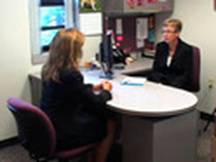 Ask your interviewer for a business card. That way, you'll have the correct spelling of names and job titles for your thank you notes and follow up calls. It's important to thank the interviewer for their time and to let them know that you look forward to hearing from them. Follow up by sending a thank you note to everyone you interviewed with.
Thanks for watching.
To learn more visit us on the Web at .
