

Партнерка на США и Канаду по недвижимости, выплаты в крипто
- 30% recurring commission
- Выплаты в USDT
- Вывод каждую неделю
- Комиссия до 5 лет за каждого referral
Практичне заняття №
Тема: Економісти країни, мова якої вивчається
Topic: Economists of Great Britain
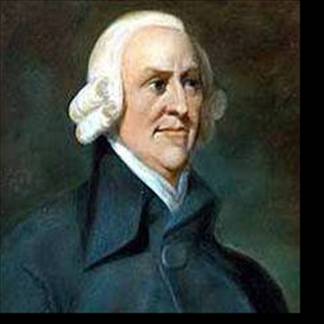
Adam Smith
and
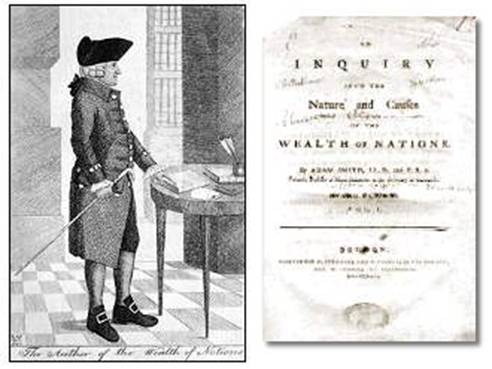
The Wealth of Nations
One of the most influential books of our time, The Wealth of Nations, was published in England in seventeen seventy-six. Written by Adam Smith, it earned the author the title “The Father of Economics”.
Smith objected to the principal economic beliefs of his day. He differed with the physiocrats who argued that land was the only source of wealth. He also disagreed with the mercantilists who measured the wealth of the nation by its money supply, and who called for government regulation of the economy in order to promote a “favourable balance of trade”.
In Smith’s view, a nation’s wealth was dependent upon production, not agriculture alone. How much it produced, he believed, depended upon how well it combined labour and the other factors of production. The more efficient the combination, the greater the output, and the greater the nation’s wealth.
The heart of the Smith’s economic philosophy was his belief that the economy would work best if left to function on its own without government regulation. Under those circumstances, self-interest would lead business firms to produce only those products that consumers wanted, and to produce them at the lowest possible cost. They would do this, not as a means of benefiting society, but in an effort to outperform their competitors and gain the greatest profit. But all this self-interest would benefit society as a whole by providing it with more and better goods and services, at the lowest prices. To explain why all society benefits when the economy is free of regulation, Smith used the metaphor of the “invisible hand”:
“Every individual is continually exerting himself to find the most advantageous employment for whatever capital he can command. It is his own advantage, and not that of society, which he has in mind, … but he is in this, as in many other cases, led by an invisible hand to promote an end which was no part of his intention, for the pursuit of his own advantage necessarily leads him to prefer that employment which is most advantageous to society”.
The “invisible hand” was Smith’s name for the economic forces that we today would call supply and demand, or the marketplace. He sharply disagreed with the mercantilists who, in their quest, for a “favourable balance of trade”, called for regulation of the economy.
Instead, Smith agreed with the physiocrats and their policy of “laissez faire”, letting individuals and businesses function without interference from government regulation or private monopolies. In that way, the “invisible hand” would be free to guide the economy and maximize production.
The Wealth of Nations goes on describing the principal elements of the economic system. Smith turned to the pin industry to demonstrate how the division of labour and the use of machinery increased output.
“One man draws out the wire, another straights it, a third cuts it, a fourth points it, a fifth grinds it at the top for receiving the head; to make the head requires two or three distinct operations…"
Although modern technology has improved the methods by which pins are produced, the principles pertaining to the division of labour remain unchanged.
Similarly, other sections dealing with the factors of production, money and international trade are as meaningful today as when they were first written.
1) * mercantilism, mercantile system economics a theory prevalent in Europe during the 17th and 18th centuries asserting that the wealth of a nation depends on its possession of precious metals and therefore that the government of a nation must maximize the foreign trade surplus, and foster national commercial interests, a merchant marine, the establishment of colonies, etc.
2) a rare word for commercialism
* laissez faire [French ] or laisser faire
 Also called: individualism the doctrine of unrestricted freedom in commerce, esp for private interests
1 | to earn | заробляти | 23 | pursuit | 1) прагнення, пошуки 2) заняття |
2 | to object | заперечсувати | 24 | to promote an end | покласти край, припинити |
3 | belief | переконання; погляд, думка | 25 | supply and demand | попит і пропозиція |
4 | to argue | доводити | 26 | marketplace | the commercial world of buying and selling |
5 | to promote | 1) сприяти 2)стимулювати, активізувати | 27 | quest | 1) шукання, пошуки 2) розшукуваний предмет 3) дізнання |
6 | regulation | pегулювання | 28 | instead | замість |
7 | supply | запас | 29 | interference | втручання |
8 | output | продукція, випуск | 30 | pin | 1) шпилька, прищіпка 2) штифт, болт |
9 | if left to function on its own | якщо дозволити їй функціонувати самостійно | 31 | division | розподіл |
10 | circumstance | обставина | 32 | labour | праця |
11 | cost | вартість, ціна, | 33 | machinery | машини, устаткування |
12 | to benefit | 1) мати користь, (з-by) 2) допомагати, давати користь | 34 | to increase | |
13 | to outperform | робити краще, ніж хтось | 35 | to draw (drew; drawn) | 1) тягти, волочити, волокти |
14 | competitor | конкурент | 36 | wire | дріт, провід |
15 | to gain profit | щтримати прибуток | 37 | to point | загострівати |
16 | invisible | невидимий | 38 | to grind | 1) молоти 2) товкти, розтирати |
17 | continua | безперервний, що повторюється | 39 | to improve | покращувати |
18 | to exert to exert oneself | напружувати (сили) намагатися, старатися | 40 | to pertain | 1) стосуватися (to) 2) бути властивим |
19 | advantageous | вигідний | 41 | to remain | залишатися |
20 | employment | 1) робота, служба 2) використовування, застосування | 42 | unchanged | без змін, незмінний |
21 | to command | мати в розпорядженні, володіти | 43 | similarly | так само, у такий самий спосіб |
22 | advantage | 1) вигода, користь 2) перевага | 44 | meaningful | красномовний, значущий, багатозначний |
 Task plete the following sentences.
1. One of the most influential books The Wealth of _____, was published in England in _____. It was written by _____ and earned the author the title “___________”.
2. Smith objected to the physiocrats who argued that _____ was the only source of wealth. He also disagreed with the _____ who measured the wealth of the nation by its __________, and who called for __________ of the economy in order to promote a “favourable __________”.
3. Smith believed that a nation’s wealth was dependent upon _____, not agriculture alone. How much it produced, depended upon how well it combined _____ and the other factors of production. The more efficient the combination, the greater the output, and the greater the __________.
4. The heart of the Smith’s economic philosophy was his belief that the economy would work best if left to function on its own without __________. Under those circumstances, _____ would lead business firms to produce only those products that _____ wanted, and to produce them at the lowest possible _____. They would do this, not as a means of benefiting _____, but in an effort to outperform their _____ and gain the greatest _____. But all this self-interest would benefit society as a whole by providing it with more and better __________, at the lowest prices. To explain why all society benefits when the economy is free of regulation, Smith used the metaphor of the “__________”:
5. The “__________” was Smith’s name for the economic forces that we today would call _____ and _____, or the marketplace. He sharply disagreed with the __________ who, in their quest, for a “favourable balance of trade”, called for __________.
6. Smith agreed with the _____ and their policy of “laissez faire”, letting individuals and businesses function without _____ from government regulation or private monopolies. In that way, the “__________” would be free to guide the economy and maximize _____.
7. The _____ of Nations goes on describing the principal elements of the economic system. Smith turned to the pin industry to demonstrate how the division of _____ and the use of _____ increased _____.
1. the Father of Economics, 1776, Adam Smith, Nations,
2. mercantilists, land, government regulation, money supply, balance of trade
3. nation’s wealth, labour, production
4. consumers, self-interest, invisible hand, society, profit, competitors, goods and services, government regulation, cost
5. regulation of the economy, supply and demand, invisible hand, mercantilists,
6. interference, production, invisible hand, physiocrats
7. output, Wealth, machinery, labour
