

Партнерка на США и Канаду по недвижимости, выплаты в крипто
- 30% recurring commission
- Выплаты в USDT
- Вывод каждую неделю
- Комиссия до 5 лет за каждого referral
Ход урока
№ п/п | Этап урока/занятия | Содержание |
1 | Организационный момент | a) Приветствие Good morning, dear children! Sit down! Who is on duty today? What date is it today? Who is absent today? How are you? What’s the weather like today? How many lessons do you have today? What are they? b) Фонетическая зарядка to encourage to look like smb to feel like doing smth to hand to be delighted to be stressed out to cheer on to pick up to drop by |
2 | Проверка домашнего задания | Ex. 15 p. 13 Read and correct the mistakes. |
3 | Объяснение нового материала | а) Today we are going to review the Future Continuous and Future Perfect tenses. First let’s review grammar rules. What do these tenses mean? What if the form of these tenses? Read Grammar Reference on page 194. Ex. 8 p. 24 Read the conversation in roles. Find and write out the sentences in the Future Continuous Tense from the dialogue. Ex. 9 p. 25 Read the conversation and put in a Pronoun and the Future Continuous form of the verbs. |
4 | Закрепление нового материала a) лексика b)грамматика | a)Физкультминутка b)Revision of gerund visit, clean, walk, wait, talk, dance Ex. 9 p. 196 Make sentences with will be –ing and will have done. Example: Tomorrow Jean is going to swim from 1 o’clock until 3 o’clock. So, at 2 o’clock she will be swimming. Ex. 11 p. 25 What do you hope you’ll have done by the age of forty-five? Write 5 sentences about your future. Example: I will have bought a big beautiful house by the age of forty-five. |
5 | Рефлексия: | What was the theme of our lesson? What have you learnt today? Was it difficult for you? What was difficult? |
Домашнее задание | Ex. 10 p. 25, to learn grammar rules. | |
6 | Подведение итогов урока/занятия, оценивание | Give comments. Today you worked very well. I’m pleased with your answers. I hope you are satisfied too. The lesson is over. Thank you very much for the lesson. |
План урока
Урок № 9
Дата:__________
Класс 10
Лексическая тема: Famous travelers
Грамматическая тема: Типы предложений.
Цель урока: Мотивировать учащихся к ведению диалога по теме урока, обмену мнениями о путешествии, его положительных и отрицательных моментах.
Задачи урока:
1. Образовательная: обучение основным коммуникативным умениям: аудированию, говорению, чтению, письму.
2. Развивающая: Развитие внимания, воображения, памяти, мышления, логики;
3. Воспитательная: Воспитание толерантного отношения к иноязычной культуре, к изучаемому языку.
Оборудование: раздаточный материал, книга, наглядности, словарь, рабочая книга.
Тип урока: комбинированный
Метод: словесный, наглядный, практический.
Учебник: Учебник для 10 класса общеобразовательных школ. Т. Аяпова, З. Абильдаева,
Ход урока
№ п/п | Этап урока/занятия | Содержание |
1 | Организационный момент | a) Приветствие Good morning! Take your sits. Nice to see you. How are you today? What was your home task? Was it difficult or easy for you? b) Фонетическая зарядка Fill in: tour, excursion, trip, journey and voyage. 1. They went on a coach _______ of Spain. 2. Let’s go on a day ______ to the seaside. 3. The holiday company organizes a weekly _______ to the mountains. 4. The Titanic sank on its maiden _______. 5. The car _______ was boring, tiring and hot. |
2 | Проверка домашнего задания | Ex. 10 p. 25, to learn grammar rules. |
3 | Объяснение нового материала | Now I want you to draw your attention to the blackboard where the quotation from John Clark is written: “He that travels far knows much”. I think these words can be the motto of our lesson. As you know travelling develops our outlook, travelling abroad helps you to study. Choose the correct answers. 1. We were in our car for an hour in the (track/traffic jam). 2. I carried all my clothes on my back in a (rucksack/suitcase). 3. We pushed all our bags on a (cab/trolley) through the airport. 4. They searched our bags at (customs/ passport control) when we arrived at the airport. 5. The plane (changed/ landed) at the airport at 3 o’clock; two hours late. 6. On the train we ate something from the (buffet/ luggage) service. 7. What a lot of (luggage/ traffic jam)! You’ve got five suitcases! 8. We haven’t got time for the bus. Let’s take a (cab/ trolley). Follow up activities. 1) What famous travelers do you know? Look at the blackboard. You can see photos of famous travellers. We’ll find out some information about some travellers. Vasco da Gama - discovered the seaway to India. Christopher Columbus - discovered South and Central America. James Cook - discovered Norfolk, South Georgia. George Vankuver - researched the north - western coast of North America. Frencis Drake - took part in the expedition to West India. What famous travelers of our country do you know? Shokan Valikhanov (1835-1865) - was an outstanding Kazakh scientist, traveler, and researcher. He explored and did research into the culture and history of the peoples of Central Asia, in Kazakhstan and Eastern Turkestan. He was the first scientist to prove that Kazakhs and Kirgizes come from different ethnic groups. In 1857, when he was only 22, he became a member of the Russian Geographic Association in St. Petersburg.
In 1856 Shokan takes part in the military-scientific expedition. The purpose of expedition was acquaintance with Kirghiz people, geographical studying of its territory, and survey of pool of Issyk Kul Lake. In a member of expedition there was a group of topographers led by Yanovsky. Sh. Valikhanov has made a number of trips to vicinities of lake on several routes together with P. P.Semenov-Tjan-Shansky with who has got acquainted and made friends in Omsk in the spring 1856. In August, 1856 Shokan goes to the Kuldzha. The primary goal of a trip was realization of negotiations with the Chinese authorities concerning adjustment of trade relations with China, interrupted after Russian trading station in the Chuguchak city has been burnt. Valikhanov should realize complex diplomatic mission connected with the decision of disputable boundary questions. This important assignment has been executed by him successfully. Having stayed in Kuldzhinsky land about three months, Shokan has familiarized with physical-geographical conditions of territory, a life and history of people. In 1857 Shokan again makes a trip to Alatau’s Kirghiz which was trial step before expedition to Kashgar. Valikhanov has even more close familiarized with a life of Kirghiz people, has studied its history, ethnography and national poetry. As a result of tireless work he has saved up an extensive historical-ethnographic material. It is especially important, that the young researcher for the first time has paid attention to the well-known poem of Kirghiz “Manas”, has made its first scientific record and translation into Russian. |
4 | Закрепление нового материала a) лексика b)грамматика | a)Физкультминутка
Cook set off for his first journey on August 26, 1768. During this trip he visited Tahiti the Society Islands, and New Zealand. He mapped much of the two main islands of New Zealand, but also ended up fighting with the local Maori tribe. Next stop on the journey was the east coast of Australia. Here James and his crew found all sorts of interesting animals and plants including the kangaroo. Unfortunately, the ship was damaged on some coral and they had to stop for a while to do repairs. Captain Cook's second expedition took place from 1772-1775. This time he took two ships, the Adventure and the Resolution. His goal was to either discover the southern continent or prove that it didn't exist. He went below 70 degrees latitude. This was the furthest south any European had explored. He also visited Easter Island. Cook's final expedition lasted from 1776 to 1779. The goal of this journey was to find a northwest passage across North America to Asia. He searched the coast of Alaska to no avail. Fun Facts about Captain Cook The first European to set foot on Australia's east coast was Cook's nephew Isaac Smith. The Endeavour also had scientists aboard including botanist Joseph Banks. They collected and recorded numerous plants and animals throughout their journey. Tahiti was so nice and the natives so friendly that some of Cook's crew wanted to stay. The Maori warriors in New Zealand wore tattoos on their faces. Some of the Endeavour's sailors got tattoos on their arms and started a tradition that continues today. |
5 | Рефлексия: | What was the theme of our lesson? What have you learnt today? Was it difficult for you? What was difficult? |
Домашнее задание | Ex. 4 p. 44 Answer the questions | |
6 | Подведение итогов урока/занятия, оценивание | Give comments. Today you worked very well. I’m pleased with your answers. I hope you are satisfied too. The lesson is over. Thank you very much for the lesson. |
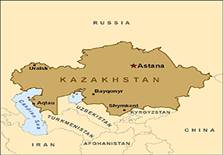 In 1855 Valikhanov has taken part in a trip of General Gasfort across the Central Kazakhstan, Semirech’ye and Таrbagatay. This trip has left indelible impression on the young traveler. For the first time he has widely familiarized with an environment of Kazakhstan and a life of people.
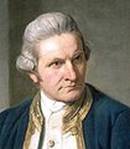 Captain James Cook was a British explorer, navigator, cartographer, and captain in the Royal Navy.
План урока

|
Из за большого объема этот материал размещен на нескольких страницах:
1 2 3 4 5 6 7 8 9 10 11 12 13 |
