

Партнерка на США и Канаду по недвижимости, выплаты в крипто
- 30% recurring commission
- Выплаты в USDT
- Вывод каждую неделю
- Комиссия до 5 лет за каждого referral
14. Chiron B, Mas C, Ferrandière M, Bonnard C et a.: Standard preoxygenation vs two techniques in children. Paediatr Anaesth 2007; 17:963–7
15. Cohn AI, Zornow MH: Awake endotracheal intubation in patients with cervical spine disease: A comparison of the Bullard laryngoscope and the fiberoptic bronchoscope. Anesth Analg 1995; 81:1283–6
16. Cook TM, MacDougall-Davis plications and failure of airway management. Br J Anaesth. 2012 Dec;109 Suppl 1:i68-i85.
17. Cook TM, Woodall N, Frerk C; Fourth National Audit Project. Major complications of airway management in the UK: results of the Fourth National Audit Project of the Royal College of Anaesthetists and the Difficult Airway Society. Part 1: anaesthesia. Br J Anaesth. 2011 May;106(5):617-31.
18. Dimitriou VK, Zogogiannis ID, Liotiri DG: Awake tracheal intubation using the Airtraq laryngoscope: A case series. Acta Anaesthesiol Scand 2009; 53:964–7
19. Domino KB, Posner KL, Caplan RA, Cheney FW: Airway injury during anesthesia: A closed claims analysis. Anesthesiology 1999; 91:1703–11
20. Enomoto Y, Asai T, Arai T, Kamishima K, Okuda Y: Pentax- AWS, a new videolaryngoscope, is more effective than the Macintosh laryngoscope for tracheal intubation in patients with restricted neck movements: A randomized comparative study. Br J Anaesth 2008; 100:544–8
21. Frappier J, Guenoun T, et al.: Airway management using the intubating laryngeal mask airway for the morbidly obese patient. Anesth Analg 2003; 96:1510–5
22. Fukutome T, Amaha K, et al.: Tracheal intubation through the LMA-Fastrach in patients with difficult airways. Anaesth Intensive Care 1998; 26:387–91
23. Gambee AM, Hertzka RE, Fisher DM: Preoxygenation techniques: Comparison of three minutes and four breaths. Anesth Analg 1987; 66:468–70
24. Goldberg ME, Norris MC, Larijani GE, Marr AT, Seltzer JL: Preoxygenation in the morbidly obese: A comparison of two techniques. Anesth Analg 1989; 68:520–2
25. Henderson J. J., Popat M. T., Latto I. P., Pearce A. C. Difficult Airway Society guidelines for management of the unanticipated difficult intubation. Anaesthesia 2004; 59: 675-694.
26. Hung OR, Pytka S, et al.: Lightwand intubation: II–Clinical trial of a new lightwand for tracheal intubation in patients with difficult airways. Can J Anaesth 1995; 42:826–30
27. Jungbauer A, Schumann M, Brunkhorst V, Börgers A, Groeben H: Expected difficult tracheal intubation: A prospective comparison of direct laryngoscopy and video laryngoscopy in 200 patients. Br J Anaesth 2009; 102:546–50
28. Koh JC, Lee JS, Lee YW, Chang CH: Comparison of the laryngeal view during intubation using Airtraq and Macintosh laryngoscopes in patients with cervical spine immobilization and mouth opening limitation. Korean J Anesthesiol 2010; 59:314–8
29. Langeron O Masso E et al. Prediction of difficult mask ventilation. Anesthesiology. 2000; 92: 1229-1236.
30. Lim Y, Yeo SW: A comparison of the GlideScope with the Macintosh laryngoscope for tracheal intubation in patients with simulated difficult airway. Anaesth Intensive Care 2005; 33:243–7
31. Malik MA, Subramaniam R, et al.: Randomized controlled trial of the Pentax AWS, Glidescope, and Macintosh laryngoscopes in predicted difficult intubation. Br J Anaesth 2009; 103:761–8
32. Metzner J, Posner KL, Lam MS, Domino KB. Closed claims’ analysis. Best Pract Res Clin Anaesthesiol 25(2):263-76, 2011.
33. Miller, C. G.: Management of the Difficult Intubation in Closed Malpractice Claims. ASA Newsletter 64(6):13-16 & 19, 2000.
34. Nakazawa K, Tanaka N, Ishikawa S, Ohmi S, Ueki M, Saitoh Y, Makita K, Amaha K: Using the intubating laryngeal mask airway (LMA-Fastrach) for blind endotracheal intubation in patients undergoing cervical spine operation. Anesth Analg 1999; 89:1319–21
35. Ovassapian A, Krejcie TC, Yelich SJ, Dykes MH: Awake fibreoptic intubation in the patient at high risk of aspiration. Br J Anaesth 1989; 62:13–6
36. Palmer JH, Ball DR: Awake tracheal intubation with the intubating laryngeal mask in a patient with diffuse idiopathic skeletal hyperostosis. Anaesthesia 2000; 55:70–4
37. Parnell JD, Mills J: Awake intubation using fast-track laryngeal mask airway as an alternative to fiberoptic bronchoscopy: A case report. AANA J 2006; 74:429–31
38. Practice Guidelines for Management of the Difficult Airway: An updated report by the American Society of Anesthesiologists Task Force on management of the difficult airway. Anesthesiology 118:251-70, 2013
39. Serocki G, Bein B, Scholz J, Dörges V: Management of the predicted difficult airway: A comparison of conventional blade laryngoscopy with video-assisted blade laryngoscopy and the GlideScope. Eur J Anaesthesiol 2010; 27:24–30
40. Shung J, Avidan MS, Ing R, Klein DC, Pott L: Awake intubation of the difficult airway with the intubating laryngeal mask airway. Anaesthesia 1998; 53:645–9
41. Smith CE, Pinchak AB, Sidhu TS, Radesic BP, Pinchak AC, Hagen JF: Evaluation of tracheal intubation difficulty in patients with cervical spine immobilization: Fiberoptic (WuScope) versus conventional laryngoscopy. Anesthesiology 1999; 91:1253–9
42. Suzuki A, Toyama Y, Iwasaki H, Henderson J: Airtraq for awake tracheal intubation. Anaesthesia 2007; 62:746–7
43. Valentine SJ, Marjot R, Monk CR: Preoxygenation in the elderly: A comparison of the four-maximal-breath and three-minute techniques. Anesth Analg 1990; 71:516–9
44. Weis FR, Hatton MN: Intubation by use of the light wand: Experience in 253 patients. J Oral Maxillofac Surg 1989; 47:577–80; discussion 581
45. Sze-Ying Thong, Theodore Gar-Ling Wong. Clinical Uses of the Bonfils Retromolar Intubation Fiberscope. Anesth Analg. 2012 Oct; 115(4):855-66
46. , , «ТРУДНЫЕ ДЫХАТЕЛЬНЫЕ ПУТИ» – ЧАСТОТА ВСТРЕЧАЕМОСТИ В РФ И ПУТИ РЕШЕНИЯ». Тезисы XIV съезда Федерации анестезиологов и реаниматологов, стр. 116-117.
ПРИЛОЖЕНИЕ 1
Таблица 1.
Элементы предоперационного объективного обследования ВДП
Признак | Подозрительные результаты |
Горизонтальная длина нижней челюсти | Менее 9 см |
Длина верхних резцов | Длинные |
Взаимоотношения резцов верхней и нижней челюсти при сомкнутых челюстях | Выступающий «неправильный» прикус (резцы верхней челюсти выступают далеко вперед относительно резцов нижней челюсти) |
Тест с закусыванием верхней губы | Пациент не может закусить верхнюю губу резцами нижней челюсти |
Взаимоотношения резцов верхней и нижней челюсти при произвольном выдвижении нижней челюсти вперед | Пациент не может достичь резцами нижней челюсти резцы верхней или выдвинуть их кпереди от верхнечелюстных резцов |
Расстояние между резцами верхней и нижней челюсти при полном открытии рта | Менее 3 см |
Видимость небного язычка | Не видим в положении пациента сидя с высунутым вперед языком (т. е. класс выше 2-го по Mallampati) |
Форма твердого неба | Высокое аркообразное или очень узкое |
Эластичность поднижнечелюстного пространства | Жесткое, неэластичное |
Тироментальное расстояние | Менее 3 поперечных пальцев (6 см) |
Стерноментальное расстояние | Менее 12,5 см |
Длина шеи | Короткая |
Толщина шеи | Толстая |
Диапазон движения головы и шеи пациента | Не может достичь подбородком яремной вырезки или не может разогнуть шею |
Прогнозирование трудной масочной вентиляции - Шкала MOANS:
· M (Mask Seal) – герметичность прилегания маски (борода и т. д.)
· O (Obesity) – избыточная масса тела (ИМТ >26 кг/м2)
· A (Age) – возраст >55 лет; снижение мышечного тонуса → обструкция дыхательных путей + храп
· N (No teeth) – отсутствие зубов
· S (Stiff lungs) – жёсткие лёгкие (отёк, астма)
Оценка шкалы - наличие >2-3 факторов значительно повышает риск трудностей при масочной вентиляции
Таблица 2.
Предикторы трудной интубации трахеи
Тест Патила (thyromental distance, (Patil V. U. et al.,1983)) | Классификация Mallampati R.S. (Mallampati test, 1985) Модификация Samsoon G.l. & Young J.R. (1987) |
|
|
Расстояние между подбородком и щитовидным хрящом измеряется от щитовидной вырезки до кончика подбородка при разогнутой голове | При максимальном открывании рта и выведении языка визуализируются: 1 класс - мягкое небо, зев, язычок 2 класс - мягкое небо и язычок 3 класс – основание язычка 4 класс - только твердое небо |
Трудная ИТ прогнозируется при расстоянии менее 6.5 см | По мере увеличения класса увеличивается прогноз трудной интубации трахеи |
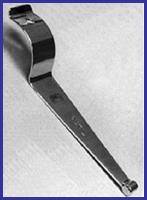

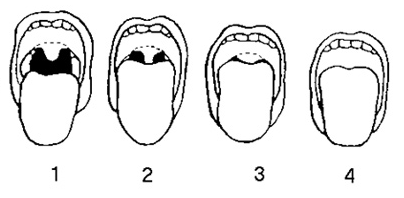
Таблица 3.

|
Из за большого объема этот материал размещен на нескольких страницах:
1 2 3 4 5 6 7 |
