

Партнерка на США и Канаду по недвижимости, выплаты в крипто
- 30% recurring commission
- Выплаты в USDT
- Вывод каждую неделю
- Комиссия до 5 лет за каждого referral
The first restoration.
During the early 1970s Ormond Haydon-Ballie, a young RAF Flight Lieutenant was seconded to the RCAF.
Whilst in Canada amongst other aircraft he discovered several derelict ‘Bolingbrokes’ (Bristol Blenheims built under licence in Canada).
In 1973 he purchased two complete airframes, 9896 and 10038 both built in Canada and having seen wartime service, he also gathered together as many engines and spare parts and had then shipped to the UK in 1974, and through a bit of wrangling got them stored at the old RAF station at Duxford in building number 66 which was immediately christened ‘Blenheim Palace’, which it is still known as today.
As the maintenance of Haydon-Baillie’s flying aircraft took priority work on the Blenheims was very low key and was dealt a terrible blow in July 1977 when he was killed in a flying accident in Germany.
In July 1978 Graham Warner was being shown around Duxford and amongst other items saw the Blenheims for the first time and after much thought and speaking to Haydon-Baillie’s team over a period of time decided to take the project on.
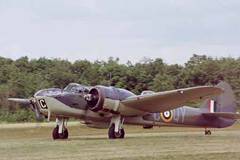
On the 22nd May 1987, a Bristol Blenheim took to the skies for the first time in over forty years to become the sole airworthy example.
This first flight followed a meticulous restoration which took twelve years, a small fortune, and some 40,000 man-hours to complete.
|
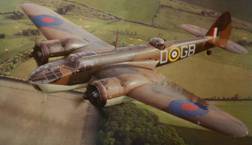
On 21st June 1987 it was virtually destroyed in an accident at Denham, not due to any mechanical fault, and mercifully with no loss of life.
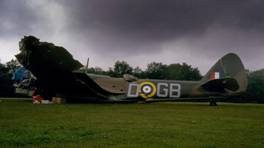
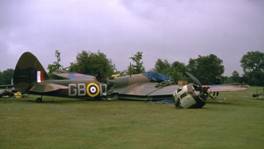
The Second restoration.
To aid the raising of the necessary funds ‘The Blenheim Appeal Fund’ was launched with donations going towards the rebuild.
It was also decided to restore the proper historic importance of the Blenheim.
The components for the second restoration arrived at Duxford in February 1988 from Strathallan.
At a press conference on 29th June 1988 it was announced that a ‘Blenheim Society’ was to be formed, with a newsletter to keep supporters informed of the progress on the restoration.
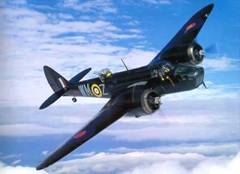
From lessons learned on the first project a different system was used on this project, each major component was assembled and systems installed whilst in the workshop making access easier. The project was completed in 1993, and the aircraft first flew in May.
|
|
|
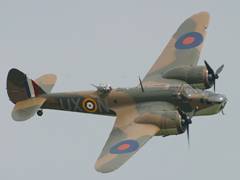
In 2003 the aircraft had a landing accident, and Blenheim Duxford Ltd. took over the responsibility for the aircraft, and it was decided to repair the aircraft as a Mk I using the nose from L6739.
