


Партнерка на США и Канаду по недвижимости, выплаты в крипто
- 30% recurring commission
- Выплаты в USDT
- Вывод каждую неделю
- Комиссия до 5 лет за каждого referral
Федеральное государственное бюджетное образовательное
Учреждение высшего профессионального образования
«Владимирский государственный университет имени Александра
Григорьевича и Николая Григорьевича Столетовых»
УЧЕБНО-МЕТОДИЧЕСКАЯ РАЗРАБОТКА ПО ДОМАШНЕМУ ЧТЕНИЮ
«J. WEBSTER. DADDY LONG-LEGS»
1-е издание
Владимир
Издательство ВлГУ
2013
УДК 43 (07)
ББК 81.423.1-9
Ионова -методическая разработка по домашнему чтению по произведению Д. Вебстер «Дядюшка длинные ноги» для студентов-бакалавров исторического факультета, обучающихся по специальности «История и иностранный язык». – Владимир: ВлГУ, 2013-18 с.
Учебно-методическая разработка по домашнему чтению по роману Д. Вебстер состоит из вокабуляра, подлежащего активному употреблению в соответствии с программой, а также систему учебных заданий по книге.
Составитель: ассистент кафедры второго иностранного языка и методики обучения иностранным языкам ВГУ им. А. Г. и (Педагогический институт ВлГУ)
Рецензент: к. п.н., доцент кафедры иностранных языков для неязыковых факультетов ВГУ им. А. Г. и (Педагогический институт ВлГУ)
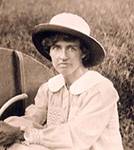 Jean Webster (pseudonym for Alice Jane Chandler Webster) was born July 24, 1876 and died June 11, 1916. She was an American writer and author of many books including Daddy-Long-Legs and Dear Enemy. Her most well-known books feature lively and likeable young female protagonists who come of age intellectually, morally, and socially, but with enough humor, snappy dialogue, and gently biting social commentary to make her books palatable and enjoyable to contemporary readers.
Daddy Long-Legs is a 1912 novel by an American writer Jean Webster. It follows the protagonist, a young girl named Jerusha "Judy" Abbott, through her college years. She writes the letters to her benefactor, a rich man whom she has never seen.
The themes of this book reflect upon Webster's interests in social work and women's suffrage. Some scholars have criticized Daddy-Long-Legs as being an "anti-feminist fairy tale", while others have argued that Judy shows growing independence, including increasing disobedience to her benefactor and his wishes, and indeed succeeds in educating Daddy-Long-Legs that he cannot control her, and that his socialism needs to move from the academic into real life.
Daddy Long-Legs (after Jean Webster)
Daddy-Long-Legs (after Jean Webster)
ASSINMENT № 1 (pp.3-12)
Vocabulary:
1. an orphan
2. an orphan asylum
3. a trustee
4. to take care of somebody
5. to have an imagination
6. a sunny soul
7. to work hard for one’s board
8. to do well in one’s studies
9. to remind somebody of something
10. to offer to do something
Questions and tasks:
I. Read and translate the passage: p.6. “The long lower hall … a big wavering daddy-long-leg”.
II. Supply the missing prepositions in the following sentences: Jerusha Abbot is an orphan. She lives …an orphan asylum and has to work hard…for her board. She is especially busy …the first Wednesday…every month. That is the day which is to be awaited…dread, endured…courage and forgotten…haste. … that day she has to scrub the floors; dust the chairs and do all the beds. Her special care is room F., where eleven small children occupy eleven little beds set …a row.
III. Give complete answers to the following questions:
A. 1. Who was Jerusha Abbott? Where did she live?
2. What were her duties in the orphan asylum?
3. Why was the first Wednesday in every month a Perfectly Awful Day for her?
4. What did you learn about Jerusha’s character?
5. Why did Jerusha stay in the orphan asylum for two years more?
B. Sum up everything you learnt about Jerusha Abbott.
IV. Find either sentences or parts of sentences in the following statements:
1. Jerusha saw that the last visit for who stood in the open door was very tall. He had long arms and legs and he reminded her of…
2. Mrs. Lippett told Jerusha that the man was one of their richest trustees. She said that …
3. The man offered to send Jerusha to college. Nevertheless, his terms were unusual. He planned to …
4. Jerusha was to write letters to the trustee telling him of progress in her studies and the details of her daily life. His reason was that.
V. Write a short summary of the text you have just read.
Assignment №2. (pp. 15-23)
Vocabulary:
1.to be have well
2. to be respectful
3. to take an interest in
4. to be divided
5. to be excited
6. a freshman
7. to be homesick
8. to stand somebody/something
9. to mention (ed) something
10. to hurt one’s feelings
11. to be brought up
Questions and tasks:
I. Read and translate the passage: “You hate girls”.
II. Find related words to the following ones: to respect, to behave, interest, to divide, to excite, to mention.
III. In what situations in the text are following words and phrases used?
to behave well; to be divided; to be homesick; to hurt one’s feelings.
IV. Change the text on page 15 into a story retold in the third person singular. Write down your sentences. Use the phrases:
In her letter Jerusha writes that…
She thinks that …
It seems to her that …
In her letters she always says that…
V. Give complete answers to the following questions:
1. What are Jerusha’s first impressions of the college?
2. What does she write about her daily life?
3. Where is Jerusha’s rooms situated?
4. What does she write about the other girls who live on the same floor?
5. Why did the whole class laugh at Jerusha?
6. What awful mistake did she make one day?
7. Does everybody know that Judy was brought up in an orphan asylum?
8. Does Judy like her college life? What phrases show that?
VI. Relate one of the letters in detail (the one you liked most)
Give a short summary of the letters (P. P.15 – 23 )
ASSIGNMENT № 3. (p. p.23-33)
Vocabulary:
1. to bore(e) somebody
2. to be generous
3. blank years
4. to catch up with (somebody)
5. to be used to something (to doing something)
6. miserable
7. to drop in (at somebody’s place)
8. an breakable rule
9. to confess(d) something
10. entertaining
Questions and tasks:
I. Read and translate the passage: p.24….”You’ve never heard… the checked ginghams”.
II. Explain the meaning of the words. Use English-English dictionary: to bore somebody, generous, miserable, to confess, entertaining.
Give English equivalents for: Воспитываться в сиротском приюте, хорошо заниматься по английскому, быть уважительным по отношению к взрослым, напомнить кому-то об обещании, заботиться о своей внешности, заинтересоваться литературой.
III. In what situations in the text are the following words used?: blank years, to catch up, to be used to something, to drop in, an unbreakable rule.
IV. Answer the questions:
1. Have you read “David Copperfield”? Who is the author of the book? Who is the main character of the book?
2. Who wrote “Ivanhoe”? Have you read the book? When did you read it?
3. Is “Cinderella” a fairy-tale or a poem? Have you read it? Have you seen film “Cinderella”?
4. Who is the author of “Robinson Crusoe?” Have you read the book? What is the book about?
5. Have you read “Jane Eyre”? Who is the author of the novel? Who is the main character of the book?
6. Who wrote “Alice in Wonderland?” What other books by the same author have you read?
7. Is Alfred Tennyson a novelist or a poet? When did he live?
8. What books did George Eliot write? When did she live? Have you read any of her books?
9. Who is Sherlock Holmes? Who is the author of the books about Sh. Holmes?
V. Answer the questions. Give complete answers:
1.Why was Judy so excited about her new clothes? What clothes did she wear in the orphan asylum?
2.How did Judy describe her trustee’s appearance?
3.What new unbreakable rule does Judy Nave?
4. Why does she have to read plain books?
5.What does she usually do in the evening?
6.What does Judy want to do during her vocations?
7. What Christmas presents did she get from her trustee?
8. What does Judy write about Julia Pendleton?
VI. Give a short summary of all the letters (p. p.23 – 33)
Tell one of the letters (you liked more) in detail.
David Copperfield Ivanhoe Cinderella Robison Crusoe Jane Eyre Alice in Wonderland Shelly Mona Liza | George Eliot Sherlock Holmes Vanity Fair Charles Dickens Walter Scott Daniel Defo Lewis Carroll William Thackery Rudyard Kipling |
ASSIGNMENT № 4. (p. p.33-43)
Vocabulary:
1. to flunk an examination in a subject
2. a reexamination
3. dreadful
4. to feel lonely
5. to get well
6. to forgive somebody (forgave – forgiven)
7. a campus
8. to show somebody about the campus
9. to make sure
Questions and tasks:
I. Read and translate the passage: p. p.41-42 “He is tall and thinnish… allowances”.
II. A. Give equivalents for the following words and phrases:
Надоедать кому-либо, хорошо вести себя, признаваться в чем-то, быть щедрым.
B. Give antonyms to: to be a generous, happy, to be upset, to fall ill, to pass examination in a subject, entertaining, nice, to forgive.
C. Find the meaning of the following words in the English-English dictionary: dreadful, to forgive somebody, a campus.
D. In what situations in the text are the following words and phrases are used? to flunk an examination, a reexamination, to get well, to feel lonely, to show somebody, about the campus, to make sure.
III. Answer the questions:
1. What news did Judy have to tell her trustee?
2. Why did she flunk Mathematics and Latin prose?
3. What did Judy fall ill with?
4. What present did Judy’s trustee send her? Was she happy to receive it? Why?
5. What did Mrs. Lippett write to Judy?
6. Whom did Judy show about the campus?
7. How did Judy describe Mr. Jervis Pendleton?
8. Where will Judy spend her vacations?
IV. Give a short summary of the letters. Retell one of the letters in detail. Use the words: Judy wrote that …, she thought that…, she wondered it, etc.
ASSIGNMENT № 5. (p. p.44-55)
Vocabulary:
1. old-fashioned
2. to come to know
3. to feel at home
4. to elect(ed) somebody, election
5. to beat (beat-beaten) somebody
6. to do one’s best
7. to count(ed)e. g. They don’t count. It doesn’t count.
8. to satisfy somebody’s curiosity
9. to amuse(d) somebody
10. a drawback
Questions and tasks:
I. Read and translate the passage: p. p.50-51 “Sallie has invited me…”. Isn’t that fun?
II. A. Fill in prepositions or add postpositions to the following phrases. Translate them into Russian: To show somebody… the campus, to do well…one’s studies, to drop…somebody’s place, to take care…somebody, to remind somebody…something, to catch…somebody, to work hard…one’s board, to take the interest…something, to be brought… … an orphan asylum.
B. Write down as many phrases with the verbs “fell,” and “to look” as you possibly can.
Pattern: to fell lonely, to look happy.
C. In what situations are the following words used: old-fashioned, elect, to come to know, to feel at home, to satisfy somebody’s curiosity, to do one’s best.
E. Make up your own situations with the words: to amuse somebody a drawback, election, to count, to do one’s best.
III. Answer the questions. Let your fellow-students give complete answers:
1. Tell her (him) to describe the farmhouse.
2. Ask her (him) to whom the farm belonged.
3. Ask her (him) what Judy was doing on the farm.
4. Ask her (him) when Judy came from Lock Willow and whether she was glad to see campus.
5. Ask her (him) whom Judy was rooming with.
6. Ask her (him)how Judy described elections.
7. Ask her (him) if Judy took part in a basketball match and who won the game.
8. Ask her (him) who invited Judy to spend the Christmas vacations with her family and whether Judy accepted the invitation.
IV. Give a short summary of the letters. Relate one of the letters (you liked best) in detail. (Use the reporting verb in the Past Indefinite Tense. Mind the sequence of tenses).
ASSIGNMENT № 6.
Vocabulary:
1. Companionable (adj.)
2. To crowd smb
3. To regard smb’s wishes
4. To live up to (one’s side of the bargain)
5. A social intercourse
6. Humiliating (adj.)
7. To put oneself in smb’s place
8. To be outraged
Questions and tasks:
1. Field Day. Describe Judy’s state of mind on that day.
2. Do you think that imagination is the most necessary quality for any person to have? May be there are other?
3. Speak on Judy’s plans for the summer.
4. A real reason of Judy’s disappointment.
5. Can a writer be more “entertaining than any of the characters in his books”?
ASSIGNMENT № 7. Vocabulary: 1. To indulge smb. 2. Eccentric (adj.) 3. To interfere with 4. To win a scholarship 5. To apply for 6. On account of 7. Gorgeous (adj.) 8. A comprehensible reason 9. To owe smth to smb 10. To be indebted Questions and tasks: 1. Give a summary of Judy’s spending time with Master Jervie. 2. Make a list of words describing Mr. Pendleton, use them when discussing him. 3. Dwell on Judy’s state of mind when receiving a scholarship. 4. What do you think makes Daddy insist on Judy’s giving up the scholarship? 5. The founder’s dance. Dwell on the events. What did Judy discover? 6. Judy got invitation from Julia Pendleton. Was she really fond of Judy? Why did Judy accept her invitation? |
ASSIGNMENT № 8. (p. p.77-78)
Vocabulary:
1. to deprive(ed) somebody of
2. to obey(ed), obedience
3. a way out
4. to care for somebody (something)
5. to get mail
6. charming
7. independent
8. to insult somebody (to be insulted)
I. Read and translate the passage on page 81…Julia’s mother says he’s unbalanced.
II. A. Explain the meaning of the following words: a way out, to obey, charming, to earn, mail (n), to deprive somebody of.
B. Find the situations in which the new words are used.
C. Use them in situations of your own.
III. Ask questions on the letter (on p.81) and let your fellow-students answer them.
IV. A. Give a short summary of all the letters (p. p.77-87)
B. Speak about one of the letters in detail.
V. Translate into English (using home-reading vocabulary)
1.- Вам нужно догнать группу. Боюсь, что вы провалитесь на экзамене. Я сделаю все возможное.
2. – Покажите мне, пожалуйста, территорию вашего института и расскажите о ваших занятиях. – Хорошо. Я с удовольствием удовлетворю ваше любопытство.
3. Говоря о его родственниках,… мне кажется, что он не любит, я думаю даже, он их просто не выносит.
4. Я знаю, у неё много недостатков, но я ценю её щедрость и послушание.
5.Она призналась, что чувствует себя неловко и одиноко.
ASSIGNMENT № 9. (p. p. 87-97)
Vocabulary:
1. to insist on
2. to plunge (d) into something
3. remarkable
4. to deserve (d)
5. to be accustomed to something
6. to publish (ed)
7. inspiration
8. to be certain = to be sure
Questions and tasks:
I. Read the passage p.95 “Isn’t it fun…I said that before”.
II. A. Find the situation in the text in which the new words are used:
B. Explain the meaning of the following words: to insist, remarkable, to deserve, to publish, inspiration.
III. Ask questions about of the letters and let your fellow-students answer them.
IV. A. Speak about the events that took place in Judy’s life. (See p. p.87-97).
B. Retell one of the letters.
ASSIGNMENT № 10 (p. p.97-105)
Vocabulary:
1. to owe (d)
2. to miss (ed) somebody
3. misunderstanding
4. at dawn
5. to set things right
6. to regret (ed) something
7. dim
Questions and tasks:
I. Speak about the main events that took place in Judy’s life at the end of the book.
II. Speak about one of the letters Judy wrote to her trustee.
What impression has the book made on you? Did you like the plot of the book? Why? (Why not?) Do you think the story is true to life? Why? (Why not?)
Учебно-методическая разработка по домашнему чтению по роману Д. Вебстер «Дядюшка длинные ноги» для студентов-бакалавров исторического факультета, обучающихся по специальности «История и иностранный язык»
