


Партнерка на США и Канаду по недвижимости, выплаты в крипто
- 30% recurring commission
- Выплаты в USDT
- Вывод каждую неделю
- Комиссия до 5 лет за каждого referral
12. Vowel contraction. Lengthening of vowels in certain conditions.
13. Voicing and unvoicing of fricatives. Metathesis.
14. Ablaut as a phonetic phenomenon.
15. Composition of Old English vocabulary.
16. The system of numerals in Old English.
17. The substantive in Old English (general characteristics).
18. The development of strong declension of nouns in Old English.
19. The development of weak declension of nouns in Old English.
20. The development of minor declensions of nouns in Old English (root-stems, r-stems, relics of es-stems).
21. Pronouns in Old English and their development.
22. The adjectives in Old English (general characteristics). Degrees of comparison of adjectives.
23. The adverbs in Old English (general characteristics). Degrees of comparison of adverbs.
24. The verb (general characteristics).
25. Strong verbs in Old English and their development.
26. Weak verbs in Old English and their development.
27. Preterite-Present verbs in Old English.
28. Irregular verbs or verbs in - mi in Old English.
29. The Scandinavian Conquest and its influence on the vocabulary.
30. The Norman Conquest and its influence on the vocabulary.
31. The rise of the London dialect.
32. The formation of the National English language.
33. Phonetic changes in Middle English and the rise of new diphthongs.
34. The Great Vowel Shift and other phonetic changes at the beginning of Modern English.
35. Composition of Middle English and New English vocabulary.
36. Grammatical changes at the beginning of Modern English.
8.2.3. Примерная тематика рефератов/презентаций
1. Исторические изменения лексического состава английского языка.
2. Римское завоевание и его влияние на становление английского языка.
3. Скандинавское завоевание и его влияние на становление английского языка.
4. Норманнское завоевание и его влияние на становление английского языка.
5. Влияние латинского и греческого языков на становление английского языка.
6. Структура и семантика древнеанглийских существительных (с разными основообразующими суффиксами).
7. Отражение культурных традиций англосаксов в языке.
8. Наречие в истории английского языка (генезис и функционирование).
9. Отражение категории одушевленности в древнеанглийском именном склонении.
10. Культурная символика наименования оружия в древнеанглийском языке.
8.2.4. Примерный перечень тестовых заданий
1. The IE family of languages: (Fill in the scheme)
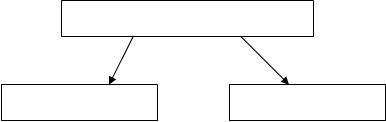 |
Celtic
Albanian
Slavonic
Italic
Germanic
Baltic
Iranian
Tocherian
2. Explain the terms “satem” & “centum” and the principle of division of all IE languages into these groups.
3. Choose the languages belonging to Centum group:
a) Albanian
b) Germanic
c) Iranian
d) Italic
e) Celtic
f) Hellenic
g) Indian
h) Anatolian
i) Tocherian
4. Name the latest theory about the home of Indo-Europeans.
5. Explain the dates connected with the periods of the history of English:
1) 5th cent.
2) 7th cent.
3) 5th – 7th cent.
4) 5th – 11th cent.
5) 8th – 11th cent.
6) 11th cent.
7) 11th – 15th cent.
8) 15th cent. (1475)
9) 15th – 21st cent.
10) 15th – mid. 17th cent.
11) mid. 17th – 18th cent.
12) 19th – 21st cent.
6. Explain the phonetical phenomena: define the law, give the scheme.
1. | Lat pater | OE fæder (father) |
2. | Grk hepta | Goth sibun (seven) |
3. | Rus болото | OE pōl (pool) |
4. | Snsk bhratar | OE brōðor (brother) |
5. | Grk pater | Osc faðir, OE fæder |
7. Define the phonetical phenomenon and give its scheme:
E. g. scæl > sceal: palatalization – [æ] => [ea] influenced by [sk’]
1) fōhan > fōn
2) hira > hiora
3) bindan > bīndan
8. Match the phonetical phenomena with their definitions:
1) – diphthongization of vowels caused by preceding consonants when a glide arose after the palatal consonants [k’], [sk’] and [j] so as the vowel was diphthongized
2) – a kind of regressive (or leftward) assimilation when a vowel was influenced by another vowel or vowel-like sound to its right so as one phoneme was replaced by another
3) – a phonetic change which consisted in two sounds exchanging their places
4) – a change of Old English short vowels [a, e, i, o, u] occurred before consonant pairs consisting of a liquid [l, r] or nasal [m, n] plus a homorganic voiced stop articulated in the same part of the mouth as the liquid or nasal
a. fracture / breaking
b. palatalization
c. front mutation / i-umlaut
d. contraction
e. lengthening
f. mutation / umlaut
g. voicing / unvoicing of fricatives
h. metathesis
i. back mutation
j. stress
9. Continue the grammar analysis of the underlined words following the model given below.
Model:
Ōhthēre sǣde his hlāforde
§ Ōhthēre – noun proper, nominative singular (ME meaning: Ohthere (name)
§ sǣde – verb, 3rd person singular, past tense, indicative mood of 'secʒan', weak verb, class III (ME meaning: said)
§ his – pronoun personal, 3rd person singular, masculine, genitive case (ME meaning: his)
§ hlāforde – noun, dative singular of 'hlāford', masculine, a-stem (ME meaning: lord)
Translation: Ohthere said his lord
wiÞ Þā Westsǣ
§ wiÞ – preposition (ME meaning: of)
§ Þā – …
§ Westsǣ – … [(OE) sǣ – noun, feminine, i-stem: ME meaning: west sea, Atlantic ocean]
Translation: …
10.  Fill in the table “Declension of Nouns” by inserting the case endings.
Stem Case | Masculine | Feminine | Neuter | |||||||||
a | i | u | n | ō | i | u | n | a | i | n | ||
Singular | Nominative | — | e | u/o | a | u | — | u/o | e | — | -/e | e |
Genitive | ||||||||||||
Dative | ||||||||||||
Accusative | ||||||||||||
Plural | Nominative | as | e/es | a | ana | e | a | a | n | u/o | u | an |
Genitive | ||||||||||||
Dative | ||||||||||||
Accusative |
 Gender
8.2.5. Структура и содержание билета
ФЕДЕРАЛЬНОЕ АГЕНТСТВО ПО ОБРАЗОВАНИЮ
ГОСУДАРСТВЕННОЕ ОБРАЗОВАТЕЛЬНОЕ УЧРЕЖДЕНИЕ
ВЫСШЕГО ПРОФЕССИОНАЛЬНОГО ОБРАЗОВАНИЯ
«ТОМСКИЙ ГОСУДАРСТВЕННЫЙ ПЕДАГОГИЧЕСКИЙ УНИВЕРСИТЕТ»
(ТГПУ)
Дисциплина: ДПП. Ф.02 История языка
Билет № __
position of Old English vocabulary.
2. The system of numerals in Old English.
3. Practical task (test).
Дата________ Зав. кафедрой английской филологии ___________
Программа учебной дисциплины составлена в соответствии с Государственным образовательным стандартом высшего профессионального образования по специальности 033200.00 (050303.65) «Иностранный язык с дополнительной специальностью».
Программу составила:
Зав. кафедрой английской филологии, к. филол. н. _________//
(подпись)
Программа учебной дисциплины утверждена на заседании кафедры английской филологии протокол № 1 от «29» августа 2008 г.
Зав. кафедрой английской филологии __________________// (подпись)
Программа учебной дисциплины одобрена методической комиссией ФИЯ ТГПУ.
Председатель методической комиссии ФИЯ ТГПУ_____________//
(подпись)

|
Из за большого объема этот материал размещен на нескольких страницах:
1 2 3 4 |
