

Партнерка на США и Канаду по недвижимости, выплаты в крипто
- 30% recurring commission
- Выплаты в USDT
- Вывод каждую неделю
- Комиссия до 5 лет за каждого referral
Муниципальное бюджетное общеобразовательное учреждение
«Томаровская средняя общеобразовательная школа №2
Яковлевского района Белгородской области» имени Героя Советского Союза
Учитель
Урок в 11 –м классе.
Тема: «Качества характера»
Цели и задачи:
Развитие навыков аудирования и устной речи.
-чтение с поиском специальной информации
-выражение раздражения, сарказма и гнева
-аудирование с поиском специальной информации
I. Начало урока.
1. Приветствие.
2. Беседа с классом.
3. Постановка целей и задач.
II. Активизация лексики по теме «Качества характера»
1. Please read the poem on p.12. Can you translate it?
Think about your best friends and say why they are special. Teacher asks some pairs
to report back to the class.
Учитель просит учащихся прочитать стихотворение на стр. 12, вспомнить своих лучших друзей и сказать, почему они являются их лучшими друзьями. Учащиеся читают стихотворение, переводят его или догадываются о его содержании по контексту, затем в парах обсуждают задание в течение 2-3 минут и отвечают перед классом
Предполагаемый ответ:
My best friend is special because she is kind and caring and does a lot for me ― we have a lot of fun together.
III. Практика в употреблении лексики по теме «Качества характера».
T: Read out the adjectives. Elicit/Explain the meaning of the adjectives.
Say which qualities you look for in a friend and which you avoid. Direct Ss’ attention to the example exchange.
с Ss work in groups discussing important character qualities in a friend.
Учитель привлекает внимание учащихся к прилагательным из упр. 2 на стр. 12. Учащиеся читают и переводят слова, пользуясь словарными статьями, данными в упражнении. Затем в группах обсуждают качества, которые они хотят видеть в своих друзьях и качества, которых они избегают в друзьях. Далее учащиеся высказываются перед классом, используя Р. О. из упражнения.
Предполагаемый ответ:
A: To me a good friend should be loyal and trusting.
B: Yes, I agree. It’s important to be able to trust your friend.
C: Hm! I also think a friend should be supportive when you have doubts or problems.
B: Sure! A friend shouldn’t be mean. Etc.
IV. Чтение с поиском специальной информации
T: Look at the dialogue. Explain the task. Answer the questions. Check in pairs.
Listen to check the rest of the dialogue.
Teacher asks various pairs to read the dialogue aloud.
Учитель предлагает учащимся прочитать первые две фразы диалога из упр. 3 на стр. 12. Учащиеся читают и отвечают на три вопроса, поставленных перед текстом. Затем учащиеся слушают и читают диалог, чтобы проверить правильность своих ответов.
Ключ
1 They are friends.
2 Because Julie cancelled her plans again.
3 Kim is telling Laura why she is angry with her friend.
T: Read out the adjectives used to describe people. Go around the class eliciting information about the characters of the people in the text (ex. 4 p, 13).
a) Go through the words/phrases in the columns. Make true statements in relation to the text.
Учитель просит учащихся найти в тексте прилагательные, описывающие характер людей. Учащиеся зачитывают слова и выражения вслух. Можно попросить учащихся перевести слова и выражения. На этом же этапе урока учащиеся выполняют упр. 4 на стр. 13 и составляют предложения. Используя подстановочную таблицу.
Предполагаемый ответ:
Laura thinks Julie is nice.
Laura thinks Kim isn’t being fair.
Laura wants to rent a DVD.
Kim thinks Julie is selfish.
V. Практика в диалогической речи.
Elicit the meaning of the word selfish. Work in pairs and practice a dialogue about a selfish friend. Use the dialogue plan on the board. Ss use it to act out their dialogues.
Учитель предлагает учащимся составить диалог по аналогии, используя схему на доске. Учащиеся работают в парах, составляют диалоги и разыгрывают их перед классом.
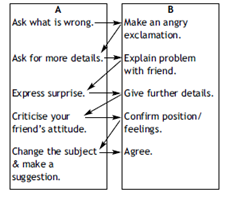
Предполагаемый ответ:
A: What’s the matter, Jill?
B: Oh, I’ve had enough.
A: Why? What’s up?
B: It’s Liz again. I lend her my clothes and she never brings them back.
A: Really?
B: Yes, she’ll never change. I lent her my new jacket for Saturday night and she still hasn’t
returned it. It’s been almost a week now.
A: Oh, come on! Aren’t you being a bit mean?
B: No, I don’t think so. She’s always taking advantage of me.
A: Oh well … forget about it … why don’t we go for a coffee?
B: Alright. That’s a good idea.
VI. Аудирование с поиском специальной информации.
Teacher asks Ss to read through the list of statements in ex. 6a p.13 and tick the ones you agree with. Present your statements to the class and give reasons for your choices.
Listen and complete the task. Listen the recording again to check your answers.
Teacher selects individual pairs to read out the statements in the order they hear them.
Answer Key
1 E 2 A 3 C 4 B 5 F
Suggested Answer Key
I agree with A, C and F. I can make friends easily because I’m friendly and sociable.
Friends help us express ourselves because we spend time together and like the same things and so we are not afraid to express our opinions with them. I’ve experienced a lot with my friends because I’ve known them for a long time and we have done a lot together.
TAPESCRIPT
Interviewer: We spoke to some British teenagers about how important friendships are to them in today’s world.
Speaker 1: I have four great friends and we’ve known each other for years. We have so much fun together. There is never a boring moment when I’m with my friends.
Speaker 2: I move around the country a lot because of my dad’s job so I change schools every couple of years. I have to be able to fit in quickly so I can feel at home. I like to make new friends straight away so I can have a social life as soon as possible. I’m a friendly person so I don’t usually have any problems.
Speaker 3: I couldn’t survive without my best friend. Who would I discuss my problems with or share my secrets and thoughts with? I definitely think a true friend who understands you is the most important thing a person can have.
Speaker 4: I don’t have many friends probably because I am very shy, but one or two friends are enough if they are friends you can trust and who really care about you. It’s not worth having dozens of friends if they only think of themselves.
Speaker 5: I have done so much with my friends. We’ve climbed mountains, swum rivers, and gone hiking and camping together. More than that though, we’ve grown up together and gone through the same things.
VII. Совершенствование фонетических навыков.
Teacher directs Ss’ attention to the list of exchanges. Elicit/Explain the meaning of any new vocabulary. Teacher explains the task. Ss complete the task. Teacher plays the recording for Ss to check their answers.
Учитель привлекает внимание учащихся к упр.7 на стр. 13. Совместно с учащимися выявляют новые и незнакомые слова и выражения. Затем учитель просит учащихся выполнить задания. Учащиеся слушают запись и проверяют свои ответы. На этом же этапе учащиеся выполняют упр. 8 стр. 13
Предполагаемый ответ
1 A: Oh, perfect! 2 A: Unbelievable!
B: What is it? B: Oh dear.
Ключ
sarcasm: 1, 4 anger: 2, 3, 5, 6, 7
Answer Key
1 e 2 c 3 d 4 a 5 b
VIII. Употребление в речи идиоматических выражений.
Read out the rubric and allow Ss time to complete the idioms. Check Ss’ answers. Elicit/Explain what the idioms mean. Elicit from Ss whether there are similar expressions in their language.
(Ss’ own answers)
Учитель зачитывает рубрику и просит учащихся дополнить идиоматические выражения в упр. 9 на стр. 13. Учащиеся выполняют задание и обсуждают аналогичные выражения в русском языке. Ответы проверяются фронтально.
Answer Key
1 eye 3 shoulder 5 back
2 head 4 neck 6 nerves
IX. Итоги урока.
Д\з упр. 10-11 с. 13
