

Партнерка на США и Канаду по недвижимости, выплаты в крипто
- 30% recurring commission
- Выплаты в USDT
- Вывод каждую неделю
- Комиссия до 5 лет за каждого referral
УДК 546.05
(УДК 621.357'12) p. 106-113
ОДНОВРЕМЕННЫЙ ЭЛЕКТРОСИНТЕЗ ОКИСЛИТЕЛЕЙ – ПЕРОКСИДА ВОДОРОДА, ПЕРБОРАТА НАТРИЯ И ГИПОХЛОРИТА НАТРИЯ ELECTROSYNTHESIS OF OXIDIZERS - HYDROGEN PEROXIDE, SODIUM PERBORATE AND SODIUM HYPOCHLORITE
Николеишвили Паата Отарович, академический доктор наук, старший научный сотрудник, институт неорганической химии и электрохимии Тбилисского государственного университета им. Иване Джавахишвили, лаборатория электрохимии и электрометаллургии, 0186, Грузия, Тбилиси, ,
E-mail: *****@***com
Цурцумия Гигла Сандроевич, академический доктор наук, старший научный сотрудник, институт неорганической химии и электрохимии Тбилисского государственного университета им. Иване Джавахишвили, лаборатория электрохимии и электрометаллургии, 0186, Грузия, Тбилиси, , E-mail: *****@***com
, академический доктор наук, старший научный сотрудник, институт неорганической химии и электрохимии Тбилисского государственного университета им. Иване Джавахишвили, лаборатория химической переработки местных ископаемых и минерального сырья, 0186, Грузия, Тбилиси, , E-mail: *****@***com
, академический доктор наук, старший научный сотрудник, институт неорганической химии и электрохимии Тбилисского государственного университета им. Иване Джавахишвили, лаборатория электрохимии и электрометаллургии, 0186, Грузия, Тбилиси, , E-mail: *****@***ru
, академический доктор наук, старший научный сотрудник, институт неорганической химии и электрохимии Тбилисского государственного университета им. Иване Джавахишвили, лаборатория электрохимии и электрометаллургии, 0186, Грузия, Тбилиси, ,
E-mail: *****@***com
Куртанидзе Русудан Роландовна, академический доктор наук, старший научный сотрудник, институт неорганической химии и электрохимии Тбилисского государственного университета им. Иване Джавахишвили, лаборатория электрохимии и электрометаллургии, 0186, Грузия, Тбилиси, ,
E-mail: *****@***com
Paata O. Nikoleishvili, Phd, Senior Researcher, Department of Electrochemistry and Electrometallurgy of Rafael Agladze Institute of Inorganic Chemistry and Electrochemistry of Ivane Javakhiishvili Tbilisi State University, 11, Mindeli Avenue, Tbilisi, 0186, Georgia,
E-mail: *****@***com
Gigla S. Tsurtsumia, Phd, Head of Department, Department of Electrochemistry and Electrometallurgy of Rafael Agladze Institute of Inorganic Chemistry and Electrochemistry of Ivane Javakhiishvili Tbilisi State University, 11, Mindeli Avenue, Tbilisi, 0186, Georgia,
E-mail: *****@***com
Marina A. Avaliani, Phd, Senior Researcher, Department of Electrochemistry and Electrometallurgy of Rafael Agladze Institute of Inorganic Chemistry and Electrochemistry of Ivane Javakhiishvili Tbilisi State University, 11, Mindeli Avenue, Tbilisi, 0186, Georgia,
E-mail: *****@***com
Valentina M. Kveselava, Phd, Senior Researcher, Department of Electrochemistry and Electrometallurgy of Rafael Agladze Institute of Inorganic Chemistry and Electrochemistry of Ivane Javakhiishvili Tbilisi State University, 11, Mindeli Avenue, Tbilisi, 0186, Georgia,
E-mail: *****@***ru
Georgi F. Gorelishvili, Phd, Senior Researcher, Department of Electrochemistry and Electrometallurgy of Rafael Agladze Institute of Inorganic Chemistry and Electrochemistry of Ivane Javakhiishvili Tbilisi State University, 11, Mindeli Avenue, Tbilisi, 0186, Georgia,
E-mail: *****@***com
Rusudan R. Kurtanidze, Researcher, Department of Electrochemistry and Electrometallurgy of Rafael Agladze Institute of Inorganic Chemistry and Electrochemistry of Ivane Javakhiishvili Tbilisi State University, 11, Mindeli Avenue, Tbilisi, 0186, Georgia,
E-mail: *****@***com
Аннотация
Актуальность работы можно объяснить значимостью развития энерго - и ресурсосберегающих технологий, использующих экологически безопасные методы. Представленный материал включает в себя исследование совместной генерации пероксида водорода (Н2О2), пербората натрия (NaBO2·H2O2·3H2O) и гипохлорита натрия (NaCIO) в электролизере фильтр-прессного типа с рациональной утилизацией как катодного, так и анодного токов. Электрогенерация Н2О2 осуществляется на газ-диффузионном катоде (GDE), покрытом сажей Black Pearls 2000 (BP 2000), образование NaBO2·H2O2·3H2O – в катодном пространстве в результате взаимодействия Н2О2 с метаборатом электролита и NaCIO – на неизнашиваемом аноде (dimensionally stable anode - DSA). В указанных процессах при получении целевого продукта (H2O2) потреблялась лишь часть электроэнергии, другая часть расходовалась на аноде на выделение кислорода в атмосферу. С целью эффективного подхода к проблеме и рационального использования анодного тока нами предпринята попытка реализации в одном электролизере одновременного получения окислителей – пероксида водорода или его производного - пербората натрия в катодном пространстве и гипохлорита натрия на аноде.
Основной целью исследования является развитие оригинальных методов и дизайна оригинального электрохимического реактора для локальной генерации H2O2 совместно с перборатом и гипохлоритом натрия. В контексте исследования запланирована схема извлечения NaBO2·H2O2·3H2O из реактора.
Методы, использованные в исследовании: электросинтез окислителей в электролизере фильтр-прессного типа с анионнообменной мембраной, аналитический химический контроль продуктов, рентгенофазовый анализ.
Результаты и выводы: установлена возможность одновременного электросинтеза Н2О2, NaBO2·H2O2·3H2O и NaCIO в электролизере фильтр-прессного типа. Условия работы: катод – GDE, анод – DSA, мембрана – AMI 7001S, католит – щелочной раствор метабората натрия (0.7M NaBO2 + 0.3M NaOH), анолит – щелочной раствор хлорида натрия (0.5M NaCl + 0.3М NaOH), температура - 28-300С. Выход по току Н2О2 (соответственно и NaBO2·H2O2·3H2O) после 3- часового электролиза составил 67%, NaCIO – 71%, расход электроэнергии на получение NaBO2·H2O2·3H2O – 1.8 кВтч кг-1, на образование NaCIO – 3.6 кВтч кг-1.
Ключевые слова: электролиз, синтез, пероксид водорода, перборат натрия, гипохлорит натрия, газ-диффузионный катод, неизнашиваемый анод (DSA), анионообменная мембрана.
Abstract
Relevance of the work. Last decennaries importance of energy-efficient and resource-saving technologies using ecological safety methods are out of any doubt which explains the relevance of the presented study; the latter is directed to the simultaneous generation of hydrogen peroxide (H2O2) at the gas-diffusion electrodes (GDE) covered by Black Pearls 2000 (BP 2000) or sodium perborate (NaBO2·H2O2·3H2O) in cathode compartment and sodium hypochlorite (NaCIO) at an dimensionally stable anode (DSA). In this mentioned processes only a part of an energy is consumed for production of goal product (H2O2) in the course of electrolysis, other part is used for oxygen (O2) formation (at anode). The goal of this work – efficient approach to the problem of total application of energy during the process of co-generation; To decrease the price cost of the product we carried out the investigations to establish the possibility for realization of combined simultaneous electrosynthesis of H2O2 , NaBO2·H2O2·3H2O and NaCIO.
The main aim of the study is the development and design of original methods and electrochemical reactor for the combined on-site generation of H2O2 at the cathode NaBO2·H2O2·3H2O in the cathodic chamber and NaCIO at anode. In the context of the research the scheme for the extraction of NaBO2·H2O2·3H2O from the reactor was scheduled.
The methods used in the study: electro-synthesis of oxidizers in filter-press type electrolyzer divided by anion-exchange membrane; analytical control of products; X-ray phase analysis.
The results: Feasibility of simultaneous electro-synthesis of hydrogen peroxide at a cathode, sodium perborate in a catholyte and sodium hypochlorite at an anode was established in filter-press type electrolyser divided by anion-exchange membrane AMI 7001S by the use of gas-diffusion cathode and DSA. Operating conditions: catholyte – alkaline solution of sodium metaborate (0.7M NaBO2 + 0.3M NaOH), anolyte – alkaline solution of sodium chloride (0.5M NaCl + 0.3 M NaOH), temperature - 28-30 0С. Current efficiency of H2O2 (and respectively of NaBO2·H2O2·3H2O) in 3 hours of electrolysis comprises 67%, NaCIO – 71%; power consumption for production of NaBO2· H2O2·3H2O comprised 1.8 kWh kg-1, for NaClO – 3.6 kWh kg-1.
Key words: Electrolysis, Synthesis, Hydrogen peroxide; Sodium perborate; Sodium hypochlorite; Gas-diffusion cathode; Dimensionally stable anode DSA; Anion-exchange membrane.
Hydrogen peroxide and its derivatives (percarbonates, perborates etc.) as well as halogenoxide compounds are among the strong oxidizers of large-scale industrial chemicals) [1]. Annually 2.2 million tons only of hydrogen peroxide is used in medicine, in everyday life as antiseptics and a disinfectant, in pulp and paper industry and in detergents as bleacher, in the technology of wastewaters treatment etc. [2-4]. Along with ozone and oxygen, H2O2 is eco-safe oxidizer which forms oxygen and water at reduction) [5]. Moreover, hydrogen peroxide can be a source of formation of OH• radicals which are the most strong oxidizers after fluorine (E0 = 2.8 V) [6-9].
Nowadays world production of hydrogen peroxide is based on catalytic reduction of organic solution of alkylanthraquinone by hydrogen-containing gas in the presence of a catalyst with a formation of alkylanthrahydroquinone and its further oxidation by oxygen or air up to hydrogen peroxide which is extracted by water. The main disadvantages of this process are its unsafety and profitableness only at large-scale production [10-12]. Therefore an elaboration of small autonomous plants for production of hydrogen peroxide immediately in consumption place is of specific interest. Generation of hydrogen peroxide by electrochemical method by two-electron reduction at carbon gas-diffusion cathode is one of the efficient ways of resolution of this problem (Equation 1). Research of electro-generation of H2O2 in acid media has been performed and described in several publications [13-15].
Cathode: 
 (Equation 1)
Anode: 
 (Equation 2)
Hydrogen peroxide can be synthesized in neutral or alkaline media in electrochemical cell by reaction (Equation 3) [16]:
cathode: 
 (Equation 3)
anode: 
 (Equation 4)
In all above-mentioned processes only a part of an energy is consumed for production of goal product (H2O2) in the course of electrolysis, other part is used for oxygen formation (at anode). To decrease the price cost of the product we carried out the investigations to establish the possibility for realization of combined simultaneous electrosynthesis of the oxidizers: hydrogen peroxide at gas-diffusion cathode and/or sodium perborate in cathode compartment and sodium hypochlorite at DSA.
An electrolyte for obtaining of sodium perborate by indirect electrochemical way was prepared by mixing of 0.7M solution of boric acid or 0.2M solution of sodium tetraborate with sodium hydroxide of various concentrations (0.3-2.6M) at the temperature of 600C by reactions [16]:

 (Equation 5)
or

 (Equation 6)
Prepared solution was cooled at 20-250C and was fed by pump in intermediate vessel of catholyte circulation cycle. Crystals of sodium perborate were identified by X-ray phase analysis by means of “DRON-3M” diffractometer using of CuKб radiation in monochromatic conditions. Concentration of hydrogen peroxide was determined by titration using standard solution of 0.1M KMnO4 and it was recalculated for sodium perborate. Current efficiencies were calculated by obtained data:

 (Equation 7)
where ηprod. - current efficiency of product (%); mreal - real weight of product, (g); q - electrochemical equivalent of products; I - supplied current (A); τ - time of electrolysis (h). The concentrations of OH - and ClO - were determined by standard neutralization and iodometric methods, respectively.
Carbon cloth covered by “Black Pearls 2000" (Sweden Company Electro Cell AB) was used as a cathode. An anode was meshed titanium plate, coated with mixed TiO2-RuO2 oxide layers (TECHWIN Co. LTD, South Korea). Anion-exchange membranes MA-40 (Russia), AMI 7001S (USA) and cation-exchange membrane MK-40 (Russia) were tested for the separation of anode and cathode compartments. Based on experimental requirements oxygen or air was supplied to the electrolyzer from air fen.
Measurements of current, voltage and pH were carried out using M2015 ammeter, M106 high-impedance voltmeter and MP512 (SANXIN, Chaina), respectively.
Principal scheme of the electrochemical cell is shown in the Figure 1, where (1) is GDE, (2) - anode, (3) - ion-exchange membranes, (4) and (5) - cathode and anode distributors, respectively. Electrodes were pressed between rubber gaskets (8); oxygen (or air) was supplied through 10x10x0.2 cm size gas chamber (6) and stainless steel mesh, which served as current feeder to the reverse side of O2-diffusion cathode (7); 9 - PTFE plates; 10- stainless steel plates.
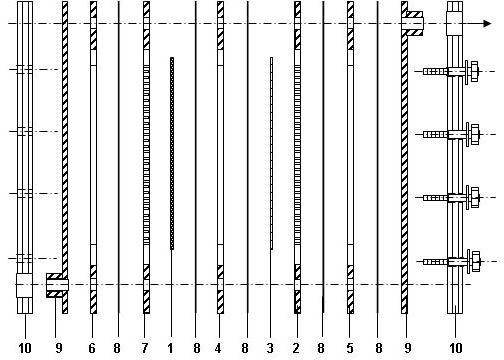
Fig. 1. Location of cell components
The schematic diagram of the experimental setup used in the study is shown in Figure 2. The electrochemical cell consists of anolyte and catholyte circuits and NaBO2·H2O2·3H2O crystallization line. During the electro-synthesis the catholyte circulated through the first tank. After the saturation of solution with sodium perborate, catholyte was transferred to crystallization circuit by turning of the three-way stopcock valve. At the same time circulation of electrolyte between the second tank and electrochemical cell was started. Saturated electrolyte was transferred to crystallizer by free flow, where it was cooled to temperature 200C by cooling system. Obtained suspension was filtrated, thereafter mother liquor was transferred to a correction tank, where specific amount of NaBO2 and water was added. Corrected solution was fed to cathode compartment through the first tank and cycle was continued. Damp crystals of NaBO2·H2O2·3H2O as an obtained product were downloaded from the filtration unit to the dryer. In order to avoid decomposition of a product, after drying at 95-100 0C, NaBO2·H2O2·3H2O was packed in container well isolated from environment.
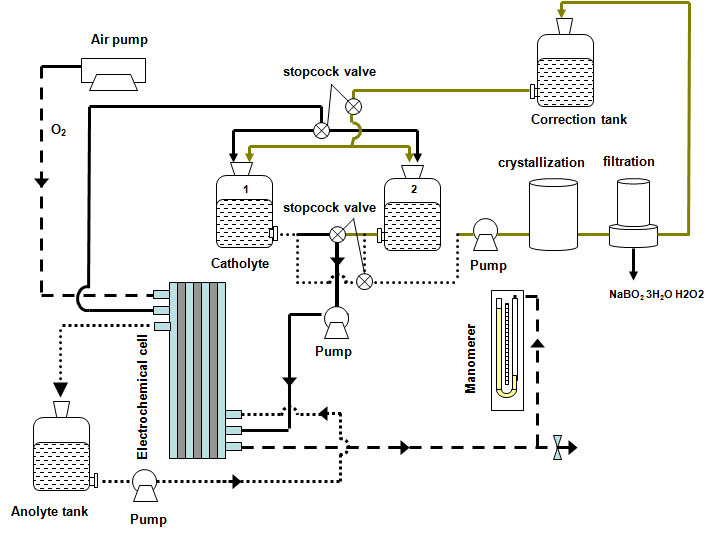
Fig.2. The experimental setup of generation of H2O2, NaBO2·H2O2·3H2O and NaClO
Anolyte solution was circulated through the anode compartment of electrochemical cell to corresponding tank by pump. In the course of electro-synthesis of NaClO in alkaline media OHЇ ions as well as ClЇ ions were consumed by the following reaction with a formation of hypochlorite-ion:

 (Equation 8)
Influence of nature of a membrane on the electro-generation of H2O2 at the cathode and NaClO at the anode
Cathion-exchange membrane MK-40 and anion-exchange membranes MA-40 and AMI-7001S were tested as dividers of anode and cathode compartments of the electrochemical cell. In case of MK-40 cathion-exchange membrane, 0.5M Na2SO4 was used as a catholyte and (1M NaCl + 0.5M NaOH) – as an anolyte. Air was fed to cathode gas chamber by air pump at the pressure of 350-400 Pa. Current density comprised 0.07 A cm-2, cell voltage – 5.5 V. In the course of electro-synthesis of NaClO at an anode OHЇ and ClЇ ions were expended and an equivalent amount of Na+ ions was penetrated in cathode compartment through a membrane and neutralized HO2Ї and OHЇ anions, formed at cathode reaction (Equation 3). As a result, anolyte pH was decreased whereas catholyte pH was increased. Current efficiency of HO2Ї over one hour varied from 90% to 85% and of NaClO – from 70% to 2% (Fig.3).
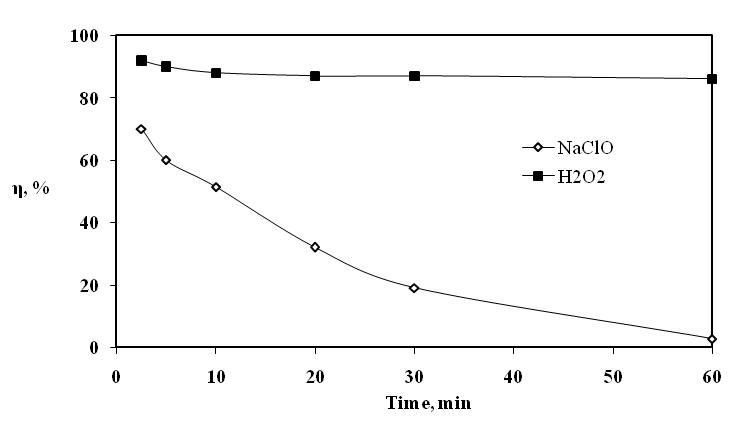
Fig.3. Dependence of current efficiencies of H2O2 (in the catholyte) and of NaClO (in anolyte) on time in electrolyzer with cathion-exchange membrane MК-40
Sharp decrease of current efficiency of NaClO may be explained by oxidation of ClЇ to Cl2 (Equation 9) and by further hydrolysis of obtained chlorine with a formation of HCl and HClO (Equation 10, Fig. 4).

 (Equation 9)

 (Equation 10)
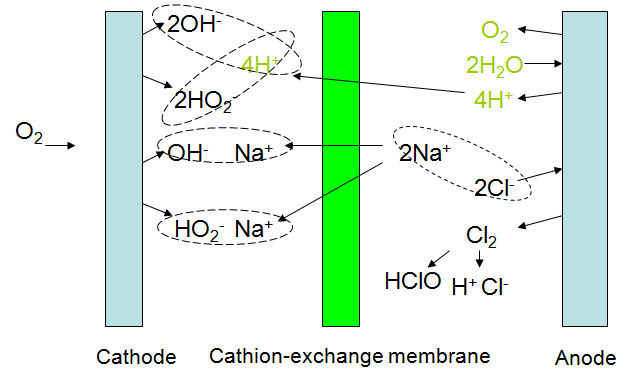
Fig.4. Scheme of migration of ions in the electrolyzer with cation-exchange membrane (anolyte did not contain alkaline)
The following experiments were carried out in electrochemical cells divided by anion-exchange membranes MA-40 and AMI 7001S, other experimental conditions were similar to the above data. OHЇ ions formed by reduction of O2 (Equation 3) penetrate to anode compartment through anion-exchange membrane and partially participate, together with ClЇ, in oxidation reaction with a formation of ClOЇ (Equation 8); another part is oxidized to O2 and H2O (Fig. 5).
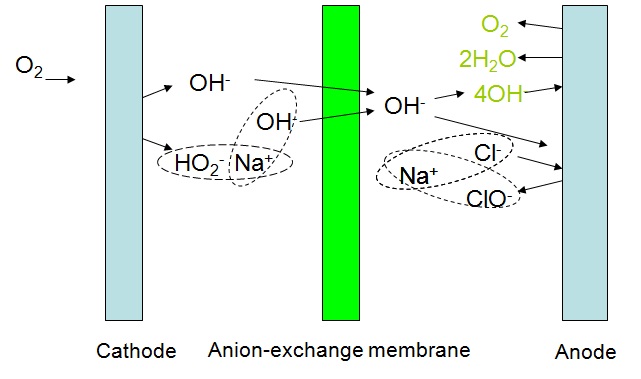
Fig.5. Scheme of migration of ions in the electrolyzer with anion-exchange membrane
As shown in Fig. 6, current efficiency of HO2Ї decreased from 92% to 81% in 180 min operation of electrochemical cell, in the same period current efficiency of ClOЇ varied from 85% to 71%.
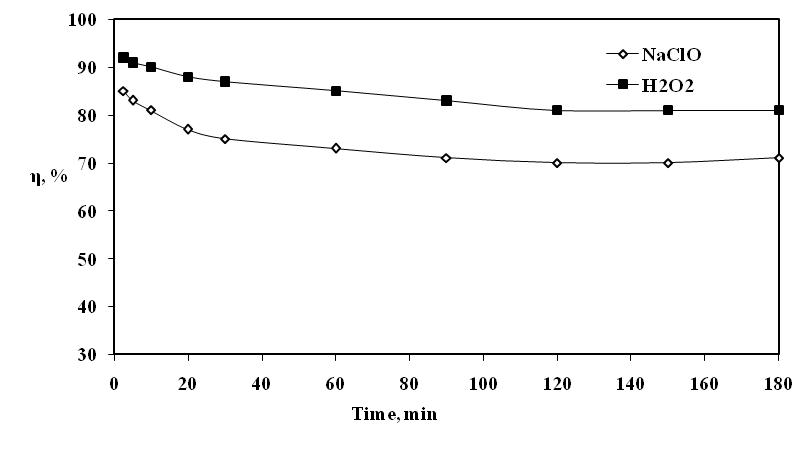
Fig.6. Dependence of current efficiencies of H2O2 (in the catholyte) and of NaClO (in anolyte) on time in electrolyzer with anion-exchange membrane AMI 7001S
Comparison of the operation of anion-exchange membranes MA-40 and AMI 7001S at fulfilling of similar experimental conditions has shown that at the use of a membrane AMI 7001S cell voltage decreased by 0.9 V (3.6 V instead of 4.5 V) and current efficiency of OH2‾ is higher than for a membrane MA-40 (Fig. 7).
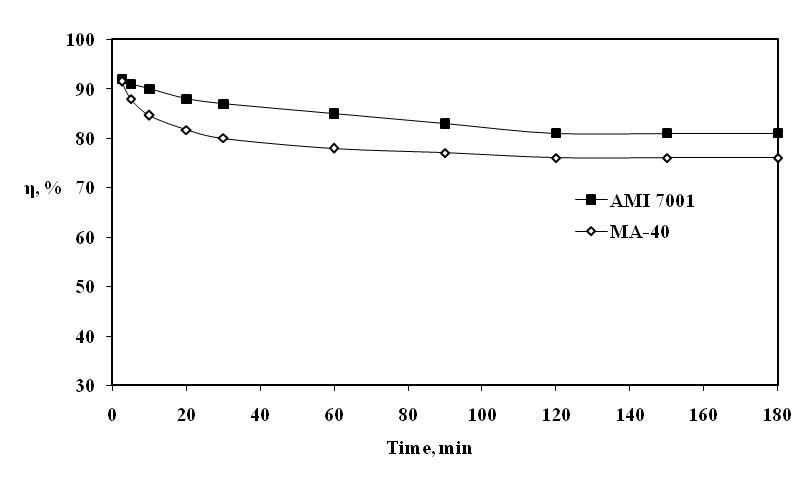
Fig. 7. Current efficiencies of H2O2 in the electrolyzer equipped by anion-exchange membranes AMI 7001S and MA-40
This fact may be explained by higher selectivity of AMI 7001S. Diffusion of ClO‾ through the membrane AMI 7001S is lesser, therefore current efficiency of NaClO is higher by 3-5% that at the use of a membrane MA-40 (Fig. 8). Specific consumption of electric power at the use of a MA-40 membrane comprised 9.1 kWh kg-1 and for AMI 7001S membrane – 4.6 kWh kg-1.
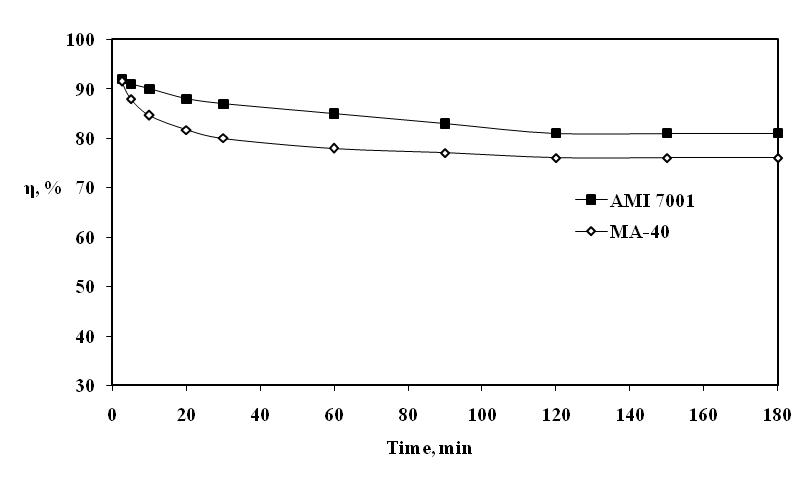
Fig. 8. Influence of AMI 7001S and MA-40 anion-exchange membranes on current efficiency of NaCIO
Generation of sodium perborate in сatholyte
Synthesis of sodium perborate was carried out at the setup presented in Fig. 2, where H2O2 obtained at a cathode reacted with sodium metaborate in alkaline-metaborate solution by the reaction:

 (Equation 11)
Study of preparation of NaBO2·H2O2·3H2O in metaborate electrolyte at various content of sodium hydroxide (0.3-1.3M) and at current density 0.07 A cm-1 and temperature 28-300C has shown that an increase of alkaline concentration enhances the solubility of sodium perborate. At the presence of 0.3M NaOH in a catholyte the crystals of NaBO2·H2O2·3H2O began to separate at attaining of their concentration to 45 g L-1, at the presence of 0.8M and 1.3M NaOH – to 55 g L-1 and 89 g L-1, respectively (Fig.9). Obtained saturated perborate solution was fed for cooling (to 200C) into crystallizer. Obtained pulp was filtered, a precipнtate was washed and dried at 1000C.
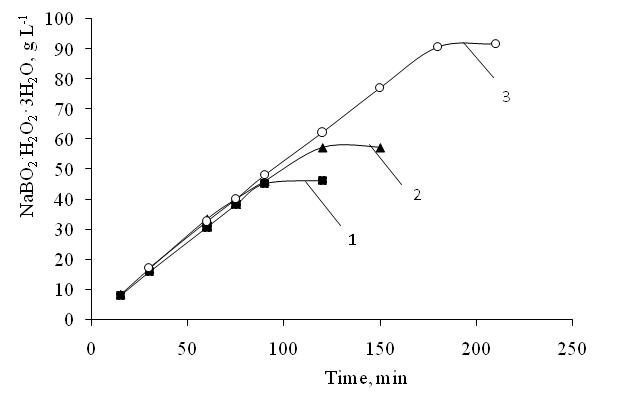
Fig. 9. Dependence of saturation of electrolyte with sodium perborate upon the time from concentration of NaOH (i = 0.07 A cm-2): 1 – 0.3M NaOH; 2 – 0.8M NaOH; 3 – 1.3M NaOH
Generation of sodium perborate in сatholyte and sodium hypochlorite in anolyte
Feasibility of simultaneous preparation of sodium perborate in сatholyte and sodium hypochlorite in anolyte has been established at the setup shown in the Fig. 1. Electrochemical cell was divided by anion-exchange membrane AMI 7001S, the electrodes (cathode and anode) were the same as described above. Alkaline solution of sodium metaborate (0.7M NaBO2 + 0.3M NaOH) was used as a catholyte and a solution (0.5M NaCl + 0.3M NaOH) – as an anolyte. Volumes of electrolytes were 500 ml, current density - 0.07 A cm-2, cell voltage - 3.5 V. Temperature of the catholyte reached 300C during the electrolysis.
Anode process: 
 (Equation 8)
Cathode process: 
 (Equation 3)
The process in cathode area:

 (Equation 11)
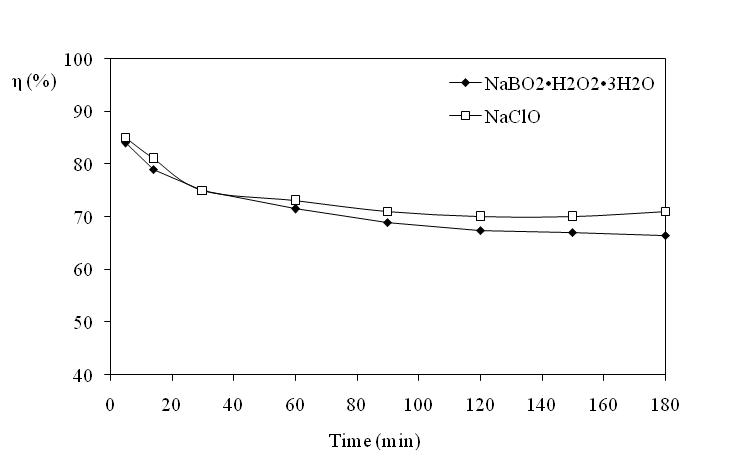
Fig.10. Dependence of current efficiencies of NaBO2·H2O2·3H2O and of NaClO from electrolysis time at their simultaneous generation: i = 0.07 A cm-2, AMI 7001S membrane, catholyte – (0.7M NaBO2 + 0.3M NaOH), anolyte - (0.5M NaCl + 0.3M NaOH)
Current efficiency of sodium perborate over 180 min of electrolysis was varied from 84% to 67%. At the same time current efficiency of sodium hypochlorite decreased from 85% to 71% (Fig. 10). Energy consumption of NaBO2· H2O2·3H2O comprised 1.8 kWh kg-1, NaClO – 3.6 kWh kg-1.
Conclusions
Feasibility of simultaneous electro-synthesis of hydrogen peroxide at a cathode, sodium perborate in a catholyte and sodium hypochlorite at an anode was established in filter-press type electrolyzer divided by anion-exchange membrane by the use of gas-diffusion cathode and DSA. Operating conditions: catholyte – alkaline solution of sodium metaborate (O.7M NaBO2 + 0.3M NaOH), anolyte – alkaline solution of sodium chloride (0.5M NaCl + 0.3 M NaOH), temperature - 28-30 0С. Current efficiency of H2O2 (and respectively of NaBO2·H2O2·3H2O) in 3 hours of electrolysis comprises 67%, NaCIO – 71%; power consumption for production of NaBO2· H2O2·3H2O comprised 1.8 kWh kg-1, for NaClO – 3.6 kWh kg-1.
References
[1] Edwards J. K., Hutchings J. G. Palladium and gold–palladium catalysts for the direct synthesis of hydrogen peroxide // Angew. Chem. Int. Ed. Engl. - 2008. - Vol. 47, P. 9192–9198.
[2] Amin H., Amer A., El Fecky A., Ibrahim I. Treatment of textile waste water using H2O2/UV system // J. Physicochemical Problems of Mineral Processing. - 2008. - Vol. 42, P. 17-28.
[3] Brillas E., Sireмs I., Oturan M. A. Electro-Fenton process and related electrochemical technologies based on Fenton’s reaction chemistry // Chem. Rev. - 2009. - Vol. 109, P. 6570–6631.
[4] Aleboyeh A., Moussa Y., Aleboyeh H. The effect of operational parameters on UV/H2O2 decolourisation of Acid Blue 74 // Dyes and Pigments – 2005. - Vol. 66, P. 129-134.
[5] Alfano O. M., Brandi R. J., Cassano A. E. Degradation kinetics of 2,4-D in water employing hydrogen peroxide and UV radiation, Chem. Eng. – 2001. - Vol. 82, P. 209–218.
[6] Arslan I., Balcioglu A. I. Degradation of commercial reactive dyestuffs by heterogenous and homogenous advanced oxidation processes: a comparative study // Dyes and Pigments – 1999. - Vol. 43, P. 95–108.
[7] Stefan M. I., Hoy A. R., Bolton J. R. Kinetics and mechanism of the degradation and mineralization of acetone in dilute aqueous solution sensitized by the UV photolysis of hydrogen peroxide // Environmental Science and Technology – 1996. - Vol. 30, P. 2382–2390.
[8] Vogelpohl A., Kim Soo-Myung. Advanced Oxidation Processes (AOP) in Wastewater Treatment // J. Ind. Eng. Chem. – 2004. - Vol. 10(1), P. 33-40.
[9] Campos-Martin J. M., Blanco-Brieva GFierro Angew., J. L.G. Hydrogen peroxide synthesis: an outlook beyond the anthraquinone process // Angew Chem. Int. Ed. – 2006. - Vol. 45(42), P. 6962 – 6984.
[10] Goor G., Kunkel W., Weiberg O. Hydrogen peroxide / In: Elvers B., Hawkins S., Ravenscroft M., Schulz G., editors // Ullmann’s Encyclopedia of Industrial Chemistry – 1989. - Vol. A13: High-performance obers to imidazole and derivatives, NewYork: VCH Publishers, 1989. P. 443–66.
[11] Strukul G. (ed.) Catalytic oxidations with hydrogen peroxide as oxidant // Kluwer academic publisher 1992. - P. 13-18.
[12] Chen O. Development of an anthraquinone process for the production of hydrogen peroxide in a trickle bed reactor - From bench scale to industrial scale // Chemical Engineering and Processing: Process Intensification – 2008. Vol. 47, P. 787–792.
[13] Agladze G. R., Tsurtsumia G. S., Jung B.-I., Kim J.-S. and Gorelishvili G. parative study of Hydrogen Peroxide Electro-Generation on Gas-Diffusion Electrodes in Undivided and Membrane cells // Journal of Applied Electrochemistry – 2007. - Vol. 37,P. 985-990.
[14] Agladze G. R., Tsurtsumia G. S., Jung B.-I., Kim J.-S., Gorelishvili G. G. The "In-cell" and "Ex-cell" Fenton Treatment of Phenol, 4-chlorphenol and Aniline // Journal of Applied Electrochemistry 2007. - Vol. 37, P. 375-383.
[15] Agladze G. R., Tsurtsumia G. S., Jung B.-I., Kim J.-S., Gorelishvili G. parative study of Chemical and Electrochemical Fenton Treatment of Organic Pollutants // Journal of Applied Electrochemistry – 2007. - Vol. 37, P. 385-393.
[16] Agladze G., Tsurtsumia G., Kveselava V., Gorelishvili G., Nikoleishvili P., Kochiashvili N., Park S.-G., Kang K.-S., Kim T.-I. Study of H2O2 electro-generation at the gas-diffusion electrodes in alkaline solution // Proceedings of the Georgian National Academy of Sciences, Chemical series – 2008. - Vol. 34, P. 21-30.
