


Партнерка на США и Канаду по недвижимости, выплаты в крипто
- 30% recurring commission
- Выплаты в USDT
- Вывод каждую неделю
- Комиссия до 5 лет за каждого referral
Государственное бюджетное образовательное учреждение
среднего профессионального
образования "Региональный многопрофильный колледж" г. Ставрополь
Тема мероприятия:
« Travelling.
Travelling abroad: pros and cons.»
Преподаватель английского языка
Группа Ю-21
г. Ставрополь
Тема мероприятия : Travelling. Travelling abroad: pros and cons.
Цель: активизация тематической лексики в устной речи учащихся в процессе развития иноязычной коммуникативной компетенции школьников.
Задачи:
Развивать умения и навыки учащихся выражать согласие или несогласие.
Воспитывать чувство уважения и интерес к культуре и народу страны изучаемого языка и собственной культуре; воспитывать потребность в практическом применении языка.
Тип урока: урок диспут.
Форма проведения: Интерактивная беседа.
Формы работы: парная, индивидуальная.
ХОД УРОКА
1. Организационный момент
– Приветствие.
– Сообщение задач занятия.
We've spoken a lot how to spend free time. Travelling is considered to be one of the ways of spending holidays and it plays an important part in the entertainment of people.
2. Warming-up - 2 мин.
Для настройки учащихся на беседу по теме используются пословицы.
Teacher: To begin with let's remember proverbs about travelling.
Repeat it after me, please:
Every country has its customs.
There is no place like home.
The wider we roam the welcomer home.
East or West, home is best.
3. Before travelling people want to get as much information as possible.
People can get all the information about travelling from
newspapers and magazines, on radio and TV,
from tourist guides and travel leaflets,
in the net, etc.
How do people usually rest?
What is better?
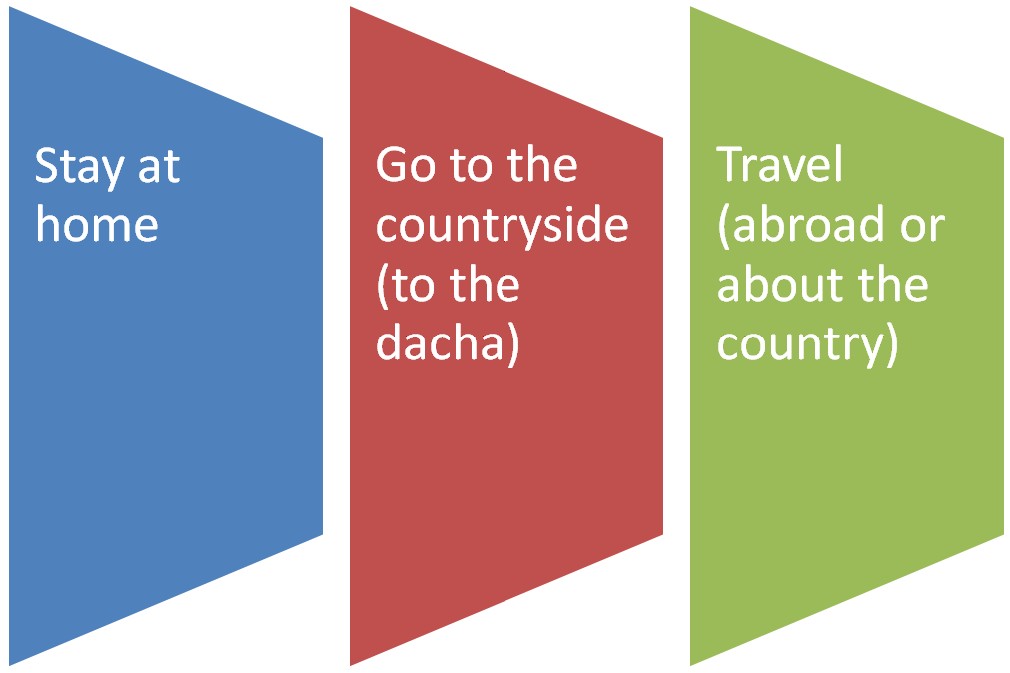
If you stay at home, you can…
When you travel abroad or about the country, you can…
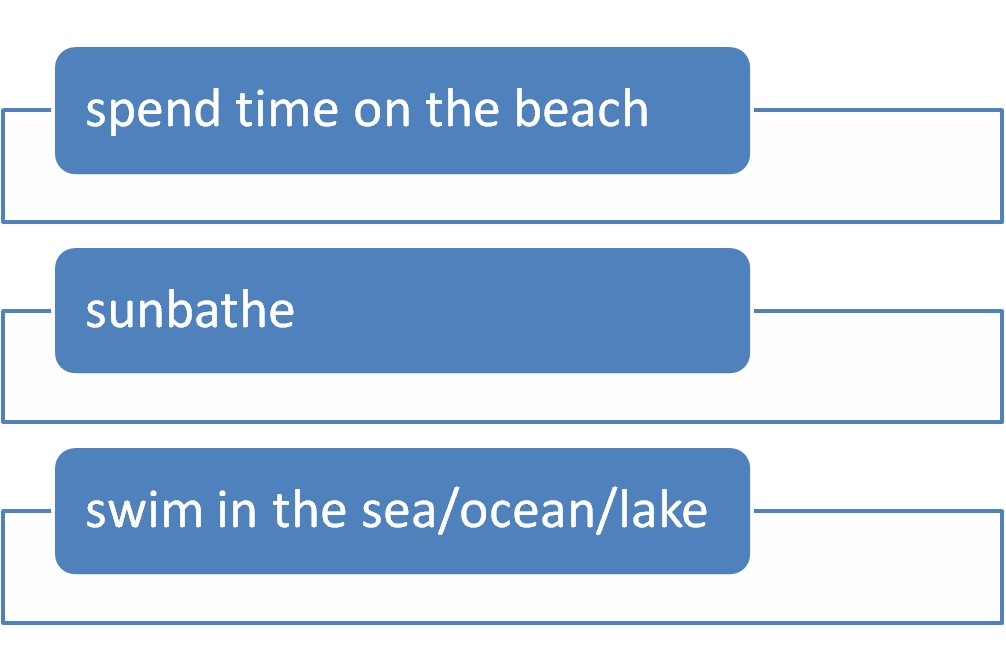
When you travel abroad or about the country, you can…

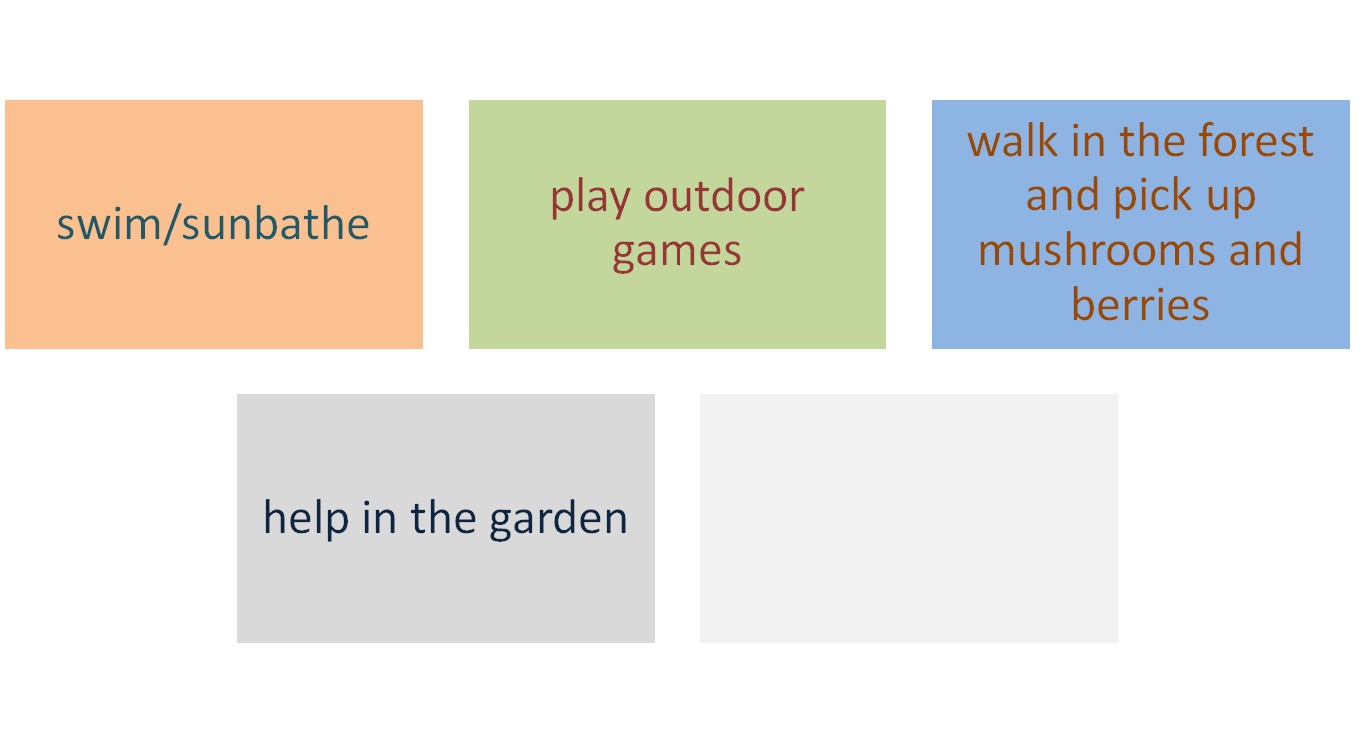
If you go to the countryside (to the dacha)
Развитие речевых навыков. -2 мин.
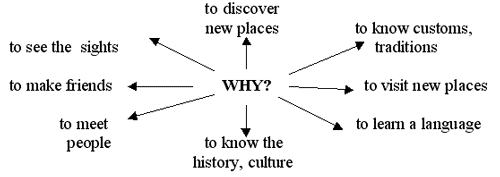
Teacher: Why do people travel? Give your reasons: Now look at the scheme. Have we mentioned all the points?
T: But you see there are different points of view upon it. And I want you to learn how to explain various opinions upon the problem. Imagine you don’t like travelling. More than that, you dislike travelling abroad. So try to express your negative attitude towards it..
PROS: | CONS: |
1. discover new places 2. help to become more educated person 3. improve knowledge of foreign language 4. teach people about art and culture 5. help to relax 6. meet interesting people 7. a good way to broaden your taste | miss your friends 2. wait at airports 3. depend on the weather 4. have to think about accommodation and food 5. beaches are always overcrowded 6. the most fantastic place is home 7. our Russian food is more tasty and healthy |
4. Активизация лексических навыков. Учащимся можно предложить лексические опоры)
Arguments for Arguments against
I am absolutely for: As for me, I don't like the idea of:
People travel abroad because: I think that:
Besides,: Besides,:
More than that: What is more,:
Life without travelling is: I can never understand:
I travel because: I am sure I wouldn't go:
What is more, travelling abroad: because:
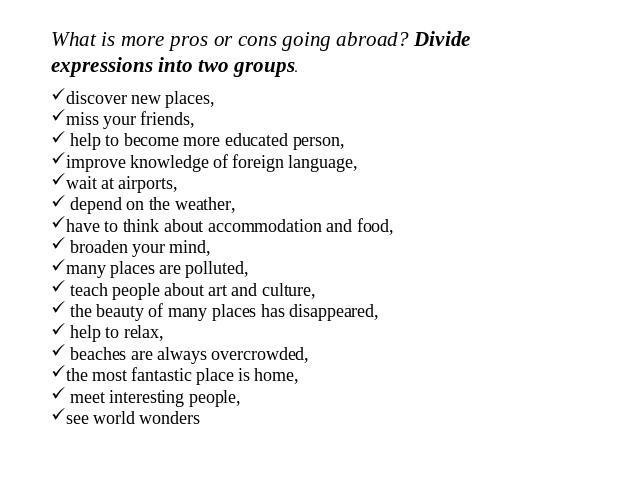
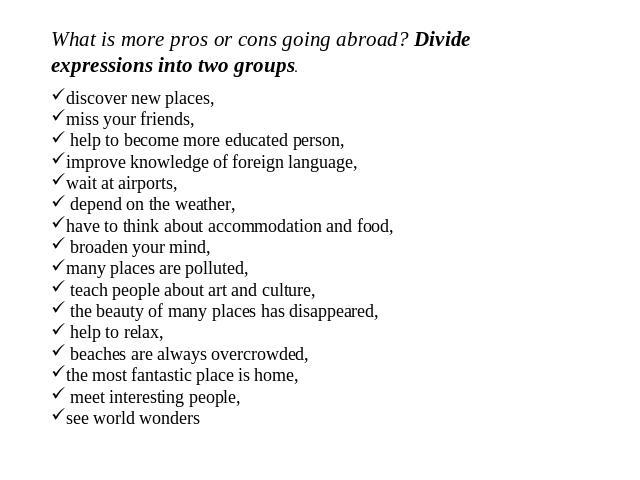
What is more pros or cons going abroad? Divide expressions into two groups. discover new places, miss your friends, help to become more educated person, improve knowledge of foreign language, wait at airports, depend on the weather, have to think about accommodation and food, broaden your mind, many places are polluted, teach people about art and culture, the beauty of many places has disappeared, help to relax, beaches are always overcrowded, the most fantastic place is home, meet interesting people, see world wonders
TRAVELLING ABROAD
Arguments in favour of going abroad
- to discover new places in other countries it’s wonderful – to be a part of people’s education travelling abroad
– to teach people about art and culture travelling
– to teach people to be understanding travelling
– to broaden the mind travelling
– to help people to relax sometimes travelling
– to make friends with interesting people
– can help to improve the knowledge of foreign languages travelling
TRAVELLING ABROAD
Arguments against tourism abroad
a lot of places to visit in your own country there are
You don’t need
to buy tickets and think of time-tables
to reserve tickets
to carry heavy suitcases
You don’t have
to wait at airports and railway stations
to think of rucksacks and suitcases You can
speak your own language
choose your favourite food
to make your relatives wait for you and worry
to be always near you your family and best friends
to be polluted and dangerous for health a lot of places
It’s no use going abroad
T: With the help of these key words try to give reasons and explain why you are against travelling abroad
P: May I put in a word? Actually there are a lot of interesting places to visit in our own country. That’s why I for one think there is no need travelling abroad.
P: As for me I agree with this point of view. And I think it’s better to spend your holidays at home. And so you will never need to buy or to reserve tickets and think of timetables or to carry heavy suitcases.
P: I do. I disagree with the view that travelling abroad is of no use. First, I should say that it’s wonderful to discover new places in other countries when you go abroad. Second, travelling abroad is a part of people’s education.
P: More than that you don’t have to wait at airports and railway stations or to think of rucksacks and suitcases. The only thing you can do is to speak your own language and to choose your favourite food.
P: I’d like to add that travelling abroad makes your relatives and friends wait for you and worry. But if you don’t go abroad they are always near you.
P: And third, travelling teaches people about art and culture and to be understanding. Besides travelling broadens the mind and helps people to relax sometimes after their hard work.
P: By the way, I should say that a lot of places are polluted and become dangerous for people’s health. So I suppose there is no use going abroad.
T: I see. And of course this conversation “against travelling abroad” was certainly a kind of a joke. No doubt that actually I am sure all of you deep in heart have a wish to travel somewhere one day. There are a lot of interesting places to see you know. As for the knowledge of the English language it can help you to visit many English-speaking countries
P: May I join the conversation? Travelling abroad can help people practise speaking foreign languages, English for example. Tourists often make friends with interesting people abroad. This can also help them to improve their knowledge of foreign languages.
T: I’d like to say that English you are learning at school is of course one of your school subjects. But the problem is wider. I want each of you to accept English first of all as a means of communication which makes you learn more about other countries, their traditions and customs. And this adds more to intercultural dialogue, doesn’t it?
P: It does. And on the other hand due to English for example and other foreign languages many people also receive a good opportunity to go sightseeing abroad. And this also adds to people’s friendship and understanding.
T: You are right. And at our today’s English lesson I’d like to offer you to make a tour, to be more exact a virtual tour abroad. Are you interested to know what country it will be?
P: What country will it be?
T: Certainly Britain and its capital. At our previous English lessons we have already spoken about London and its historical places of interest. And before going to the capital of the UK I want to see how well you know the names of the most famous London sights. Let us quickly read them for us to remember them better. Card 5 will help us to do it.
Для повторения названий основных достопримечательностей Лондона учитель раздает карточки раздаточного материала. Отрабатывается фонетическое звучание лексики, учащиеся читают знакомые уже названия достопримечательностей Лондона «по цепочке», а затем – за учителем в режиме [T – Children] работа хором.
Some people are fond of travelling to exotic countries, while others say that exotic travel is rather risky.
Many people dream of exciting travels to sunny, beautiful and interesting places in exotic countries. But every tourist must remember that there are a number of risks that they need to be aware of.
In my opinion, exotic travel gives you an opportunity to participate in exciting experiences. In exotic countries you can ride a camel or an elephant, enjoy modern cities or picturesque little villages, admire ancient temples and what not. Travelling to exotic countries many tourists would like to watch the daily life of local people, to see mountains, jungles and beaches. I believe that exotic travel is very rewarding because it can lead to totally new understanding of diverse cultures and lifestyles.
Learning English abroad or in your own country
Learning languages abroad or in your own country? This is the question that many people ask themselves every year when they start learning English. Mainly because learning a language takes too much time sometimes.
On the one hand, the most effective way to learn English is to travel and live in a country where English were spoken, because you could speak the language with native people with a real accent, not only practicing with phrases that are only found in books. However, travelling abroad and stating there could be quite expensive for a student.
On the other hand, if you chose learning in your own country, another option could be to take classes in an academy or with a professional teacher – a native one or not. But the problem in an academy is they have a lot of students per room, and you couldn’t practice like you want to. Also, one-to-one classes could be very expensive even with a non-native teacher.
To sum up, the main problem is the money. Therefore, it is recommended to know first how much money you would have saved up and then chose the best option which are available to you.
What is more pros or cons going abroad? Divide expressions into two groups. discover new places, miss your friends, help to become more educated person, improve knowledge of foreign language, wait at airports, depend on the weather, have to think about accommodation and food, broaden your mind, many places are polluted, teach people about art and culture, the beauty of many places has disappeared, help to relax, beaches are always overcrowded, the most fantastic place is home, meet interesting people, see world wonders
10. Заключительный этап урока. Подведение итогов, домашнее задание.-2 мин.
Teacher: Now, I see that you like travelling very much and know a lot of interesting things about it. Well, our lesson is almost over. Thank you for being active at the lesson. It was very interesting to listen to your points of view. Your marks for the lesson are the following.
Have you got any questions?
