

Партнерка на США и Канаду по недвижимости, выплаты в крипто
- 30% recurring commission
- Выплаты в USDT
- Вывод каждую неделю
- Комиссия до 5 лет за каждого referral
Тема занятия: Покупки
Класс: 6
Тип урока: Урок закрепления изучаемого материала (с применением ЭСО – презентации по теме)
Место урока в теме: Один из заключительных уроков в теме
Формы работы: парная, фронтальная
Цели урока: Активизация употребления ЛЕ по теме «Покупки» в устной речи
Задачи урока: 1. Образовательные: Совершенствовать навыки устной речи по теме, активизировать употребление ЛЕ по теме «Покупки» в устной речи.
2. Развивающие: обеспечить развитие речи учащихся; развивать интеллектуальные способности (мыслительные умения, перенос знаний и умений в новые ситуации); развивать познавательный интерес и расширять кругозор учащихся.
3. Воспитательные: формировать этические нормы поведения, воспитывать гуманистическое отношение к людям.
Оборудование: презентация по теме, аудиозаписи, схемы диалогов, заготовка для домашнего задания.
Ход урока:
- Организационный этап: Приветствие. Введение учащихся в атмосферу иноязычной речи. Актуализация знаний, имеющихся у учащихся по изучаемой теме. … Say Good morning to our guests. Ориентировочно-мотивационный этап:
Слайды 1- 2: Тематика и целеполагание: Звучит стихотворение. Why do you think we begin our lesson with this poem? What is this poem about? (Students answer.) – That’s right. The best idea is that our unit is called “Shopping fever” and this poem is just about it. What are we speaking about in our lesson today? (Students answer.) Very well. Yes, we are speaking about everything that concerns shopping.
- Операционально-познавательный этап:
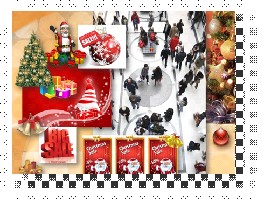
Слайды 1- 2: Небольшое рассуждение о Рождественских распродажах: Christmas is very important for shopping, isn’t it? Why? (Shopping fever begins in many countries. There are a lot of sales in many shops. Many people want to buy presents for their nearest and dearest.) You are right.
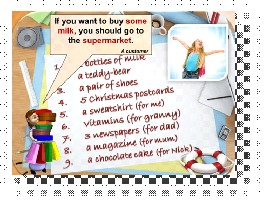
Слайды 3-4: Упражнение на соотнесение ЛЕ и различных видов магазинов: Many boys and girls like you want to buy presents. But before going shopping they make a shopping list. Here you can see one of them. Whose shopping list is it? (Rosie’s) Let’s give her some advice where she can buy these things. Would you like some help? (Ученики по очереди называют, в каком магазине Рози может купить вещи и продукты из списка покупок).
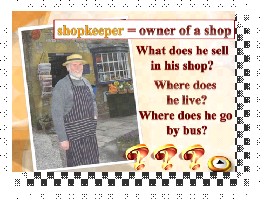
Слайд 5: Упражнение на понимание речи на слух: But you know there are some people that don't need to go shopping to different shops. Look at one of them. What do you think who is this man? (A shop owner, a shopkeeper). I’ve got a friend in Britain, and the man in this photo is his uncle. Look, I’ve got 3 questions for you. The first one is … Listen to the information from my friend and answer the first question/ the second question/ the third question.
Слайд 6 - 8: Описание фотографии и введение нового понятия Oxfam.

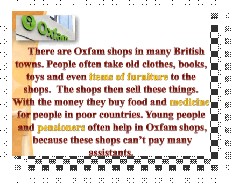
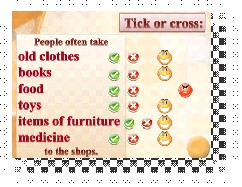
Слайды 7, 9 - 12: Упражнения на чтение текста и контроль его понимания.
Чтение текста про себя. Read the text about Oxfam and try to understand it. Чтение текста вслух (1 ученик). S, read the text aloud. And now let’s do some exercises about this text. Tick or cross: Выбор информации из представленных вариантов. True or false: Определение правильности информации. Choose the correct variant. Answer the question.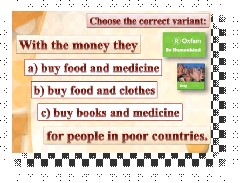
Слайды 13 - 14: Упражнения на обсуждение увиденного и рассуждение на тему.
Look at the next picture. What can you see? (a clothing and shoe bank) What emblem is there? (Oxfam) What can you read here? (wanted clean clothing, shoes in pairs, bric-a-brac; to sell in Oxfam shops; in bags, please). So what are these banks for? (People can bring clean clothes and shoes in pairs and put them in these banks, then Oxfam shops will sell them and help poor people)
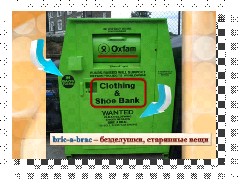
Would you like to work in an Oxfam shop? Why? … What could you bring in a “Clothing and Shoe Bank”? … Have you ever seen an Oxfam shop in Belarus? (No, I haven’t) Look at these pictures now. You can see that there are some Oxfam shops in Russia. Maybe some time later there will be some shops like these in Belarus. Let’s hope, because it’s a great idea to help people.
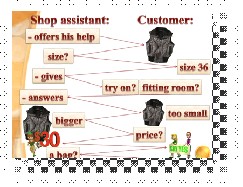
Слайды 15-18: Упражнения по составлению диалогов с опорой на образ – схему диалога. But before bringing old clothes to Oxfam shops you need to go to a clothes shop and to buy new clothes. I’ve got 3 kinds of the dialogue “At the clothes shop”. Choose one of them and get ready for acting your dialogue. You’ve got 2-3 minutes.
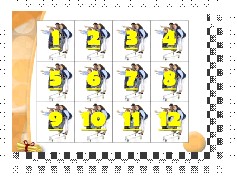
Слайды 19-31: Группа различных упражнений, объединённых общей темой:
Look here. This is a quiz. There are 12 different tasks (questions or exercises) for you. You can choose the number you like. Who wants to be the first?
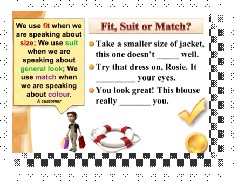
Why do you like shopping?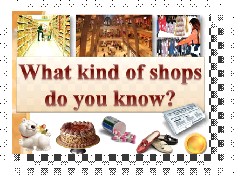
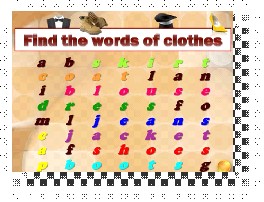
Слайд 32: Упражнение-игра: Find the words of clothes.
Are you tired? Let’s have a rest. I’ve got a simple game. Find the words of clothes. You can work in pairs. How many words did you find? (9 words)
Слайд 33: Творческое задание на составление списка покупок:
Christmas is coming. I think you want to buy some presents to your nearest and dearest. Imagine the situation: you’ve got 50 000 roubles and you have to make a shopping list. You can use exercise 3 at page 27 in your AB.
- Контрольно-коррекционный этап: Рефлексия:
- Заключительный этап. Подведение итогов урока. Well, our lesson is almost over. Thank you for being active during the lesson. It was very interesting to listen to you. Your marks for the lesson are the following… now, please, write down your home task. So, your homework is to finish your shopping lists and to do exercise 3 on page 27 in your AB. Конец урока.
