


Партнерка на США и Канаду по недвижимости, выплаты в крипто
- 30% recurring commission
- Выплаты в USDT
- Вывод каждую неделю
- Комиссия до 5 лет за каждого referral
Вместе с тем, японские пацифисты считают что понятие "нормальная" страна должно ассоциироваться, прежде всего, не с правом государства на войну, а с тем, что страна имеет "мирную" конституцию. В 1999 году вдохновленная "Гаагским воззванием к миру" и заявлением на "Всемирном форуме в поддержку мира" в Ванкувере стартовала "Всемирная кампания по статье 9 в интересах запрещения войн". Сегодня к миротворческой инициативе присоединились сотни организаций и тысячи граждан Японии, Республики Корея, России, Монголии, Нидерландов, Германии, Франции, Испании, Греции и США (всего более 40 страна мира)1.
Поддерживая кампанию по 9-й статье, активисты проводят мирные демонстрации, акции протеста, публикуют статьи, собирают подписи в защиту "мирной" конституции. В 2005 году, году в котором человечество отметило 60-ю годовщину окончания Второй мировой войны, в двенадцати газетах различных стран вышли общественные уведомления о проведении глобальной акции солидарности против пересмотра конституции Японии и отмены девятой статьи2. Кульминацией многолетней миротворческой работы по защите 9-й статьи стала "Всемирная конференция по статье 9", которая прошла в Токио с 1 по 6 мая 2008 года3.
Как повлияла 9 статья конституции на послевоенное развитие страны? Какая она, современная Япония: милитаристская, пацифистская или реалистичная? Что знают о Японии Россияне, и как она отражается в зеркале общественного мнения, какие темы привлекают сегодня внимание российских японоведов, и что ожидают от Японии российская политическая элита и крупный бизнес в ближайшем будущем и, наконец, существует ли необходимость, и если так, то каковы перспективы заключения мирного договора между нашими странами? Эти вопросы были предложены для обсуждения участникам конференции "Япония: шесть десятилетий без права на войну", секции которой прошли в Москве и во Владивостоке. Обсуждение началось в столице, откуда несколько дней спустя эстафетная палочка была передана в дальневосточный регион страны4. Московское заседание прошло в конференц-зале Международной общественной организации «Федерация мира и согласия»5, Владивостокская секция открылась в зале Ученого совета Морского государственного университета имени адмирала 6.
Ученые представлявшие учреждения Российской академии наук, сотрудники вузов, представители общественных организаций и СМИ собрались, чтобы провести коллективное осмысление различных аспектов социального, экономического и политического состояния современной Японии, в контексте формирования системы многосторонней безопасности в Северо-Восточной Азии и перспектив российско-японского двухстороннего сотрудничества. Результаты этой работы представлены в сборнике материалов конференции.
9 статья Конституции Японии и ее роль в послевоенном развитии страны, эволюция политики Японии в оборонной сфере, проблемы исторической памяти, а также роль и место Японии в формировании системы коллективной безопасности в Северо-Восточной Азии – главные темы, вокруг которых развернулась научная дискуссия. Также исследователями были затронуты вопросы отношений Японии с КНДР и Россией. В обсуждении ситуации в российско-японских отношениях ключевое место занял территориальный спор.
Ко дню проведения конференции в г. Владивостоке была приурочена общественная акция по сбору подписей под Заявлением в поддержку 9 статьи Конституции Японии7, которая проходила в рамках "Всемирной кампании по статье девять в интересах запрещения войн". Под Заявлением подписались 426 человек, включая большинство участников конференции.
На конференции был поднят вопрос корректности участия Россиян в вопросах относящихся к суверенному праву японцев, – рассуждать какой должна быть конституция Японии. Ответ на этот вопрос дан в статье активиста японского миротворческого движения Акиры Кавасаки "Глобальное влияние статьи девять", которую он попросил опубликовать для русскоязычных читателей, не принимая очного участия в конференции.
Директор Центра международных исследований Морского государственного университета
им. адм.
Приложение 4
ФОТОГРАФИИ
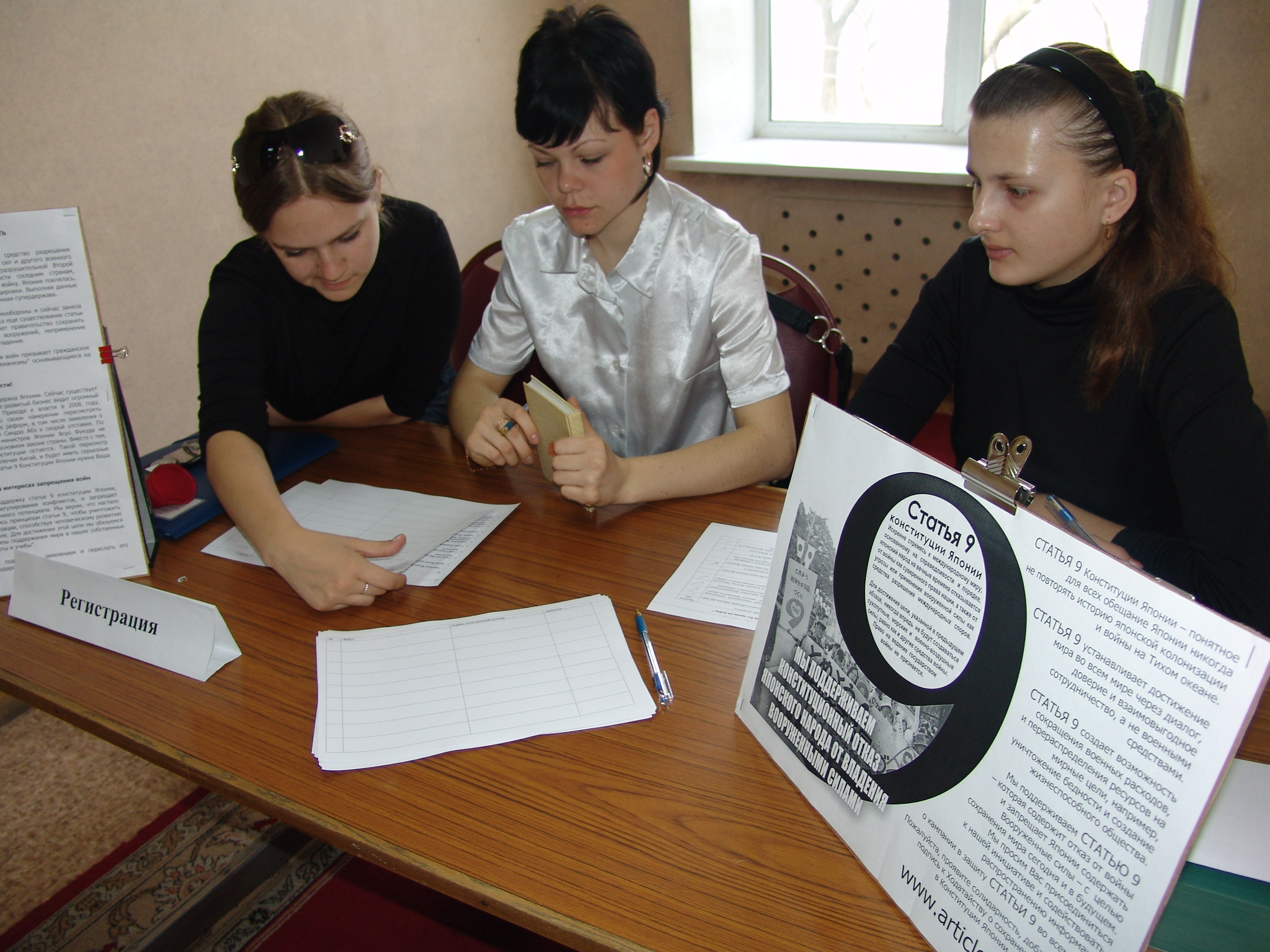


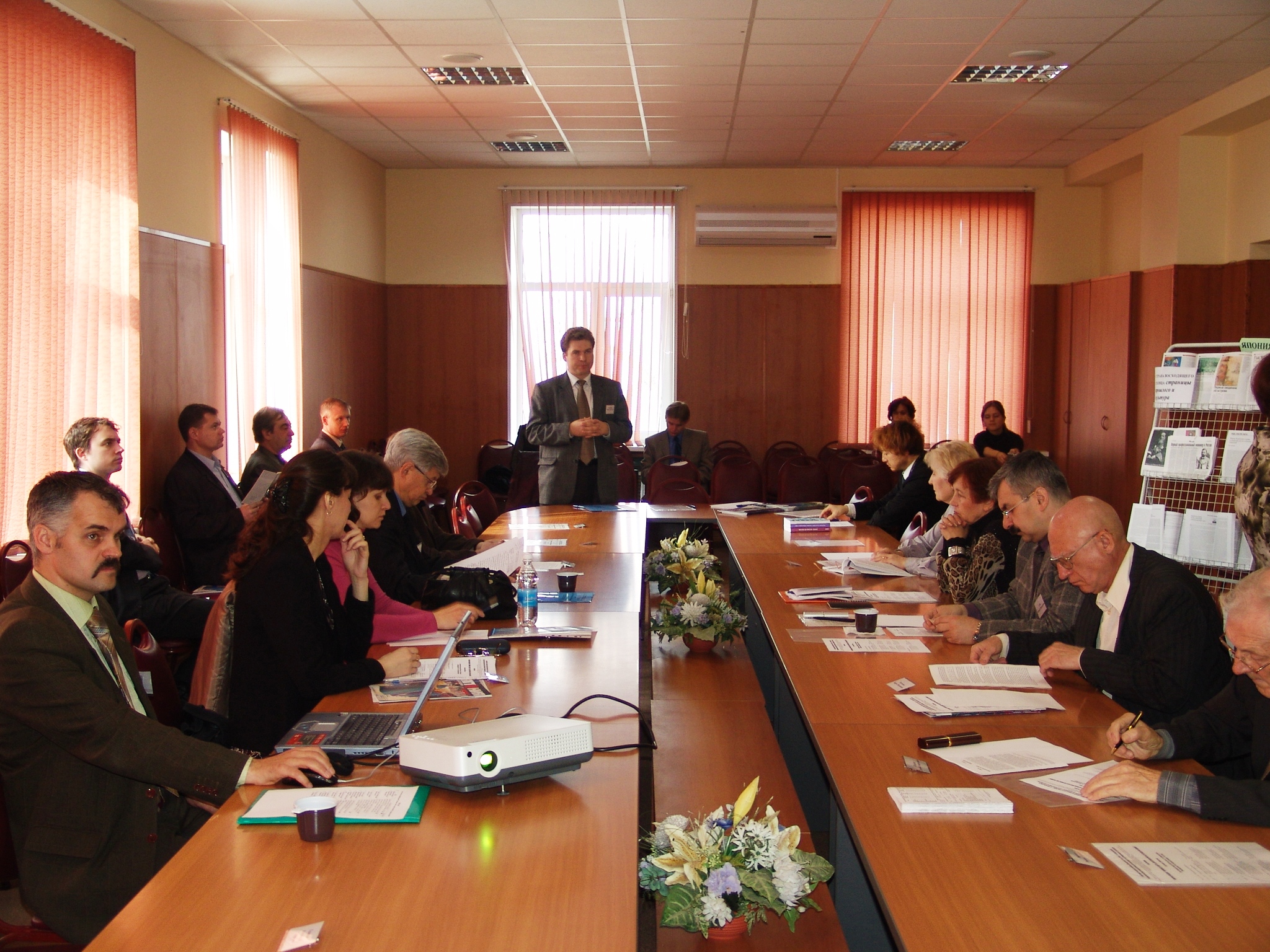

АННОТАЦИИ
ANNOTATIONS
A. Kawasaki
Global Article 9 impact
The presentation covers Global influence of Article 9. In the beginning of the presentation the presenter introduces historical background that led to the ratification of the Article 9 of Japan constitution. As the world situation has changed and Article 9 is viewed as increasingly irrelevant. As a result, the disputes around the pacifist Article 9 arise. The author explains the reasons for debates on alteration of Article 9, as well as the attitude toward it in Japan and all over the world, the activity of supporters and opponents of the Article 9. In author’s opinion, pacifist Article 9 could remain unchanged just if the governments of other countries ratified similar provisions in their Constitutions, thus supporting an idea of peace and prohibition of wars.
D. Streltsov
“New Deal” of Japanese political elite concerning
pacifist provisions of the country Constitution
The presentation covers main features of Japan foreign policy nowadays. The author gives brief introduction of the historical background for Article 9 of Japan Constitution and describes new political challenges Japan faced. Now one of the key trends in Japan's foreign policy is to shift away from the experience of non-military power and as a result, to review related commitments and agreements. "New Deal" of Japanese political elite associated with the rejection of the pacifist provisions of the Constitution and aimed to strengthening military potential of the country, though not explicitly, but is supported by West, especially by the USA. Nevertheless, as opinion poll results show there is ambiguous attitude toward the Article 9 of the Constitution in Japan. Today there are increasing concerns in Japan related to the growth of arms race in APR, China’s military buildup and development of Pyongyang nuclear program. These factors can push Japan to abandon its pacifist status in order to ensure its national security.
S. Smirnov
Article 9 of the Constitution and Self-Defense Forces of Japan
The occupation of Japan was unique and carefully planned operation of political reorganization of the state, controlled from outside. Article 9 of Japan Constitution is considered as controversial. The author refers to historians who believe that it was a kind of compromise to preserve the institution of the emperor in postwar Japan. Existence of this Article is the reason for problems of Japanese military rather than other categories of people. It is well known that Japan Self-Defense Forces are highly competitive with those of the leading Asian countries from the point of combat capability. The main problem is related to the moral state of Japan Self-Defense Forces personnel. Today the status of the Japanese military in society is low. Japan is known as a country with millennial traditions of the military class and samurai code of conduct. It is really difficult for Japan to give up everything that is connected with militarism.
The author concludes if Japan saves its Article 9 of the Constitution, it will show the rest of the world how to remove the notion of “sovereign right to war” from international law in the XXI century.
S. Sevastyanov
Russia’s assessment of Japanese “soft power”
and changing USA – Japan security alliance
The article describes some of Russia's approaches to the “soft power” of Japan and changing USA – Japan security alliance. The author analyzed contemporary Russia-USA and Japan-Russia relations and concluded that the “soft power” of Tokyo is not sufficient for effective handling foreign policy objectives of Japan in East Asia and all over the world. The presence of Article 9 of the Constitution, fixes status quo and image of Tokyo in the region as a junior partner of Washington, thus blocking the establishment of permanent peace in the region. According to the author, if Tokyo agreed on a compromise approach to the problem of so-called “northern territories”, Moscow could support Tokyo steps to achieve status of a “normal” state, including the cancellation of Article 9, although it is the people of Japan who have the last word in this argument.
D. Konoplev
Japan Constitution as an important element
of regional security mechanism
Nowadays Japan is in the top five most developed world economic powers. For half a century it has accumulated immense scientific and technical potential, particularly in military sector. During the post-war development the country had a slogan “affluent country, week armed forces”. After the defeat in World war II Japan officially abandoned the so called policy of remilitarization. However in the conditions of forming a new world order many of the Japanese politicians started to appeal to necessity of gaining a leading political role that was adequate to economic strength of the country. Wherein they accentuated the need to revise even up to repeal of the 9th article of the Japanese constitution. How far the Japanese йlite is going to come “in stiffing the nation spirit” no one knows. Hopefully our countries will adhere peaceful foreign policy, which is needful for reciprocal collaboration and regional stability too. Most probably putting a sharp military slant on the policy the Japanese government can frighten not only country associates but the Japanese people too. It’s doubtful whether Japan is ready to waive its economic prosperity for the sake of dangerous ambitions.

|
Из за большого объема этот материал размещен на нескольких страницах:
1 2 3 4 |
