

Партнерка на США и Канаду по недвижимости, выплаты в крипто
- 30% recurring commission
- Выплаты в USDT
- Вывод каждую неделю
- Комиссия до 5 лет за каждого referral
Welcome to Russian grammar.
“Gender of Russian nouns”.
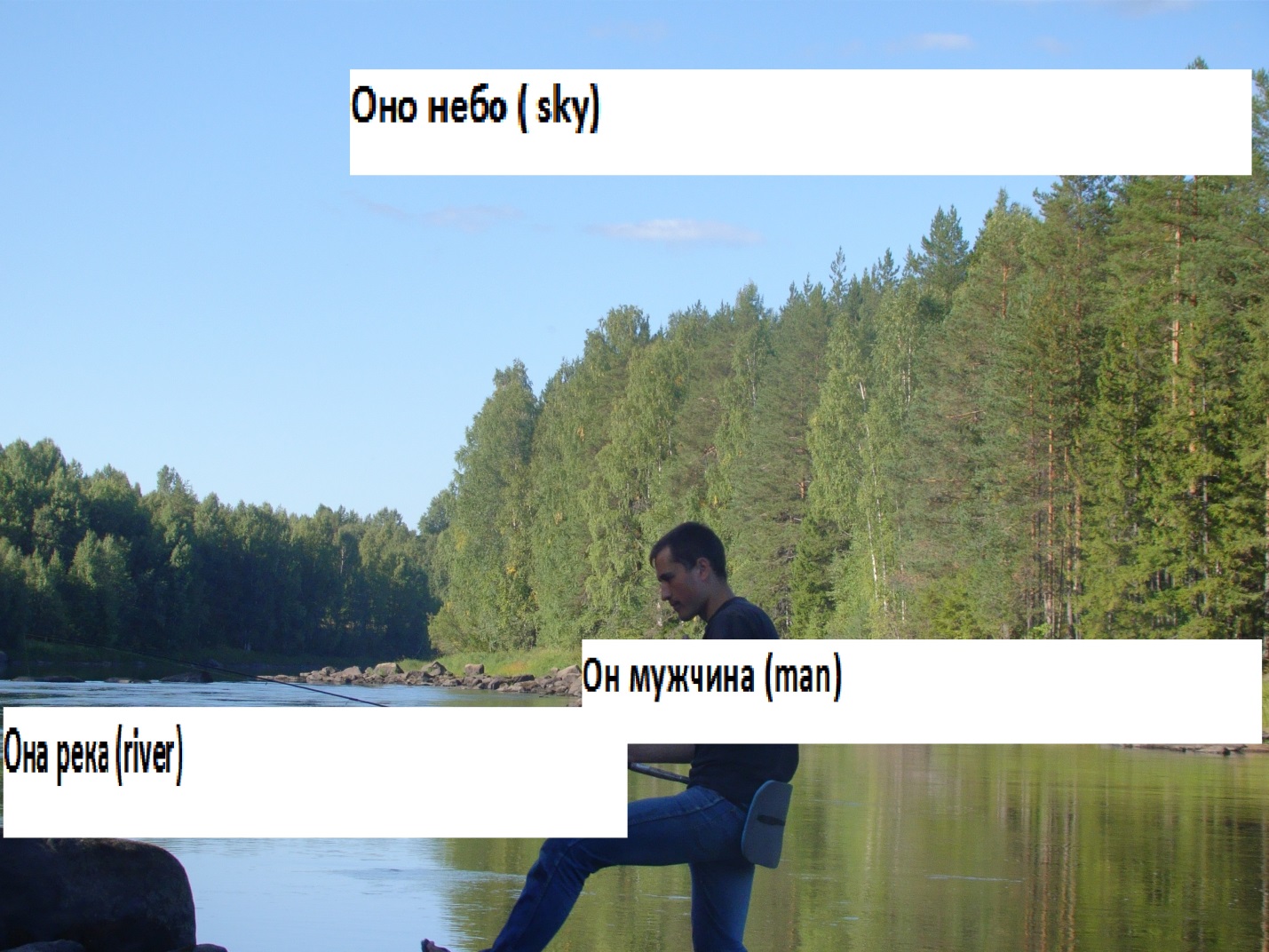
«personal photo»
Like the Earth revolves around the Sun Everything in Russian language revolves around the notion of gender. So, let’s start our journey to the world of Russian gender.
In Russian language there are three genders: masculine (мужской род), feminine (женский род), and neuter (средний род). If you ask, if there is any logic in dividing our nouns into genders according to the way they look, feel, smell or act, I would say no. For example in Russian there are two words with the same meaning, denoting «a road vehicle with an engine and four wheels that can carry a small number of passengers». But the first one is a car «машина» that would be feminine and the second word is an automobile «автомобиль» that would be masculine. But don’t despair; anyway there is still some logic from the grammatical point of view.
There is a quick overview how to denote the gender of Russian nouns.
!!!You should always look at the last letter of the word.
If the word ends in consonant the gender is masculine.
If the noun ends in a letter «a\я» the gender is feminine.
If the noun ends in «o\e» the gender is neuter.
If the word ends in «ь» we should check the gender in the dictionary because it can be either feminine or masculine.
Of course there are some exceptions.
Now, let’s discuss every gender in detail.
Masculine nouns.
Masculine nouns end in consonants. The pronoun for the masculine nouns is he «Он».
(Он) робот – a robot.
(Он) гамбургер - a hamburger.
(Он) Макдональдс – McDonald’s
(Он) Май - May
Of course there are exceptions.
Some nouns that ending in ь are masculine.
(Он) Парень – a guy
(Он) Конь – a horse
(Он) Апрель - April
All the nouns denoting male are always masculine even if they end in a vowel ( а\я, о, е, и).
For example:
(Oн) Дядя – an uncle
(Он) Папа – a father
(Он) Вова – Vova (Russian male name)
(Он) Миша – Misha (Russian male name)
2. Feminine nouns.
Most of feminine nouns end in a\я. The pronoun for the feminine nouns is she «Она».
For example:
(Она) Семья – a family
(Она) Мама – a mother
(Она) Сестра – a sister
A lot of nouns, ending in ь are feminine.
Examples:
(Она) Ночь – a night.
(Она) Дочь – a daughter.
(Она) Мышь – a mouse.
!!! if ь stands after ж, ш, ч, the gender if feminine for sure.
If a noun denotes a female it would be feminine even if it ends in consonant.
Examples:
(Она) Мисс – miss.
(Она) Мадам – madam.
3.Neuter nouns.
Neuter nouns end in o\ e, ё. The pronoun for the neuter nouns is it «Оно».
Examples:
(Оно) Море – sea
(Оно) Небо - sky
There are some exceptions.
Nouns that end with мя would be neutral.
(Оно) Имя – name, (Оно) Время - time
(Он) Кофе - coffee would be masculine.
!!!!Now, there is a task for you. Divide these words into (Он, Она, Оно) groups.
Мама, Дедушка, Море, Александр, Солнце, Река, Время, Бизнесмен, Спортсменка, Спортсмен, Англия, Россия, Окно, Стол, Чизбургер.
