


Партнерка на США и Канаду по недвижимости, выплаты в крипто
- 30% recurring commission
- Выплаты в USDT
- Вывод каждую неделю
- Комиссия до 5 лет за каждого referral
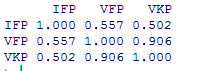
Таблица 2. Корреляционная матрица для модели 1.35
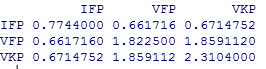
Таблица 3. Ковариационная матрица для модели 1.
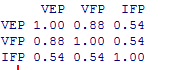
Таблица 4. Корреляционная матрица для модели 2.
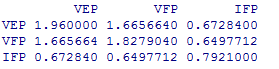
Таблица 5. Ковариационная матрица для модели 2.
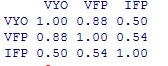
Таблица 6. Корреляционная матрица для модели 3.
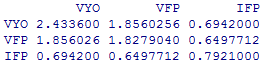
Таблица 7. Ковариационная матрица для модели 3.
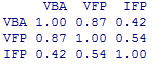
Таблица 8. Корреляционная матрица для модели 4.
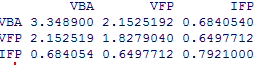
Таблица 9. Ковариационная матрица для модели 4.
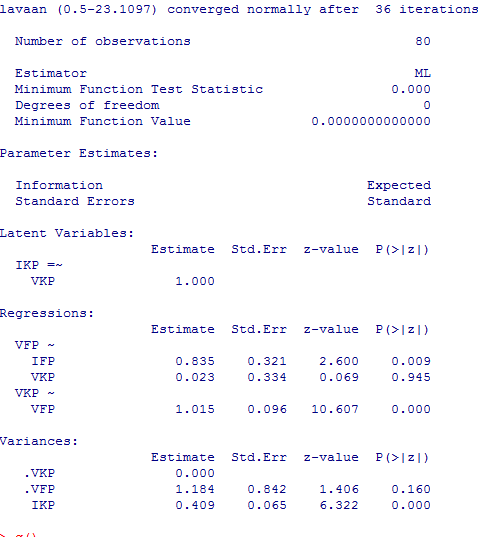
Рисунок 14. Результаты модели 1.
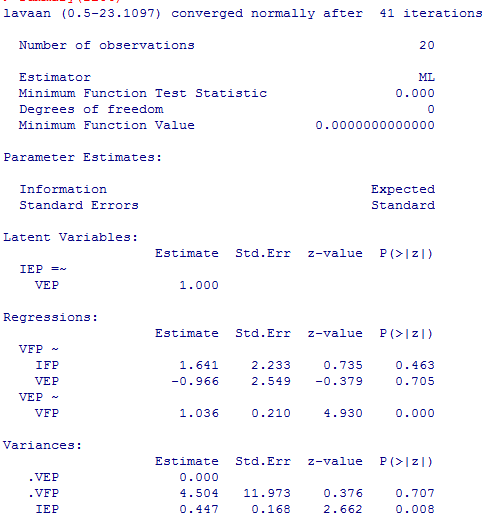
Рисунок 15. Результаты модели 2.
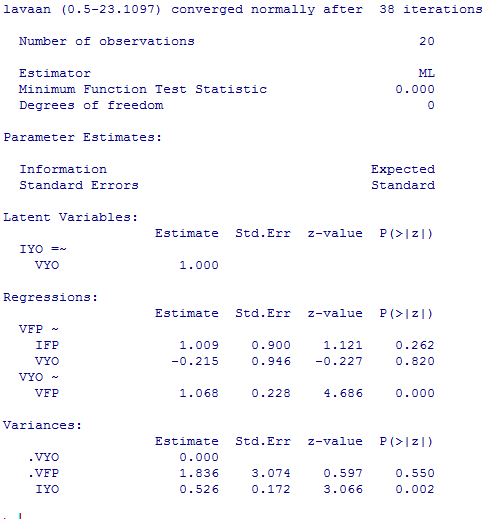
Рисунок 16. Результаты модели 3.
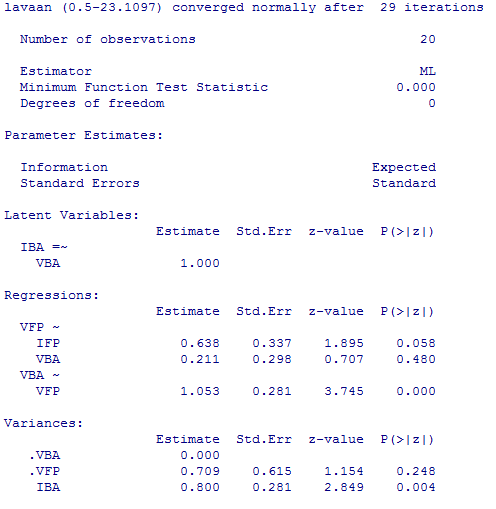
Рисунок 17. Результаты модели 4.
1 Bollen K. A. Latent variables in psychology and social sciences / Annu. Rev. Psychol, 2002. Vol. 53 P. 605-63.
2 Nunnally J. C. Psychometric Theory / ch. 3, NewYork: McGraw-Hill,1978.
3 Сравнительный анализ методов категориального факторного анализа / Ф-т социологии ВШЭ – Москва, 2013 – 7с.
4 Joreskog K. G, Sorbom D. Factor Analysis and Structural Equation Models / Cambridge, MA: Abt Books, 1979, P. 105.
5 Bollen K. A. Latent variables in psychology and social sciences / Annu. Rev. Psychol, 2002. Vol. 53 P. 609.
6 Там же, 610.
7 Bentler P. M. Linear systems with multiple levels and types of latent variables. In Systems Under Indirect Observation / ed. KG JЁoreskog, H Wold, 1982, P. 106.
8 Cathy G. Powell, Yasar Bodur. Professional Development for Quality Teaching and Learning: A focus on students learning outcomes, 2016. P. 26.
9 Emmanuel Adjei-Boateng. Mentoring and lives experiences of beginning teachers in a resident teacher program / University of North Dakota, USA, 2016. P. 18.
10 Catherine Maree Burgess. Culturally responsive relationships focused pedagogies / University of Sydney, 2017. P 31.
11 Raoul A. Arreola. Developing a Comprehensive Faculty Evaluation System, ed. 3, 2007.
12 McDaniel, T. R. Student evaluations of instructors: A good thing / Academic Leader, Vol. 22(8), 2006, P. 8.
13 Marsh, H. W., & Roche, L. A. Making students’ evaluation of teaching effectiveness effective: The critical issues of validity, bias, and utility / American psychologist, Vol. 52(11), 2007, P. 1187-1197.
14 Centra, J. A. Will teachers receive higher student evaluations by giving higher grades and less course work / Research in higher education, Vol. 44(5), 2003, P. 495-518.
15 URL: https://www. hse. ru/evaluation/.
16 Whitely, S. E. and K. O. Doyle. Implicit Theories in Student Ratings / American Educational Research Journal, Vol. 13, No. 4, 1976, pp. 341-354.
17 Cadwell, Joel, Jenkins Jeffrey. Effects of the semantic similarity of items on student ratings of instructors / Journal of Educational Psychology, Vol. 77(4), 1985, P. 383-393.
18 A Half a minute: predicting teacher evaluations from thin slices of non-verbal behavior and physical attractiveness / Journal of personality and social psychology Vol. 64(3), 1993, P. 431-441.
19 Chaudhry N. A., M. Arif. Teachers’ Nonverbal Behavior and Its Impact on Student Achievement / International educational studies, Vol. 5(4), 2012, P 55-64.
20 Гало-эффект как фактор эффективного воздействия в рекламном дискурсе. - Тверь: Тверская Государственная сельскохозяйственная академия, 2009.
21 Gottschall, J., Anderson K., Burch J., Chelsea Byrnes. The “Beauty Myth” Is No Myth. Human Nature, Vol. 19(2), 2008, P. 174–188.
22 Michael R. Measuring the physical in physical attractiveness: Quasi-experiments on the sociobiology of female facial beauty. Cunningham / Journal of Personality and Social Psychology, Vol. 50(5), 1986, P. 925-935.
23 Diener, E., Wolsic, B., Fujita, F. Physical attractiveness and subjective well-being / Journal of Personality and Social Psychology, Vol. 69, 1995, P. 120-129.
24 Prokop P., Fedor P. Physical attractiveness influences reproductive success of modern men / J Ethol, 2011, P. 453–458.
25 Felton J., Mitchell, J., Stinson, M. Web-based student evaluations of professors: the relations between perceived quality, easiness and sexiness / Assessment & Evaluation in Higher Education, Vol. 29(1),2004, P. 91-108.
26 Bokek-Cohen, Y., Davidowitz, N. Beauty in the Classroom: Are Female Students Influenced by the Physical Appearance of Their Male Professors / Journal of Education and human development, Vol.2(1), 2008.
27 Hamermesh, Parker. Beauty in the classroom: instructors’ pulchritude and putative pedagogical productivity / Economics of education review. Vol.24, 2005, p. 369-376
28 Beaujean, A. Latent Variable Modeling Using R. Routledge, 2014.
29Grace, J. B., Schoolmaster, D. R. Jr., Guntenspergen, G. R., Little, A. M., Mitchell, B. R., Miller, K. M., and Schweiger, E. W. Guidelines for a graph-theoretic implementation of structural equation modeling / Ecosphere Vol. 3(8), 2012 article 73.
30 Barbara Byrnes. Structural Equation Modeling for Ecology & Evolutionary Biology, 2005, P. 162-163.
31Barbara Byrnes. Structural Equation Modeling for Ecology & Evolutionary Biology, 2005, P. 164.
32Barbara Byrnes. Structural Equation Modeling for Ecology & Evolutionary Biology, 2005, P. 164-173.
33 URL: http://blog. /2017/01/cran-10000.html.
34 Yves Rosseel. Lavaan: An R Package for Structural Equation Modeling. Journal of Statistical Software, Vol. 48(2), 2012, P. 1-36.
35 В этой и во всех следующих таблицах и рисунках, буква «I» в названиях переменных означает то же самое, что и буква О (объективный).

|
Из за большого объема этот материал размещен на нескольких страницах:
1 2 3 4 5 6 7 8 9 |
