


Партнерка на США и Канаду по недвижимости, выплаты в крипто
- 30% recurring commission
- Выплаты в USDT
- Вывод каждую неделю
- Комиссия до 5 лет за каждого referral
Статья опубликована в сборнике материалов VII Международной научно-практической конференции на английском языке «Современные технологии в сфере сельскохозяйственного производства и образования» и размещена на сайте Кемеровского ГСХИ (http://www. ksai. ru/upload/sborniki/eng2016/index. html#/16/)
УДК 372.881.1
РОЛЬ ИНОСТРАННОГО ЯЗЫКА В ЖИЗНИ СОВРЕМЕННОГО ЧЕЛОВЕКА
THE FOREIGN LANGUAGE IN THE LIFE OF A MODERN PERSON
, специалист ОПО и ДП, Кемеровский государственный сельскохозяйственный институт, , канд. пед. наук, доцент, Кемеровский технологический институт пищевой промышленности (университет), S. S. Turkin, specialist of the Pre-University Training Center, Kemerovo State agricultural institute, D. V. Shalimova, PhD in Pedagogy, Associate Professor, Kemerovo technological institute of the food industry (university)
В статье анализируются данные опроса студентов об их отношении к изучению иностранных языков на уровне магистратуры, приводятся фактические сведения об общем уровне языковой подготовки студентов,
об их самооценке.
The 21st century is the time of progress and technologies. It puts forward new claims to the modern person, one of which is the knowledge of at least one foreign language. The foreign language broadens one's outlook, allows learning culture and customs of other people. Today it became fashionable to learn foreign languages. But is it a fashion or a necessity?
Learning a foreign language is not just a craze or someone's whim, and the process of obtaining knowledge which is vital in modern society actively continues to develop and should be improved. Foreign languages really play an important role in the life of the modern person especially of a person involved the process of studying.
The researcher I. K. Voytovich writes: "political, social and economic and cultural changes in Russia in the 1990th significantly expanded functions of a foreign language. Inclusion of Russia in the world market, cooperation with foreign countries considerably increased a possibility of contacts for representatives of various social and age groups. There were real conditions for education and work abroad, for promotion of the Russian goods and services in the world market, for exchange of students, postgraduate students, specialists. The role of a foreign language in our society changed. It became one of the basic elements of modern education system and a tool for the achievement of professional self-realization" [1: 7].
Foreign language competence is an irreplaceable component of education for successful people. The language skill point now always occurs in questionnaires of personnel departments of the public and commercial institutions. Those who know at least one foreign language impress employers.
Assessment survey among students of the Kemerovo technological institute of the food industry has been carried out with the aim to analyze the students’ attitude to the issue. The respondents were 63 graduate students of the faculty of magistracy and postgraduate study. The majority of respondents (92 %) learn English as a foreign language, 5% of the undergraduates interviewed study German, 3 % learn two foreign languages. Many students prefer to master English as a language of international communication.
The main issue responded in the poll was - "A role of foreign-language education in the modern world". The most popular answer to the question: why I learn a foreign language was “the necessity for general development” - 76 %, “for acquisition of a profession” - 24%. About 25 % of students realize that languages need to be learned both for a general development, and for acquisition of a profession.
When asked about the longevity of learning the language more than 80% of the graduate students chose the answer: “6 years and more. The period of learning from 2 to 5 years corresponds to 16.7 % of all respondents, and the period of less than 1 year was chosen by 3.3 % of learners.
Looking at Diagrams 1 and 2, a certain contradiction can be seen between the desire to have a good command of a language and the self-esteem level concerning the language competence.
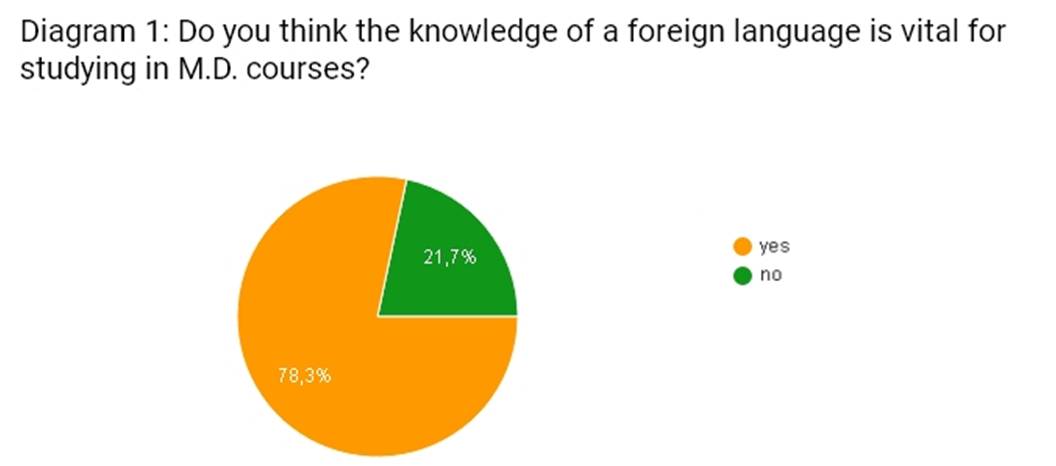
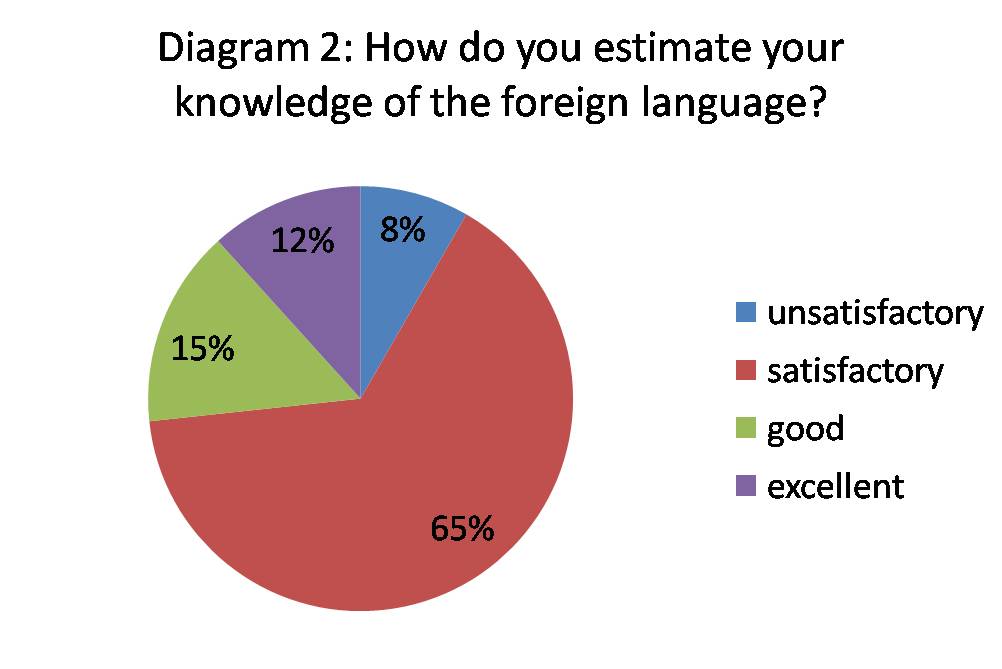
As can be concluded from Diagram 2, the graduate students’ level of knowledge is not high, but there is a simple explanation to it, as they don't pay attention to independent studying (only 20 per cent of the student revise the language material). And the key to success undoubtedly consists in everyday training.
The general knowledge questions about the number of languages in the world, the most spoken language, etc. were not answered correctly by many respondents. Now even more often than English, Chinese acts on the international scene [2]. Therefore the knowledge of it can be very useful. We believe that more advanced study of some cultural aspects of foreign languages at the Master Degree level might bring a lot of good to our future experts and scientists.
On the whole, it is possible to draw the following conclusions. The process of learning foreign languages is favorable to development of mental capacities that allows understanding other subjects and sciences easier. Studying of a non-native language demands storing and understanding thousands of new words therefore memory and thinking are being trained. All this positively affects the general condition of psychological, intellectual and physical health.
Learning other languages gives the opportunity to see the world from a different perspective as it is impossible to understand why people of other countries speak and behave this or that way without having plunged into their culture, customs, traditions.
References
Voytovich I. K. Inostrannye yazyki v kontekste nepreryvnogo obrasovanya / pod red. Т. I. Zeleninoy. – Izhevsk: Izd-vo «Udmurt University», 2012. – 212 p. Luis, M. Paul, Harry F. Simmons and Charles D. Fennig. - 2016. Ethnologue: Languages of the World. Edition 19. Dallas, Техаs: SIL International. Internet resource: http://www. / (10.11.2016)