


Партнерка на США и Канаду по недвижимости, выплаты в крипто
- 30% recurring commission
- Выплаты в USDT
- Вывод каждую неделю
- Комиссия до 5 лет за каждого referral
Presently there came along the Djinn in charge of All Deserts, rolling in a cloud of dust (Djinns always travel that way because it is Magic), and he stopped to palaver and pow-wow with the Three.
‘Djinn of All Deserts (Джинн Всех Пустынь),’ said the Horse (сказал Конь), ‘is it right for any one to be idle, with the world so new-and-all (годится ли кому бы то ни было быть праздным, когда весь мир такой новенький)?’
‘Certainly not,’ said the Djinn (конечно, нет, — сказал Джинн).
‘Well,’ said the Horse (ну, — сказал Конь), ‘there’s a thing in the middle of your Howling Desert (посреди твоей Унылой Пустыни есть существо) (and he’s a Howler himself (а оно и само Нытик)) with a long neck and long legs (с длинной шеей и длинными ногами), and he hasn’t done a stroke of work since Monday morning (и оно не ударило копытом о копыто с утра в понедельник; not to do a stroke of work — не ударить палец о палец). He won’t trot (оно не хочет бегать).’
right [raIt], idle [aIdl], certainly ['sWtqnlI]
‘Djinn of All Deserts,’ said the Horse, ‘is it right for any one to be idle, with the world so new-and-all?’
‘Certainly not,’ said the Djinn.
‘Well,’ said the Horse, ‘there’s a thing in the middle of your Howling Desert (and he’s a Howler himself) with a long neck and long legs, and he hasn’t done a stroke of work since Monday morning. He won’t trot.’
‘Whew!’ said the Djinn (фью! — сказал Джинн), whistling (со свистом), ‘that’s my Camel (это /же/ мой Верблюд), for all the gold in Arabia (клянусь всем золотом Аравии[20])! What does he say about it (что он говорит по этому поводу)?’
‘He says “Humph (он говорит Грп)!” said the Dog (сказал Пес); ‘and he won’t fetch and carry (и он не хочет приносить и (у)носить).’
‘Does he say anything else (говорит он еще что-нибудь)?’
‘Only “Humph!” (только Грп); and he won’t plough (и он не хочет пахать),’ said the Ox (сказал Бык).
whistle [wIsl], gold [gquld], Arabia [q'reIbjq]
‘Whew!’ said the Djinn, whistling, ‘that’s my Camel, for all the gold in Arabia! What does he say about it?’
‘He says “Humph!” said the Dog; ‘and he won’t fetch and carry.’
‘Does he say anything else?’
‘Only “Humph!”; and he won’t plough,’ said the Ox.
‘Very good,’ said the Djinn (очень хорошо, — сказал Джинн). ‘I’ll humph him if you will kindly wait a minute (я его гропну, если вы будете любезны подождать минутку).’
The Djinn rolled himself up in his dust-cloak (Джинн завернулся в свой пыльный плащ; to roll up — завертывать, свертывать), and took a bearing across the desert (и взял направление через пустыню; to take a bearing — засекать направление, определять пеленг), and found the Camel most ‘scruciatingly idle (и нашел Верблюда премучительно праздного; to find — найти), looking at his own reflection in a pool of water (глядящего на свое отражение в луже воды).
‘My long and bubbling friend (мой длинный и пускающий пузыри друг; to bubble — кипеть; пузыриться; подниматься пузырьками),’ said the Djinn (сказал Джинн), ‘what’s this I hear of your doing no work (что это = как так, я слышу о тебе, что ты не работаешь), with the world so new-and-all (со всем миром = когда весь мир такой новенький)?’
‘Humph!’ said the Camel (Грп! — сказал Верблюд).
humph [mm, hAmf], kindly ['kaIndlI], hear [hIq]
‘Very good,’ said the Djinn. ‘I’ll humph him if you will kindly wait a minute.’
The Djinn rolled himself up in his dust-cloak, and took a bearing across the desert, and found the Camel most ‘scruciatingly idle, looking at his own reflection in a pool of water.
‘My long and bubbling friend,’ said the Djinn, ‘what’s this I hear of your doing no work, with the world so new-and-all?’
‘Humph!’ said the Camel.
The Djinn sat down (Джинн сел; to sit down — садиться), with his chin in his hand (подперев подбородок рукой: «с его подбородком в его кисти руки»), and began to think a Great Magic (и начал обдумывать Великое Волшебство), while the Camel looked at his own reflection in the pool of water (в то время как Верблюд смотрел на свое собственное отражение в луже воды).
‘You’ve given the Three extra work ever since Monday morning (ты всегда давал Трем дополнительную работу с утра в понедельник), all on account of your ‘scruciating idleness (исключительно из-за твоей мучительной праздности; on account of — из-за, вследствие, на основании),’ said the Djinn (сказал Джинн); and he went on thinking Magics (и он продолжал обдумывать Волшебство), with his chin in his hand (подперев подбородок рукой).
‘Humph!’ said the Camel (Грп! — сказал Верблюд).
great [greIt], magic ['mxGIk], account [q'kaunt]
The Djinn sat down, with his chin in his hand, and began to think a Great Magic, while the Camel looked at his own reflection in the pool of water.
‘You’ve given the Three extra work ever since Monday morning, all on account of your ‘scruciating idleness,’ said the Djinn; and he went on thinking Magics, with his chin in his hand.
‘Humph!’ said the Camel.
‘I shouldn’t say that again if I were you (я бы не говорил опять = повторял это на твоем месте: «если бы я был тобой»),’ said the Djinn (сказал Джинн); ‘you might say it once too often (возможно, когда-нибудь ты скажешь это слишком часто = когда-нибудь ты пожалеешь, что так часто говорил это). Bubbles, I want you to work (пузырь, я хочу, чтобы ты работал).’
And the Camel said ‘Humph!’ again (а Верблюд снова сказал Грп); but no sooner had he said it (но не успел он это сказать) than he saw his back (как /он/ увидел, что его спина), that he was so proud of (которой он так гордился), puffing up and puffing up into a great big lolloping humph (стала раздуваться и раздуваться, превращаясь в огромный большой торчащий Грп; to puff up — распухать, вздуваться; to lollop — раскачиваться из стороны в сторону, вылезать, торчать).
‘Do you see that (/ты/ видишь это)?’ said the Djinn (спросил Джинн). ‘That’s your very own humph (это твой тот самый собственный Грп; very — тот самый, подлинный) that you’ve brought upon your very own self by not working (который ты накликал себе сам по собственной милости из-за того, что не работал). To-day is Thursday (сегодня четверг), and you’ve done no work since Monday (а ты не работал с понедельника), when the work began (когда началась работа). Now you are going to work (теперь ты будешь работать).’
often [Ofn], proud [praud], own [qun]
‘I shouldn’t say that again if I were you,’ said the Djinn; ‘you might say it once too often. Bubbles, I want you to work.’
And the Camel said ‘Humph!’ again; but no sooner had he said it than he saw his back, that he was so proud of, puffing up and puffing up into a great big lolloping humph.
‘Do you see that?’ said the Djinn. ‘That’s your very own humph that you’ve brought upon your very own self by not working. To-day is Thursday, and you’ve done no work since Monday, when the work began. Now you are going to work.’
‘How can I (как же я смогу),’ said the Camel (спросил Верблюд), ‘with this humph on my back (с этим Грпом на моей спине)?’
‘That’s made a-purpose (это сделано нарочно),’ said the Djinn (сказал Джинн), ‘all because you missed those three days (только из-за того что ты прогулял те три дня). You will be able to work now for three days without eating (теперь ты сможешь работать три дня без еды), because you can live on your humph (потому что ты можешь жить своим Грпом); and don’t you ever say I never did anything for you (и никогда не говори, что я ничего не сделал для тебя). Come out of the Desert (выходи из Пустыни) and go to the Three (и иди к Трем), and behave (и веди себя прилично). Humph yourself (Грюпай на себя)!’
purpose ['pWpqs], because [bI'kOz], live [lIv]
‘How can I,’ said the Camel, ‘with this humph on my back?’
‘That’s made a-purpose,’ said the Djinn, ‘all because you missed those three days. You will be able to work now for three days without eating, because you can live on your humph; and don’t you ever say I never did anything for e out of the Desert and go to the Three, and behave. Humph yourself!’
And the Camel humphed himself, humph and all (и Верблюд погрюпал на себя, грп и все прочее), and went away to join the Three (и ушел, чтобы присоединиться к Трем). And from that day to this (и с того дня и поныне) the Camel always wears a humph (Верблюд всегда носит грп) (we call it ‘hump’ now (теперь мы называем его «горб»), not to hurt his feelings (чтобы не задеть его чувств; to hurt — обижать, задевать, делать больно)); but he has never yet caught up with the three days (но он никогда = так и не нагнал те три дня; to catch up with — догнать, нагнать) that he missed at the beginning of the world (которые он прогулял в начале мира), and he has never yet learned how to behave (и он никогда = так и не научился вести себя прилично).
always ['Llwqz], wear [wFq], caught [kLt]
And the Camel humphed himself, humph and all, and went away to join the Three. And from that day to this the Camel always wears a humph (we call it ‘hump’ now, not to hurt his feelings); but he has never yet caught up with the three days that he missed at the beginning of the world, and he has never yet learned how to behave.
THE Camel’s hump is an ugly lump (Верблюжий горб — уродливая глыба)
Which well you may see at the Zoo (которую вы можете без труда увидеть в зоопарке);
But uglier yet is the hump we get (но еще уродливее горб, который мы получаем = который появляется у нас)
From having too little to do (от имения слишком мало дел = от безделья).
ugly ['AglI], lump [lAmp], Zoo [zH]
THE Camel’s hump is an ugly lump
Which well you may see at the Zoo;
But uglier yet is the hump we get
From having too little to do.
Kiddies and grown-ups too-oo-oo (детишки и взрослые тоже)
If we haven’t enough to do-oo-oo (если у нас недостаточно дел = работы),
We get the hump (у нас появляется горб) —
Cameelious hump (Верблюжий горб) —
The hump that is black and blue (горб, который черный и синий; black — мрачный, унылый; безнадежный; дурной, злой; мерзкий, отвратительный; blue — подавленный, унылый; грустный; посиневший; в кровоподтеках)!
grown-up ['grqunAp], Cameelious [kq'mJlIqs], blue [blH]
Kiddies and grown-ups too-oo-oo
If we haven’t enough to do-oo-oo,
We get the hump —
Cameelious hump —
The hump that is black and blue!
We climb out of bed with a frowzy head (мы выбираемся из постели с растрепанной головой)
And a snarly-yarly voice (и ворчливым голосом).
We shiver and scowl and we grunt and we growl (мы дрожим и хмуримся, и мы ворчим и /мы/ брюзжим)
At our bath and our boots and our toys (на нашу ванну и наши ботинки и наши игрушки);
climb [klaIm], frowzy ['frauzI], bath [bRT]
We climb out of bed with a frowzy head
And a snarly-yarly voice.
We shiver and scowl and we grunt and we growl
At our bath and our boots and our toys;
And there ought to be a corner for me (и должен быть предел для меня; corner — край, граница)
(And I know there is one for you (и я знаю, есть таковой = предел для тебя))
When we get the hump (когда у нас появляется горб) —
Cameelious hump (Верблюжий горб) —
The hump that is black and blue (горб, который черный и синий)!
corner ['kLnq], ought [Lt], know [nqu]
And there ought to be a corner for me
(And I know there is one for you)
When we get the hump —
Cameelious hump —
The hump that is black and blue!
The cure for this ill is not to sit still (лечение для этого не сидеть неподвижно),
Or frowst with a book by the fire (или нежиться с книгой у камина; to frowst — получать удовольствие от пребывания в теплом, душевном, интимном окружении);
But to take a large hoe and a shovel also (но взять большую мотыгу и лопату тоже),
And dig till you gently perspire (и копать, пока ты умеренно /не/ пропотеешь);
cure [kjuq], frowst [fraust], fire ['faIq]
The cure for this ill is not to sit still,
Or frowst with a book by the fire;
But to take a large hoe and a shovel also,
And dig till you gently perspire;
And then you will find that the sun and the wind (и тогда ты обнаружишь, что солнце и ветер),
And the Djinn of the Garden too (а также Джинн Сада),
Have lifted the hump (подняли = сняли горб) —
The horrible hump (ужасный горб) —
The hump that is black and blue (горб, который черный и синий)!
find [faInd], wind [wInd], garden ['gRdn]
And then you will find that the sun and the wind,
And the Djinn of the Garden too,
Have lifted the hump —
The horrible hump —
The hump that is black and blue!
I get it as well as you-oo-oo (у меня он появляется так же, как у тебя) —
If I haven’t enough to do-oo-oo (если у меня недостаточно дел = я недостаточно работаю) —
We all get hump (у нас всех появляется горб) —
Cameelious hump (Верблюжий горб) —
Kiddies and grown-ups too (у детишек, и у взрослых тоже)!
you [jH], do [dH], all [Ll]
I get it as well as you-oo-oo —
If I haven’t enough to do-oo-oo —
We all get hump —
Cameelious hump —
Kiddies and grown-ups too!
Верблюжий горб уродлив, безобразен.
Его увидишь в зоопарке ты.
Однако горб, который от безделья,
Несет еще мерзейшие черты.
К детворе и взрослым тоже,
Когда безделье нас гложет,
Цепляется горб,
Верблюжий горб
Из черной унылой кожи.
Когда с кровати мы, хмурясь, встаем,
Мы слышим свой голос ворчливый,
Который бранится, брюзжит и бурчит
На все что угодно чванливо.
Для всех такой момент похоже
Есть (для тебя, дружище, тоже),
Когда к нам липнет горб,
Верблюжий горб
Из черной унылой кожи.
Бездельем не вылечить эту болезнь.
Поможет здесь только работа.
Возьмите лопату побольше, кирку
и в землю вгрызайтесь до пота.
И сразу заметишь, что солнце, ветра
И с ними Садовый Джинн тоже
Подняли твой горб,
Ужаснейший горб
Из черной унылой кожи.
Если меня праздность гнетет
Ко мне приклеиться может
Ужаснейший горб,
Верблюжий горб
И к детям, и к взрослым тоже.
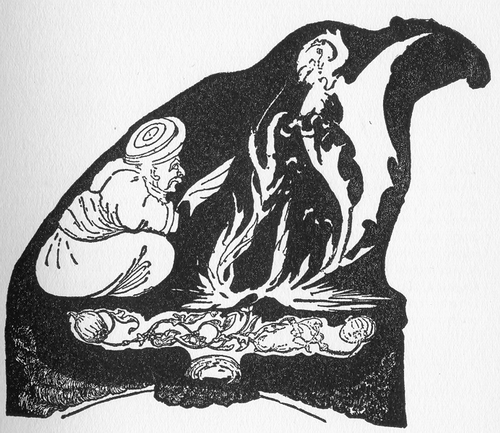
This is the picture of the Djinn (это изображение Джинна) making the beginnings of the Magic (делающего начало = начинающего Волшебство) that brought the Humph to the Camel (которое принесло Грп на Верблюда; to bring — приносить, привозить). First he drew a line in the air with his finger (сначала он провел /своим/ пальцем черту в воздухе; to draw — проводить линию, черту), and it became solid (и она стала твердой = и она затвердела; to become — становиться); and then he made a cloud (а потом он сделал облако; to make — делать, изготовлять), and then he made an egg (а потом он сделал яйцо) — you can see them both at the bottom of the picture (ты можешь увидеть их обоих внизу картинки) — and then there was a magic pumpkin (а потом появилась волшебная тыква) that turned into a big white flame (которая превратилась в большое белое пламя). Then the Djinn took his magic fan and fanned that flame (потом Джинн взял свой волшебный веер и раздул это пламя) till the flame turned into a magic by itself (пока пламя само не превратилось в волшебство). It was a good Magic and a very kind Magic really (это было действительно хорошее Волшебство и очень доброе Волшебство), though it had to give the Camel a Humph (хотя оно должно было дать Верблюду Грп) because the Camel was lazy (потому что Верблюд был ленивый). The Djinn in charge of All Deserts (Джинн, отвечающий за Все Пустыни) was one of the nicest of the Djinns (был одним из милейших Джиннов), so he would never do anything really unkind (поэтому он никогда бы не стал делать ничего действительно злого).
picture ['pIkCq], brought [brLt], though [Dqu]
This is the picture of the Djinn making the beginnings of the Magic that brought the Humph to the Camel. First he drew a line in the air with his finger, and it became solid; and then he made a cloud, and then he made an egg — you can see them both at the bottom of the picture — and then there was a magic pumpkin that turned into a big white flame. Then the Djinn took his magic fan and fanned that flame till the flame turned into a magic by itself. It was a good Magic and a very kind Magic really, though it had to give the Camel a Humph because the Camel was lazy. The Djinn in charge of All Deserts was one of the nicest of the Djinns, so he would never do anything really unkind.
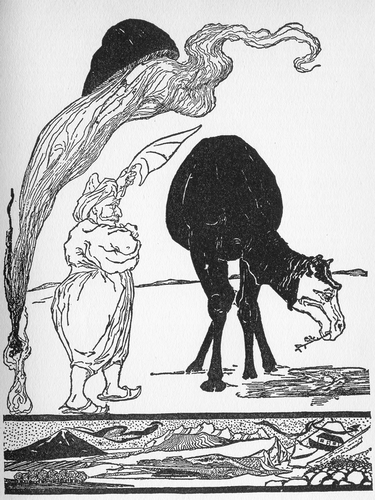
HERE is the picture of the Djinn in charge of All Deserts (ВОТ изображение Джинна, отвечающего за Все Пустыни) guiding the Magic with his magic fan (направляющего Волшебство своим волшебным веером). The Camel is eating a twig of acacia (Верблюд ест веточку акации), and he has just finished saying “humph” once too often (и он только что закончил говорить «Грп» на один раз больше, чем достаточно; once too often — одного раза больше чем достаточно) (the Djinn told him he would (Джинн сказал ему, что он прекратит /говорить это/)), and so the Humph is coming (и поэтому /к нему/ приближается = летит Грп). The long towelly-thing growing out of the thing like an onion is the Magic (длинная полотенцеподобная штуковина, вырастающая из /другой/ штуковины, похожей на луковицу, — это Волшебство; towel — полотенце), and you can see the Humph on its shoulder (и ты можешь увидеть Грп на его выступе). The Humph fits on the flat part of the Camel’s back (Грп совпадает с ровной частью спины Верблюда). The Camel is too busy looking at his own beautiful self in the pool of water (Верблюд слишком занят созерцанием своей собственной прекрасной личности в луже воды) to know what is going to happen to him (чтобы заметить, что сейчас произойдет с ним).
guiding ['gaIdIN], acacia [q'keISq], happen ['hxpqn]
HERE is the picture of the Djinn in charge of All Deserts guiding the Magic with his magic fan. The Camel is eating a twig of acacia, and he has just finished saying “humph” once too often (the Djinn told him he would), and so the Humph is coming. The long towelly-thing growing out of the thing like an onion is the Magic, and you can see the Humph on its shoulder. The Humph fits on the flat part of the Camel’s back. The Camel is too busy looking at his own beautiful self in the pool of water to know what is going to happen to him.
Underneath the truly picture is a picture of the World-so-new-and-all (под основной картинкой находится изображение Мира-такого-новенького-и-всё). There are two smoky volcanoes in it (в нем есть два курящихся вулкана), some other mountains and some stones (несколько других гор и несколько камней) and a lake and a black island (и озеро, и черный остров) and a twisty river and a lot of other things (и извилистая река, и много других вещей = много другого), as well as a Noah’s Ark (а также Ноев Ковчег). I couldn’t draw all the deserts that the Djinn was in charge of (я не смог нарисовать все пустыни, которыми заведовал Джинн), so I only drew one (поэтому я нарисовал лишь одну), but it is a most deserty desert (но это очень пустынная пустыня).
volcano [vOl'keInqu], mountain ['mauntIn], draw [drL]
Underneath the truly picture is a picture of the World-so-new-and-all. There are two smoky volcanoes in it, some other mountains and some stones and a lake and a black island and a twisty river and a lot of other things, as well as a Noah’s Ark. I couldn’t draw all the deserts that the Djinn was in charge of, so I only drew one, but it is a most deserty desert.
HOW THE RHINOCEROS GOT HIS SKIN
Как у Носорога появилась Его = такая шкура
ONCE upon a time (однажды), on an uninhabited island on the shores of the Red Sea (на одном необитаемом острове на берегах Красного Моря), there lived a Parsee (жил да был Парс) from whose hat the rays of the sun were reflected in more-than-oriental splendour (от шляпы которого лучи солнца отражались в более-чем-восточном великолепии). And the Parsee lived by the Red Sea (и этот Парс жил у Красного Моря) with nothing but his hat and his knife and a cooking-stove of the kind (с ничем = без ничего кроме /его/ шляпы, и /его/ ножа, и такой кухонной плиты) that you must particularly never touch (которую тебе особенно нельзя никогда трогать). And one day he took flour and water and currants and plums and sugar and things (и однажды он взял муку, и воду, и смородины, и сливы, и сахар, и прочее), and made himself one cake (и испек себе один пирог) which was two feet across and three feet thick (который был два фута[21] в поперечнике и три фута толщиной). It was indeed a Superior Comestible (это был в самом деле Превосходный Съестной Припас (that’s magic (это волшебство = волшебные слова)), and he put it on the stove (и он поставил его на плиту) because he was allowed to cook on that stove (потому что ему разрешали готовить на этой плите), and he baked it (и он стал печь его) and he baked it (и он пек его) till it was all done brown and smelt most sentimental (пока он не стал весь коричневый и не стал пахнуть очень чувствительно; to smell — пахнуть). But just as he was going to eat it (но как раз когда он собирался есть его) there came down to the beach from the Altogether Uninhabited Interior one Rhinoceros (на пляж из Совершенно Необитаемой Внутренней Части = Глубины спустился Носорог; to come down — спускаться) with a horn on his nose (с рогом на /его/ носу), two piggy eyes (двумя свинячьими глазками), and few manners (и очень немногими /хорошими/ манерами = и с плохими манерами).
island ['aIlqnd], whose [hHz], allow [q'lau]
ONCE upon a time, on an uninhabited island on the shores of the Red Sea, there lived a Parsee from whose hat the rays of the sun were reflected in more-than-oriental splendour. And the Parsee lived by the Red Sea with nothing but his hat and his knife and a cooking-stove of the kind that you must particularly never touch. And one day he took flour and water and currants and plums and sugar and things, and made himself one cake which was two feet across and three feet thick. It was indeed a Superior Comestible (that’s magic), and he put it on the stove because he was allowed to cook on that stove, and he baked it and he baked it till it was all done brown and smelt most sentimental. But just as he was going to eat it there came down to the beach from the Altogether Uninhabited Interior one Rhinoceros with a horn on his nose, two piggy eyes, and few manners.
In those days the Rhinoceros’s skin fitted him quite tight (в те дни шкура Носорога очень плотно сидела на нем). There were no wrinkles in it anywhere (на ней нигде не было складок). He looked exactly like a Noah’s Ark Rhinoceros (он был похож в точности на Носорога с Ноева Ковчега), but of course much bigger (но конечно /был/ гораздо больше). All the same (тем не менее), he had no manners then (у него тогда не было хороших манер), and he has no manners now (нет у него хороших манер и сейчас), and he never will have any manners (и никогда у него не будет хороших манер). He said, ‘How (он сказал: ау / опа)!’ and the Parsee left that cake (и Парс оставил пирог) and climbed to the top of a palm tree (и взобрался на вершину пальмы) with nothing on but his hat (без ничего кроме /своей/ шляпы), from which the rays of the sun were always reflected in more-than-oriental splendour (от которой лучи солнца всегда отражались в более-чем-восточном великолепии). And the Rhinoceros upset the oil-stove with his nose (а Носорог перевернул керосиновую плитку[22] /своим/ носом), and the cake rolled on the sand (и пирог покатился по песку), and he spiked that cake on the horn of his nose (и он наколол этот пирог на рог своего носа), and he ate it (и он съел его), and he went away (и /он/ ушел), waving his tail (помахивая /своим/ хвостом), to the desolate and Exclusively Uninhabited Interior (в безлюдную и Исключительно Необитаемую Глубину /острова/) which abuts on the islands of Mazanderan, Socotra, and the Promontories of the Larger Equinox (который примыкает к островам Мазандаран, Сокотра и к Мысам Большого Равноденствия). Then the Parsee came down from his palm-tree (тогда Парс спустился с пальмы) and put the stove on its legs (и поставил плитку на /ее/ ножки) and recited the following Sloka (и прочел следующую Слоку), which, as you have not heard (которую, так как вы /ее/ не слышали), I will now proceed to relate (я сейчас расскажу): —
Rhinoceros [raI'nOsqrqs], tight [taIt], abut [q'bAt]
In those days the Rhinoceros’s skin fitted him quite tight. There were no wrinkles in it anywhere. He looked exactly like a Noah’s Ark Rhinoceros, but of course much bigger. All the same, he had no manners then, and he has no manners now, and he never will have any manners. He said, ‘How!’ and the Parsee left that cake and climbed to the top of a palm tree with nothing on but his hat, from which the rays of the sun were always reflected in more-than-oriental splendour. And the Rhinoceros upset the oil-stove with his nose, and the cake rolled on the sand, and he spiked that cake on the horn of his nose, and he ate it, and he went away, waving his tail, to the desolate and Exclusively Uninhabited Interior which abuts on the islands of Mazanderan, Socotra, and the Promontories of the Larger Equinox. Then the Parsee came down from his palm-tree and put the stove on its legs and recited the following Sloka, which, as you have not heard, I will now proceed to relate : —
Them that takes cakes (тот, кто забирает пироги)
Which the Parsee-man bakes (которые печет Парс)
Makes dreadful mistakes (совершает ужасные ошибки).
And there was a great deal more in that than you would think (и в этом было гораздо больше /смысла/, чем вы могли бы подумать).
dreadful ['dredful], deal [dJl], would [wud]
Them that takes cakes
Which the Parsee-man bakes
Makes dreadful mistakes.
And there was a great deal more in that than you would think.
Because, five weeks later (потому что пять недель спустя), there was a heat-wave in the Red Sea (в /районе/ Красного моря был период сильной жары), and everybody took off all the clothes they had (и все поснимали всю одежду, какая у них была). The Parsee took off his hat (Парс снял свою шляпу); but the Rhinoceros took off his skin (а Носорог снял свою шкуру) and carried it over his shoulder (и нес ее через /свое/ плечо) as he came down to the beach to bathe (когда он спускался на пляж покупаться). In those days it buttoned underneath with three buttons (в те дни она застегивалась внизу на три пуговицы) and looked like a waterproof (и была похожа на дождевик; waterproof — непромокаемый плащ). He said nothing whatever about the Parsee’s cake (он не сказал абсолютно ничего о Парсовом пироге), because he had eaten it all (потому что он съел его весь); and he never had any manners, then, since, or henceforward (и у него не было хороших манер тогда, с тех пор и впредь). He waddled straight into the water and blew bubbles through his nose (вразвалочку он вошел прямо в воду и стал выдувать = пускать пузыри через /свой/ нос), leaving his skin on the beach (оставив /свою/ шкуру на пляже = берегу).
clothes [klquDz], bathe [beID], henceforward ["hens'fLwqd]
Because, five weeks later, there was a heat-wave in the Red Sea, and everybody took off all the clothes they had. The Parsee took off his hat; but the Rhinoceros took off his skin and carried it over his shoulder as he came down to the beach to bathe. In those days it buttoned underneath with three buttons and looked like a waterproof. He said nothing whatever about the Parsee’s cake, because he had eaten it all; and he never had any manners, then, since, or henceforward. He waddled straight into the water and blew bubbles through his nose, leaving his skin on the beach.
Presently the Parsee came by and found the skin (некоторое время спустя мимо проходил Парс и нашел шкуру), and he smiled one smile (и он улыбнулся одной улыбкой) that ran all round his face two times (которая пробежала по всему его лицу два раза). Then he danced three times round the skin and rubbed his hands (потом он сплясал три раза вокруг шкуры и потер /свои/ руки).
Then he went to his camp (потом он пошел в свой лагерь) and filled his hat with cake-crumbs (и наполнил свою шляпу крошками от пирога), for the Parsee never ate anything but cake (так как Парс никогда не ел ничего кроме пирогов), and never swept out his camp (и никогда не подметал свой лагерь; to sweep out — подметать). He took that skin (он взял ту шкуру), and he shook that skin (и он потряс ту шкуру; to shake — трясти), and he scrubbed that skin (и он поскреб ту шкуру), and he rubbed that skin (и он потер ту шкуру) just as full of old, dry, stale, tickly cake-crumbs and some burned currants as ever it could possibly hold (как раз настолько полную старых, сухих, черствых, щекотных крошек от пирога и нескольких горелых коринок, сколько она могла удержать; possibly — возможно; может быть). Then he climbed to the top of his palm-tree and waited for the Rhinoceros to come out of the water and put it on (потом он забрался на верхушку своей пальмы и стал ждать, когда Носорог выйдет из воды и наденет ее[23]; to put on — надевать).
found [faund], ate [et], palm [pRm]
Presently the Parsee came by and found the skin, and he smiled one smile that ran all round his face two times. Then he danced three times round the skin and rubbed his hands.
Then he went to his camp and filled his hat with cake-crumbs, for the Parsee never ate anything but cake, and never swept out his camp. He took that skin, and he shook that skin, and he scrubbed that skin, and he rubbed that skin just as full of old, dry, stale, tickly cake-crumbs and some burned currants as ever it could possibly hold. Then he climbed to the top of his palm-tree and waited for the Rhinoceros to come out of the water and put it on.
And the Rhinoceros did (и Носорог надел). He buttoned it up with the three buttons (он застегнул ее на три пуговицы), and it tickled like cake-crumbs in bed (и она защекотала, как крошки в постели). Then he wanted to scratch (тогда он захотел почесаться), but that made it worse (но это еще больше ухудшило дело); and then he lay down on the sands and rolled and rolled and rolled (и тогда он лег на песок и катался, и катался, и катался), and every time he rolled the cake crumbs tickled him worse and worse and worse (и каждый раз, как он перекатывался, крошки пирога щекотали его хуже, и хуже, и хуже). Then he ran to the palm-tree and rubbed and rubbed and rubbed himself against it (тогда он побежал к пальме и терся, и терся, и терся о нее). He rubbed so much and so hard (он терся так много и так сильно) that he rubbed his skin into a great fold over his shoulders (что он натер на своей шкуре большую складку над плечами), and another fold underneath (и еще одну складку внизу), where the buttons used to be (где раньше были пуговицы) (but he rubbed the buttons off (но он стер пуговицы)), and he rubbed some more folds over his legs (и он натер еще несколько складок над /своими/ ногами). And it spoiled his temper (и это испортило его нрав), but it didn’t make the least difference to the cake-crumbs (но это не имело ни малейшего значения для крошек; to make no difference — не иметь значения: «не делать разницы»). They were inside his skin and they tickled (они были внутри его шкуры и /они/ щекотали). So he went home, very angry indeed and horribly scratchy (и он пошел домой, воистину очень сердитый и со страшным зудом; to scratch — чесать(ся)); and from that day to this (и с того дня до сего(дня) / и поныне) every rhinoceros has great folds in his skin and a very bad temper (у каждого носорога большие складки на /его/ шкуре и очень скверный нрав), all on account of the cake-crumbs inside (исключительно из-за крошек от пирога внутри; account — счет; on account — в счет чего-либо, из-за чего-либо).
button ['bAtn], worse [wWs], account [q'kaunt]
And the Rhinoceros did. He buttoned it up with the three buttons, and it tickled like cake-crumbs in bed. Then he wanted to scratch, but that made it worse; and then he lay down on the sands and rolled and rolled and rolled, and every time he rolled the cake crumbs tickled him worse and worse and worse. Then he ran to the palm-tree and rubbed and rubbed and rubbed himself against it. He rubbed so much and so hard that he rubbed his skin into a great fold over his shoulders, and another fold underneath, where the buttons used to be (but he rubbed the buttons off), and he rubbed some more folds over his legs. And it spoiled his temper, but it didn’t make the least difference to the cake-crumbs. They were inside his skin and they tickled. So he went home, very angry indeed and horribly scratchy; and from that day to this every rhinoceros has great folds in his skin and a very bad temper, all on account of the cake-crumbs inside.
But the Parsee came down from his palm-tree (а Парс спустился с /своей/ пальмы), wearing his hat (нося свою шляпу = в шляпе), from which the rays of the sun were reflected in more-than-oriental splendour (от которой лучи солнца отражались в более-чем-восточном великолепии), packed up his cooking-stove (упаковал свою кухонную плитку), and went away in the direction of Orotavo, Amygdala, the Upland Meadows of Anantarivo, and the Marshes of Sonaput (и ушел в направлении Оротаво, Миндалины, Горных Лугов Антананариву и Болот Сонапута[24]).
wear [wFq], reflect [rI'flekt], oriental ["LrI'entql]
But the Parsee came down from his palm-tree, wearing his hat, from which the rays of the sun were reflected in more-than-oriental splendour, packed up his cooking-stove, and went away in the direction of Orotavo, Amygdala, the Upland Meadows of Anantarivo, and the Marshes of Sonaput.

|
Из за большого объема этот материал размещен на нескольких страницах:
1 2 3 4 5 6 7 8 9 10 11 12 13 14 15 16 17 18 |
