


Партнерка на США и Канаду по недвижимости, выплаты в крипто
- 30% recurring commission
- Выплаты в USDT
- Вывод каждую неделю
- Комиссия до 5 лет за каждого referral
change [CeInG], tremendously [trI'mendqslI], behind [bI'haInd]
‘Well, calling names won’t catch dinner,’ said the Ethiopian. ‘The long and the little of it is that we don’t match our backgrounds. I’m going to take Baviaan’s advice. He told me I ought to change; and as I’ve nothing to change except my skin I’m going to change that.’
‘What to?’ said the Leopard, tremendously excited.
‘To a nice working blackish-brownish colour, with a little purple in it, and touches of slaty-blue. It will be the very thing for hiding in hollows and behind trees.’
So he changed his skin then and there (и он изменил свою кожу тут и там), and the Leopard was more excited than ever (а Леопард еще больше разволновался); he had never seen a man change his skin before (он никогда прежде не видел, чтобы человек менял свою кожу; before — прежде).
‘But what about me (а как насчет меня)?’ he said (спросил он), when the Ethiopian had worked his last little finger into his fine new black skin (когда Эфиоп всунул свой последний мизинчик в свою прекрасную новую черную кожу).
‘You take Baviaan’s advice too (ты тоже последуй совету Павиана). He told you to go into spots (он велел тебе пойти поиграть в пятнашки[49]).’
excited [Ik'saItId], finger ['fINgq], before [bI'fL]
So he changed his skin then and there, and the Leopard was more excited than ever; he had never seen a man change his skin before.
‘But what about me?’ he said, when the Ethiopian had worked his last little finger into his fine new black skin.
‘You take Baviaan’s advice too. He told you to go into spots.’
‘So I did (я так и сделал),’ said the Leopard (сказал Леопард). ‘I went into other spots as fast as I could (я устремился в другие места со всех ног). I went into this spot with you (я отправился в это место с тобой), and a lot of good it has done me (и мне это принесло кучу пользы[50]).’
‘Oh,’ said the Ethiopian (ах, — сказал Эфиоп), ‘Baviaan didn’t mean spots in South Africa (Павиан не имел в виду места[51] в Южной Африке). He meant spots on your skin (он имел в виду пятна[52] на твоей шкуре; to mean — подразумевать, иметь в виду).’
‘What’s the use of that (какой в этом прок)?’ said the Leopard (спросил Леопард).
‘Think of Giraffe (вспомни Жирафа),’ said the Ethiopian (сказал Эфиоп). ‘Or if you prefer stripes (или же если ты предпочитаешь полоски), think of Zebra (вспомни Зебру). They find their spots and stripes give them perfect satisfaction (они считают, что их пятна и полоски дают им полное удовлетворение = полностью удовлетворяют их).’
South [sauT], use [jHs], prefer [prI'fW]
‘So I did,’ said the Leopard. ‘I went into other spots as fast as I could. I went into this spot with you, and a lot of good it has done me.’
‘Oh,’ said the Ethiopian, ‘Baviaan didn’t mean spots in South Africa. He meant spots on your skin.’
‘What’s the use of that?’ said the Leopard.
‘Think of Giraffe,’ said the Ethiopian. ‘Or if you prefer stripes, think of Zebra. They find their spots and stripes give them perfect satisfaction.’
‘Umm,’ said the Leopard (хм, — сказал Леопард). ‘I wouldn’t look like Zebra — not for ever so (я не хотел бы быть похожим на Зебру — не навсегда во всяком случае).’
‘Well, make up your mind (ну, решайся),’ said the Ethiopian (сказал Эфиоп), ‘because I’d hate to go hunting without you (потому что я бы очень не хотел охотиться без тебя; to hate — ненавидеть; не любить), but I must if you insist on looking like a sun-flower against a tarred fence (но мне придется, если ты будешь настаивать на том, чтобы выглядеть как подсолнух на фоне просмоленного забора).’
‘I’ll take spots, then (значит, я выбираю пятна; then — тогда),’ said the Leopard (сказал Леопард); ‘but don’t make ‘em too vulgar-big (но не делай их слишком вульгарно-большими). I wouldn’t look like Giraffe — not for ever so (я не хотел бы быть похожим на Жирафа — не навсегда во всяком случае).’
‘I’ll make ‘em with the tips of my fingers (я сделаю их кончиками моих пальцев),’ said the Ethiopian (сказал Эфиоп). ‘There’s plenty of black left on my skin still (на моей коже осталось еще много черной краски). Stand over (становись /сюда, туда — в определенное место/)!’
mind [maInd], hunt [hAnt], flower ['flauq]
‘Umm,’ said the Leopard. ‘I wouldn’t look like Zebra — not for ever so.’
‘Well, make up your mind,’ said the Ethiopian, ‘because I’d hate to go hunting without you, but I must if you insist on looking like a sun-flower against a tarred fence.’
‘I’ll take spots, then,’ said the Leopard; ‘but don’t make ‘em too vulgar-big. I wouldn’t look like Giraffe — not for ever so.’
‘I’ll make ‘em with the tips of my fingers,’ said the Ethiopian. ‘There’s plenty of black left on my skin still. Stand over!’
Then the Ethiopian put his five fingers close together (затем Эфиоп сложил свои пять пальцев вплотную вместе = щепотью) (there was plenty of black left on his skin still (на его коже оставалось много черной краски; to leave — оставлять) and pressed them all over the Leopard (и поприжимал = потыкал ею Леопарда со всех сторон), and wherever the five fingers touched left five little black marks, all close together (и где бы пять пальцев ни коснулись, они оставили пять маленьких черных отметин, все щепотью: «все плотно друг с другом»). You can see them on any Leopard’s skin you like, Best Beloved (Самые Любимейшие, вы можете увидеть их на шкуре какого угодно Леопарда). Sometimes the fingers slipped and the marks got a little blurred (иногда пальцы соскальзывали, и отметины стали = получились немного смазанными); but if you look closely at any Leopard now (но, если вы внимательно посмотрите на любого Леопарда = присмотритесь тщательно к любому Леопарду сейчас) you will see that there are always five spots (вы увидите, что /там/ всегда есть пять пятнышек) — off five fat black finger-tips (от пяти жирных черных отпечатков пальцев).
‘Now you are a beauty (теперь ты красавец = хорош, нечего сказать)!’ said the Ethiopian (сказал Эфиоп).
close [klqus], blurred [blWd], beauty ['bjHtI]
Then the Ethiopian put his five fingers close together (there was plenty of black left on his skin still) and pressed them all over the Leopard, and wherever the five fingers touched left five little black marks, all close together. You can see them on any Leopard’s skin you like, Best Beloved. Sometimes the fingers slipped and the marks got a little blurred; but if you look closely at any Leopard now you will see that there are always five spots — off five fat black finger-tips.
‘Now you are a beauty!’ said the Ethiopian.
‘You can lie out on the bare ground (ты можешь растянуться во всю длину на голой земле) and look like a heap of pebbles (и будешь похож на кучу гальки). You can lie out on the naked rocks (ты можешь разлечься на голых скалах) and look like a piece of pudding-stone (и будешь похож на кусок конгломерата[53]). You can lie out on a leafy branch and look like sunshine sifting through the leaves (ты можешь разлечься на ветке с листьями и будешь похож на солнечный свет, рассеявшийся сквозь листья); and you can lie right across the centre of a path and look like nothing in particular (и ты можешь лежать прямо поперек тропинки в самом центре и не быть ни на что особенно похожим). Think of that and purr (представь себе это и урчи /от удовольствия/; to purr — мурлыкать, урчать)!’
‘But if I’m all this (но если я все это),’ said the Leopard (сказал Леопард), ‘why didn’t you go spotty too (почему ты тоже не стал пятнистым)?’
‘Oh, plain black’s best for a nigger (ах, для негра лучше всего простой черный цвет),’ said the Ethiopian (сказал Эфиоп). ‘Now come along and we’ll see (теперь идем и выясним) if we can’t get even with Mr. One-Two-Three-Where’s-your-Breakfast (не можем ли мы расквитаться с Мистером Раз-два-три-Где-ваш-Завтрак/-посмотри/; to get even with — расквитаться, свести счеты)!’
bare [bFq], ground [graund], path [pRT]
‘You can lie out on the bare ground and look like a heap of pebbles. You can lie out on the naked rocks and look like a piece of pudding-stone. You can lie out on a leafy branch and look like sunshine sifting through the leaves; and you can lie right across the centre of a path and look like nothing in particular. Think of that and purr!’
‘But if I’m all this,’ said the Leopard, ‘why didn’t you go spotty too?’
‘Oh, plain black’s best for a nigger,’ said the Ethiopian. ‘Now come along and we’ll see if we can’t get even with Mr. One-Two-Three-Where’s-your-Breakfast!’
So they went away and lived happily ever afterward, Best Beloved (и они ушли и жили счастливо потом всегда, Самые Наилюбименькие). That is all (это все).
Oh, now and then you will hear grown-ups say (ах, то и дело вы будете слышать, как взрослые говорят), ‘Can the Ethiopian change his skin or the Leopard his spots (может ли Эфиоп переменить кожу свою, а Леопард пятна свои[54])?’ I don’t think even grown-ups would keep on saying such a silly thing (не думаю, что даже взрослые продолжали бы повторять такую глупость) if the Leopard and the Ethiopian hadn’t done it once (если бы Леопард и Эфиоп не совершили этого когда-то) — do you (не так ли)? But they will never do it again (но они не сделают этого снова = больше никогда), Best Beloved (Самые Наилюбимейшие). They are quite contented as they are (они вполне довольны тем, какие они /сейчас/).
afterward ['Rftqwqd], once [wAns], quite [kwaIt]
So they went away and lived happily ever afterward, Best Beloved. That is all.
Oh, now and then you will hear grown-ups say, ‘Can the Ethiopian change his skin or the Leopard his spots?’ I don’t think even grown-ups would keep on saying such a silly thing if the Leopard and the Ethiopian hadn’t done it once — do you? But they will never do it again, Best Beloved. They are quite contented as they are.
I AM the Most Wise Baviaan (я Самый Мудрый Павиан), saying in most wise tones (говорящий мудрейшим тоном),
‘Let us melt into the landscape (давай сольемся с пейзажем) — just us two by our lones[55] (только мы одни вдвоем).’
People have come — in a carriage — calling (приехали люди в экипаже — зовут). But Mummy is there (но там Мамочка)….
Yes, I can go if you take me (да, я могу пойти, если ты возьмешь меня) — Nurse says she don’t care (няня говорит, что ей все равно).
Let’s go up to the pig-sties and sit on the farmyard rails (пойдем к свинарнику и посидим на ограде двора фермы)!
Let’s say things to the bunnies (давай поговорим с кроликами), and watch ‘em skitter their tails (и понаблюдаем, как они подергивают своими хвостиками)!
Let’s — oh, anything (давай — ах, что угодно), daddy (папочка), so long as it’s you and me (пока мы с тобой вдвоем — ты и я),
And going truly exploring (и пойдем в настоящий исследовательский поход), and not being in till tea (и будем на улице до чая / ужина)!
Here’s your boots (вот твои ботинки) (I’ve brought ‘em (я принесла их)), and here’s your cap and stick (а вот твоя фуражка и трость).
And here’s your pipe and tobacco (а вот твоя трубка и табак). Oh, come along out of it — quick (ах, идем отсюда — скорей).
people [pJpl], carriage ['kxrIG], tobacco [tq'bxkqu]
I AM the Most Wise Baviaan, saying in most wise tones,
‘Let us melt into the landscape — just us two by our lones.’
People have come — in a carriage — calling. But Mummy is there….
Yes, I can go if you take me — Nurse says she don’t care.
Let’s go up to the pig-sties and sit on the farmyard rails!
Let’s say things to the bunnies, and watch ‘em skitter their tails!
Let’s — oh, anything, daddy, so long as it’s you and me,
And going truly exploring, and not being in till tea!
Here’s your boots (I’ve brought ‘em), and here’s your cap and stick.
And here’s your pipe and tobacco. Oh, come along out of it — quick.
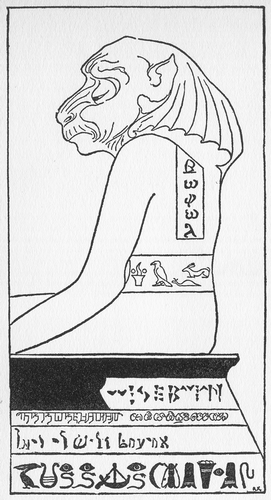
This is Wise Baviaan (это Мудрый Павиан), the dog-headed Baboon (собакоголовый Бабуин), Who is Quite the Wisest Animal in All South Africa (Который Действительно Мудрейшее Животное во Всей Южной Африке). I have drawn him from a statue (я нарисовал его со статуи) that I made up out of my own head (которую я выдумал из моей собственной головы), and I have written his name on his belt (и я написал его имя на его поясе) and on his shoulder and on the thing he is sitting on (и на его плече и на штуковине, на которой он сидит). I have written it in what is not called Coptic and Hieroglyphic and Cuneiformic and Bengalic and Burmic and Hebric (я написал это не тем, что называется коптским языком, иероглифами, клинописью, бенгали, бирманским языком и ивритом) all because he is so wise (исключительно потому, что он так мудр). He is not beautiful (он не красив), but he is very wise (но он очень мудр); and I should like to paint him with paint-box colours (и я хотел бы раскрасить его красками из коробки красок), but I am not allowed (но мне не разрешают). The umbrellaish thing about his head is his Conventional Mane (зонтоподобная штука у его головы — это его Традиционная Грива; conventional — обычный, обыкновенный, традиционный, условный; umbrella — зонт).
statue ['stxtjH], colour ['kAlq], conventional [kqn'venSqnql]
This is Wise Baviaan, the dog-headed Baboon, Who is Quite the Wisest Animal in All South Africa. I have drawn him from a statue that I made up out of my own head, and I have written his name on his belt and on his shoulder and on the thing he is sitting on. I have written it in what is not called Coptic and Hieroglyphic and Cuneiformic and Bengalic and Burmic and Hebric, all because he is so wise. He is not beautiful, but he is very wise; and I should like to paint him with paint-box colours, but I am not allowed. The umbrellaish thing about his head is his Conventional Mane.
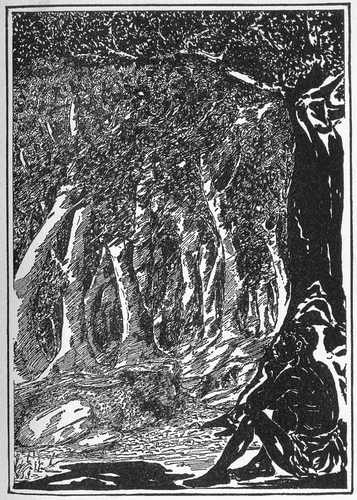
THIS is the picture, of the Leopard and the Ethiopian (это изображение Леопарда и Эфиопа) after they had taken Wise Baviaan’s advice (после того как они последовали совету Мудрого Павиана) and the Leopard had gone into other spots (и Леопард покрылся пятнами) and the Ethiopian had changed his skin (а Эфиоп сменил свою кожу). The Ethiopian was really a negro (Эфиоп был действительно негр), and so his name was Sambo (и поэтому его звали Самбо[56]). The Leopard was called Spots (Леопарда назвали Пятнистым), and he has been called Spots ever since (и с тех пор его всегда зовут Пятнистым). They are out hunting in the spickly-speckly forest (они вышли на охоту в пятнисто-пятнастом лесу), and they are looking for Mr. One-Two-Three-Where’s-your-Breakfast (и они ищут мистера Раз-два-три-Где-ваш-Завтрак-/посмотри/). If you look a little (если вы немного приглядитесь) you will see Mr. One-Two-Three not far away (недалеко вы увидите мистера Раз-два-три). The Ethiopian has hidden behind a splotchy-blotchy tree (Эфиоп спрятался за пятночно-мазочным деревом) because it matches his skin (потому что оно соответствует его коже), and the Leopard is lying beside a spickly-speckly bank of stones (а Леопард лежит возле пятнасто-пятнистого каменистого берега) because it matches his spots (потому что он подходит к его пятнам). Mr. One-Two-Three-Where’s-your-Breakfast is standing up eating leaves from a tall tree (мистер Раз-два-три-Где-ваш-Завтрак-посмотри стоит и объедает листья с высокого дерева). This is really a puzzle-picture like ‘Find the Cat’ (это действительно загадочная картинка, как «найди Кота»[57]).
negro ['nJgrqu], leave [lJv], puzzle [pAzl]
THIS is the picture, of the Leopard and the Ethiopian after they had taken Wise Baviaan’s advice and the Leopard had gone into other spots and the Ethiopian had changed his skin. The Ethiopian was really a negro, and so his name was Sambo. The Leopard was called Spots, and he has been called Spots ever since. They are out hunting in the spickly-speckly forest, and they are looking for Mr. One-Two-Three-Where’s-your-Breakfast. If you look a little you will see Mr. One-Two-Three not far away. The Ethiopian has hidden behind a splotchy-blotchy tree because it matches his skin, and the Leopard is lying beside a spickly-speckly bank of stones because it matches his spots. Mr. One-Two-Three-Where’s-your-Breakfast is standing up eating leaves from a tall tree. This is really a puzzle-picture like ‘Find the Cat.’
THE ELEPHANT’S CHILD
Слоненок
IN the High and Far-Off Times (в Высокие и Отдаленные Времена) the Elephant, O Best Beloved, had no trunk (у Слона, о Самые Наилюбименькие, не было хобота). He had only a blackish, bulgy nose (у него был лишь черноватый выпуклый нос), as big as a boot (большой, как башмак), that he could wriggle about from side to side (который он мог изгибать из стороны в сторону); but he couldn’t pick up things with it (но он не мог подбирать им предметы). But there was one Elephant (но жил один Слон) — a new Elephant (новый Слон) — an Elephant’s Child (Слоненок) — who was full of ‘satiable curtiosity[58] (который был полон ненасытного вежливого любопытства; insatiable — ненасытный), and that means he asked ever so many questions (а это значит, он задавал чрезвычайно много вопросов). And he lived in Africa (и он жил в Африке), and he filled all Africa with his ‘satiable curtiosities (и он наполнял всю Африку своим ненасытным вежливым любопытством[59]). He asked his tall aunt, the Ostrich (он спрашивал свою высокую тетушку Страусиху), why her tail-feathers grew just so (почему ее хвостовые перья росли именно так), and his tall aunt the Ostrich spanked him with her hard, hard claw (и его высокая тетушка Страусиха хлопала его своей твердой-твердой лапой).
elephant ['elIfqnt], aunt [Rnt], ostrich ['OstrIC]
IN the High and Far-Off Times the Elephant, O Best Beloved, had no trunk. He had only a blackish, bulgy nose, as big as a boot, that he could wriggle about from side to side; but he couldn’t pick up things with it. But there was one Elephant — a new Elephant — an Elephant’s Child — who was full of ‘satiable curtiosity, and that means he asked ever so many questions. And he lived in Africa, and he filled all Africa with his ‘satiable curtiosities. He asked his tall aunt, the Ostrich, why her tail-feathers grew just so, and his tall aunt the Ostrich spanked him with her hard, hard claw.
He asked his tall uncle, the Giraffe (он спрашивал своего высокого дядюшку Жирафа), what made his skin spotty (что сделало его шкуру пятнистой = отчего у него пятнистая шкура), and his tall uncle, the Giraffe, spanked him with his hard, hard hoof (и его высокий дядюшка Жираф ударял его своим твердым-твердым копытом). And still he was full of ‘satiable curtiosity (и тем не менее = все равно он был полон ненасытного вежливого любопытства)! He asked his broad aunt, the Hippopotamus (он спрашивал свою обширную тетушку Бегемотиху), why her eyes were red (почему у нее красные глаза), and his broad aunt, the Hippopotamus, spanked him with her broad, broad hoof (и его обширная тетушка Бегемотиха лягала его своим широким-широким копытом); and he asked his hairy uncle, the Baboon (и он спрашивал своего волосатого дядюшку Бабуина), why melons tasted just so (почему дыни на вкус именно такие), and his hairy uncle, the Baboon, spanked him with his hairy, hairy paw (и его волосатый дядюшка Бабуин шлепал его своей волосатой-волосатой лапой). And still he was full of ‘satiable curtiosity (и все равно он был полон ненасытного вежливого любопытства)! He asked questions about everything that he saw (он задавал вопросы обо всем, что он видел), or heard, or felt, or smelt, or touched (или слышал, или чувствовал, или обонял, или касался; to hear; to feel; to smell), and all his uncles and his aunts spanked him (и все его дядюшки и его тетушки шлепали его). And still he was full of ‘satiable curtiosity (и все равно он был полон ненасытного вежливого любопытства)!
uncle [ANkl], broad [brLd], hoof [hHf]
He asked his tall uncle, the Giraffe, what made his skin spotty, and his tall uncle, the Giraffe, spanked him with his hard, hard hoof. And still he was full of ‘satiable curtiosity! He asked his broad aunt, the Hippopotamus, why her eyes were red, and his broad aunt, the Hippopotamus, spanked him with her broad, broad hoof; and he asked his hairy uncle, the Baboon, why melons tasted just so, and his hairy uncle, the Baboon, spanked him with his hairy, hairy paw. And still he was full of ‘satiable curtiosity! He asked questions about everything that he saw, or heard, or felt, or smelt, or touched, and all his uncles and his aunts spanked him. And still he was full of ‘satiable curtiosity!
One fine morning in the middle of the Precession of the Equinoxes (одним прекрасным утром посреди Предварения / Прецессии Равноденствий) this ‘satiable Elephant’s Child asked a new fine question (этот ненасытный Слоненок задал новый превосходный вопрос) that he had never asked before (который он не задавал никогда прежде). He asked, ‘What does the Crocodile have for dinner (он спросил: что Крокодил ест на обед)?’ Then everybody said, ‘Hush!’ in a loud and dretful[60] tone (тогда все сказали: ш-ш — громким и раздрастрашным тоном), and they spanked him immediately and directly (и они стали немедленно и тотчас шлепать его), without stopping, for a long time (/и шлепали его/ долгое время без перерыва).
By and by, when that was finished (вскоре, когда это закончилось), he came upon Kolokolo Bird sitting in the middle of a wait-a-bit thorn-bush (он случайно встретил Птичку Колоколо, сидевшую в середине сассапарили круглолистной[61]), and he said (и он сказал), ‘My father has spanked me (мой отец шлепал меня), and my mother has spanked me (и моя мать шлепала меня); all my aunts and uncles have spanked me for my ‘satiable curtiosity (все мои тетушки и дядюшки шлепали меня за мою ненасытное вежливое любопытство); and still I want to know what the Crocodile has for dinner (а я все равно хочу знать, что ест Крокодил на обед)!’
equinox ['JkwInOks], crocodile ['krOkqdaIl], immediately [I'mJdIqtlI]
One fine morning in the middle of the Precession of the Equinoxes this ‘satiable Elephant’s Child asked a new fine question that he had never asked before. He asked, ‘What does the Crocodile have for dinner?’ Then everybody said, ‘Hush!’ in a loud and dretful tone, and they spanked him immediately and directly, without stopping, for a long time.
By and by, when that was finished, he came upon Kolokolo Bird sitting in the middle of a wait-a-bit thorn-bush, and he said, ‘My father has spanked me, and my mother has spanked me; all my aunts and uncles have spanked me for my ‘satiable curtiosity; and still I want to know what the Crocodile has for dinner!’
Then Kolokolo Bird said, with a mournful cry (тогда Птичка Колоколо сказала с печальным криком), ‘Go to the banks of the great grey-green, greasy Limpopo River (иди на берега великой серо-зеленой жирной реки Лимпопо), all set about with fever-trees, and find out (полностью усаженной = заросшей /по берегам/ хинными деревьями, и узнаешь).’
That very next morning (прямо на следующее утро), when there was nothing left of the Equinoxes (когда от равноденствий ничего не осталось), because the Precession had preceded according to precedent (потому что Прецессия случилась предварительно в соответствии с прецедентом), this ‘satiable Elephant’s Child took a hundred pounds of bananas (этот ненасытный Слоненок взял сотню фунтов бананов[62]) (the little short red kind (маленького коротенького красненького сорта)), and a hundred pounds of sugar-cane (и сотню фунтов сахарного тростника) (the long purple kind (длинного пурпурного сорта)), and seventeen melons (и семнадцать дынь) (the greeny-crackly kind (зеленовато-хрустящего сорта)), and said to all his dear families (и сказал всем своим дорогим семействам), ‘Goodbye (до свидания). I am going to the great grey-green, greasy Limpopo River (я ухожу к великой серо-зеленой жирной реке Лимпопо), all set about with fever-trees (полностью заросшей /по берегам/ хинными деревьями), to find out what the Crocodile has for dinner (чтобы узнать, что ест на обед Крокодил).’ And they all spanked him once more for luck (и они все отшлепали его еще раз на счастье), though he asked them most politely to stop (хотя он просил их очень вежливо перестать).
greasy ['grJsI], fever ['fJvq], politely [pq'laItlI]
Then Kolokolo Bird said, with a mournful cry, ‘Go to the banks of the great grey-green, greasy Limpopo River, all set about with fever-trees, and find out.’
That very next morning, when there was nothing left of the Equinoxes, because the Precession had preceded according to precedent, this ‘satiable Elephant’s Child took a hundred pounds of bananas (the little short red kind), and a hundred pounds of sugar-cane (the long purple kind), and seventeen melons (the greeny-crackly kind), and said to all his dear families, ‘Goodbye. I am going to the great grey-green, greasy Limpopo River, all set about with fever-trees, to find out what the Crocodile has for dinner.’ And they all spanked him once more for luck, though he asked them most politely to stop.
Then he went away (тогда он ушел), a little warm (немного разгоряченный), but not at all astonished (но совсем не удивленный), eating melons (/он/ ел дыни), and throwing the rind about (и разбрасывал кожуру), because he could not pick it up (потому что он не мог ее подбирать).
He went from Graham’s Town to Kimberley (он пошел от Города Грэма в Кимберли), and from Kimberley to Khama’s Country (а из Кимберли в Страну Хамы), and from Khama’s Country he went east by north (а из Страны Хамы он пошел на восток к северу), eating melons all the time (и все время ел дыни), till at last he came to the banks of the great grey-green, greasy Limpopo River (пока наконец он /не/ пришел к берегам великой серо-зеленой жирной реки Лимпопо), all set about with fever-trees (полностью заросшей /по берегам/ хинными деревьями), precisely as Kolokolo Bird had said (в точности такой, как говорила Птичка Колоколо).
warm [wLm], throw [Trqu], north [nLT]
Then he went away, a little warm, but not at all astonished, eating melons, and throwing the rind about, because he could not pick it up.
He went from Graham’s Town to Kimberley, and from Kimberley to Khama’s Country, and from Khama’s Country he went east by north, eating melons all the time, till at last he came to the banks of the great grey-green, greasy Limpopo River, all set about with fever-trees, precisely as Kolokolo Bird had said.
Now you must know and understand (а сейчас вам надобно узнать и понять), O Best Beloved (О Самые Любименькие), that till that very week, and day, and hour, and minute (что до той самой недели, и дня, и часа, и минуты), this ‘satiable Elephant’s Child had never seen a Crocodile (этот ненасытный Слоненок никогда не видел Крокодила), and did not know what one was like (и не знал, какой он из себя). It was all his ‘satiable curtiosity (это было все его ненасытное любопытство).
The first thing that he found (первым, кого он нашел) was a Bi-Coloured-Python-Rock-Snake curled round a rock (был Двухцветный-Питон-Скалистый-Змей, свернувшийся кольцами вокруг скалы).
‘‘Scuse me (извините /меня/),’ said the Elephant’s Child most politely (сказал очень вежливо Слоненок), ‘but have you seen such a thing as a Crocodile in these promiscuous parts (но /не/ видели ли вы в этих неоднородных = сомнительных краях такое существо, как Крокодил; promiscuous — разнородный, разношерстный, неодинаковый, разный, смешанный; беспорядочный, неразборчивый)?’
python ['paITqn], curl [kWl], promiscuous [prq'mIskjuqs]
Now you must know and understand, O Best Beloved, that till that very week, and day, and hour, and minute, this ‘satiable Elephant’s Child had never seen a Crocodile, and did not know what one was like. It was all his ‘satiable curtiosity.
The first thing that he found was a Bi-Coloured-Python-Rock-Snake curled round a rock.
‘‘Scuse me,’ said the Elephant’s Child most politely, ‘but have you seen such a thing as a Crocodile in these promiscuous parts?’
‘Have I seen a Crocodile (/не/ видел ли я Крокодила)?’ said the Bi-Coloured-Python-Rock-Snake (спросил Двухцветный-Питон-Скалистый-Змей), in a voice of dretful scorn (голосом /пронизанным/ ужасно-раздражительной насмешкой). ‘What will you ask me next (о чем еще ты у меня спросишь)?’
‘‘Scuse me (извините /меня/),’ said the Elephant’s Child (сказал Слоненок), ‘but could you kindly tell me what he has for dinner (но не будете ли вы так любезны сказать мне, что он ест на обед)?’
Then the Bi-Coloured-Python-Rock-Snake uncoiled himself very quickly from the rock (тогда Двухцветный-Питон-Скалистый-Змей очень быстро размотался со скалы), and spanked the Elephant’s Child with his scalesome, flailsome tail (и отшлепал Слоненка своим чешуйчатым молотильчатым хвостом; flail — цеп, молотить).
scorn [skLn], kindly ['kaIndlI], flail [fleIl]
‘Have I seen a Crocodile?’ said the Bi-Coloured-Python-Rock-Snake, in a voice of dretful scorn. ‘What will you ask me next?’
‘‘Scuse me,’ said the Elephant’s Child, ‘but could you kindly tell me what he has for dinner?’
Then the Bi-Coloured-Python-Rock-Snake uncoiled himself very quickly from the rock, and spanked the Elephant’s Child with his scalesome, flailsome tail.
That is odd (это странно),’ said the Elephant’s Child (сказал Слоненок), ‘because my father and my mother (потому что мой отец, и моя мать), and my uncle and my aunt (и мой дядя, и моя тетя), not to mention my other aunt (не упоминая моей другой тетушки), the Hippopotamus (Бегемотихи), and my other uncle, the Baboon (и моего другого дядюшки Бабуина), have all spanked me for my ‘satiable curtiosity (все шлепали меня за мое ненасытное вежливое любопытство) — and I suppose this is the same thing (и я полагаю, что это = здесь то же самое).’
So he said good-bye very politely to the Bi-Coloured-Python-Rock-Snake (и он очень вежливо попрощался с Двухцветным-Питоном-Скалистым-Змеем), and helped to coil him up on the rock again (и помог ему снова намотаться на скалу), and went on (и пошел дальше), a little warm (немного разгоряченный), but not at all astonished (но совсем не удивленный), eating melons, and throwing the rind about (/при этом он/ ел дыни и разбрасывал кожуру), because he could not pick it up (потому что он не мог ее подбирать), till he trod on (пока /он/ не наступил на то; to tread — наступать, топтать) what he thought was a log of wood (что он посчитал бревном) at the very edge of the great grey-green, greasy Limpopo River, all set about with fever-trees (у самого берега великой серо-зеленой жирной Реки Лимпопо, полностью заросшей хинными деревьями).
father ['fRDq], mother ['mADq], rind [raInd]
That is odd,’ said the Elephant’s Child, ‘because my father and my mother, and my uncle and my aunt, not to mention my other aunt, the Hippopotamus, and my other uncle, the Baboon, have all spanked me for my ‘satiable curtiosity — and I suppose this is the same thing.’
So he said good-bye very politely to the Bi-Coloured-Python-Rock-Snake, and helped to coil him up on the rock again, and went on, a little warm, but not at all astonished, eating melons, and throwing the rind about, because he could not pick it up, till he trod on what he thought was a log of wood at the very edge of the great grey-green, greasy Limpopo River, all set about with fever-trees.
But it was really the Crocodile (но на самом деле это был Крокодил), O Best Beloved (О Самые Наилюбименькие), and the Crocodile winked one eye — like this (и Крокодил мигнул одним глазом — вот так)!
‘‘Scuse me (извините /меня/),’ said the Elephant’s Child most politely (сказал очень вежливо Слоненок), ‘but do you happen to have seen a Crocodile in these promiscuous parts (но /не/ доводилось ли вам видеть в этих сомнительных краях Крокодила)?’
Then the Crocodile winked the other eye (тогда Крокодил моргнул другим глазом), and lifted half his tail out of the mud (и поднял наполовину свой хвост из ила); and the Elephant’s Child stepped back most politely (а Слоненок очень вежливо отступил назад), because he did not wish to be spanked again (потому что он не хотел, чтобы его снова шлепали).
‘Come hither, Little One (подойди сюда, Малыш),’ said the Crocodile (сказал Крокодил). ‘Why do you ask such things (почему ты спрашиваешь такие вещи = об этом)?’
happen ['hxp(q)n], half [hRf], hither ['hIDq]
But it was really the Crocodile, O Best Beloved, and the Crocodile winked one eye — like this!
‘‘Scuse me,’ said the Elephant’s Child most politely, ‘but do you happen to have seen a Crocodile in these promiscuous parts?’
Then the Crocodile winked the other eye, and lifted half his tail out of the mud; and the Elephant’s Child stepped back most politely, because he did not wish to be spanked again.
‘Come hither, Little One,’ said the Crocodile. ‘Why do you ask such things?’
‘‘Scuse me (извините),’ said the Elephant’s Child most politely (сказал очень вежливо Слоненок), ‘but my father has spanked me (но мой отец шлепал меня), my mother has spanked me (моя мать шлепала меня), not to mention my tall aunt, the Ostrich (не говоря уже о моей высокой тетушке Страусихе), and my tall uncle, the Giraffe (и моем высоком дядюшке Жирафе), who can kick ever so hard (которые умеют лягаться чрезвычайно сильно), as well as my broad aunt, the Hippopotamus (а также о моей обширной тетушке Бегемотихе), and my hairy uncle, the Baboon (и моем волосатом дядюшке Бабуине), and including the Bi-Coloured-Python-Rock-Snake (и включая Двухцветного-Питона-Скалистого-Змея), with the scalesome, flailsome tail (с чешуйчатым молотильчатым хвостом; scale — чешуйка; flail — цеп), just up the bank (как раз выше на берегу), who spanks harder than any of them (который шлепает сильнее любого из них); and so, if it’s quite all the same to you (и поэтому, если вам все равно), I don’t want to be spanked any more (то я больше не хочу, чтобы меня шлепали).’
including [In'klHdIN], want [wOnt], more [mL]
‘‘Scuse me,’ said the Elephant’s Child most politely, ‘but my father has spanked me, my mother has spanked me, not to mention my tall aunt, the Ostrich, and my tall uncle, the Giraffe, who can kick ever so hard, as well as my broad aunt, the Hippopotamus, and my hairy uncle, the Baboon, and including the Bi-Coloured-Python-Rock-Snake, with the scalesome, flailsome tail, just up the bank, who spanks harder than any of them; and so, if it’s quite all the same to you, I don’t want to be spanked any more.’

|
Из за большого объема этот материал размещен на нескольких страницах:
1 2 3 4 5 6 7 8 9 10 11 12 13 14 15 16 17 18 |
