

Партнерка на США и Канаду по недвижимости, выплаты в крипто
- 30% recurring commission
- Выплаты в USDT
- Вывод каждую неделю
- Комиссия до 5 лет за каждого referral
Elsewhere, in northern Jawzjan province, an official described “tough fighting” after hundreds of insurgent fighters attacked the Qush Tepa district.
The governor’s spokesman Mohammad Reza Ghafoori said Afghan security forces were waiting for airstrike backup.
He said the insurgents’ ranks included Pakistanis, Uzbeks and Chechens.
Four Afghan security forces personnel have been killed, and another three wounded, he said.
Taliban Capture “Important” Southern Afghan District After Heavy Fighting:
“Taliban Are In Control Of 60%Of Helmand”
July 30, 2016 SBS International
An important district in Afghanistan’s southern poppy-growing province of Helmand has fallen to Taliban control after heavy fighting that killed or wounded up to 20 police.
Abdul Majeed Akhonzada, deputy director of the provincial council, said Kanashin district had “fallen into Taliban hands” on Saturday.
The fall of the district, which borders Pakistan and major poppy-producing districts, means “Taliban are in control of 60 per cent of Helmand”, Akhonzada said.
Much of the area of Marjah, Sangin, Garmser and Dishu districts have already fallen to the Taliban, he said.
The district police chief and deputy head of the local branch of the national intelligence agency were critically wounded in clashes that began late Friday, he said.
Precise casualty figures can’t be confirmed as bodies litter the ground and fighting was still underway, he added.
The fall of Kanashin follows a report by the Special Inspector General for Afghanistan Reconstruction concluding that government forces have lost five per cent of the territory they held at the end of January.
The report released earlier this week said that about 65.6 per cent of districts across Afghanistan were under government “control or influence” at the end of May, “a decrease from the 70.5 per cent” at the end of January.
It said that of Afghanistan’s 407 districts, 268 were under government control or influence, 36 or 8.8 per cent were under insurgent control or influence, and 104 or 25.6 per cent were considered “at risk”.
The Taliban have been fighting to overthrow the Kabul government since 2001, when their regime was ousted by the US invasion. The insurgents consider Helmand, along with neighbouring Kandahar province, to be their heartland.
No Surprise That The Afghan Forces Losing Territory To The Taliban:
“High Attrition Rates, Including A High Number Of Casualties, Results In The Force Losing A Third Of Its Troops Annually”
29 July 16 By Mazin Sidahmed and Spencer Ackerman, Guardian UK Excerpts]
The US special inspector general for Afghanistan reconstruction (Sigar) found that the NATO-backed Afghan government is in control of 65.6% of districts in the country – a drop from the 70.5% it held in January 2016.
Sherjan Ahmadzai, director for the Center for Afghanistan Studies University of Nebraska-Omaha, said it was no surprise that the Afghan forces had lost territory to the Taliban.
“Afghan forces are not in the position of strength the coalition forces enjoyed before the withdrawal,” Ahmadzai said, adding that the lack of an effective air force and a summertime Taliban offensive to gain opium-producing regions had also contributed to the loss of territorial control.
The United States has spent a total of $114.9bn on reconstruction and relief in Afghanistan since 2002, the report found. Almost $70bn of that, or 60%, was spent on building up the Afghan defense forces, yet problems with the force persist.
In addition to losing territory to the Taliban, the Afghan army has come under pressure from Islamic State in Khorasan province and the Islamic Movement of Uzbekistan, the report said.
Despite help from coalition airstrikes, the Afghan forces have also suffered from high attrition rates, including a high number of casualties, which results in the force losing a third of its troops annually.
SOMALIA WAR REPORTS
Insurgents Attack Police Department Headquarters In Mogadishu
July 31, 2016 By Bill Roggio and Caleb Weiss, The Long War Journal. [Excerpts]
Bill Roggio is a Senior Fellow at the Foundation for Defense of Democracies and the Editor of The Long War Journal. Caleb Weiss is an intern at the Foundation for Defense of Democracies and a contributor to The Long War Journal.
***************************************************************************************
Earlier today, Shabaab launched a large-scale assault on Somalia’s Criminal Investigation Department’s (CID) headquarters in Mogadishu. The attack, which is the second of its kind in Somalia’s capital in the past week, left at least 6 people dead and several others wounded.
According to reports, Shabaab began the operation by detonating two car bomb near the perimeter of the headquarters. Following the car bombings, a small assault team was able to breach the perimeter and enter the complex.
Five civilians and one police officer were killed in the assault, while the four Shabaab fighters who entered the CID headquarters were killed, according to Al Jazeera. The number of casualties released by Shabaab’s Shahada News largely matches the numbers given by Al Jazeera.
Today’s attack in Mogadishu, comes just days after Shabaab mounted a similar assault near an African Union base near the Mogadishu airport. The attack left 13 people dead and wounded 19 others wounded.
In addition to the attack on the CID headquarters, Shabaab launched an assault on a Somali military base near Afgoye just outside of the Somali capital.
The Somali military claimed to have repelled the attack while Shabaab said it inflicted heavy casualties on the military, Shabelle reported.
MILITARY RESISTANCE BY EMAIL
If you wish to receive Military Resistance immediately and directly, send request to *****@***org. There is no subscription charge. Same address to unsubscribe.
FORWARD OBSERVATIONS
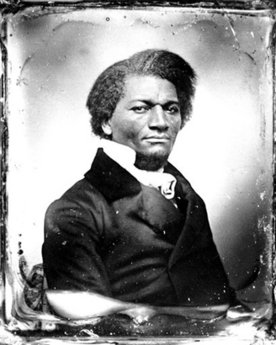
“At a time like this, scorching irony, not convincing argument, is needed. Oh had I the ability, and could reach the nation’s ear, I would, pour out a fiery stream of biting ridicule, blasting reproach, withering sarcasm, and stern rebuke.
“For it is not light that is needed, but fire; it is not the gentle shower, but thunder.
“We need the storm, the whirlwind, and the earthquake.”
“The limits of tyrants are prescribed by the endurance of those whom they oppose.”
Frederick Douglass, 1852
The Nixon administration claimed and received great credit for withdrawing the Army from Vietnam, but it was the rebellion of low-ranking GIs that forced the government to abandon a hopeless suicidal policy.
-- David Cortright; Soldiers In Revolt
Agent Orange Children Vietnam 2016 #15
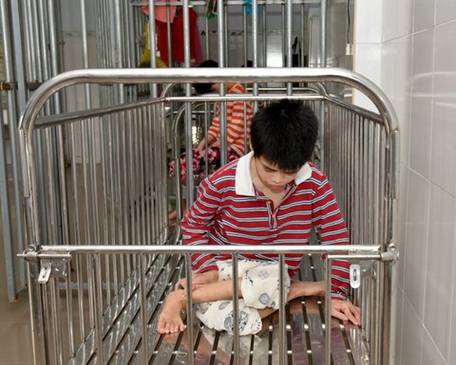
Photograph by Mike Hastie
From: Mike Hastie
To: Military Resistance Newsletter
Sent: May 13, 2016
Subject: Agent Orange Children Vietnam 2016 #15
Full Disclosure
Photo and caption from the portfolio of Mike Hastie, US Army Medic, Vietnam 1970-71. (For more of his outstanding work, contact *****@***net)
One day while I was in a bunker in Vietnam, a sniper round went over my head. The person who fired that weapon was not a terrorist, a rebel, an extremist, or a so-called insurgent. The Vietnamese individual who tried to kill me was a citizen of Vietnam, who did not want me in his country. This truth escapes millions.
Mike Hastie
U. S. Army Medic
Vietnam 1970-71
December 13, 2004
Brexit -- The Unsung Victory Of The Radical Left:
“The British Referendum Has Struck This Market Worshipping EU Its First Major Blow”
“Finally An Objective Is In Sight, However Distant. An End To Enforced Austerity”
“Not Only No To ‘Savage’ Capitalism, Or ‘Crony’ Capitalism, But To Capital Itself”
July 28, 2016 by Matthew Whitley, LeftEast [Excerpts]
Brexit has been greeted as a darkly seminal event, likely to be enshrined as the first historical breakthrough of reaction in contemporary Europe.
Everywhere it is being trumpeted as the triumph of xenophobia, populism and racism.
In the eyes of the global media, “Vote Leave” irreversibly bears the signature of the Eurosceptic, nationalist right.
And yet the reality of the referendum itself most clearly marks the moment, perhaps above all else, when ideology made its first impactful reappearance in Western politics – an event no more uniquely a boon to the fascistic right than the anti-capitalist left wing.
The imbalance between this media reaction and the strategic reality, between perceived winners and losers, is the result of a crude framing of the situation as a contest between two poles – cooperation versus competition and protectionism versus internationalism.
But pretensions towards “technocratic” government and the concept of supranational “post-ideological” administration were the primary casualties of the referendum itself, with both right and left afforded new space to occupy in their absence.
What has been revealed in the vote’s aftermath is not the inherent strength of UKIP or Front National, but the incoherency and weakness of message among their left wing challengers.
As a result of formerly critical personalities like Corbyn ceding the rhetorical field, what should have been one of few crucial, strategic victories in recent memory for the radical left has been transformed into a massive narrative and propaganda defeat.
It is not hard to see what the left stands to gain by weakening the European Union.
Just look to Italy, a country still reeling from the 2008 financial crisis with 11% official unemployment, national debt at 133% of GDP, and an expected two decade recession in the analysis of the IMF.

|
Из за большого объема этот материал размещен на нескольких страницах:
1 2 3 4 5 |
