


Партнерка на США и Канаду по недвижимости, выплаты в крипто
- 30% recurring commission
- Выплаты в USDT
- Вывод каждую неделю
- Комиссия до 5 лет за каждого referral
|
Throughout our lives, right from the moment when as infants we cry to express hunger, we are engaging in social interaction of one form or …(1)… . Each and …(2)… time we encounter fellow human beings, some kind of social interaction will take place, …(3)… it’s getting on a bus and paying the fare for the journey, or socializing with friends. It goes without …(4)… , therefore, that we need the ability to communicate. Without some method of transmitting intentions, we would be …(5)… a complete loss when it …(6)… to interacting socially. Communication involves the exchange of information, which can be …(7)… from a gesture to a friend signaling boredom to the presentation of a university thesis which may …(8)… ever be read by a handful of others, or it could be something in …(9)… the two. Our highly developed languages set us …(10)… from animals. …(11)… for these languages, we could not communicate sophisticated or abstract ideas. …(12)… could we talk or write about people or objects …(13)… immediately present. …(14)… we restricted to discussing objects already present, we would be …(15)… to make abstract generalization about the world. |
3. Read the following text and decide which answer (A, B, C or D) best fits each gap.
The death of languagesThe death of languages has been repeated many times in history. Localised disasters such as great floods of warfare have …(1)… a part, but in the modern era the increased international movement of people has greatly …(2)… the destruction. Local languages may be overpowered by a metropolitan language, thus increasing the pressure to neglect ancestral tongues in …(3)… of the new one, which is seen as the key to prospering in the …(4)… culture. Children may be forbidden to use their mother tongue in the classroom, as has occurred to many groups, including the Welsh and Aboriginal Australians. The death of a language is not only a tragedy for those directly affected, but also an …(5)… cultural loss for the world. Through language, each culture expresses a unique worldview. Thus, any effort to …(6)… linguistic variety implies a deep respect for the positive values of other cultures. | ||||
1 | A done | B made | C adopted | D played |
2 | A speeded | B accelerated | C urged | D hurried |
3 | A favour | B preference | C support | D choice |
4 | A foremost | B major | C leading | D dominant |
5 | A invaluable | B irretrievable | C inimitable | D irrepressible |
6 | A champion | B hold | C preserve | D collaborate |
SPEAKING
Speak on one of the following topics for 2 min. Two minutes’ preparation time is allowed.
Negotiating · the role of verbal communications in management and employee discussions
Recruitment · the importance of body language when applying for the job
Communication · the importance of good communication skills in developing a career in any kind of business |
PRACTICAL ADVICE:
· USE VIVID EXAMPLES TO SUPPORT YOUR IDEAS
· LET YOUR SPEECH BE EXPRESSIVE
Make notes
……………………………….……………………………………………………………………………………………………….……………………………………………………………………………………………………….……………………………………………………………………………………………………….……………………………………………………………………………………………………….……………………………………………………………………………………………………….……………………………………………………………………………………………………….……………………………………………………………………………………………………….……………………………………………………………………………………………………….……………………………………………………………………………………………………….……………………………………………………………………………………………………….……………………………………………………………………………………………………….……………………………………………………………………………………………………….……………………………………………………………………………………………………….……………………………………………………………………………………………………………………………………………………………………………………………………………………………………………………………………………………….
WRITING
A |
DDICTION TO ONLINE GAMING AND SOCIAL NETWORKING SITES HAS NEGATIVE INFLUENCES ON INTERACTION IN THE WORKPLACE AND FACE-TO-FACE COMMUNICATION.
Write an essay (about 180 words) supporting your stance on the issue.
REMEMBER:
A THESIS SENTENCE MUST DO THE FOLLOWING:
· COMMUNICATE ONE IDEA
· CATCH THE READER’S ATTENTION
· IDENTIFY WHAT THE PARAGRAPH IS ABOUT
· SUPPORT THE THEME OF THE ENTIRE ESSAY
………………………………………………………………………………………………………………………………………………………………………………………………………………………………………………………………………………………………………………………………………………………………………………………………………………………………………………………………………………………………………………………………………………………………………………………………………………………………………………………………………………………………………………………………………………………………………………………………………………………………………………………………………………………………………………………………………………………………………………………………………………………………………………………………………………………………………………………………………………………………………………………………………………………………………………………………………………………………………………………………………………………………………………………………………………………………………………………………………………………………………………………………………………………………………………………………………………………
…………………………………………………………………………………………………………………………………………………………………………………………………………………………………………………………………………………………………………………………………………………………………………………………………………………………………………………………………………………………………………………………………………………………………………………………………………………………………………………………………………………………………………………………………………………………………………………………………………………………………………………………………………………………………………………………………………………………………………………………………………………………………………………………………………………………………………………………………………………………………………………………………………………………………………………………………………………………………………………………………………………………………………………………………………………………………………………………………………………………………………………………………………………………………………………………………………………….
UNIT THREE
READING
Read the article and answer the questions (1-13) based on it.
Views of intelligence across cultures
A In recent years, researchers have found that people in non-Western cultures often have ideas about intelligence that are considerably different from those that have shaped Western intelligence tests. This cultural bias may therefore work against certain groups of people. Researchers in cultural differences in intelligence, however, face a major dilemma, namely: how can the need to compare people according to a standard measure be balanced with the need to assess them in the light of their own values and concepts?
В For example, Richard Nesbitt of the University of Michigan concludes that East Asian and Western cultures have developed cognitive styles that differ in fundamental ways, including how intelligence is understood. People in Western cultures tend to view intelligence as a means for individuals to devise categories and engage in rational debate, whereas Eastern cultures see it as a way for members of a community to recognize contradiction and complexity and to play their social roles successfully This view is backed up by Sternberg and Shih-Ying, from the University of Taiwan, whose research shows that Chinese conceptions of intelligence emphasize understanding and relating to others, and knowing when to show or not show one's intelligence.
С The distinction between East Asia and the West is just one of many distinctions that separate different ways of thinking about intelligence. Robert Serpell spent a number of years studying concepts of intelligence in rural African communities. He found that people in many African communities, especially in those where Western-style schooling is still uncommon, tend to blur the distinction between intelligence and social competence. In rural Zambia, for instance, the concept of nzelu includes both cleverness and responsibility. Likewise, among the Luo people in rural Kenya, it has been found that ideas about intelligence consist of four broad concepts. These are named paro or practical thinking, luoro, which includes social qualities like respect and responsibility, winjo or comprehension, and rieko. Only the fourth corresponds more or less to the Western idea of intelligence.
D In another study in the same community, Sternberg and Grogorenko have found that children who score highly on a test of knowledge about medicinal herbs, a test of practical intelligence, often score poorly on tests of academic intelligence. This suggests that practical and academic intelligence can develop independently of each other, and the values of a culture may shape the direction in which a child's intelligence develops.
It also tends to support a number of other studies which suggest that people who are unable to solve complex problems in the abstract can often solve them when they are presented in a familiar context. Ashley Maynard, for instance, now professor of psychology at the University of Hawaii, conducted studies of cognitive development among children in a Mayan village in Mexico using toy looms, spools of thread, and other materials drawn from the local environment. The research suggested that the children's development could be validly compared to the progression described by Western theories of development, but only by using materials and experimental designs based on their own culture.
E The original hope of many cognitive psychologists was that a test could be developed that was absent of cultural bias. However, there seems to be an increasing weight of evidence to suggest that this is unlikely. Raven's Progressive Matrices, for example, were originally advertised as 'culture free' but are now recognized as culturally ch non-verbal intelligence tests are based on cultural constructs which may not appear in a particular culture. It is doubtful whether cultural comparisons of concepts of intelligence will ever enable us to move towards creating a test which encompasses all aspects of intelligence as understood by all cultures. It seems even less likely that such a test could be totally free of cultural imbalance somewhere.
The solution to the dilemma seems to lie more in accepting that cultural neutrality is unattainable and that administering any valid intelligence test requires a deep familiarity with the relevant culture's values and practices.
Questions 1-4. The reading Passage has five sections, A-E. Choose the correct heading for sections B-E from the list of headings below.
1 Research into African community life
2 Views about intelligence in African societies
3 The limitations of Western intelligence tests
4 The Chinese concept of intelligence
5 The importance of cultural context in test design
6 The disadvantages of non-verbal intelligence tests
7 A comparison between Eastern and Western understanding of intelligence
8 Words for "intelligence" in African languages
9 The impossibility of a universal intelligence test

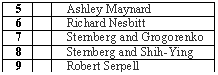 Questions 5-9. Look at the researchers in 5-9 and the list of findings below. Match each researcher with the correct finding.
List of findings
A There is a clear relationship between intelligence and relationships with others in Chinese culture.
В Children frequently scoring well in academic tests score better in practical tests.
С The difference between intelligence and social competence is not distinct in many African communities.
D Children frequently scoring well in practical tests score less well in academic tests.
E In experiments to measure cognitive development, there is a link between the materials used and the test results.
F The connection between intelligence and social competence in many African communities is not clear.
G The way cognition is viewed in East Asian cultures differs fundamentally from those in Western cultures.
H Chinese culture sees revelations about one's intelligence as part of intelligence.
Question 10-12. Which THREE of the following statements about non-verbal intelligence tests are mentioned by the writer of the passage? Tick them (✓).
A
НЕ нашли? Не то? Что вы ищете?
Реклама
Реклама на сайте, общая информация Контент-маркетинг Поддержите проект! Copyright © 2009-2026 Pandia. Все права защищены. Мнение редакции может не совпадать с мнениями авторов. Автоответчик: +7 495 7950139 228504 Написать письмо: [email protected] 
❮
❯
|