


Партнерка на США и Канаду по недвижимости, выплаты в крипто
- 30% recurring commission
- Выплаты в USDT
- Вывод каждую неделю
- Комиссия до 5 лет за каждого referral
2. Многозначность глагола to have в группе Simple
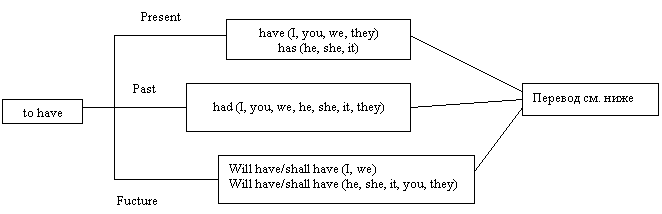 |
Примечание
Глагол to have значительно шире по значению, чем русский глагол «иметь, обладать». Его перевод зависит
от контекста.
1) В глаголе to have заложена потенциальная возможность действия:
Магу has a pencil in her hand. — Мери держит в руке карандаш.
The city has 100,000 inhabitants. — Население города составляет 100 000 человек. (=В городе проживает...)
2) В некоторых сочетаниях с существительными (часто отглагольными) глагол to have теряет свое основное значение и служит только указателем на совершение некоего ограниченного действия:
to have dinner — обедать;
to have a talk — поговорить;
to have a walk — прогуляться;
to have a good time — хорошо провести время.
3) В английском языке существует ряд устойчивых сочетаний с глаголом to have, которые переводятся на русский язык, как правило, глаголом действия:
She has a perfect command of English. — Она прекрасно владеет английским языком. I won't have it. — Я не потерплю этого.
4) Глагол to have в сочетаниях с существительным часто употребляется вместо простого глагольного сказуемого, выраженного глаголом действия:
Не had a longing to smoke. — Ему страшно хотелось курить.
Примечание
Наряду с глаголом to have в значении «иметь, обладать» употребляется также сочетание have (has) got. В такого рода предложениях возможно использование конструкций there is / are.
Например:
We haven't got any coffee in the house. = There isn't any coffee in the house.
Упражнения
1. Переведите следующие предложения, обращая внимание на различные значения глагола to have.
1)1 have no pencil. 2) You have no other way out. 3) His face had that small subtle smile that was so characteristic of him. 4) He came to her swiftly and in a moment had her in his arms. 5) Have some more cake! 6) I won't have you do this sort of things. 7) I cannot have my clients disturbed in the middle of the night.
8) Many householders have two or even three newspapers every day. 9) Women's clothes today have plenty of colour. 10) He had me around the waist. 11) I had him here just now asking for details. 12) What will you have? — Oh, I don't want anything. I had a cocktail. 13) He suddenly had her by the shoulders. 14) She had a quick wash. 15) He had a shower. 16) He had an easy life. 17) I have no idea how to solve this problem. 18) He has the latest issue of the "Modern Technologies" at home. 19) It costs much to have dinner in this restaurant. 20) Do you have any questions?
2. Переведите следующие предложения, обращая внимание на подчеркнутые словосочетания.
1) But now they felt it is time to have things out with her. 2) Because of the radio, Catherine and I had words one afternoon. 3) Ned Preston certainly had a way with him. 4) He had an eye for everything. 5) She was not only having a good time herself but she was trying to give all of them a good time. 6) If I do the thing, I will do it thoroughly but I must have a free hand. 7) It is always necessary to have a walk before one goes to bed. 8) I'm not going to work today. I have a bad cold. 9) She often has a sore throat. 10) They always have a light supper. 11) We had a terrible argument last week. 12) He wants to have a pleasant evening. 13) They had quite an adventure last holiday. 14) Please have the kindness to ring him up. 15) Be sure you can have my sympathy.
2. Многозначность глагола to have в группе Simple
|
Примечание
Глагол to have значительно шире по значению, чем русский глагол «иметь, обладать». Его перевод зависит
от контекста.
1) В глаголе to have заложена потенциальная возможность действия:
Магу has a pencil in her hand. — Мери держит в руке карандаш.
The city has 100,000 inhabitants. — Население города составляет 100 000 человек. (=В городе проживает...)
2) В некоторых сочетаниях с существительными (часто отглагольными) глагол to have теряет свое основное значение и служит только указателем на совершение некоего ограниченного действия:
to have dinner — обедать;
to have a talk — поговорить;
to have a walk — прогуляться;
to have a good time — хорошо провести время.
3) В английском языке существует ряд устойчивых сочетаний с глаголом to have, которые переводятся на русский язык, как правило, глаголом действия:
She has a perfect command of English. — Она прекрасно владеет английским языком. I won't have it. — Я не потерплю этого.
4) Глагол to have в сочетаниях с существительным часто употребляется вместо простого глагольного сказуемого, выраженного глаголом действия:
Не had a longing to smoke. — Ему страшно хотелось курить.
Примечание
Наряду с глаголом to have в значении «иметь, обладать» употребляется также сочетание have (has) got. В такого рода предложениях возможно использование конструкций there is / are.
Например:
We haven't got any coffee in the house. = There isn't any coffee in the house.
Упражнения
1. Переведите следующие предложения, обращая внимание на различные значения глагола to have.
1)1 have no pencil. 2) You have no other way out. 3) His face had that small subtle smile that was so characteristic of him. 4) He came to her swiftly and in a moment had her in his arms. 5) Have some more cake! 6) I won't have you do this sort of things. 7) I cannot have my clients disturbed in the middle of the night.
8) Many householders have two or even three newspapers every day. 9) Women's clothes today have plenty of colour. 10) He had me around the waist. 11) I had him here just now asking for details. 12) What will you have? — Oh, I don't want anything. I had a cocktail. 13) He suddenly had her by the shoulders. 14) She had a quick wash. 15) He had a shower. 16) He had an easy life. 17) I have no idea how to solve this problem. 18) He has the latest issue of the "Modern Technologies" at home. 19) It costs much to have dinner in this restaurant. 20) Do you have any questions?
2. Переведите следующие предложения, обращая внимание на подчеркнутые словосочетания.
1) But now they felt it is time to have things out with her. 2) Because of the radio, Catherine and I had words one afternoon. 3) Ned Preston certainly had a way with him. 4) He had an eye for everything. 5) She was not only having a good time herself but she was trying to give all of them a good time. 6) If I do the thing, I will do it thoroughly but I must have a free hand. 7) It is always necessary to have a walk before one goes to bed. 8) I'm not going to work today. I have a bad cold. 9) She often has a sore throat. 10) They always have a light supper. 11) We had a terrible argument last week. 12) He wants to have a pleasant evening. 13) They had quite an adventure last holiday. 14) Please have the kindness to ring him up. 15) Be sure you can have my sympathy.
