


Партнерка на США и Канаду по недвижимости, выплаты в крипто
- 30% recurring commission
- Выплаты в USDT
- Вывод каждую неделю
- Комиссия до 5 лет за каждого referral
Vienna Convention on protection of ozone layer signed in 1985 and Montreal protocol on ozone depleting substances signed in 1987 were first steps to global cooperation in the sphere of protection of the ozone layer. Changes in ozone layer have significant negative impact on health of people and the environment.
At present Vienna Convention on protection of ozone layer and Montreal protocol on ozone depleting substances are considered to be one of the most successful international agreements in the sphere of environment protection.
In Kyrgyz Republic issues of protection of ozone layer are regulated by basic nature protection laws – “On environmental protection” and “On protection of atmospheric air”.
In 2000 Kyrgyz Republic ratified Vienna convention and Montreal protocol. Within the framework of fulfillment of obligations under these agreements the Government of Kyrgyz Republic adopted the regulation No. 552 dated September, 6. In this regulation first-priority actions on their fulfillment were determined and Regulations on state regulation of import and export of ODS and ODS-containing products were approved.
On January, 15, 2003 Kyrgyz Republic passed the law on ratification of London, Copenhagen and Montreal amendments to Montreal protocol.
The work on improvement of international agreements is being continued. New supplements reflecting scientific and technical progress in the sphere of protection of ozone layer are being developed. At the same time the national legislation is improved taking into account specific features of ODS reduction in Kyrgyz Republic.
Kyrgyz Republic does not produce equipment and goods containing ODS which are controlled by Montreal protocol, but imports them both in pure condition and in products.
All ODS are imported from the Russian Federation and China, with the exception of some of them being received from other countries (Kazakhstan, Ukraine, Israel and the Great Britain).
No facts of ODS seizures by customs bodies in 2007 were registered.
Kyrgyzstan - Licensing System
In accordance with Kyrgyzstan’s Law on licensing No. 12 dated March, the 3rd,1997, ODS import/export is to be licensed.
Licensing system of ODS and products containing ODS substances was approved by the Government resolution No. 552, dated September the 6th, 2000. This licensing system covers all of the ODS described in the Montreal Protocol.
The Government resolution No. 860 dated November 25th, 2004, bans all export/imports of equipment which requires the use of substances listed in annexes A and B of the Montreal Protocol.
Kyrgyzstan requested assistance to improve their current ODS regulations/import and export licensing system and to establish a comprehensive national law on ozone layer protection. Currently, there are provisions on how to deal with seized ODS and ODS equipment and enforcement of ODS regulations is lacking.
CAP has provided financial assistance from the programmatic budget to support this activity.
ODS Import quota covers substances listed the annexes A, B, E of the Montreal Protocol. The annual quota on imports of these substances is in accordance with the schedule of its phase out, as determined by the State program of ODS reduction in Kyrgyzstan.
Any amount of ODS import of substances indicated in annexes A, B, E of the Montreal Protocol which is over the annual limits is banned.
Information from the National Ozone Unit of Kyrgyzstan
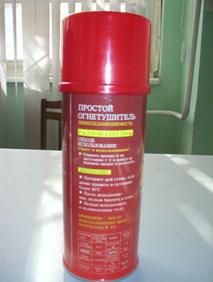
In November 2007, car fire extinguishers, based on Halon 1211, were found at one of the automobile spare parts market in Bishkek. Prosecutor’s office started investigation on this issue, because import of substances from Annex A to Montreal Protocol is banned as well as equipment based on such substances.
During investigation it was found that in beginning of 2007 a company registered in Free Economic Zone, imported car fire extinguishers in amount of 2400 pcs. (1440 ODP kg.) from South Korea The company used forged documents for import of these fire extinguishers.
As a result of the investigation, owners of the company were penalized (penalty under administrative law). Ecological inspectors and Customs officers found guilty in this case were punished (disciplinary penalty).
 In December 2007, a batch of refrigerators (58 pcs.) from South Korea was arrested and placed to the Customs terminal in Osh. Joint commission, consisting of ecological inspectors and Customs officers, examined refrigerators and found that:
- 27 refrigerators were based on R-12;
- 25 refrigerators were based on R-134а;
- 6 showcase refrigerators were based on R-22.
A special report was written. The owner of these goods was offered to retrofit the equipment from R-12 to R-134a. It was necessary for him to conclude the contract with experts from enterprises «Oshtorgmontazh» or «Rembyttekhnika» for conducting retrofitting of equipment. Otherwise it was proposed to send refrigerators based on R-12 at the expense of importer back to South Korea.
Owners of the company paid a fine as the result of the investigation. The officials guilty of the violation were penalized.
- 25 refrigerators used R-134а;
- 6 refrigerator showcases used R-22.
The report on these facts was made. In accordance with the report the owner had to retrofit 27 refrigerators which used R-12, to R-134a.
RUSSIAN FEDERATION
In accordance with the information of the National Contact Point of the Customs service of the Russian Federation, in 2007 the customs bodies during customs control and intelligence investigations prevented 5 offences related to ODS transportation.
10.01.2007 officers of Volgograd Customs launched an administrative case related to export to the United Arab Emirates of trichloroethylene with weight 62200 kilos due to failure to present documents confirming information stated in the declaration in time.
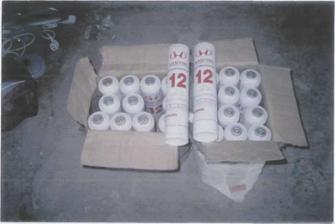
04.05.2007 during customs control of the cargo from China officers of Vladivostok customs detected and seized ozone depleting substance in 300 cylinders (painted metal welded containers of oval form with two handles and metal valve in the top part marked “MIXED REFRIGERANT YH12/MIXED REFRIGERANT YH12 IS A POSSIBLE REPLACEMENT FOR R12, NET WEIGHT 13,6 kilos”), weight 4080 kilos.
24.05.2007 officers of customs checkpoint of seaport Vostochny launched an administrative case on the grounds of provision of false information regarding description and code of goods arriving from China which resulted in failure to apply prohibitions and restrictions. The goods were trichlorotrifluoroethane in barrels - 80 pieces.
25.05.2007 officers of the customs checkpoint seaport Vostochny launched an administrative case on the grounds of provision of false information regarding description and code of goods arriving from China which resulted in failure to apply prohibitions and restrictions. The goods were trichlorotrifluoroethane in barrels - 80 pieces (21840 kilos).
24.08.2007 officers of customs checkpoint Burachki launched an administrative case against the Lithuanian company for provision of false information regarding the weight of the goods during transportation into the Russian territory, the goods being dichloromethane, weight 4296 kilos. The goods were seized and placed into a bonded warehouse.
REPUBLIC OF TAJIKISTAN
In accordance with the information from the National Contact Point of the Customs service of the Republic of Tajikistan, no facts of ODS seizures by customs bodies in 2007 were registered.
Information from the National Ozone Unit of Tajikistan
At the beginning of 2007, inside the country, during the annual inventory of enterprises producing aluminum, at “TAlKO” enterprise (former Tajik Aluminum Factory) in Tursunzadeh city over 2305 kg of CFC-11 and HCFC-22 mixes in one-ton containers were found. Containers were thoroughly examined for preventing of ODS leakage and were sealed up
In January 2008, inside the country during wide-scale inventory of enterprise producing domestic refrigerators (for its sale by auction) – Dushanbe Refrigeration Factory “Pamir” in Dushanbe city, about 6000 kg of CFC-11 in one-ton containers were found. Containers were thoroughly examined for preventing of ODS leakage and were sealed up.
Tajikistan - Licensing System
· The Statement of the Government of Republic Tajikistan No. 477 from December 3, 2002 “Measures on implementation of Vienna Convention on ozone layer protection and Montreal Protocol on ozone-depleting substances” and also Statements “On import of ozone-depleting substances to Republic Tajikistan” and “On State licensing of activities, connected with use of ozone-depleting substances and ODS-containing production” were adopted.
· The Statement of the Government of Republic Tajikistan No. 517 from December 30, 2005 “On prohibition of manufacturing, import and re-export of ozone-depleting substances and productions, containing substances, specified in the List A and B of ozone-depleting substances”. Import of these substances to the Republic of Tajikistan is realized under State Regulation in accordance with Annex 1 of the Statement “On import of ozone-depleting substances to Republic Tajikistan”” was adopted.
· The Law of Republic Tajikistan “On changes and additions to the Law of Republic Tajikistan “On licensing of activities”” No. 327 from June 30, 2006 was adopted. In accordance with this Law, licensing will cover all activities, connected with purchase, selling, use, destruction of ozone-depleting substances and ODS-containing products and also all activities, connected with installation, maintenance and repair of equipment, containing ozone-depleting substances.
REPUBLIC OF UZBEKISTAN
In accordance with the information of the National Contact Point of the Customs service of the Republic of Uzbekistan, the customs bodies prevented 4 attempts of inbound smuggling of ODS from China during 9 months of 2007.
On May, 2, 2007 officers of mobile customs checkpoint Burbalik of the Department of the State Customs Committee for Fergana region on the highway “Kokand-Tashkent” stopped a vehicle Daewoo Nexia, the driver – an Uzbek national. During customs inspection of the boot of the car officers found 24 metal cylinders (weight of each cylinder - 1 kilo) with liquid Freon bearing the trademark “Hanting” made in China. The above-mentioned Uzbek national did not present documents confirming legal transportation of the goods.
On May, 10, 2007 officers of the customs checkpoint Kamchik of the Department of the State Customs Committee for the Namangan region stopped a vehicle Daewoo Nexia going from Andizhan to Tashkent, the driver – an Uzbek national. During customs inspection of the boot of the car officers found compressors for refrigerators and metal containers with 108.8 grams of Freon made in China. The above-mentioned Uzbek national did not present documents confirming legal transportation of the goods.
On July, 3, 2007 officers of the customs checkpoint Kamchik of the Department of the State Customs Committee for the Namangan region stopped a vehicle Daewoo Nexia going from Andizhan to Tashkent, the driver – an Uzbek national. During customs inspection of the boot of the car officers found 72 litres of Freon made in China. The above-mentioned Uzbek national did not present documents confirming legal transportation of the goods.
On August, 21, 2007 officers of the customs checkpoint “Rishton” of the Department of the State Customs Committee for Fergana region jointly with border guards service during scheduled inspection of a bypass road at the border of Altyaryk district of Fergana region with Batkent region of Kyrgyz Republic at attempt of illegal entrance to territory of Uzbekistan stopped a vehicle Moskvitch-412, the driver – an Uzbek national. During customs inspection of the boot of the car officers found 36 metal cylinders (weight of each cylinder - 1 kilo) with liquid Freon marked “Hanting” made in China. The above-mentioned Uzbek national did not present any documents confirming legal transportation of the goods.
Uzbekistan- Licensing System
The licensing system was introduced in 2000 and reinforced in 2006 prohibiting trade with non-Parties as well as the import of some types of ODS and equipment containing ODS and introducing import quotas for transitional ODS including HCFCs (CI) for the period of 2005-2030.
Import quotas for CFCs (AI), carbon tetrachloride (BII) and methyl chloroform (BIII) were introduced in March of 2000.
Ban on import of halons (aII, except for essential use) and other fully halogenated CFCs (B I) was introduced from 1 January 2000.
Ban on import of refrigeration and air conditioning equipment containing A substances was introduced from 1 July 2000.

|
Из за большого объема этот материал размещен на нескольких страницах:
1 2 3 4 5 |
