


Партнерка на США и Канаду по недвижимости, выплаты в крипто
- 30% recurring commission
- Выплаты в USDT
- Вывод каждую неделю
- Комиссия до 5 лет за каждого referral
Forest bat
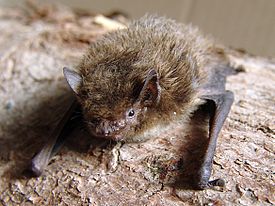
It is a tiny bat often weighing less than 4 g with pale grey or brownish fur, the skin on the face, feet and forearm is usually pinkish. he wingspan can range up to 15 cm (5.9 in) and the body length is up to 5 cm (2.0 in). Females are slightly larger than males. The little forest bat is very similar in appearance and often confused with a number of other bats. They are met in Moose Island and Serebryanoborskoe forestry.
Сommon dormouse
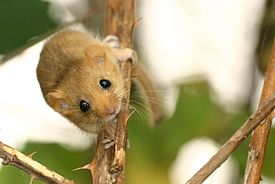
The hazel dormouse can reach a body length of about 10 centimetres (3.9 in) and a length of about 16 centimetres (6.3 in) if you consider the tail as well. It is 6 to 9 cm (2.4 to 3.5 in) long with a tail of 5.7 to 7.5 cm (2.2 to 3.0 in). It weighs 17 to 20 g (0.60 to 0.71 oz), although this increases to 30 to 40 grams (1.1 to 1.4 oz) just before hibernation. This small mammal has reddish brown fur that can vary up to golden-brown or yellow-orange-brown becoming lighter in the lower part. Eyes are large and black. Ears are small and not very developed, while the tail is long and completely covered with hair. This creature spends most of its waking hours among the branches of trees looking for food. It will make long detours rather than come down to the ground and expose itself to danger. The hazel dormouse hibernates from October to April–May. The hazel dormouse requires a variety of arboreal foods to survive. It eats berries and nuts and other fruit with hazelnuts being the main food for fattening up before hibernation. The dormouse also eats insects found on food-source trees. They are met in Moose Island, Izmailovsky Park, Bitcevsky forest (eastern and southern parts of Moscow).
2 Category
Hare
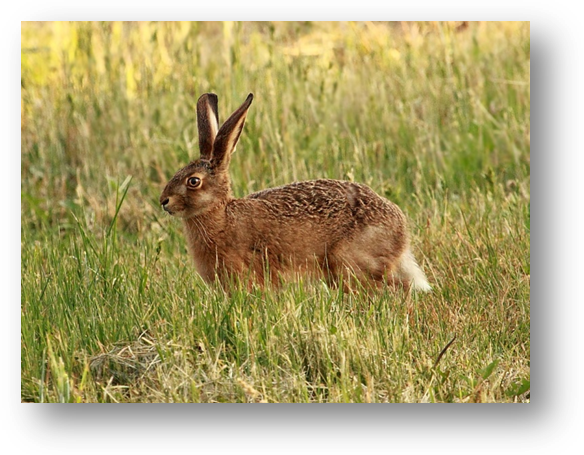
Hare - refers to large hares: body length: 57-68 cm, weight 4-6 kg, rarely up to 7 kg. Hare — an animal native steppe of Europe, near East and Asia Minor and North Africa. His migration to the North probably did not begin before the middle of the Quaternary period. In Russia is found throughout the European part of the country to the Northern shores of Ladoga and Onega lakes.
Hedgehog

Hedgehog - is an animal of small size. Its body length is 20-30 cm, tail is about 3 cm., [4] the body weight of 700-800 g. [5] the Ears are relatively small (usually less than 3.5 cm). The muzzle is elongated. The nose of the animal is sharp and constantly wet. The ordinary hedgehog habitat includes Western and Central Europe, British Isles, South Scandinavia, North-West of the European part of Russia, Western Siberia, Kazakhstan.
Forest polecat
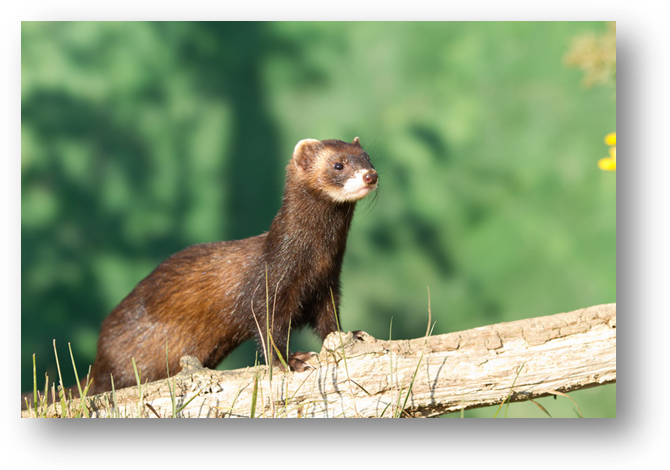
Forest polecat the external signs the polecat is a little different from most mustelids of the genus Mustela: stocky with short legs, armed at the end of long sharp claws. The torso is elongated and flexible. Black ferrets weigh from 400 g to 810 g, a length of 36-48 cm, 15-17 cm Black tail weasel is widely distributed throughout Western Europe, although its habitat is gradually shrinking. Quite a large population of ferrets living in England (the Name in Britain — Polecat) and almost throughout the European part of Russia, except for North Karelia, the Caucasus, the Lower Volga region.
Forest Musovka
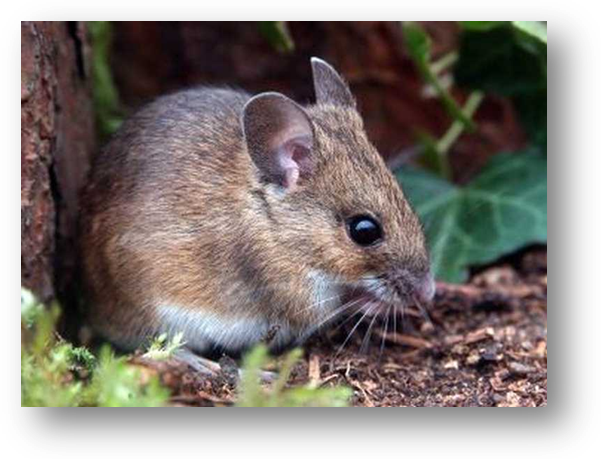
Forest Musovka - small, long-tailed animal like a mouse with large ears. Its body length up to 7.6 cm, the tail longer than the body — up to 10.6 cm; weight up to 9 g. the body Color top and sides yellowish - or reddish-brown mixed with black hair; abdomen greyish. The area of forest Mysovka covers the forest and forest-steppe zones of Eurasia from Central and Eastern Europe to the Baikal region. Isolated pockets of habitat are in Norway, Sweden and Denmark. In Russia it inhabits almost the entire European part of Russia.
Water vole
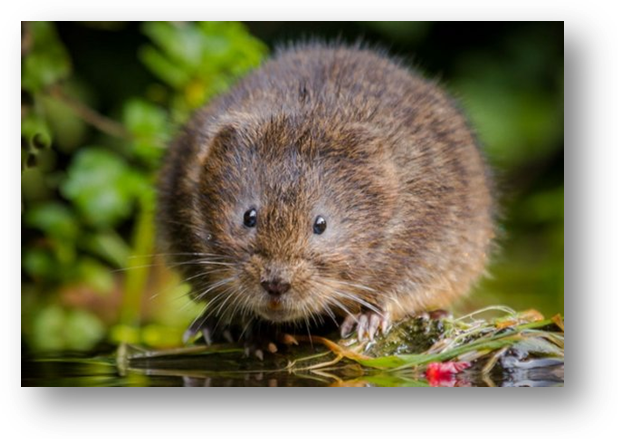
Water vole - is a mammal of the family Khomyakov. Externally, to the layman, similar to the rat, but has a more cylindrical body, short snout, short ears, soft silky hair and less long, hardly noticeable especially because of the fluffy fur of the feet. The tail, unlike muskrats, round in cross section, and unlike the rats covered, though not thickly, hair ends not with bare skin, but a shadow brush with a length of about 0.5 cm of the Eyes less than in rats. The area includes the Northern part of the Eurasian continent from the Atlantic coast of Western Europe to Central and South-Eastern Yakutia, South to the Northern coast of the Mediterranean sea, and Asia Minor, North Mongolia, North-Western regions of China. On the territory of the former USSR, widespread species, occupying most of the non-Chernozem zone of the Russian Federation.
3 Category (Rare animals)
The Ermine
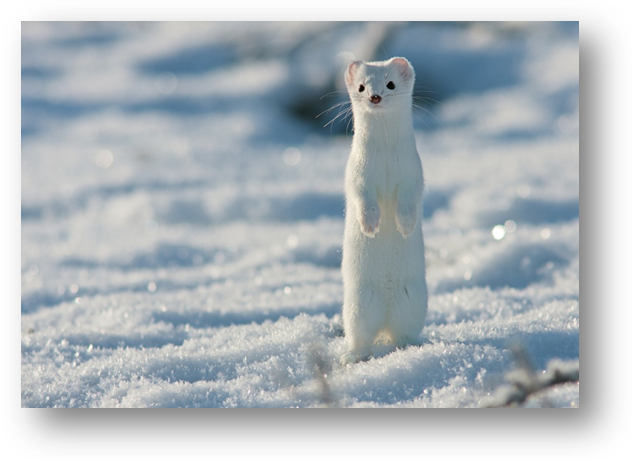
The Ermine - is a small animal of the marten typical appearance with a long body, short legs, a long neck and a triangular head with small rounded ears. Body length in male 17-38 cm (females about half), tail length is about 35% of the body length — 6-12 cm; body weight — from 70 to 260 g. it Lives in Arctic, subarctic and temperate zones of Eurasia and North America. In Europe it is found from Scandinavia to the Pyrenees and Alps, with the exception of Albania, Greece, Bulgaria and Turkey. In Russia normal in the European North and in Siberia. Least weasel is the smallest member of Carnivora. Body weight of 60-250 g males, females 30-108 g, body length of males 160-260 mm, females 114-212 mm, tail length in males 12-87 mm, of females 17-64 mm. Found in Europe, Northern Asia and North America. In Russia lives everywhere even in the North. The weasel belongs to the common predators, but its abundance currently is greatly decreased due to hunting and deterioration of food resources, destruction of habitats, etc.
Hazel Dormouse

Hazel Dormouse - is a small animal, resembling a miniature squirrel. Size it with the mouse: body length 15 cm, weight 15-25 g. This is one of the smallest of dormice. The tail is long, 6-7. 7 cm, with a tassel at the end. Snout slightly obtuse; ears small, rounded; whiskers long, up to 40 % of the length of the body. Hazel Dormouse is widespread in deciduous and mixed forests of Europe and Northern Turkey; found in southern Sweden and the South of the UK. Typical for southern Europe; only in Spain. On the territory of Russia comes to the Eastern part of the area oreshnikova Sony. In a relatively small area, which occupies the Eastern part of the area oreshnikova Sony, the species is distributed sporadically and few.
White hare
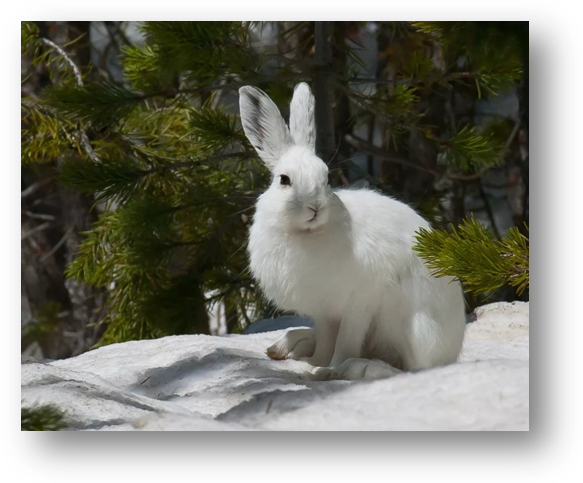
White hare - a Large hare, with body length of adult animals from 44 to 65 cm, occasionally reaching up to 74 cm; body mass of 1.6—4.5 kg. Average size decrease from North-West to South-East. Arctic hare inhabits the tundra, forest and steppe zone of Northern Europe. In Russia it is distributed in most parts of the territory in the North to the tundra zone, inclusive.
A small bat
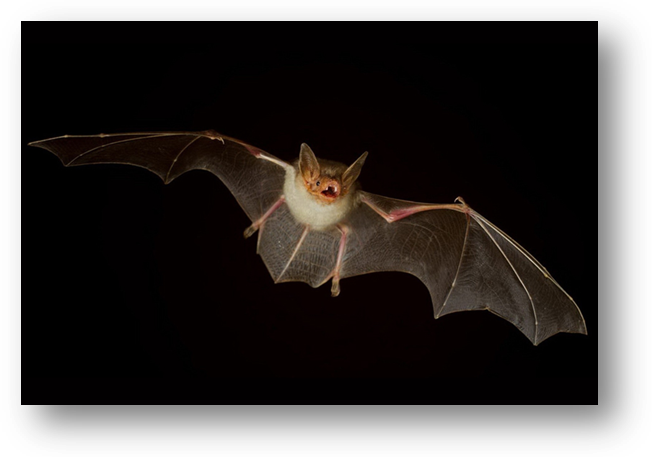
Small bat is a mammal of bats. It belongs to the family gladstonos bats. Found on the territory of Western and Central Europe to Afghanistan and Kashmir. In Russia, found in the South-West of the country, in the Caucasus and the Altai. Prefer the old tall deciduous and mixed forests, where there are meadow space and ponds.
This count Dracula in the thumbnail is a representative of one of the most poorly studied species of bats in the world! Moreover, this is the only flying mammals. To meet vecerina in the parks and forests of the Moscow region, but the area of its habitat is rapidly declining. The reason for this is deforestation and the expansion of residential areas in the Moscow region.
4 Category
Scilly (lesser white-toothed) shrew
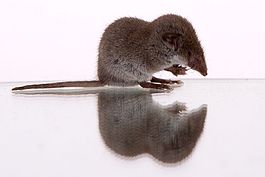
Detachment Insectivores - Insectivora. Family Shrew – Soricidae
Its number is small due to the secretive way of life and the poor knowledge of the species and the trend of its change in the Moscow region are not clear enough. It inhabits Central and Southern Europe, South Asia, North and East Africa. In the Moscow region dwells near the northern border of the area. Distribution in the territory of the region is very poorly studied; finds of the species are registered in the Naro-Fominsk, Leninsky and Podolsky districts. Small white belly is characterized by small sizes - body length of representatives of North European populations is 60-72 mm, tail length is from 15 to 17 mm. Weight up to 9 g. Coloration of the back is from very light gray to gray with a brown tint, abdomen lighter than the dorsal part or one color with it. Distribution in the territory of the region is very poorly studied; finds of the species are registered in the Naro-Fominsk, Leninsky and Podolsky districts. Small white belly is characterized by small sizes - body length of representatives of North European populations is 60-72 mm, tail length is from 15 to 17 mm. Weight up to 9 g. Coloration of the back from very light gray to gray with a brown tint, abdomen lighter than the dorsal part or one color with it. Within its vast range, a small beluga prefers to settle near water bodies, sometimes into human habitation. It feeds mainly on insects. The weight of food eaten per day is one and a half times more than the weight of the animal itself. Without food, it can live a little over a day (up to 28 hours).
Tiny (Least )shrew

|
Из за большого объема этот материал размещен на нескольких страницах:
1 2 3 4 |
