


Партнерка на США и Канаду по недвижимости, выплаты в крипто
- 30% recurring commission
- Выплаты в USDT
- Вывод каждую неделю
- Комиссия до 5 лет за каждого referral
Правительство Санкт-Петербурга
Комитет по образованию
Государственное образовательное учреждение
среднего профессионального образования
Санкт-Петербургский колледж управления и экономики
«Александровский лицей»
ЛИНГВОСТРАНОВЕДЕНИЕ И СТРАНОВЕДЕНИЕ
Методические рекомендации для подготовки к экзамену
для студентов среднего профессионального образования
специальности 050303 «Иностранный язык»
Санкт-Петербург
2010
ОГЛАВЛЕНИЕ
ПОЯСНИТЕЛЬНАЯ ЗАПИСКА.. 4
ЭКЗАМЕНАЦИОННЫЕ ВОПРОСЫ... 5
ОСНОВНЫЕ ТЕРМИНЫ... 7
ПЛАНЫ ОТВЕТОВ НА ЭКЗАМЕНАЦИОННЫЕ ВОПРОСЫ... 8
Question 1: Early History (Celts – Danes) 8
Question 2: Early History (Danes – Normans) 9
Question 3: The Hundred Years’ War 10
Question 4: The War of Roses. 11
Question 5: Reign of Henry VIII. 12
Question 6: Civil War. Republic. Protectorate. 13
Question 7: Victorian Era. 14
Question 8: Franco-British Relations. 15
Question 9: Geography of the UK.. 16
Question 10: Monarchy: History. Functions. 17
Question 11: British Government 18
Question 12: British Parliament: History. Functions. 19
Question 13: Parliament of the United Kingdom. Elections. 20
Question 14: Political Parties of the UK.. 21
Question 15: Capital of the UK.. 22
Question 16: Political relations between the UK and the USA.. 23
Question 17: Economy of the UK.. 24
Question 18: Education in the UK.. 25
Question 19: British Culture (Anglo-Saxon – Enlightenment) 26
Question 20: British Culture (Romanticism – Post-Modernism) 27
Question 21: British School of Painting. 28
Question 22: Mass Media of the UK.. 30
Question 23: Architecture and Places of Interest in London. 31
Question 24: The British as They are Seen by Other Nations. 32
Question 25: Influence of History on the Development of English. 33
Question 26: Early History of the USA.. 34
Question 27: The War of Independence. 35
Question 28: Formation of the New Country (USA) 36
Question 29: The War between the North and the South. 37
Question 30: The USA in XIX – XX.. 38
Question 31: The USA in the WWI & WWII. 39
Question 32: The Vietnam War 40
Question 33: Cold War. Cuban Missile Crisis. 41
Question 34: Modern History: 9/11. Iraq War 42
Question 35: Population: General overview. Immigrants. 43
Question 36: Population: Native Population. 44
Question 37: Geography of the USA.. 45
Question 38: Government: Congress. 46
Question 39: President of the USA.. 47
Question 40: Political Parties and Elections in the USA.. 48
Question 41: Capital of the USA.. 49
Question 42: Local Government (UK & USA) 50
Question 43: Russian-American Relations. 51
Question 44: Modern Foreign Policy of the USA.. 52
Question 45: Economy of the USA.. 53
Question 46: Education of the USA.. 54
Question 47: US Culture and Literature. 55
Question 48: The Americans as They are Seen by Other Countries. 56
Question 49: US Mass Media and Film Industry. 57
Question 50: US Places of Interest 58
Question 51: US and UK National Holidays. 59
GLOSSARY.. 62
ЛИТЕРАТУРА.. 63
ПОЯСНИТЕЛЬНАЯ ЗАПИСКА
Данные методические рекомендации предназначены для подготовки студентов, обучающихся по специальности СПО 050303 "Иностранный язык", к экзамену по дисциплине "Лингвострановедение и страноведение".
Задачей методических рекомендаций является предоставление студентам необходимого материала для организации самостоятельной работы при подготовке к сдаче экзамена.
Методические рекомендации содержат:
1. Список экзаменационных вопросов.
Вопросы 1–25 посвящены историко-культурным реалиям Объединенного королевства, 26–41, 43–50, 52 – историко-культурным реалиям США, 42, 51 – современным реалиям Великобритании и США.
2. Список терминов, включенных в экзаменационные билеты.
3. Планы ответов на 52 экзаменационных вопроса.
Планы ответов являются краткими конспектами лекций, объем представленного материала зависит от сложности вопроса. В некоторых планах присутствуют графические таблицы, схемы, карты.
4. Глоссарий основных терминов.
5. Список основной рекомендуемой литературы.
Представленный материал соответствует разделам и темам календарно-тематического плана рабочей программы учебной дисциплины "Лингвострановедение и страноведение".
Использование данных методических рекомендаций позволяет сократить время на подбор систематизацию материала и подготовку к экзамену.
ЭКЗАМЕНАЦИОННЫЕ ВОПРОСЫ
по дисциплине «Лингвострановедение и страноведение»
1. Early History (Celts – Danes).
2. Early History (Danes – Normans).
3. The Hundred Years’ War.
4. The War of Roses.
5. Reign of Henry VIII.
6. Civil War. Republic. Protectorate.
7. Victorian Era.
8. Franco-British Relations.
9. Geography of the UK.
10. Monarchy: History. Functions.
11. British Government.
12. British Parliament: History. Functions.
13. Parliament of the United Kingdom. Elections.
14. Political Parties of the UK.
15. Capital of the UK.
16. Political relations between the UK and the USA.
17. Economy of the UK.
18. Education in the UK.
19. British Culture (Anglo-Saxon – Enlightenment).
20. British Culture (Romanticism – Post-Modernism).
21. British School of Painting.
22. Mass Media of the UK.
23. Architecture and Places of Interest in London.
24. The British as They are Seen by Other Nations.
25. Influence of History on the Development of English.
26. Early History of the USA.
27. The War of Independence.
28. Formation of the New Country (USA).
29. The War between the North and the South.
30. The USA in XIX – XX.
31. The USA in the WWI & WWII.
32. The Vietnam War.
33. Cold War. Cuban Missile Crisis.
34. Modern History: 9/11. Iraq War.
35. Population: General overview. Immigrants.
36. Population: Native Population.
37. Geography of the USA.
38. Government: Congress US President of the USA.
39. President of the USA.
40. Political Parties and Elections in the USA.
41. Capital of the USA.
42. Local Government (UK & USA).
43. Russian-American Relations.
44. Modern Foreign Policy of the USA.
45. Economy of the USA.
46. Education of the USA.
47. US Culture and Literature.
48. The Americans as They are Seen by Other Countries.
49. US Mass Media and Film Industry.
50. US Places of Interest.
51. US and UK National Holidays.
52. US Family. Stereotypes.
Экзамен по дисциплине «Лингвострановедение и страноведение» носит теоретический характер.
Экзаменационный билет состоит из трех вопросов:
- 1 вопрос об историко-культурных реалиях Объединенного Королевства Великобритании и Северной Ирландии,
- 2 вопрос об историко-культурных реалиях Соединенных Штатов Америки,
- 3 вопрос – термин, обозначающий культурное явление Великобритании или США.
В пособии представлены подробные планы ответов на экзаменационные вопросы.
ОСНОВНЫЕ ТЕРМИНЫ
1. Frontier.
2. Reconstruction.
3. Danelaw.
4. American dream.
5. American flight.
6. Witan.
7. Magna Carta.
8. Black Death.
9. Doomsday Book.
10. Workhouse.
11. Great Fire.
12. The Tube.
13. Double-decker.
14. The Black Country.
15. 11+ Exam.
16. GCSE.
17. Ph. D.
18. Reservation.
19. Berliner.
20. Beringia.
21. Sons of Liberty.
22. Confederation.
23. Bill of Rights.
24. The Homestead Act.
25. Ghetto.
26. New Deal.
ПЛАНЫ ОТВЕТОВ НА ЭКЗАМЕНАЦИОННЫЕ ВОПРОСЫ
Question 1: Early History (Celts – Danes)
Plan:
1. Separation from the mainland at the end of the Ice Age about 10.000 years BC – nomadic groups of hunters and fishermen.
2. A group of Neolitic ppl from the Iberian Peninsula came in 3000 BC. The Beaker ppl.
3. The Celts arrived around 700 BC, presumably from Eastern Europe or Southern Russia.
– They were partly civilized
– They were polytheistic
– Some kinds of trees were sacred
– The society was governed by priests Druids. (Stonehenge)
– They were rather cruel and in worshipping too.
4. The Romans came in 55 BC (up to 410 AD). The Romans landed and fought with the Britons.
– They made and fortified the ports.
– They built the fortress Londinium on the place of little harbor Lyn-din.
– The built roads
– Brought urban civilization
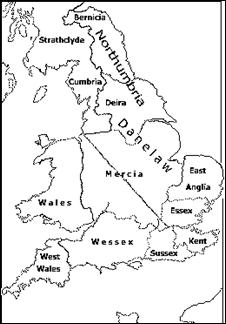 So Britain was governed by governors from Rome and it remained a roman province.
The last serious resistance of the Celts in the south came in AD 61, when Boadicea, queen of the Iceni, of East Anglia, led her people in revolt. Hadrian wall.
5. The Anglo-Saxon Period – 4th century.
- At that time the country was divided into several kingdoms suffering from feudal wars for supremacy.
- Anglo-Saxons lived in villages round each was a ditch (ров), and earthen wall, wooden fence for defence.
- The first king was Offa of Mercia (757-796).
- The important innovation – “Witan” or Royal council.
- They were pagan.
- The poem Beowulf , the Sutton Hoo treasure
- Saxon Kingdoms.
6. Conversion to Christianity
- During the later years of Roman occupation, Christianity had become established all over the country,
- Anglo-Saxon believed in older Germanic gods
- the Christianity survived only through the Celtic Church.
- in 597 the Pope Gregory sent St. Augustine to re-establish the Christian religion, in 660.
- Canterbury in Kent – religious center.
- Edwin and Venerable Bede.
Question 2: Early History (Danes – Normans)
Plan:
Danes
1. In the 8th century pirates from Scandinavia and Denmark began raiding the eastern shores of Britain.
2. To resist the enemies the kingdoms were united. Egbert, the king of Wessex, the strongest kingdom, bacame the first king of England.
3. To protect the country Alfred the Great gathered a big army and gave battles.
4. Danelaw Cnut (Canute), King of the Vikings, became the ruler of the whole of England, Viking Scotland and Scandinavia.
5. Anglo-Saxon Chronicle.
6. Edward the Confessor.
Normans
7. XIth century – William, Duke of Normandy was promised the throne of England.
8. The battle at Hastings on 14 October 1066.
9. The native English aristocracy was replaced by a French aristocracy.
10. Feudalism in England.
11. National language.
Question 3: The Hundred Years’ War
Plan:
Period – 1337–1453
Participants – two royal houses (English and French) - the House of Valois and the House of Plantagenet, also known as the House of Anjou. The House of Valois claimed the title of King of France, while the Plantagenets from England claimed to be Kings of France and England. The Plantagenet Kings in England had their roots in the French regions of Anjou and Normandy
Reasons:
1. Edward III was the king of England and he wanted to be a king of France as well.
2. French feudal lords were eager to seize free towns of Franders.
War:
- Duke of Normandy remained a vassal of the French King, but avoided swearing fealty.
- French monarchs resented a neighbouring king holding lands within their own realm, and sought to neutralise the threat England now posed to France.
- Both dynasties possessed lands in both France and Britain.
- French remained the official language of England until the second half of the 14th century.
- There was a crisis over the French succession. There was no male heir.
- Open hostilities broke out as French ships began scouting coastal settlements on the
- At first England was successful as it was better equipped.
Reasons of England’s Loss:
Black Death
Peasant Revolt
Parliament
Significance
- The Hundred Years' War was a time of military evolution.
- The war also stimulated nationalistic sentiment.
- The Hundred Years' War accelerated the process of transforming France from a feudal monarchy to a centralised state.
- The Hundred Years War basically confirmed the fall of the French language in England.
- The latter stages of the war saw the emergence of the dukes of Burgundy as important players on the political field
- The conflict became one of the major contributing factors to the Wars of the Roses.
Question 4: The War of Roses
Plan:
The Wars of the Roses (1453–1487) were a series of dynastic civil wars fought in England between supporters of the Houses of Lancaster and York.
Reason: Disputed succession
The antagonism started with the overthrow of King Richard II by his cousin, Henry Bolingbroke, Duke of Lancaster, in 1399, who had a very poor claim to the throne while Roger Mortimer was the heir presumptive.
Henry IV died in 1413. His son, Henry V, inherited a temporarily pacified nation. Henry was a great soldier, and his military success against France in the Hundred Years' War resulted in his enormous popularity.
King Henry VI of England, ascended the throne as an infant only nine months old. He was surrounded by unpopular regents and advisors who were blamed for mismanaging the government and poorly executing the continuing Hundred Years' War with France.
NB: 1. In all the quarrels, Henry VI had taken little part. He was portrayed as a weak, ineffectual king.
2. In addition, he suffered from episodes of mental illness that he may have inherited from his grandfather Charles VI of France.
3. By the 1450s many considered Henry incapable of carrying out the duties and responsibilities of a king.
Main parties:
Lancastrians – Henry VI, Margaret of Anjou, Edward; Duke of Somerset
vs
Yorkists – Richard Lord Protector, Edward (IV); Warwick, Earl of Salisbury
War:
1. Henry VI vs Richard Lord Protector
2. Margaret vs Richard
3. Act of Accord
4. Murder of Richard, Edmund, Salisbury
5. Edward’s (York) coronation
6. Edwards quarrel with Warwick
7. Warwick and George’s plot
8. Edward V and the council of regency under Richard, Duke of Gloucester
9. “Princes in the Tower” (Edward V & Richard
10. Henry Tudor VII
Outcome
weakening of the feudal power of the nobles and a corresponding strengthening of the merchant classes.
growth of a strong, centralized monarchy under the Tudors.
Question 5: Reign of Henry VIII
Plan:
Henry VII
1. tried to establish good relationships with merchants and gentry.
2. built a huge fleet of merchant ships.
3. forbade anyone except himself to keep armed men.
4. created the new nobility from gentry.
Henry VIII (28 June 1491 – 28 January 1547)
- was a Renaissance Man
- brutally suppressed the Protestant reformation of the church
- separated the Anglican church from the Roman one
- dissolved monasteries
- established himself as the Supreme Head of the Church of England.
- united of England and Wales
- reformed the navy
Marriages
1. Catherine of Aragon (daughter Mary of England – 3rd in line of succession) – marriage declared null and void.
2. Anne Boleyn (daughter Elizabeth of York – 2nd in line of succession) – execution.
3. Jane Seymour (son Edward VI – 1st in line of succession) – death of illness.
4. Anne Clements – divorce.
5. Catherine Howard – execution.
6. Catherine Parr
Main laws passed by Henry VIII
- The Ecclesiastical Appointments Act 1534 required the clergy to elect bishops nominated by the Sovereign.
- The Act of Supremacy 1534 declared that the King was "the only Supreme Head in Earth of the Church of England"
- The Treasons Act 1534 made it high treason, punishable by death, to refuse to acknowledge the King as such.
Edward VI
Mary I (Bloody)
Elizabeth I
Mary Stuart
Question 6: Civil War. Republic. Protectorate
Plan:
1642–1651 was a series of armed conflicts and political machinations between Parliamentarians (Roundheads) and Royalists (Cawaliers).
1st, 2nd – supporters of King Charles I vs supporters of the Long Parliament,
3rd – supporters of King Charles II vs supporters of the Rump Parliament
NB: The Civil War led to the trial and execution of Charles I, the exile of his son, Charles II, and replacement of English monarchy with first, the Commonwealth of England (1649–53), and then with Protectorate (1653–59), under Oliver Cromwell's personal rule.
Reasons
1. The king’s desire to unite kingdoms.
2. Desire to establish absolute monarchy
3. Mutual resentment of the King and Parliament
4. Fear the heirs might accept Catholic church
5. King’s financial difficulties
- Charles hoped to unite the kingdoms of England, Scotland and Ireland into a new single kingdom
- He believed in “Divine Right of Kings”
- Charles got married with a French Roman Catholic princess
- Fiasco in France – George Villiers, the Duke of Buckingham
- the Petition of Right
- "Eleven Years' Tyranny" ("Charles's Personal Rule")
- Short Parliament
- Scottish invasion
- The Long Parliament
It began to force various reforming measures upon him.
1. The legislators passed a law which stated that a new Parliament should convene at least once every three years – without the King's summons, if necessary.
2. Other laws passed by the Parliament made it illegal for the king to impose taxes without Parliamentary consent,
3. Parliament got control over the king's ministers.
4. Finally, the Parliament passed a law forbidding the King to dissolve it without its consent, even if the three years were up.
- Thomas Wentworth’s execution
- Charles’s attempt to arrest five members of the House of Commons on a charge of treason.
- Armed conflict
- Oliver Cromwell, trial of Charles I for treason
- Republic
- Cromwell’s protectorate
- Restoration. Charles II
Question 7: Victorian Era
Plan:
Victoria (Alexandrina Victoria; 24 May 1819 – 22 January 1901)
Her reign as the Queen lasted 63 years and seven months, longer than that of any other British monarch before her.
Though Victoria ascended the throne at a time when the United Kingdom was already an established constitutional monarchy.
- The Victorian era represented the height of the Industrial Revolution
- A period of significant social, economic, and technological progress in the United Kingdom.
- A great expansion of the British Empire.
Victoria, who was of almost entirely German descent, was the last British monarch of the House of Hanover
- Succession. Whig government
- Victoria's principal adviser was her uncle King Leopold I of Belgium.
- The Queen married her first cousin, Prince Albert.
- Attempts to assassinate.
- Years of Isolation
Reforms
1. Victorian’s reign is the climax of Britain’s imperial ambitions.
2. People’s Charter -Voting right for adult citizens.
3. She rejected property restrictions for MPs.
4. Acc. to the Poor Law there were introduced workhouses.
5. The Industrial Revolution. A Riot of Luddites.
6. A period of Napoleonic wars: Admiral Nelson won a famous victory at Trafalgar.
7. The Corn Law.
8. Education Acts.
9. Constitutional monarchy
10. Government of India
Victorian Attitudes
"The grandmother of Europe"
Question 8: Franco-British Relations
Plan:
Celts – Romans ð common enemy.
1. Roman era
Julius Caesar invasion. Roman rule
2. Norman conquest
3. High Medieval era
Plantagenet dynasty, which was based in its Angevin Empire, half of France was under Angevin control as well as all of England. However, almost all of the Angevin empire was lost to Philip II of France under Richard the Lionheart, John and Henry III of England. This finally gave the English a separate identity as an Anglo-Saxon people under a Francophone, but not French, crown.
4. The Hundred Years War
5. The early modern period
Wars. Separation of nations, cultures. Catholicism vs Protestantism (Henry VIII)
6. Universal monarchy
7. Formation of Great Britain
The newly united Britain fought France in the War of the Spanish Succession (1702–1713), and the War of the Austrian Succession (1740–1748)
8. Overseas expansion
9. Colonization of North America
10. American War of Independence
11. The French Revolution
12 .The Napoleonic Wars
13. Treaties of Versailles. WWI & WWII
14. UN
Question 9: Geography of the UK
Plan:
Country Great Britain, the northeastern part of the island of Ireland, and many small islands. | Borders Northern Ireland is the only part of the UK with a land border. the UK is surrounded by - the Atlantic Ocean, - the North Sea, - the English Channel - the Irish Sea |
- The largest island, Great Britain, is linked to France by the Channel Tunnel. - union of the kingdoms of England and Scotland (1707) . - union with the Kingdom of Ireland (1801) - The UK has fourteen overseas territories, all remnants of the British Empire - By mid-2008, population was estimated to have grown to 61,383,000, the third largest in the European Union, the twenty-first largest in the world. | Symbols Union Flag (Union Jack). God Save the King Britannia Lion Bulldog Geography of the UK Islands Great Britain Ireland Shetland Islands Orkney Isl. Outer & Inner Hebrides Anglesey Scilly |
|
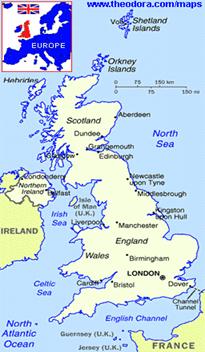
Mountains Highlands & Uplands Grampian mountains Pennines Ben Nevis Snowdon | Lakes Lough Neagh Loch Lomond Loch Ness Lake District | Rivers Severn Thames Mersey Avon |
Question 10: Monarchy: History. Functions
Plan:
1. Origin 2. Normans 3. Magna Carta 4. Scottish king 5. Commonwealth | 6. Merger 7. Empire 8. Republic of Ireland 9. Commonwealth of Nations |
- Monarchy the UK is a parliamentary monarchy.
- In the UK there is no single written constitution. It is formed by acts of Parliament, bills and conventions.
- The monarch is a symbol of the unity of the nation. The UK has been united under the sovereign. And this tradition was broken only after the civil war ð Republic (1649–1660).
- The Crown is passed to the eldest child of the sovereign.
- Now a monarch has a ceremonial role in the state affairs.
Functions
- Opening, summoning, dissolving the Parliament.
- Approving the appointment of the Prime Minister.
- Giving Royal Assent to the bills.
- Giving honours as peer grades, knighthoods, medals.
- Head of the Commonwealth.
- Head of the Church of England
- Commander-in-Chief of the armed forces.
- Head of the Executive branch of the government.
- Head of the Judicial Body
But a monarch doesn’t make independent political decisions.
Elizabeth Alexandra Mary II (born on the 21st of April 1926).
The Windsor dynasty. (1917)
Was Crowned on the 2nd June 1953.
The predecessor – George VI.
The heir – Charles, the prince of Wales.
Royal Families House of Wessex Danish Line House of Wessex, Restored Plantagenet, Angevin Line | Plantagenet, Lancastrian Line Plantagenet, Yorkist Line House of Stuart The Commonwealth House of Stuart, Restored | House of Orange and Stuart House of Stuart House of Brunswick, Hanover Line House of Saxe-Coburg-Gotha House of Windsor |
Question 11: British Government
Plan:


 System of Government
Executive Judicial Legislative
The Cabinet Courts Parliament
Parliament
Was established by Edward I in 1265 to impose taxes.
Parliament | |
The House of Commons | The House of Lords |
- Consists of 646 elected members (MPs) - The chairman – Speaker - Prime Minister - The MPs are elected by general election. - The country is divided into 650 constituenciesMPs are elected for 5 years. - Shadow cabinet | - Lords Temporals (hereditary peers) - life peers - law Lords (the Court of Appeal) - Lords Spirituals The chairman – Lord Chancellor |
Function – to make a law.
Government
Function – to put the law into effect.
Prime Minister
the Cabinet.
Courts
As there is no written constitution ð no criminal code.
British law comes from 2 sources – bills from Parliament
– previous traditions, customs and events.
Court of Appeal | High Court |
Crown Court | Country Court |
Magistrate Courts |
Appeals are heard by higher court.
Some cases are referred to the European Court of Justice in Luxembourg.
There are also Juvenile Court
And Coroners’ Courts.
Question 12: British Parliament: History. Functions
Plan:
- The English Parliament traces its origins to the Anglo-Saxon Witenagemot.
- In 1066, William of Normandy brought a feudal system, a council of tenants-in-chief and ecclesiastics
- Magna Carta.
- In 1265, Simon de Montfort, 6th Earl of Leicester summoned the first elected Parliament. (Forty-shilling Freeholders).
- By the reign of Edward II, Parliament had been separated into two Houses: one including the nobility and higher clergy, the other including the knights and burgesses
- Scottish King James VI (James I of England), the countries both came under his rule but each retained its own Parliament.
- James I's successor, Charles I, quarrelled with the English Parliament ðEnglish Civil War.
- Under Oliver Cromwell's Commonwealth of England the House of Lords was abolished, and the House of Commons made subordinate to Cromwell.
- After Cromwell's death, the Restoration of 1660 restored the monarchy and the House of Lords.
- Mary II and William IIIð the English Bill of Rights introduced a constitutional monarchy
- After the Hanoverian George I ascended the throne in 1714 through an Act of Parliament, power began to shift from the Sovereign, who had to rely on Parliament for support
- until the 19th century — the House of Lords was superior to the House of Commons both in theory and in practice. Members of the House of Commons were elected in an antiquated electoral system, under which constituencies of vastly different sizes existed.
1. The legislative authority, the Crown-in-Parliament, has three separate elements: the Monarch, the House of Lords, and the House of Commons.
2. Royal Assent of the Monarch, represented by the government, is required for all Bills to become law
3. The Monarch also chooses the Prime Minister, who then forms a government from members of the houses of parliament. This must be someone who can command a majority in the House of Commons.
Functions
Compose laws
Laws can be made by Acts of the United Kingdom Parliament.
Laws, in draft form known as bills
The last stage of a bill involves the granting of the Royal Assent
Thus, every bill obtains the assent of all three components of Parliament before it becomes law
Parliament also used to perform several judicial functions.
The British Government is answerable to the House of Commons.
Question 13: Parliament of the United Kingdom. Elections
Plan:
- Total Members – 1,Peers + 650 Members of Parliament (MPs)
- Parliament alone possesses legislative supremacy and thereby ultimate power over all other political bodies in the UK and its territories.

|
Из за большого объема этот материал размещен на нескольких страницах:
1 2 3 4 |
