

The basic unit of intonation is an intonation pattern: pitch movements and tempo. Intonation patterns are actualized in speech.
Two main functions of intonation are — constitutive and recognitive, intonation also serves to distinguish communicative types of sentences and differentiate functional styles.
Methods of indicating intonation are different: wedge-like symbols, staves with dots and dashes, which correspond to unstressed and stressed syllables within the voice range, tonetic stress marks, numerical system, etc. The system of staves is the most vivid, the system of tonetic symbols is the most economical and vivid, and that’s why they are most popular in our textbooks.
The tonetic units that constitute the total intonation pattern (contour) are the following:
1. unstressed and half stressed syllables preceding the first stressed syllable constitute the prehead of the intonation group;
2. stressed and unstressed syllables up to the last stressed syllable constitute the head, body or scale of the intonation group;
3. the last stressed syllable, within which fall or rise in the intonation group is accomplished, is called the nucleus; the syllable marked with the nuclear tone may take a level stress;
4. the syllables (or one syllable), that follow the nucleus, constitute the tail, e. g.
It's been a 'very 'good evening for me.
• | • .— | • • • | |
prehead scale nucleus tail |
The most important part of the intonation group is the nucleus, which carries nuclear stress (nuclear tone).
According to the changes in the voice pitch preheads can be: rising, mid and low:
|
|
|
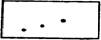 rising
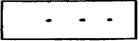 mid
mid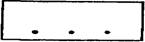 low
lowScales can be: descending, ascending and level.
According to the direction of pitch movement within and between syllables, descending and ascending scales can be: stepping, sliding and scandent:
| descending stepping descending sliding descending scandent | ascending stepping ascending sliding ascending scandent |
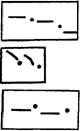
If one of the words in the descending scale is made specially prominent, a vertical arrow is placed before the dash-mark which indicates the stressed syllable on the staves, or before the word made specially prominent in the text — / / accidental rise, e. g. 'John is very \ busy.
This type of scale is called upbroken descending scale.
The falling tones convey completion and finality, they are categoric in character. The rising tones are incomplete and non-categoric. Of all the level tones mid level tone is used most frequently. The level tones may express hesitation and uncertainty.
Attitudinal function of intonation can be observed in utterances consisting of one word and in utterances consisting of more than a single word. In the latter cases it is not only that the type of the nucleus is important but also the pitch of the utterance preceding the nucleus: pre-head and head. The attitudinal function of different tonal types in statements, special and general questions, commands and interjections is accurately and thoroughly described in the "Intonation of Colloquial English" by J. D. O'Connor and G. F. Arnold and in other textbooks on phonetics.
SENTENCE STRESS
Sentence stress is a greater prominence of words, which are made more or less prominent in an intonation group. The special prominence of accented words is achieved through the greater force of utterance and changes in the direction of voice pitch, constituting the nuclear tone.
The difference between stress and accent is based on the fact that in the case of stress the dominant perceptual component is loudness, in the case of accent it is pitch. Degrees of stress in an utterance correlate with the pitch range system. Nuclear stress is the strongest — it carries the most important information. Non-nuclear stresses are subdivided into full and partial. Full stress occurs only in the head of an intonation group, partial stress occurs also in the prehead and tail. Partial stresses in the prehead are most frequently of a low variety, high partial stress can occur before a low head. Words given partial stress do not lose prominence completely, they may retain the whole quality of their vowels e. g. [a:'tistik] .
In tone-groups stress may undergo alternations under the influence of rhythm, but there are some rules concerning words that are usually stressed or unstressed in an utterance.
Given below is the list of words that are usually stressed:
Nouns. Adjectives. Numerals. Interjections. Demonstrative pronouns. Emphatic pronouns. Possessive pronouns (absolute form). Interrogative pronouns. Indefinite pronouns: somebody, someone, something, anybody, anyone, anything (used as subject). Indefinite negative pronouns: no, none, no one, nobody, nothing. Indefinite pronouns some, any (expressing quality). Determinatives: all, each, every, other, either, both. Proclitics: much, many, a little, a few. Notional verbs. Auxiliary verbs (negative contracted forms). Two-word prepositions. Two-word conjunctions. Particles: only, also, too, even, just.
The words those are usually unstressed:
Personal pronouns. Reflexive pronouns. Reciprocal pronouns. Relative pronouns (The pronoun which in non-defining clauses is usually stressed, e. g. I gave him a spade, which tool he hid in the barn). Possessive pronouns (conjoint form). Indefinite pronouns: somebody, someone, something, anybody, anyone, anything (used as object). Indefinite pronouns some, any (when expressing quantity). Auxiliary verbs (affirmative form). One-word prepositions and conjunctions. Articles. Particles: there, to. Modal verbs (contracted forms and general questions are exceptions).
The meaning of the verbs may, should, must changes depending on whether they are stressed or unstressed, e. g. You \ may go — possibility. You may \ go — permission.
Stresses in an utterance provide the basis for identification and understanding of the content, they help to perform constitutive, distinctive and identificatory function of intonation. These functions are performed jointly with the pitch component of intonation.
RHYTHM AND TEMPO
Rhythm is the regular alternation of stressed and unstressed syllables. It is so typical of an English phrase that the incorrect rhythm betrays the non-English origin of the speaker even in cases of "correct" pronunciation.
The phenomenon of rhythm is closely connected with the phonetic nature of stress.
The units of the rhythmical structure of an utterance are stress groups or rhythmic groups. The perception of boundaries between rhythmic groups is associated with the stressed syllables or peaks of prominence.
Unstressed syllables have a tendency to cling to the preceding stressed syllables — enclitics, or to the following stressed syllables — proclitics. In English, as a rule, only initial unstressed syllables cling to the following stressed syllable, non-initial unstressed syllables are usually enclitics: . . . . — usual rhythm pattern, . . . . — exceptions with the initial unstressed syllables.
Each sense-group of the sentence is pronounced at approximately the same period of time, unstressed syllables are pronounced more rapidly: the greater the number of unstressed syllables, the quicker they are pronounced. Proclitics are pronounced faster than enclitics.
Rhythm is connected with sentence stress. Under the influence of rhythm words which are normally pronounced with two equally strong stresses may lose one of them, or may have their word stress realized differently, e. g.
ÇPicca'dilly — ÇPiccadilly 'Circus — 'close to ÇPicca'dilly
Çprin'cess — a Çprincess 'royal
Çindia'rubber — a 'piece of Çindia'rubber — an ÇindiaÇrubber 'ball
PAUSATION AND TAMBER
Pausation is closely connected with the other components of intonation. The number and the length of pauses affect the general tempo of speech. A slower tempo makes the utterance more prominent and more important. It is an additional means of expressing the speaker's emotions.
Pauses made between two sentences are obligatory. They are longer than pauses between sense-groups and are marked by two parallel bars /||/. Pauses made between sense-groups are shorter than pauses made between sentences. They are marked /|/. An interval within an intonation group is marked /}/.
Pauses are usually divided into filled and unfilled, corresponding to voiced and silent pauses. Pauses are distinguished on the basis of relative length: unit, double and treble. Their length is relative to the tempo and rhythmicality norms of an individual. The exception is "end-of-utterance" pause, which length is controlled by the person who is about to speak.
Another subdivision of pauses is into breathing and hesitation.
Pauses play not only segmentative and delimitative functions, they show relations between utterances and intonation groups, performing a unifying, constitutive function. They play the semantic and syntactic role, e. g. There was no love lost between them (they loved each other). There was no love | lost between them (they did not love each other).
Attitudinal function of pausation can be affected through voiced pauses, which are used to signal hesitation, doubt, suspence. Such pauses have the quality of the central vowels [«, «:] or [m, «:m]. They may be used for emphasis, to attach special importance to the word, which follows it.
The tamber or the voice quality is a special colouring of the speaker's voice. It is used to express various emotions and moods, such as joy, anger, sadness, indignation, etc.
Tamber should not be equated with the voice quality only, which is the permanently present person-identifying background, it is a more general concept, applicable to the inherent resonances of any sound. Tamber is studied along the lines of quality: whisper, breathy, creak, husky, falsetto, resonant, and qualification: laugh, giggle, tremulousness, sob, cry.
STYLISTIC USE OF INTONATION
According to M. A. Sokolova's data, stylistically distinctive function of intonation is determined by the intonational styles, which are the following:
1. Informational
2. Academic (Scientific)
3. Publicistic (Oratorial)
4. Declamatory (Artistic)
5. Conversational (Familiar)
Intonational styles register and speech typology correlate along the lines of:
1. varieties of language: spoken or written;
2. forms of communication: monologue or dialogue, polylogue;
3. degree of speech preparedness: prepared, spontaneous;
4. the number of participants: public, non-public;
5. character of participants' relationship: formal, informal.
Spontaneous informal conversational style comprises eight groups of attitudinal intonation patterns. Their use depends on the situation, emotional state of the speakers, their relationship, extralinguistic factors. This style is very popular with the students, so the teachers should pay due attention to the communicative part of intonation teaching.
Basic notions: intonation, non-segmental, prosodic features of speech, melody, pitch of the voice, sentence stress, temporal characteristics, duration, tempo, pausation, rhythm, tamber, voice quality.
Topics for discussion in class: (3 часа)
1. The communicative and expressive functions of intonation.
2. Two main approaches to the problem of intonation in Great Britain.
3. Define: melody, sentence stress, rhythm, tempo, pausation and tamber.
4. Stylistic use of intonation.
Tasks for independent work (7 часов):
1. Make up your own glossary containing new phonetic terms in the lecture “Intonation”. Transcribe new phonetic terms, difficult words and expressions used in the pare their explanations and definitions in the English and Russian languages.
2. Prove two main functions of intonation: communicative and expressive.
3. Get ready to give the summary, using new phonetic terms of the lecture.
Answer the following questions.
1. How is intonation defined?
2. What are the main components of intonation?
3. What are the main approaches to the study of intonation?
4. What is the role of the melody or the pitch component of intonation?
5. What do you know about the sentence stress?
Literature:
1. Leontyeva S. F. A Theoretical Course of English Phonetics. М., 2002.
2. O'Connor T. D. Phonetics. Pelican Books, 1977.
3. Система английской речевой интонации. – М., Высшая школа, 1979.
4. Ритмическая система английской речи. – М., 1984.
5. Анализ интонации устного текста и его составляющих. – Минск, 1978.
6. Изучение интонации на современном этапе и некоторые задачи интонационных исследований. // ИЯШ, 1970, №4.
7. Интонационная система русского языка. – Л., 1982.
8. Р. Общая фонетика. – Л., 1979.
9. , , Теоретическая фонетика английского языка. – М., 2004.
10. Торсуев Г. П. Проблемы теоретической фонетики и фонологии. – М.,1969.
11. Интонация и смысл высказывания. – М., Наука, 1979.
12. Английская фонетическая терминология. – М., 1962.
References and works quoted from
Fundamental
1. Ф. Теоретическая фонетика современного английского языка. – М., 2002.
2. Соколова М.А., , , Теоретическая фонетика английского языка. – М., 2004.
3. Основы фонологии. – М., 2000.
Supplementary
1. Абдалина E.А. Интонационные средства выражения ремы в простом повествовательном предложении в современном английском языке. АКД. – М., 1973.
2. К вопросу о лингвистической трактовке английской интонации и способах ее графического изображения. // Иностранные языки в школе (ИЯШ), 1971, №6.
3. Система английской речевой интонации. – М., Высшая школа, 1979.
4. Ритмическая система английской речи. – М., 1984.
5. Звуковой строй русского языка. – Л., 1977.
6. Об изменениях в произношении современного английского языка. // ИЯШ.1974, вып. 8.
7. Длительность английских гласных фонем в зависимости от способа примыкания к последующему согласному. // ИЯШ, 1967, № 3.
8. Фоностилистика как один из разделов фонетики. // Интонация. Киев: Вища школа, 1978, с.33-41.
9. О фонетических стилях современного немецкого языка. // Филологические науки, 1972, т. 15, № 16.
10. , Сравнительная фонетика английского, немецкого и французского языков. – М., 2005.
11. К вопросу об обучении фразовому ударению в современном английском языке. // ИЯШ, 1973, № 5.
12. Введение в дескриптивную лингвистику. – М. 1959.
13. Анализ интонации устного текста и его составляющих. – Минск, 1978.
14. Просодические контрасты в языке. – Симферополь,1983.
15. Общая фонетика. – Л., 1979.
16. Основные проблемы фоностилистического анализа текста. // Исследование фонетических особенностей речевых стилей. – М. МГПИ им. , 1978, с.19-287.
17. Типология и генезис просодии английского текста. // Проблемы лингвистики текста и использования текстового материала в учебном процессе. – М., МОПИ им. ской, 1981.
18. О роли артикуляционной базы в обучении произношению. // ИЯШ, 1971, № 5.
19. Фразовая интонация славянских языков. – М., 1977.
20. Изучение интонации на современном этапе и некоторые задачи интонационных исследований. // ИЯШ, 1970, № 4.
21. Интонационная система русского языка. – Л., 1982.
22. , и др. Практическая фонетика английского языка. – М., 1997.
23. , и др. Теоретическая фонетика английского языка. – М., 1996.
24. Проблемы теоретической фонетики и фонологии. – М., 1969.
25. Фонетическая структура слова. – М., 1962.
26. Интонация и смысл высказывания. – М., Наука, 1979.
27. Л. Английская фонетическая терминология. – М., 1962.
28. Фонологические расхождения между американским и британским вариантами английского языка. // ИЯШ, 1968, № 1.
29. Фонетика французского языка, 6-е изд. – М., 1957. (Вопросы общей фонетики в этой книге.)
30. Якобсон P., Фонология и её отношение к фонетике; Введение в анализ речи. // Новое в лингвистике. – М., 1962, вып. 2.
31. Barber Ch. Linguistic Change in Present-Day English. Ldn, 1969.
32. Bronstein A. The Pronunciation of American English. N. Y., 1960.
33. Brown О. Listening to Spoken English. М,, 1984.
34. Crystal D., Davy D. Investigating English Style. Ldn, 1969.
35. Gimson A. C. An Introduction to the Pronunciation of English. Ldn, 1972.
36. Jassem W. Intonation of Conversational English. Wr., 1952.
37. Jones D. The Phoneme: Its Nature and Use. Ldn, 1967.
38. Kingdon R. The Groundwork of English Intonation. Ldn, 1958.
39. O'Connor T. D. Phonetics. Pelican Books, 1977.
40. Pike K. The Intonation of American English. Michigan, 1945.
41. Selesnev V. Exercises in Intonation of Colloquial English. M. 1983.
42. Shakhbagova D. A. Varieties of English Pronunciation. М., 1982.
Dictionaries:
1. Jones D. An English Pronouncing Dictionary. London, 1957.
2. Webster’s New International Dictionary of the English Language. Second ed., unabridged, 1957 (A Guide to Pronunciation).
3. Kenyon J. S., Knott T. A. A Pronouncing Dictionary of American English. Springfield, Mass., U. S.A., 1953.
4. Словарь лингвистических терминов. М., 2000.
5. , Словарь-справочник лингвистических терминов. – М., 1976.
6. Большой энциклопедический словарь. Языкознание. Под ред. . – М., 1998.
7. Проблемы лингвистической фонетики и структуры языка. // Отв. ред. . – Л. 1977.
8. Статьи из журналов ВЯ, ФН, ИЯШ и др.
9. Структура предложения и словосочетания в индоевропейских языках – Л.: Наука. 1979.
Table of Contents
Part I. The Significance of Phonetics. Lecture 1. The Subject-Matter of Phonetics 3
Lecture 2. Methods and Devices of Phonetic Investigation............ 8
Part II. Standard Pronunciation. Lecture 3. RP in Great Britain and GA in America 10
Part III. Segmental Phonemes. Lecture 4. Articulatory and Physiological Classification of English Vowels..................................................................................................... 13
Lecture 5. Articulatory and Physiological Classification of English Consonants 19
Lecture 6. English Phonemes in Writing...................................... 35
Part IV. Syllable Structure. Lecture 7. Syllable.......................... 39
Part V. Stress. Lecture 8. Word Stress..................................... 51
Part VI. Intonation. Lecture 9. Intonation and Its Components.. 57
References and Works Quoted from.......................................... 66
***
1) Сделать вопросо-ответные тексты, уменьшить размер текстов – как в истории языка
2) Словарь еще раз проработать, расширить, с английского на русский термины и труднопроизносимые слова, словосочетания, застывшие выражения
3) Трудные предложения дать англо-русские и наоборот, переводы.
4) Методы исследования звукового строя и суперсегментных элементов языка расширить, добавить компьютерные обработки.
5) Раздел ударения и интонации добавить словарь, к разделам, очень подробный.
6) Найти интересные выдержки (об исследовании звукового строя и супрасегментных элементов: из различных источников – классиков мировой фонологии; из жизни и деятельности ученых фонетистов - российских, региональных….)
7) Максимально использовать Интернет ресурсы
8) Иллюстративный материал в Power Point….
УЧЕБНОЕ ИЗДАНИЕ
Клара Николаевна Бичелдей
Лекционный курс по теоретической фонетике
(английский язык)
Компьютерная верстка

|
Из за большого объема этот материал размещен на нескольких страницах:
1 2 3 4 5 |
