


Партнерка на США и Канаду по недвижимости, выплаты в крипто
- 30% recurring commission
- Выплаты в USDT
- Вывод каждую неделю
- Комиссия до 5 лет за каждого referral
Учебно-методический
комплекс по теме:
“The Printed World:
Newspapers.
Magazines.
Books. ”
Ф. И.О.
Москва, 2010 г.
СОДЕРЖАНИЕ.
1. Пояснительная записка.
2. Основные обобщенные, прогнозируемые результаты изучения
темы
3. Карта темы
4. Алгоритмы
5. Таблица взаимосвязи прогнозируемых результатов школьников
6. Содержание уроков
8. Срезовые работы
9. Результативность изучения темы
10. Анализы и выводы
ПОЯСНИТЕЛЬНАЯ ЗАПИСКА.
Данный курс разработан на основе образовательной технологии «Достижение прогнозируемых результатов» и предназначен для изучения в 9 классах общеобразовательных школ в качестве вспомогательного пособия к УМК «Английский язык – 9класс» , при изучении темы «Мир печати».
Данный курс состоит из 15 уроков. 1 урок отводится на введение лексического материала с помощью карты-темы; 9 уроков на активизацию изученной лексики, введение и отработку грамматического материала по темам «Причастие I, II», «Герундий», развитие умений в чтении, аудировании, письме и устной речи; 1 урок – повторение изученного лексико-грамматического материала; 4 урока – контроль всех видов речевой деятельности (лексико-грамматический тест, контроль умений в чтении, контроль умений в аудировании, контроль умений в устной речи).
Большое значение в данном УМК уделяется работе с лексическим материалом. Здесь обращается большое внимание на осознанное запоминание слов. Для этого рассматриваются различные приёмы. Например, такие как определение значения слова с помощью его семантического значения, исходя из контекста, с помощью синонимов, антонимов и словообразования.
Усвоение учащимися учебного материала отслеживается на каждом из уроков с помощью соответствующих срезовых работ, что дает возможность учителю своевременно скорректировать недочеты и пробелы в знаниях учащихся.
Данный УМК помогает совершенствовать имеющиеся знания по грамматике и знакомит учащихся с новыми грамматическими темами «Причастие I, II», «Герундий». В помощь учащимся предлагаются алгоритмы образования Причастия I, II и отличия Причастия I от другой формы глагола с - ing окончанием – Герундия.
С позиции развития рецептивных видов речевой деятельности, а именно чтения, следует отметить разнообразие заданий на понимание прочитанного. Это позволяет развивать все виды чтения (с извлечением необходимой информации, с пониманием общего содержания, с полным пониманием прочитанного), что необходимо для сдачи экзамена и для самостоятельного чтения.
Для развития продуктивных видов речевой деятельности, а именно устной речи, была разработана 3х уровневая система упражнений. Для выполнения заданий 1 уровня необходимо выразить своё мнение или отношение к предложенной ситуации общения на основе изученной лексики и опор (например, плана или ключевых слов). В заданиях 2 уровня детям предлагается совершенствовать навыки устной речи и умение выражать своё мнение, согласие или несогласие с точкой зрения собеседника. Задания 3 уровня учат рассматривать и сопоставлять различные точки зрения на одну и ту же проблему, отстаивать своё мнение в данной ситуации.
Для развития письменной речи учащимся предлагается написание личного письма в газету/журнал, рецензии на прочитанную книгу и эссе на тему «Роль Прессы в нашей жизни».
Тренировочные упражнения на развитие умений в чтении, аудировании, так же как и все виды контроля разработаны по 3 уровням сложности, что позволяет дифференцированно подходить к контролю знаний учащихся по данной теме.
Дифференцированная система заданий способствует учету индивидуальных способностей и возможностей каждого ребенка и позволяет ему самостоятельно работать над развитием собственного интеллекта и культурного уровня. Таким образом, создаются условия для вовлечения каждого учащегося в активный познавательный процесс. Учащимся с высокой подготовкой рекомендуется выполнение заданий всех 3 уровней сложности, так как они не дублируют друг друга.
Форма и содержание предложенных упражнений соответствует стандарту обучения английскому языку, а также заданиям ЕГЭ по английскому языку в разделах «Использование языка», «Чтение», «Аудирование».
Т. о. данный УМК, разработанный на основе технологии «Достижение прогнозируемых результатов», способствует реализации современных целей обучения иностранному языку, повышению качества обучения, учитывает дифференцированный подход и подготавливает к сдаче ЕГЭ.
Основные обобщенные, прогнозируемые результаты изучения темы:
1. знание лексики по теме «The Printed World»
2. знание грамматического материала по теме «V-ing формы глагола» (Participle I, Gerund)
3. умение использовать данные лексические единицы в заданном контексте и изученных грамматических структурах
4. умение определять данные лексические единицы, исходя из их семантического значения
5. знание основных словообразующих суффиксов и префиксов
6. умение преобразовывать изученные лексические единицы с помощью изученных суффиксов и префиксов
7. умение использовать данную лексику в связном монологическом высказывании по теме «The Printed World» и в диалогическом высказывании в предложенных ситуациях
8. умение читать и понимать тексты по заданной тематике
9. умение аудировать тексты по заданной тематике
Количество уроков по плану: 15
Количество срезовых работ: 15
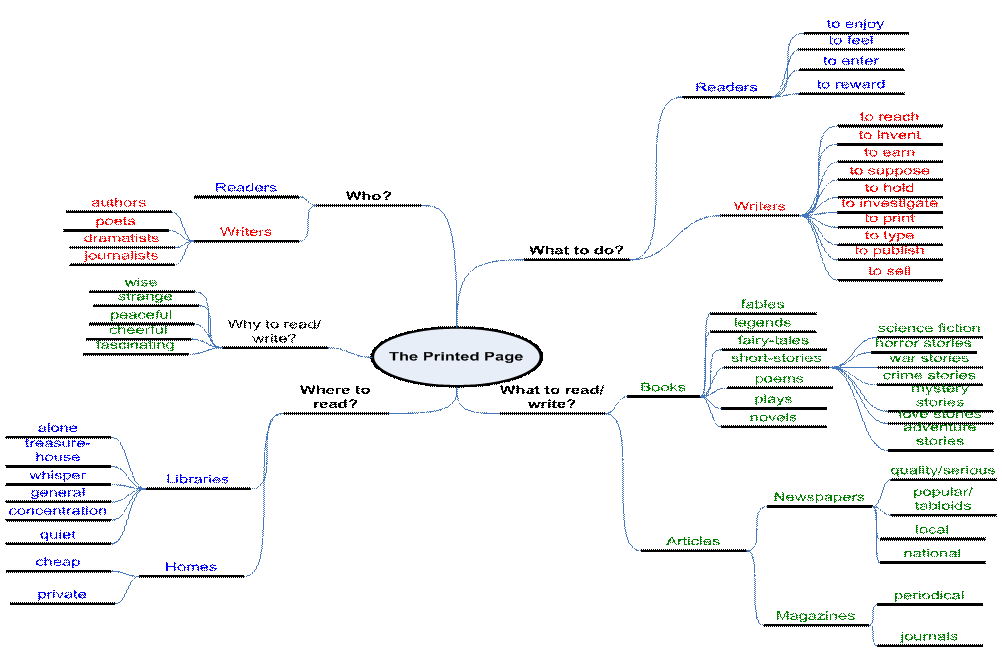
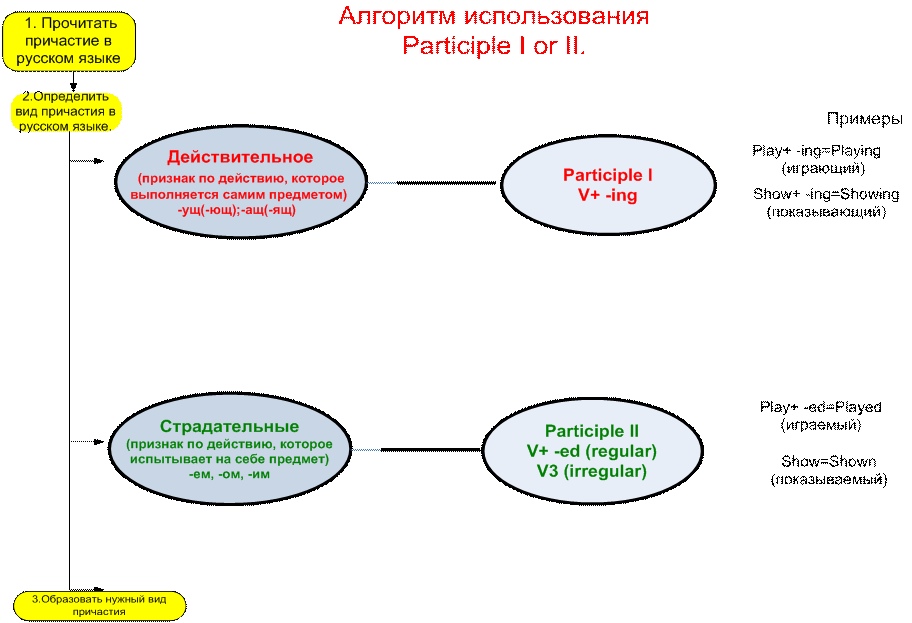
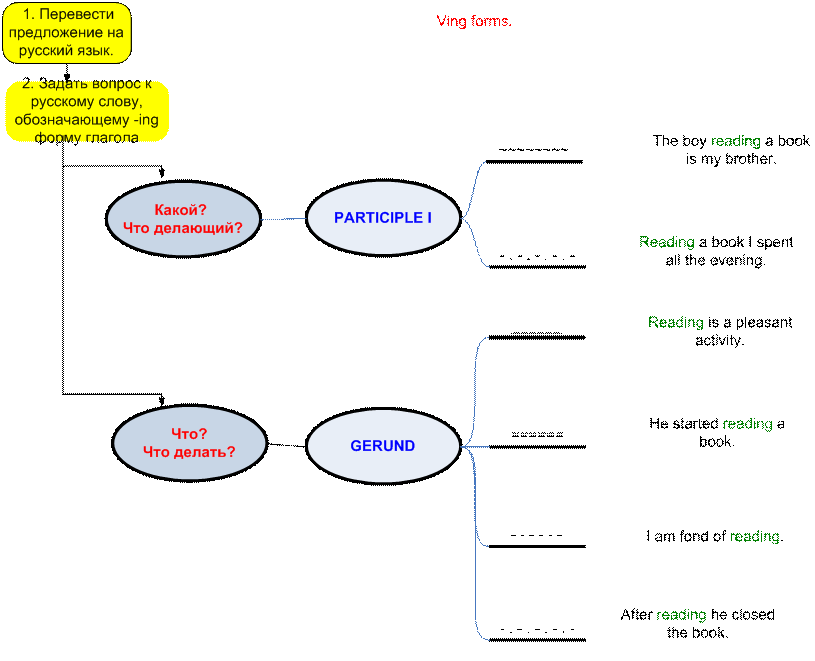
Таблица взаимосвязи прогнозированных результатов учения школьников
№ заданий итоговой работы Уроки по теме | I уровень | II уро-вень | III уро-вень | № срезовой работы | |||||
1 | 2 | 3 | 4 | 5 | 6 | 1 | |||
№ 1 Мир Печати. | 1 | 1 | |||||||
№ 2 Чтение. Библиотеки. | 1 | 2 | |||||||
№ 3 Писатели. | 1 | 3 | |||||||
№ 4 Газеты | 1 | 4 | |||||||
№ 5 Журналы. | 1 | 5 | |||||||
№ 6 История Прессы. | 6 | 6 | |||||||
№ 7 Журнализм. | 1 | 7 | |||||||
№ 8 Известные писатели и поэты. | 1 | 8 | |||||||
№9 Любимые книги. | 1 | 9 | |||||||
№10 Повторение изученного. | 11 | 11 | 11 | 11 | 11 | 11 | 11 | 11 | 10 |
Урок № 1
Изучение карты темы “The Printed Page”
Урок № 2
Тема
Мир печати
№ | Прогнозируемые результаты урока | Срезовые работы |
1 2 | знают лексику по теме из блока “Readers and writers ”, “Why we read” умеют использовать данную лексику в ответах на вопросы по теме. | Воспроизведение части карты темы (PT 1) |
Упражнения |
1.Translate the following words into English/Russian. Cheerful, peaceful, strange, wise, fascinating; authors, poets, dramatists, journalists. Тихий, мирный, странный, незнакомый, мудрый, мудрость, захватывающий, автор, поэт, драматург, журналист 2Fill in the missing letters in the following words. Ch--rful, q-i-t, pe--eful, str-n-e, wi-e, fa--inating; wis---; --thors, po-ts, dr-m-tists, j--rnalists. 3.Write the words with their translation. Cheerful, quiet, peaceful, strange, wise, fascinating; wisdom; authors, poets, dramatists, journalists. 4.Translate the word combinations. Весёлый человек, мирная атмосфера, странное место, мудрый совет, радостная улыбка, любимый поэт, известный драматург, популярный журналист, современный автор 5. Guess the words from their definition or synonyms and write them down. -Brisk, joyful, glad, merry -pacific -odd, unknown or not the same as others -knowing a lot, having great experience -captivating, exciting -the writer of a novel or a short story - the writer of lyrics - the person who writes theatrical plays - the person who writes for a newspaper 6.Answer the following questions. Do you like reading books? Do you read more or less than before? Who are your favourite authors? What information can you obtain from the books? What do you usually feel reading your favourite book? |
Домашнее задание: 1. Learn the words on topic “Readers and writers”,“Why we read”. 2.Read the text “Reader’s letters to a periodical”[1] and do the tasks. Level I Say how the reader describes the following in his letter. 1. The reader … Saturday mornings spent in the library. 2. In libraries the reader felt … and …. 3. The library was the reader’s … world. 4. The reader remembers the … voices of the readers and librarians and the sound of …pages. 5. Later the reader sometimes went to the library because he/she was … and depressed. 6.For the reader, libraries have always been places of … and … , treasure houses of …, … and information, the kingdom of the … word. 7. Children should look at libraries as very special places where they can enter a new …world. Level II Read the letter and say which of the following ideas are not in it. 1. The reader loves and has always loved libraries. 2. The reader was first taken to the library by his/her parents. 3. The reader used libraries for his/her studies. 4. The atmosphere of the library never fails to make the reader feel more cheerful. 5. The reader thinks that nowadays children don’t go to the library so often as they did before. 6. The reader believes that a library is the right place for children to go. Level III Answer the questions. 1. How did the author feel in the libraries when he/she was young? 2. What did the author like in the libraries? 3. What were the reasons of visiting different libraries when the author grew up? 4. What should the children to be taught from the early childhood? Why is it necessary to do it? 5. What is your attitude to the libraries? How often do you attend them?
Reader’s Letter to a Periodical. I am no longer young but I still remember happy Saturday morning I spent in the library when I was a child. In libraries I felt cheerful and peaceful. The library was my special world in which I loved everything – the smell of books, the whispering voices of the readers and the librarians, the sound of turning pages. As I grew up, libraries became more and more work-place for me, at school and university. But there were other times when I went to the library just because I felt lonely or depressed. When I was alone in strange towns, I never failed to find the local library and enjoyed myself spending one or two hours there. For me the libraries have always been places of quietness and concentration, treasure - houses of wisdom, culture and information, the kingdom of the printed word. Our children need to learn from babyhood to feel at home in the libraries. At the same time they should look at them as very special places where they can enter a new fascinating world. |
Урок № 3
Тема
Чтение. Библиотеки.
№ | Прогнозируемые результаты урока | Срезовые работы |
1 2 3 | знают лексику по теме из блока “ Reading at home and in the library”. Умеют определять данные лексические единицы с помощью их значения. Умеют образовывать слова с помощью суффиксов (-ness, - hood, - tion, - ing, - er). | Воспроизведение части карты темы из блока “ Reading at home and in the library”. (PT2) |
1.Translate the following words into English/Russian. Alone, treasure-house, whisper, general, concentration, quiet, cheap, private; Один, сокровищница, шёпот, общий, сосредоточенность, тихий, дешёвый, частный. 2Fill in the missing letters in the following words. Alon-, tr-a—re – house, --isper, g-neral, - on-entration, q---t, ch---p, pr-v-te. 3.Draw the part of the intellectual map with these words. 4.Write the words with their translation. Alone, treasure-house, whisper, general, concentration, quiet, cheap, private. 5.Guess the word from its definition. 1 one, without anybody; 2 place with a lot of precious things; 3 to say something very quietly ; 4 available to everybody; 5 special attention; 6 not loud, calm; 7 inexpensive, with low price ; 8 belonging to one particular person; 6.Fill in the necessary words in the sentences. 1 I am so tired. Leave me …. 2 Libraries are real … of books. 3 She has a sore throat, so she has to speak in a …. 4 …education is available to everybody in our country. 5 He lost … and missed my warning. 6 In the evening it is very calm and …here. 7 Nobody is allowed to walk here. It’s a …property. 8. I didn’t have much money so we went to a …café but not to a restaurant. 7.Express the following sentences in English. 1 В этом доме было тихо и спокойно. 2 Это был первый раз, когда они оставили малыша одного дома. 3 Не говори шёпотом, я ничего не слышу. 4 Частная библиотека нашего дедушки – настоящее сокровище. 5 Вход в музей свободен для общей публики. 6 Перевод этого текста требует большого внимания и концентрации. Давай купим это платье. Оно такое дешёвое. 8Form the words using the necessary affixes (-ness, - hood, - tion, - ing, - er) . To concentrate, child, quiet, to feel, strange, to fascinate, lonely. Give your own examples. | ||
Домашнее задание : 1. Learn the new words on topic. 2.Read the text about famous libraries[2] and translate it (I level), do the task after it (II level), speak about one of the libraries (III level).
The Greatest Libraries of the World. a)The US Library of Congress is the largest in the world. It has about 90 million items – books, manuscripts, maps, photographs, pieces of music and microfilms. The library has about 350 miles of bookshelves in three gigantic building on Capitol Hill, Washington D. C. The collection was started in 1800 to help Congressmen in their work. When in 1814 the books were destroyed in a fire, the Congress bought Thomas Jefferson’s personal library of about 6,500 books – the beginning of a new collection. Now the US Library of Congress is open to the general public. b)Biblioteque Nationale (National Library) is the most important library in France and one of the oldest in the world. It is now located in Paris. Its beginning was the first royal library started by Charles V () who collected 1,200 manuscripts in the Louvre. Since 1537 the library has received a copy of every French publication. In 1692 the library was opened to the public and renamed the Biblioteque Nationale in 1795. the library’s collection nowadays includes about 9 million books and 180 thousand manuscripts published in France and in other countries in the world. c)The State Russian Library in Moscow is one of the largest in the world. It has more than 40 million items in 247 languages: books, newspapers, maps, music and others. The library is not only a place to read. It is also a learning centre which organizes lectures, discussions and presentations. The library was opened in the 18th century on the basis of Count Rumyantsev’s private collection and since that time it has been used by scientists, scholars, teachers, students, in fact anybody who is over 18 years old can use the library’s reading rooms. About 4 thousand people come to the library every day. d) The British Library is the national library of the UK. It gets the copy of every book published in the country and many foreign publications as well. The library has a large new building in London which was finished in 1996. Before that the library was part of the British Museum. Nowadays everyone who comes to the museum can visit the famous Reading Room designed as Rome’s Pantheon by the Italian Anthony Panizzi who had to leave his country for England and was Keeper of Printed Books from 1837 to 1856 and the Librarian of the museum. Some of the greatest minds and the most famous people of their times have worked in this room: writers, dramatists, politicians such as Dickens, Bernard Shaw, Garibaldi, Karl Marx, Vladimir Lenin.
I. Name the library(ies) about which the following is true. 1) This library is situated in a capital. 2) The text doesn’t say when the library was started. 3) This library was started by a monarch as early as the 14th century. 4)This library is bigger than the other three. 5) We know who was the architect of a certain part of this library. 6) This library moved to a new building not so long ago. 7) We know who cannot use this library. 8) We know some names of people who were this library’s readers. 9) This library began as an information centre for the politicians. 10) The Text doesn’t say if this library has any books written outside the country. |
Урок № 4

|
Из за большого объема этот материал размещен на нескольких страницах:
1 2 3 |
