

Партнерка на США и Канаду по недвижимости, выплаты в крипто
- 30% recurring commission
- Выплаты в USDT
- Вывод каждую неделю
- Комиссия до 5 лет за каждого referral
· Impact of the process of preparations for and holding of the Olympic Games in Sochi in 2014 on the life conditions of citizens of the settlements, their cultural and national traditions.
· Readiness of local self-governance bodies and local citizens to be integrated in the Olympic process and activities in terms of formation of their future in the given settlement (availability of official materials, letters, Internet messages, etc., proving that).
Moreover, a favorable option was to choose three settlements belonging to different rural districts.
Basing on the above criteria and after several iterations and discussions of the list of settlements between the Customer, Contractor and Administration of Sochi the followings pilot settlements were selected:
Estosadok (Krasnopolyansky rural district), Chereshnya (Nizhneshilovsky rural district), Galitsyno (Moldovsky rural district).
Ethnic heterogeneity of those settlements proves the right choice. Thus, in Estosadok settlement Estonians number 355 people, Russians – 271, Ukranians – 115 and Armenians – 95 people.
Armenian population predominates in the settlement of Chreshnya, making up 68 %, and Russian population that makes up the rest 34 %. The ethnic Russians make up the majority in the Galitsyno settlement (60%) with the rest of population consisting of the Greeks, Armenians and Ukrainians.
The experience of compilation of programmes of sustainable development shows that in the absence of serious ethnic, cultural and religious contradictions inside settlements rich national composition of population is a positive factor that allows to implement complimentarily policy, when each ethnos makes its own specific input into the life of the whole settlement, thus increasing total income, enriching cultural diversity and natural landscape.
Economic activity of the citizens of all pilot settlements is connected with agriculture and tourism. At the same time, in each of the pilot settlements the situation with the ratio of able-bodied population to the total number of inhabitants might be considered as rather favorable.
Table 1
The structure of able-bodied population in three pilot settlements
Able-bodied population (people) | Total number of inhabitants (people) | % of able-bodied population to overall number of inhabitants | |
Estosadok | 250 | 836 | 30 |
Galitsyno | 215 | 642 | 33 |
Chereshnya | 835 | 2426 | 34 |
Compiled on the basis of data provided by the administration of Sochi
2.2 Pilot settlements in the environment
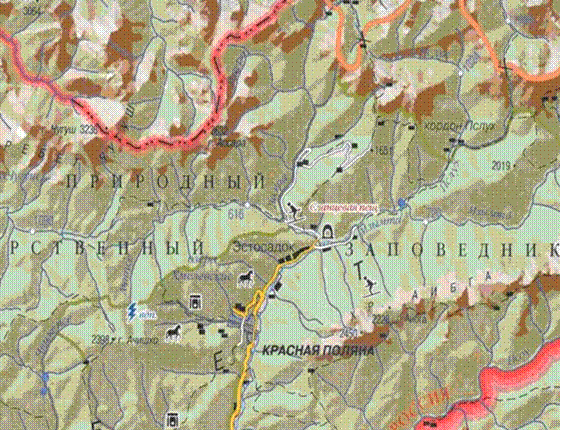
Estosadok settlement is located 4 km from the settlement of Krasnaya Polyana and 44 km from Adler. Total population as of 2011 makes up 836 people. The settlement consists of 206 households. The settlement is located in the Mzymta river basin. Estosadok settlement has a system of water supply but does not have sanitation system and central gas supply. There is a bus transport connection to Sochi, Krasnaya Polyana and local airport.
The settlement of Galytsyno is located 15 km from Adler in the Basin of Mzymta River. Total population as of 2011 in Galitsyno makes up 667 people. Similar to Estosadok, Galytsyno has a system of water supply but does not have sanitation system and central gas supply. There is a bus connection to the district centre - Adler.
By national composition population of the settlement consists of the Russians, Greeks, Armenians and Ukrainians. There is a secondary school in the settlement.
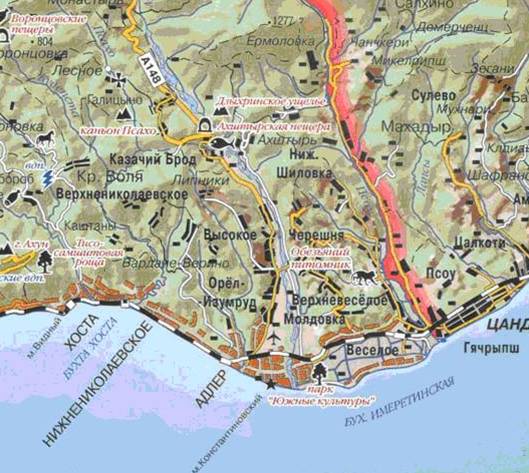
Figure 2. Settlements of Chereshnya and Galitsyno
The settlement of Chereshnya is located 7 km from Adler. Total population as of 2011 makes up 2430 people (2011). The settlement is located in the Mzymta river and Psou river basins. The settlement has a system of water supply but does not have sanitation system and central gas supply. There is a bus transport connection to Adler. There is a secondary school in the settlement.
Chapter 3 Consideration of the opinion of local citizens as a basis for compiling the Local Agenda 21
Increasing activeness of inhabitants and strengthening the role of local self-governance in the life of mountain settlements in the process of the development and implementation of Local Agenda 21 was an important task of the Project.
Within the framework of the Project a sociological study was performed.
3.1 Basic parameters of the sociological study
618 people from the three settlements were interviewed through questioning. Selection was performed through quoting method (by national composition). Basic socio-demographic characteristics on sample of inhabitants of pilot settlements are presented in Annex 1.
Таблица 2
Sample size for settlements under consideration
No | Name | General aggregate[3] (at the age from 18)/ people | Sample size (Number of questionnaires) |
1. | Estosadok | 786 | 202 |
2. | Chereshnya | 1964 | 239 |
3. | Galitsyno | 502 | 177 |
Total | 3252 | 618 |
Sample calculation was made according to the formula:
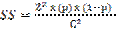
where: Z = Z factor (90%- of confidence interval)
p = per cent of target respondents or answers in the decimal form (0,5 by default)
c = confidence interval, in the decimal form (±5%)

Correction for small general aggregate was calculated according to the formula:

where:
ss = sample size
css = adjusted sample
pop = general aggregate
CSS (Estosadok) = 270/ (1+ (270-1)/786)= 202
CSS (Chereshnya) = 270/ (1+ (270-1)/1964)= 239
CSS (Galitsyno) = 270/ (1+ (270-1)/502)= 177
Table 3
Quota sample for Estosadok settlement
No | Characteristics of the national composition | National composition of the settlement in % | The size of the quota sample (people) |
1. | Russians | 32% | 65 |
2. | Estonians | 42% | 86 |
3. | Ukrainians | 14% | 28 |
4. | Armenians | 11% | 23 |
TOTAL: | 100% | 202 |
Table 4
Quota sample for Chereshnya settlement
№ | Characteristics of the national composition | National composition of the settlement in % | The size of the quota sample (people) | |
1. | Armenians | 68% | 163 |
|
2. | Russians | 32% | 76 |
|
TOTAL: | 100% | 239 |
|
Таблица 5
Quota sample for Galitsyno settlement
No | Characteristics of the national composition | National composition of the settlement in % | The size of the quota sample (people) | |
1. | Russians | 58% | 103 |
|
2. | Ukrainians | 4% | 7 |
|
3. | Armenians | 1% | 18 |
|
4. | Greeks | 28% | 49 |
|
TOTAL: | 100% | 177 |
|
As the “equal rights of generations» is the central topic of sustainable development, the youth (from 18 to 30 years of age) was selected as a separate group for studying in each settlement. Moreover, it was recognized that in the concept of sustainable development environmental factor is predominant, that was reflected in the additional block of environmental questions, put to the citizens in the course of the questioning. Additional explanation to this fact is given below.
3.2 General conclusions of sociological study for the three settlements
The results of the studies allowed answering several questions, important from the point of view of sustainable development, the answers to which were difficult due to the absence of official statistical data. Wages make up the main part (от 63 %) in the structure of income of all settlements. This important conclusion testifies to the fact that the majority of able-bodied population works on the basis of contracts. Trips for earnings are rather frequent phenomenon among population of all settlements, especially the youth, as the most active part of able-bodied of population. The diagrams below testify to this fact.
Diagram 1
The structure of income of inhabitants of Chereshnya settlement
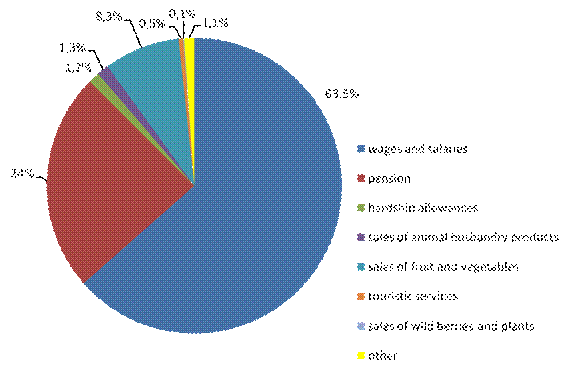
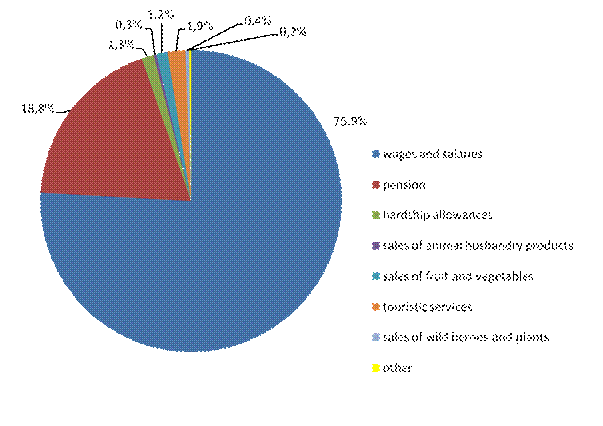
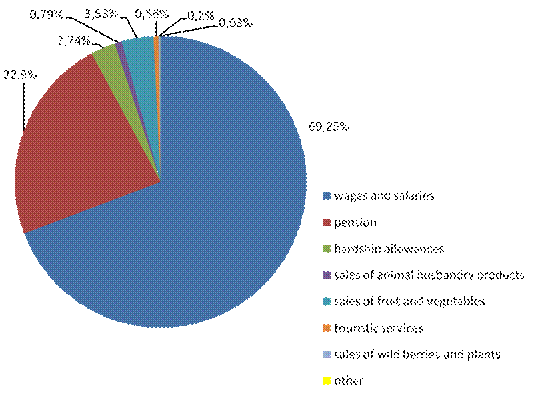
Certain differences are observed from settlement to settlement in the overall picture of primary shares of wages and pensions in the structure of income in all settlements. Thus, in Estosadok (see Diagram 2), specific weight of wages is significantly higher (by 12.4%) than in Chereshnya settlement and higher than in Galitsyno (by 6.6%). Income from services to tourists is also relatively higher. In Estosadok, the income from sales of vegetables and fruits is significantly lower than in Chereshnya (1.2 % versus 8.3 %). This can be primarily explained by the fact of closer location of Estosadok to one of the main Olympic regions – Krasnaya Polyana.
Local citizens are occupied in various professions (from electrician to unskilled laborers) on the objects under construction in Krasnaya Polyana. At the same time, local citizens mention employment in the sphere of services as a problem. In their comments they mentioned liquidation of such specialty as “hotel business” as a negative fact, as this specialty used to be included in the school curricula in Krasnaya Polyana in the Soviet time. They connect this fact with refusals for hiring them for work in modern hotels that are under construction and already function in the vicinity of Krasnaya Polyana and Estosadok.
Diagram 2
The structure of income of inhabitants of Estosadok
It is necessary to mention wretched income of inhabitants of Galitsyno settlement from sales of products of animal husbandry (0.79%). This settlement specialized in swine breeding and, according to local citizens, was famous for its products. However, recently swine breeding faced the crisis.
Diagram 3
The structure of income of inhabitants of Galitsyno
Sociological survey shows that the bigger part of population of all three settlements gets an opportunity to get their earnings in the private sector.
From the point of view of market economy there is nothing wrong with it. Artificial creation of collective farms in the near past proved its inefficiency.
At the same time, from the point of view of sustainable development, population employment forms that minimize transport expenditures are welcomed. It is also evident that a possibility of employment in the vicinity or in a settlement itself through communication and addressing of common issues unites people of various ages and nationalities. This is also a factor of sustainable development.
Inhabitants of all three settlements realistically connect their future with agriculture and tourism. Practically equal functional distribution between small-scale market agriculture and individual construction (leasing of buildings) is typical for their holdings. In a certain sense it testifies to the stable orientation of citizens towards these two аренду types of activity. No other plans for building were identified.
Diagram 4
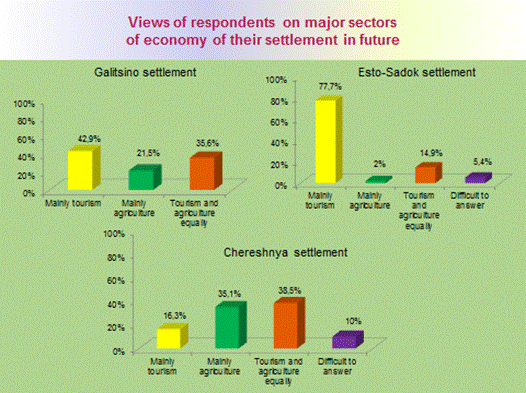
The results of the social survey, presented on Diagram 4 show that inhabitants of Chereshnya settlement connect their future primarily with agriculture, while inhabitants of Estosadok – only with the development of tourism. Inhabitants of Galitsyno see their future both in occupation in agriculture and in tourism. The position of inhabitants of the pilot settlements is very close to the vision of the future of the heads of administration of municipal districts.
Prior to the discussion of sustainable development it is necessary to answer the question: are the changes in organization of vital activity of pilot settlements really needed?
3.3 On the necessity of changes
Let us consider the consolidated table of distribution of the groups of population (in %) in the intervals of values of total monthly income of a family for all three pilot settlements.
Table 6
Total income (thousand rubles /month) | The number of questioned (in percent) in Chereshnya | The number of questioned (in percent) in Estosadok | The number of questioned (in percent) in Galitsyno |
Less than 6 | 5,3 | 1,0 | 4,5 |
6 – 10 | 19,2 | 11,4 | 21,5 |
11 – 15 | 25,5 | 20,3 | 29,4 |
16-20 | 28,9 | 24,7 | 24,3 |
More than 20 | 20,9 | 42,6 | 20,3 |
It is evident that the best situation from the point of view of well-being and its distribution by groups is in Estosadok settlement. In Chereshnya settlement the indicators are somewhat better than in Galitsyno. It refers to the total income of a family in settlements where the share of children and teenagers in comparison with total number of citizens is relatively big (19 % in Chereshnya and 25 % in Galitsyno). In Estosadok settlement this indicator is equal to 6.

|
Из за большого объема этот материал размещен на нескольких страницах:
1 2 3 4 5 |
