


г) определить возможную ценность информации и адресата, которомуэта и нформация может быть предназначена. Требование лаконичности является наиболее характерным, однако в текст аннотации рекомендуется вставлять клише типа «подробно излагается», «кратко рассматривается», «вводит в курс» и т. д. Разделу «Основные достоинства и недостатки работы» присущ субъективный характер, однако и в этой части аннотации следует использовать определенные стилистические клише: advantages, merits – преимущества, достоинства; achievement — достижение; contribution — вклад; deepth — глубина; considerations — соображения, выводы; survey — обзор, анализ; contain — содержать, включать (в себя); deal with, survey, treat — рассматривать, разбирать, исследовать; extensive cover of (literature) – широкий охват литературы; at the high level — на высоком уровне; disadvantages, shortcomings — недостатки, замечания; errors — ошибки, заблуждения; omission — пропуск, упущение; feature — характерная черта; mention — упоминать; refer — упоминать, ссылаться; disappointing - разочаровывающий; generalized — обобщенный; inadequate — несоответствующий. При оценке работы (монографии и т. д.) используются следующие штампы: in conclusion — в заключение; it can be highly recommended - можно с уверенностью рекомендовать; an invaluable aspect of the text is — неоценимое значение текста в том, что; it is to be warmly welcomed – нужно всячески приветствовать.
В неязыковом вузе на первое место в обучении выдвигается просмотровое чтение, которое находит выход в аннотировании иноязычного материала. Просмотровое чтение и его подвиды — это ведущие элементы чтения, предшествующие реферированию.
A TRAVEL TO PLES
The town of Plyos of the Ivanovo region. Plyos and its sights.
Plyos sights are a variety of interesting and informative routes designed for all ages. Certainly, ecological route attracts the largest number of tourists to the city. Plyos is an open air museum, and it has the status of the town-reserve. The main attractions in Plyos are the next: gentle Russian nature, exquisite scenery, numerous parks, and, of course, the river Volga. From the top of Cathedral Mountain and "official place" closed under restoration visible artistic bend of the river and the incredible beauty of the tops of the churches, the kind of "live Tretyakov Gallery", as in the paintings of the great Levitan can be seen.
Since ancient times, Plyos (Ivanovo region) has been constructed like the other Russian towns - fortress, followed by posad and then a settlement. The town stands on high hills and has a very unusual topography, but despite the difficult landscape Plyos still preserves the historical layout, developed in the 17-18 centuries. At present it is its main difference from other ancient Russian cities. Nothing is built here on Cathedral Hill they only restore monuments and sustain life of old trees, which, according to legend of local residents are about 150 years old. Up to now walking along the winding alleys (previously citizens called them boulevards) of Cathedral Mountain is a favorite pastime plesyan and guests. The view of the Volga has not changed, in spite of the construction of the Gorky Reservoir in Soviet times; there is the previous course of the river and the same water level. Going for a walk along the promenade Plyos (Ivanovo region), "Levitan grove", cedar or oak groves is a treat for those who come here to enjoy nature, sunrises, sunsets and just enjoy the fresh air of the Volga.
Educational Sites of Plyos are two art museums. The museum of Russian landscape with collections of original paintings of Levitan, Shishkin, Savrasov and other famous artists. Today, the museum organizes themed exhibitions – sales of works contemporary artists and masters of national crafts. The second museum, that is I. I Levitan Memorial Museum, is opened in the same house where the artist lived and worked. Two museums in a small town of three thousand people - is also sights Reach.
Historic Sites of Plyos are seen as soon as you enter the town. There are six churches and the bells of every church in the city spreads tender trembling sounds on holidays and weekends. The city preserved and restored the Old Church - Resurrection, the Assumption Cathedral, the Resurrection of Christ and St. Barbara.
Of particular interest are Sites of Plyos, if you go on a tour on foot. A professional guide will meet you on the steps of our private hotel, conduct along the cobbled streets of the town, past the lace frames Plyos houses will tell you where Levitan (and his friends) lived and worked, he will show you the modern monument to a country woman and a cat, "a rock of love" and the winter "sweet mountain", Catholic hill and the museum of Russian art. Many places of interest in Plyos preserved from the time when the city was a well-known and favorite place in Moscow and St. Petersburg Truckers of 18-19 century. Today the city has been changing qualitatively, thanks to the governor of the Ivanovo region M. Men’, to the town and the museum administration, a huge number of ancient monuments are being restored in Plyos. Through these changes it is easy to trace past life of the town and its inhabitants, present and, what is most importantly, the future. Every day Plyos (Ivanovo region) is transforming, filling with interesting events and people, holidays and festivals, the outer and the inner world of the town is changing for the better and decent way.
Vacation on the Volga River
Vacation on the Volga River is a great opportunity to enhance your strength, and have a good spare time.
If you feel like going on holidays to the Volga River in summer, where else to go, if not to the bank of the Volga. In summer period the town-reserve changes into the town museum under the open sky. There are good walks, bike rides to a picnic or barbecue.
Family holidays on the Volga in summer are wonderful and informative sightseeing trips on the river, offering to be made on a boat or catamaran. In order to rest on the bank of the Volga more comfortably, the City administration has converted, enlarged and decorated the town sandy beach where you can spend the whole day near the water. A variety of summer sports: badminton, volleyball, table tennis will not let get bored if you arrive at the bank of the Volga with your children. The middle Volga is a wonderful place where a variety of leisure activities have been developing over the years. Many types of tourism, such as ethnic, pilgrim, environmental, gastronomic and country have recently become very popular.
Family holiday on the Volga with children is becoming more attractive and interesting year after year. In summer period holidaymakers are pleased with rest in the open air. For example, during the "Linen palette" festival the river turns into a catwalk, holiday Theatre presents performances involving Plyos’ citizens, as it used to be in old and good times, the jazz festival attracts celebrities from the capital, and the Andrei Tarkovsky film festival provides an opportunity to review your favorite movies.
Vacation on the Volga River in the winter
Many people prefer relaxing on the Volga River in winter. There are entertainments for everyone here: different kind of sports and activities, as well as the ability to have a calm, quiet and comfortable family holiday on the Volga with kids or company.
There is joyful news for those who prefer active rest: ski slope with a lift, ski and snowboard rental has been opened, a cafe "Polar Hamster" with warming mulled wine and barbecue, camp kasha, coffee and tea. The cafe is a comfortable and cozy space and no doubt that the fully family holiday on the Volga with children or a company is guaranteed. It is worth noting an important detail: the descent has been built on the natural slopes of the Volga, with no artificial embankments.
For fans of cross country skiing, a great ski resort is opened. The bank of the Volga in winter is visited for white snow and frosty air. Even in Soviet times the track was famous all over Russia for its 10 km’s length. Just imagine skiing, magnificent Russian landscapes, fresh air, sunshine, and then - crackling wood in the fireplace, hot tea, coffee or a delicious homemade dinner.
The rest on the bank of the Volga guarantees to keep the traditional Russian sledding down the hills, because there are many mountains and small hills designed for different age groups in the area.
Lovers of ice skating have the opportunity to have a good time at the rink Plyos; skates can be rented or you can bring your own.
The rest on the bank of the Volga in winter is a great holiday: people can spend many winter festivities at weekends and holidays, and they organize travel to snowy woods, skiing, snowmobiling, sledding down the hills, ice skating and excursions.
And, of course, it is impossible to imagine a good rest on the bank of the Volga without Russian bath, it is important not to miss the opportunity to relax in the sauna with Chuvilkin spring or in an ordinary Russian sauna with brooms and herbal teas. Relaxation in the bath, then bathing in the ice hole are great ways to relax, refresh and increase your body's resistance to stresses and thus protect yourself from the flu and improve circulation. All this can be combined with SPA-treatment and massages.
Do not forget about walking trips: alone or with a guide. A professional guide from Levitan museum will tell you about old Plyos houses, he will take you to the house where galoshes used to be made in the old days, the place where a local doctor or a summer visitor from Moscow used to live. As Plyos is a town-reserve on the banks of the Volga River, without any public transport, going for a walk is a pleasure for those who have already managed to forget about pedestrian’s life. These walks are additional to the winter program, that responds to the unusual topography of the town, where in addition to housing estates an extensive infrastructure exists: cafes, restaurants, tea Plyos’s temperance society, Fedor Shaliapin holiday theatre, some antique and food stores.
Rest on the Volga River in winter has been expanding its capabilities increasingly, the desire and time to spend it with your family appear there.
The richness of Russian cuisine
The whole world knows the abundance of Russian cuisine and hospitality of the Russian character. Interrelation of cuisine and hospitable nature is especially felt in the countryside, in the Russian province that lives its own, special life. Today, they cook in province as ancestors have taught, preserving family traditions and using the knowledge that has come into our live with the appearance of new products and dishes. Of course, in big cities there is more variety and choice: Italian, French chefs and chefs from other countries try to get to the restaurants of big cities, but the traditional Russian cuisine is the distinguishing feature and exotic of the province. In large cities, very few places now offer to taste Russian pie, dumplings, or kvass prepared according to old recipes. In our time, the taste of authentic Russian cuisine can be found only in the province.
Plyos is the very small city where the traditions of Russian national food are stored, preserved and collected, where you can see what once wrote Russian classics from Gogol to *****ssian cuisine in Plyos is not in exile, wrote Alexander Genis, one of the authors of the book "Russian Cuisine in Exile", that "the main ingredient in Russian cuisine is time. Cabbage soup is cooked for two days in three broths by the rich "and such gastronomic masterpieces of Russian cuisine, as Kurnik, pork, duck with apples, quail, Easter bread, require a lot of patience and time, as in the old days.
Many tourists visit the Plyos and many of them say that the card Plyos and its gastronomic feature is the smoked fish. All year round they smoke fish in Plyos. Walking along the promenade, you can try the famous Plyos bream and buy smoked fish, sweet melting in the mouth, as a gift for friends and relatives.
Another nice side of gastronomic trip to Plyos is to visit guest homes in order to taste cuisine and enjoy a creative approach to it by Plyos cooks.
Saunas of Ivanovo region. Sauna on the Volga
What could be better than staying close to nature? For Russian people nothing compares to pleasant moments spent in a place where the scenery is dazzling, the air is crystal clear, and the water of the rivers and lakes is transparent to the bottom. And these places are not a fairy tale! Visit Plyos and you will know the ancient traditions of the Slavic holidays in the 21st century. And those cannot be imagined without the obligatory Russian sauna with wood - hot and crisp, fragrant with a broom! Sauna in Plyos is a real treat for body and soul!
Organization and holding the traditional Russian holidays
Xmas yuletide and Christmas (January 6 and 7);
Shrovetide (February or March);
Easter (April);
Ivan Kupala Day (07 July);
Honey Spas (August);
Apple Spas (August).
Open your own Plyos!
Look at the Plyos from the Volga, feeling on your face a refreshing spray of the river!
Or maybe you want to feel the cheeks burn from the breeze carrying through the newly opened ski slope?
Or maybe you want to feel the cheeks burn when the breeze carried through the newly opened ski slope? In Plyos everyone will find entertainment to his taste. You can listen to folk songs at the festival; take part in a master class, conducted by a town artist.
And children (and not just kids!) are pleased to go down the snowy descent of the mount of Liberty. Do not be lazy to climb the mountain of the Cathedral, the historic center Plyos, walk along meandering alley, where there are old (about 145 years) birches.
Look at the spread out at the foot of the majestic Plyos and the Volga river. And of course, Levitan! Levitan place... His "Eternal Rest" ... And at sunset remember all your Plyos!
THE TEXTS FOR ANNOTATING AND SYNOPSIS
THE MOSCOW KREMLIN
The Moscow Kremlin is a striking monument to Russian history and culture. Its history goes far back into old times. The first annalistic information about Moscow dates to the 12th century. We learn that in 1156, on Borovitsky (Pinewood) Hill at the confluence of the Moskva and Neglinnaya rivers, Prince Yuri Dolgoruky laid the foundation for a small wooden fortress — Kremlin. That is how Moscow was born — the future capital of the mighty-Russian State.
There were particularly important stages in the history of Moscow and the Kremlin that determined their development. In the 14th century, under the reign of Ivan Kalita, Moscow became the capital of the great principality of Vladimir. The Kremlin was enclosed with mighty oak walls, and on its territory (according to chronicles) the first stone churches were built. During the second half of the 14th century, Kalita's grandson, Dmitry Donskoi, built new walls — out of white stone, enlarging the territory of the Kremlin, to almost its present size.
The second half of the 15th century — the beginning of the 16th is the most important in the history of the Moscow Kremlin. Moscow became the capital of the newly formed independent state. Having thrown off the many-centuries-old yoke of the Golden Horde, it entered into diplomatic relations with many European countries. The splendid buildings, erected at that period on Sobornaya Ploshchad (Cathedral Square) of the Kremlin, are reflections of these events. Prominent Russian masters from Pskov, Novgorod, and the Vladimir-Suzdal principality and illustrious architects of the Italian Renaissance, took part in the grandiose construction work. The Kremlin was raised as the political and cultural centre of Rus. Architectural monuments of that period have survived to our day, and, in the main, determine the Kremlin's appearance.
In , instead of the already decrepit white-stone walls and towers, brick ones were built those have also survived till nowadays. Building work was done by artels of Russian masters under the supervision of architects invited here from Northern Italy: Marco, Pietro Antonio Solari, Antonio Friazin and Alevisio Friazin. The length of the new wall was 2,235 metres. The height — from 5 to 19 metres, the thickness-from 3.5 to 6.5 metres. The walls were decorated with merlons, having narrow embrasures, and were crowned with 19 towers. These are the Spasskaya Tower (Our Saviour; up to the 17th century called Frolovskaya), Senatskaya (Senate), Nikolskaya (St. Nicholas), Uglovaya Arsenalnaya (Corner Arsenal, or Sobakin), Srednaya Arsenalnaya (Middle Arsenal), Troitskaya (Trinity, connected by a bridge to Kutafya-Overdressed Woman-Tower), Komendantskaya (Commandant's), Konyushennaya (Cavalry), Oruzheinaya (Armoury), Borovitskaya (Pinewood), Vodovzvodnaya (Watch), Tainitskaya (Secret Passage), Blagoveshchenskaya (Annunciation), Petrovskaya (St. Peter's), Pervaya (First) and Vtoraya (Second) Bezimyannaya (Nameless) towers, Belemishevskaya (or Moskvoretskaya-Moskva River), Konstantino-Yelininskaya (St. St. Konstantin and Helen), and Nabatnaya (Alarm) towers. In the 17th century the towers were finished off.
At the end of the 15th-beginning of the 16th-centuries on Sobornaya Ploshchad — the highest spot of the Borovitsky Hill — on the spot where the oldest churches had been pulled down because of their dilapidated state — new ones were erected — the Uspensky (Dormition), Blagoveshchensky (Annunciation) and Arkhangelsky (St. Michael'the Archangel) cathedrals, and the church of Rizpolozheniya (deposition of the Robe), and the Granovitaya Palata (Faceted Chamber) — the main hall for ceremonies of the great principality's palace. It was during this period that masterpieces of architecture were created in the Kremlin, which determined the subsequent path of development of Russian art.
In the 16th century the Bell Tower of Ivan the Great and the Belfry were built on Sobornaya Ploshchad. The next century presented the Kremlin with the Patriarchal Palace with its Cathedral of the Twelve Apostles, that were included into the complex of the Patriarch's grounds, and the figured, elegant Terem (Garret-Chamber Palace).
In the 18th century, in connection with the transfer of the capital to St. Petersburg, hardly any construction work was carried on in the Kremlin, hi 1702 the building of the Arsenal was begun, work that was prolonged for almost 30 years, with intervals. An outstanding edifice of the end of the century was the Senate building, raised to the project of the illustrious Russian architect Matvei Kazakov. It was built in the classical style, with many well-proportioned white columns lending it a solemn yet festive air,
In the 19th century, to Konstantin Ton's design, the Grand Kremlin Palace and the Orazheinaya Palata (Armoury Chamber) were built in the Kremlin. Both buildings have elements of 17th-century Russian decorative architecture, characteristic for that time.
Heroic pages in the formation of the Russian State and the shaping of its national culture are connected with the Kremlin. Talented masters created works here whose perfection has not dimmed to our day.
The Armory building contains a permanent exhibition entitled The Diamond Treasury, which was opened in 1967. Here on show are. The finest items of Russian State collection of precious stones and jewellery of great historical, artistic and financial value, and also gold and platinum nuggets. The collection was founded in 1922 on the basis of the crown jewels of the former Imperial household, which were kept in the Diamond Room of the Winter Palace in St. Petersburg. The exhibition opens with showcases of natural diamonds, mined in Soviet times. These include the largest, named Friendship of Peoples, Builder, Yuri Gagarin, Valentina Tercshkova and Maria (named after a woman who worked for many years in diamond mining). The largest gem-quality diamond found in our country is the Star of Yakutia (232.1 carats).
The historical section of exhibition contains the «Seven Wonders» of the Diamond Collection, precious stones which are world famous.
Shah diamond. This is of a yellowish colour and has preserved its natural shape in the form of an octahedron. It was found in India in the sixteenth century and belonged to the ruler Ahmcdnaghar, as can be seen from the inscriptions refered to changes of the owner, the first being the dynasty of Grand Moguls in India. Later after the sacking of Delhi by the army of Shah Nadir of Persia, the diamond passed to Path Ali Khan. It came to Russia after the murder by fanatics in Teheran of the Russian diplomat and poet Alexander Griboedov in 1829. As compensation the Shah of Persia sent this remarkable diamond to Nicolas 1 of Russia.
Chrysolite. An olive-green cut stone (192.6 carat) of rare size and beauty. Ceylon sapphire. Remarkable for the unusual clarity and elegance of its cut. The stone is set in an open work brooch studded with diamonds of different si7,es. Portrait diamond. A completely flat stone of unusual beauty and clarity'. It is set in a gold bracelet decorated with coloured enamel. Under the diamond is a miniature portrait of Alexander I on ivory.
Colombia diamond. A rectangular dark-green stone which is completely transparent and has no natural defects. Set in a diamond-Spinel. This huge polished dark-red stone (398.72 carats) was purchased by Tsar Alexis, son of-Michacl, from the Chinese Emperor K'ang hsi in 1676. Surrounded by diamonds it was set in the Great Imperial Crown.
Orloff diamod. The fourth largest diamond in the world, this greenish-blue gem is the subject of many a legend. According to one of them it used to adorn a sculpture of Buddha in India until it was stolen by a French soldier Then it came into the possession of Nadir Shah, from whom it was also stolen. In 1767 an Armenian merchant acquired it from a Persian and put it in a bank in Amsterdam. Through a jeweller called Lasarev, Grigory Orlov (Orloff) bought it from there for 400,000 roubles and presented it to Catherine the Great on her name-day.
Next to the historical gems is the great Ruby, The size of an egg. The widow of King Charles IX of France gave it to her brother King Rudolph of Bohemia. During the Thirty Years' War (1618-48) the Caesar Ruby, as the gem was then called, was taken from Prague to Stockholm. On a visit to St, Petersburg in 1777 King Gustavus HI of Sweden presented the Great Ruby to the Russian Empress Catherine the *****ssian specialists have established that this gem is not a ruby, but a tourmaline. Jewellers skillfully supplemented the natural shape of the gem with sheets of gold covered with green enamel.
Among the eighteenth-century jewels on show is the Great Bouquet, worn on the belt or corsage. Made of Braxil diamonds and Columbia emeralds, the bouquet is most elegant in form and rich in colour. The illusion of live colour was created by the use of a special fastener for the gems. The Small diamond Bouquet, a wreath-shaped diadem and earrings that form a set, is remarkable for its rich colours and sumptuous patterns. The aigrette of diamonds with large blue sapphires and diamond jets is most original. It was used as a female hair ornament.
Among the rare items of jewellery note the bow and earrings with red spinels set in diamonds, the work of a St. Petersburg master in 1764, and also the Cornucopia hairpin by Louis-David Duval. This eminent jeweller. showed remarkable inventiveness and skill in marking use of a gem's natural qualities. It is highly likely that the diamond hairpins in the form of baskets of roses are also his work. The open-work diamond hairpins in the form of hair ribbons were made with great artistic taste by another well-known jeweller, Jeremie Pozier, a Swiss who worked in Russia for almost forty years.
Nineteenth-century exhibits include the diadem of Empress Elizabeth, the wife of Alexander I, made of 175 brilliant-cut and 1,200 rose-cut diamonds.
A special section of the exhibition contains the coronation regalia and orders, some of which are in the armory. The oldest item in the collection is the diamond clasp that fastened an ermine cloak during royal processions. It dates back to the reign of Empress Elizabeth (1747-61) and is the work of Jeremie Pozier, The Great Imperial Crown for the coronation of Catherine the Great was also made by him. It consists of two silver hemispheres opened upwards, as it were, and studded with diamonds, among which is a broad garland of diamond oak leaves with large white and pink diamonds. The hemispheres are framed by two rows of big pearls that together with diamond branches unite the composition. It is crowned by a diamond cross fixed onto a huge dark-red spinel. The Great Imperial Crown contains 4,936 diamonds and weighs 1,907 grams.
In the same section you can see the insignia of the highest Russian order of St. Andrew the First-called, which was instituted by Peter the Great. The order's great imperial chain consists of twenty links adorned with diamonds. They alternate with two headed eagles, St. Andrew crosses and Peter the Great's monogram. The chain is about one-and-a-half metres long. It was made for the coronation of Paul I. The star of the order is adorned with diamonds and large pearls. The order's motto For Faith and Loyalty in inscribed in gold around a circle of blue enamel. The medal itself, with the figure of St. Andrew, is topped by the Imperial Crown and studded with many diamonds.
The exhibition also contains the insignia of the Order of St. Catherine in the form of a gold medallion with her likeness framed with diamonds, the Order of St, Alexander Nevsky (of the Neva) in the middle of a cross, and several other pre-revolutionary Russian and foreign orders. Among the latter the emblem of the Old Spanish Order of the Golden Fleece made of gold and diamonds is of special interest.
The next, Soviet-times section contains diamonds, jewellery and nuggets. The highest award for military prowess, the Victory Order and the Marshal's Star are adorned with diamonds. Among the items of jewellery made by Soviet masters the platinum Rose brooch studded with almost 1,500 diamonds is particularly noteworthy.
The necklace and earrings of the Urals amethysts framed with diamonds are magnificent. The composition is based on a combination of stylized strawberry blossom and fruit. The Cosmos jewellery set is most elegant and tasteful. Another fine specimen of Russian jewellery is the necklace and bracelet with emeralds. The high open-work necklace is made of platinum. The large foliate design is studded with diamonds. The silhouette is emphasized by a thin line of emeralds, while the central diamond pendant. The composition of the necklace is repeated in the bracelet.
The last section contains gold and platinum nuggets. The largest gold nugget found in Russia, the Big Triangle weighs over 36 kilogram. It is now the largest in the world (larger nuggets abroad have been smelted down). The Big Triangle was found in 1842 in a mine not far from the town of Miass in the southern Urals. Many nuggets have unusual shapes from which their names are derived, such as Hare's Ears, Mephistopheles and Camel. Here you can also see the largest platinum nugget called Urals Giant, weighing 7.8 kilograms.
A Travel to Kolomna


Kolomna, with Kremlin and monasteries, mystical stories about Maria Mnishek’s imprisonment and well-known paste-makers is said to be once the informal capital of Moscow Princedom.
The way to Kolomna is not a straight line – it is necessary to wind to get there. Turns, turns, turns – and we are driving along the road which wonderfully arises from everywhere.
The smooth highway cuts through woods situated near Moscow. Sometimes we can’t see almost any houses or constructions from windows of our car, that is why it is possible for oneself to imagine that you rush somewhere out of time.
I like open space around, groves and fields, meadows and small rivers. It also seems that the small town which is suddenly strung on the way as if the ancient bead doesn’t spoil the nature at all, moreover it only adds a little man-made beauty to it. The lovely low town, for a wonder remained color and originality in our changeable world aspiring to updating.
Here Kolomna Kremlin grows on a hill in front of us as a wonderful athlete. One can be surprised with very tall walls and ancient towers, and inside there are ancient small streets with temples, apartment houses and offices – old history and today are inosculated with each other.
And the things that for the visitors have the smell of antiquity and old times, Kolomna’s inhabitants regard only as a part of their daily life.
Walls of ancient Kremlin
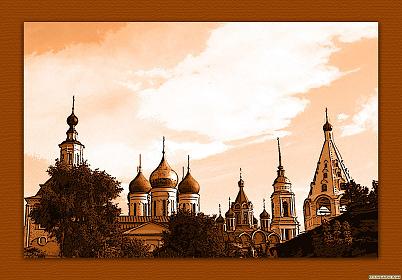
A tin input in the heart of Kolomna, as well as it is necessary in provincial Russian cities of the last centuries, at a striped box with a barrier, there is a policeman. The polished boots, peak-cup, and draft on the side - a town is under reliable protection. We slightly pass deep into the main street, and here we are already in the place. Our excursion about Kolomna Kremlin begins here. Kolomna, one of the most ancient Russian cities, opens its history before us: Vasily Temnyi (Dark) who turned the city into the real capital of Northeast Russia, Ivan the Terrible collecting here the council of war before the campaign to Kazan, Maria Mnishek pining in torture chambers, Lzhedmitriia the First’s wife... All these events took place in Kolomna.
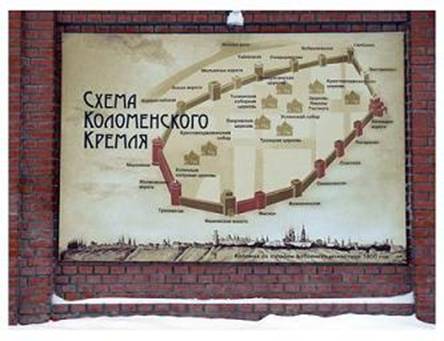
We look at small affable houses, cozy curtains and we wonder: if here, in territory of Kremlin inhabited constructions have remained.
- Mom, it’s somehow very similar to Tsaritsyno!
- Precisely you have noticed it.
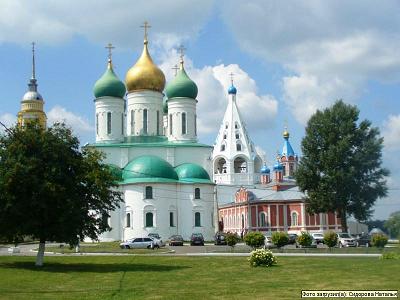
The following question, which the guide is asked, is about the architect. It has appeared that there was the general founder of ours Tsaritsyno and Kolomna walls.
- Mom, you remember, there is a tower which is almost fallen somewhere. And here is the same one! They are talking about a monastery fencing, which was constructed by Kazakov.
- Yes, it appears, Kolomna can even brag of its own «a Pisa tower» as it is called in Italy.
The guide conducts us to the depth of time, and in between times, we learn that somewhere else in the recent past akolomna was a remote small town, dierty and dilapidated. It is extremely surprising, that such a beautiful, well-grooned, and clean city is in front of us now. It appears it is an achievement of the past. The solemn start of a tower clock – a symbol – has recently taken place here. And now time has begun to flow in this ancient place, hourly filling its small streets with melodious rings of the tower chiming clock. There is only one nun in stuff in the local monastery. It remains not clear for us. But there are traces of restoration work everywhere, so, it will be even better than now.
In ancient surroundings fresh signs take roots: here a girl in snow-white crinoline wedding dress clothes is closing a lock on a handrail of the bridge – for making her life with husband strong, long and happy. Women immediately notice that all the bridge is covered by locks of different kinds and sizes. So new traditions remarkably get accustomed in the old city.
We are walking about Kremlin, listening to the guide, looking in galleries, eyeing ancient pictures, engravings – and we absorb in ourselves the spirit of this small town situated near Moscow, which has been unexpectedly involved in the thick of the modern life, and has become a platform for set of various festival and holidays.
The paste-maker in Kolomna
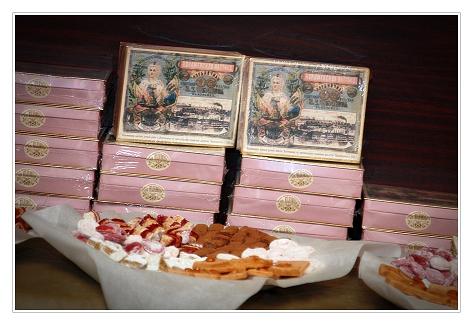
Here is an ancient residence. It used to belong to a merchant family somewhere. It blows here as stories of petty-bourgeous life from the Russian literature of the nineteenth century. We are coming into a yard – and the illusion which has grasped us of literary travel finds new acknowledgement.
First of all in the yard my daughters have properly wallowed in the hay. Dry blades has tanged in the plaits, tenacious straws has tanged on the clothes. Why not to drive on a fragrance dry grass if all yard is filled up by it and the fragrance is so wonderful that the spirit grasps. Of course, the first you feel on having entered the museum court yard is the smell of hay and apples. Apples are everywhere – they are lying in stacks, on a pig-iron small stove in the yard, on a table covered with a lacy cloth. We wonder why apples are lying here.
– Let’s go inside and find out, - we are getting upstairs on a board terrace, open the ancient door – and we find ourselves on the mercy of a young charming woman dressed in ancient clothes as it’s necessary to magicians. Here are timbered walls, dressers, buffet and two young ladies in crinolines and caps. There are frills and ruches on them – certainly, the people making a paste should look exactly like they do. We are again transferred to the other time and sensation that we have appeared in a literary work, now has taken hold of us with new force.
Does anybody of us think that the paste is not that sort of thing that we usually buy in shops? It is an absolutely special story and it is necessary to be told to you in a special way. People here engage exactly in this work, in this ancient house so reminded to me merchant manors from books of Russian writers. It is absolutely impossible to imagine that paste has thought up just for keeping apples fresh for winter. Really, is this air, gentle miracle made of such usual, absolutely household reasons?
–Mom, does it mean that a paste has turned out casually? That is great! It is good and useful imention! – Of course, it is useful, children like candies very much. And you already imagine as the zealous mistress strives at the furnace, preparing supplies for the winter. What beautiful jars and pots our paste-maker has got. She ties up it necks with parchment so carefully. She places stocks on regiments so thoughtfully! There are labels pastes on the jars: raspberry paste, nut paste, honey paste.
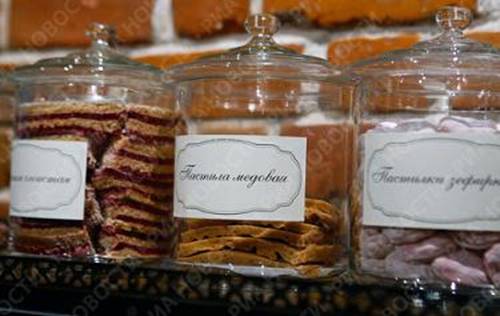
The Kolomna paste-maker, as it happens, used to be the city symbol. And now again a good-natured, round-cheeky woman with a high kokoshnik on her head is looking at us from photos.
Our imaginations have left not too far from the reality. We are listening attentively to a story about how charming young ladies were creating the museum, how many forces they spent for searching of the historic recipes, how difficult it was to restore technologies. And when the action reaches tea with some paste, we greatfully understand that the work was titanic and not in vain.

|
Из за большого объема этот материал размещен на нескольких страницах:
1 2 3 |
