

Партнерка на США и Канаду по недвижимости, выплаты в крипто
- 30% recurring commission
- Выплаты в USDT
- Вывод каждую неделю
- Комиссия до 5 лет за каждого referral
ПРАКТИЧЕСКОЕ ЗАНЯТИЕ ПО ТЕМЕ:
SURDOPEDAGOGICS
The hearing mechanism
1. The text you are going to read is dedicated to the hearing mechanism. What do you already know about it? If you were to deal with such topic, what would you speak about?
2. Look at the picture. Give Russian names to the parts of the ear.
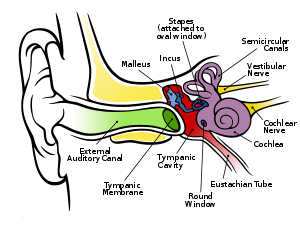 auditory canal is exaggerated in this image)" " width="300" height="225" style="padding : 1px;"/>
3. Pay attention to the following words in the text:
to detect – определять;
balance – равновесие;
the entire organ – внешний орган;
the visible portion – видимая часть;
vertebrates – позвоночные животные;
to localize – определять местонахождение, находиться;
sound sources – источники звука;
аudition – слух;
waves of pressure – воздушные потоки под давлением;
to perceive – осознавать, понимать, постигать, воспринимать; ощущать, чувствовать;
a cell – клетка;
to amplify – расширять(ся), увеличивать(ся), усиливать(ся);
medium – проводник;
ear canal – ушной канал;
middle ear – среднее ухо;
inner ear – внутреннее ухо;
hollow – пустой, полый;
temporal bone – височная кость;
dense – жесткий, упругий;
epithelium – верхний слой кожи, эпителий;
to stud – усеивать, покрывать( обычно для украшения);
hair cells – клетки волоски;
structural protein filaments – структурные белковые нитевидные волокна;
to release – облегчать, освобождать;
bend over – гнуться, сгибаться, двигаться в определенном направлении;
to fire – поджигать, воспламенять; зд. приводить в действие;
the eighth cranial nerve – восьмой черепной нерв (предверно-улитковый);
to sensе balance – держать равновесие;
the vestibular portion – вестибулярный аппарат;
frequencies – частота звука;
pinna – ушная раковина;
the ear canal – слуховой ход;
the ear drum – барабанная перепонка;
cartilage appendage – козелок, хрящевой аппендикс;
to damp – смачивать, увлажнять; ухудшать(ся);
еar wax – ушная сера;
glands – гланды(особые лимфатические узлы);
the anterior – передний(яя часть);
concave side – выгнутая сторона.
II.1. Find the following English equivalents in the text:
- различать звуки;
- играть главную роль;
- чувство равновесия;
- видимая часть;
- располагаться симметрично;
- по обоим сторонам головы;
- передвигаться по воздуху;
- нервные импульсы;
- возбуждение нервных клеток;
- чувство равновесия;
- не иметь особого влияния на слух;
Use dictionary if necessary.
2. Read the text:
The ear is the organ that detects sound. It not only acts as a receiver for sound, but plays a major role in the sense of balance and body position. The ear is part of the auditory system. The word "ear" may be used correctly to describe the entire organ or just the visible portion. Vertebrates have a pair of ears, placed symmetrically on opposite sides of the head. This arrangement aids in the ability to localize sound sources.
Audition is the scientific name for the sense of sound. Sound is a form of energy that moves through air, water, and other matter, in waves of pressure. Sound is the means of auditory communication like spoken language. Although the ear is the vertebrate sense organ that recognizes sound, it is the brain and central nervous system that "hears". Sound waves are perceived by the brain through the firing of nerve cells in the auditory portion of the central nervous system. The ear changes sound pressure waves from the outside world into a signal of nerve impulses sent to the brain. The outer part of the ear collects sound. That sound pressure is amplified through the middle portion of the ear and, in land animals, passed from the medium of air into a liquid medium. The change from air to liquid occurs because air surrounds the head and is contained in the ear canal and middle ear, but not in the inner ear. The inner ear is hollow, embedded in the temporal bone, the densest bone of the body. The hollow channels of the inner ear are filled with liquid, and contain a sensory epithelium that is studded with hair cells. The microscopic "hairs" of these cells are structural protein filaments that project out into the fluid. The hair cells are mechanoreceptors that release a chemical neurotransmitter when stimulated. Sound waves moving through fluid push the filaments; if the filaments bend over enough it causes the hair cells to fire. In this way sound waves are transformed into nerve impulses. The nerve impulses travel from the left and right ears through the eighth cranial nerve to both sides of the brain stem and up to the portion of the cerebral cortex dedicated to sound. This auditory part of the cerebral cortex is in the temporal lobe. The part of the ear that is dedicated to sensing balance and position also sends impulses through the eighth cranial nerve, the VIIIth nerve's Vestibular Portion. Those impulses are sent to the vestibular portion of the central nervous system. The human ear can generally hear sounds with frequencies between 20 Hz and 20 kHz (the audio range).
The outer ear is the most external portion of the ear. The outer ear includes the pinna (also called auricle), the ear canal, and the very most superficial layer of the ear drum (also called the tympanic membrane). In humans the only visible portion of the ear is the outer ear. Although the word "ear" may properly refer to the pinna (the flesh covered cartilage appendage on either side of the head), this portion of the ear is not vital for hearing. The outer ear does help get sound (and imposes filtering), but the ear canal is very important. Unless the canal is open, hearing will be dampened. Ear wax (cerumen) is produced by glands in the skin of the outer portion of the ear canal. This outer ear canal skin is applied to cartilage; the thinner skin of the deep canal lies on the bone of the skull. Only the thicker cerumen-producing ear canal skin has hairs. The outer ear ends at the most superficial layer of the tympanic membrane. The tympanic membrane is commonly called the ear drum. The pinna helps direct sound through the ear canal to the tympanic membrane (eardrum).
The framework of the auricle consists of a single piece of yellow fibrocartilage with a complicated relief on the anterior, concave side and a fairly smooth configuration on the posterior, convex side. Human beings localize sound within the central nervous system, by comparing arrival-time differences and loudness from each ear, in brain circuits that are connected to both ears. This process is commonly referred to as EPS, or Echo Positioning System.
III.1. Answer the questions:
What is an ear? Does it have any other meanings? What does it act for? Where are the ears located? What is audition? How does it work? What parts does an ear consist of? Which part of the ear really “hears”? Which parts of an ear are vital for hearing? How does the brain help hearing?2. Say whether the following statements are true or false:
Audition is the scientific name for the sense of balance. The ear is the organ that detects sound. It not only acts as a receiver for sound, but plays a major role in the sense of balance and body position. The ear is part of the vestibular system Vertebrates have a pair of ears, placed symmetrically on opposite sides of the head. The ear is the vertebrate sense organ that recognizes sound, although it is the brain and central nervous system that "hears". The outer part of the ear collects sound. The hollow channels of the inner ear are filled with liquid. The auditory part of the cerebral cortex is in the temporal lobe. The part of the ear that is dedicated to sensing balance and position sends impulses through the eighth cranial nerve. The outer ear is the most external portion of the ear. The outer ear helps get sound, but the ear canal is not very important.3. Continue the sentences:
Audition is…. The ear is…. It not only … The ear is part … Vertebrates have … Although the ear is The outer part of the ear The hollow channels of the inner ear The nerve impulses This auditory part of the cerebral cortex is…. The part of the ear that is dedicated to … The outer ear is the most external portion of the ear. The outer ear … The framework of the auricle consists of… Human beings localize…4. Fill in the blanks with the words from the text:
The …is the organ that detects sound. It not only acts as a … for sound, but plays a major role in the … of balance and body position. The … is part of the auditory system. The word "ear" may be used correctly to describe the entire … or just the visible portion. Vertebrates have a pair of… , placed symmetrically on opposite sides of the head. This arrangement aids in the ability to localize sound… sources. Audition is the scientific name for the … of sound. Sound is a form of energy that moves through air, water, and other matter, in waves of pressure. Sound is the means of auditory communication like spoken language. Although the … is the vertebrate sense organ that recognizes sound, it is the … and central nervous system that "hears". … … are perceived by the brain through the firing of nerve cells in the … … of the central nervous system. The … changes sound pressure waves from the outside world into a signal of … impulses sent to the brain. The outer part of the … collects sound. That … … is amplified through the middle portion of the … and, in land animals, passed from the medium of air into a liquid…. The inner … is hollow, embedded in the temporal … , the densest bone of the body. The … are mechanoreceptors that release a chemical neurotransmitter when stimulated. … waves moving through fluid push the filaments; if the filaments bend over enough it causes the … to fire. In this way sound waves are transformed into … impulses. The nerve ….travel from the left and right … through the eighth cranial … to both sides of the brain stem and up to the portion of the cerebral cortex dedicated to… . This auditory part of the cerebral cortex is in the … lobe.

|
Из за большого объема этот материал размещен на нескольких страницах:
1 2 3 4 5 6 7 |
