


Партнерка на США и Канаду по недвижимости, выплаты в крипто
- 30% recurring commission
- Выплаты в USDT
- Вывод каждую неделю
- Комиссия до 5 лет за каждого referral
Test #1
Human Body
Instruction: Chose the correct answer.
1. _____________ investigates the body's structure, whereas __________ investigates the processes or functions of living things.
a. Physiology, cytology
b. Physiology, anatomy
c. Anatomy, histology
d. Histology, cytology
e. Anatomy, physiology
2. The study of tissues is called
a. cytology.
b. anatomy.
c. histology.
d. anatomic imaging.
e. physiology.
3. Ultrasound, X-rays, CT, and MRI are all examples of
a. anatomic imaging.
b. surface anatomy.
c. regional anatomy.
d. gross anatomy.
e. cytology.
4. A group of cells with similar structure and function, together with the extracellular substances located between them, form a(n)
a. organism.
b. organelle.
c. tissue.
d. organ.
e. organ system.
5. The basic living unit of all plants and animals is the
a. cell.
b. chemical.
c. organ.
d. organelle.
e. tissue.
6. Which organ system removes substances from the blood, combats disease, maintains tissue fluid balance, and absorbs fat from the digestive tract?
a. endocrine
b. integumentary
c. lymphatic
d. respiratory
e. urinary
7. Which organ system consists of skin, hair, nails, and sweat glands?
a. endocrine
b. integumentary
c. lymphatic
d. respiratory
e. urinary
8. Which organ system consists of hormone-secreting glands, such as the pituitary and thyroid glands?
a. endocrine
b. integumentary
c. lymphatic
d. respiratory
e. urinary
Test #1
Name: Anatomy
Answers
1-c
2-c
3-a
4-c
5-a
6-c
7-b
8-c
Test # 2
Human Body Parts
Instructions: Chose the correct answer.
1. What is the smallest living part of the body?
a) tissue
b) nerve
c) cell
2. What gas does your body need?
a) oxygen
b) carbon dioxide
c) pollution
3. How is oxygen carried to the cells?
a) nerves
b) blood
c) tissue
4. Nerves carry messages from a body part to the _________.
a) feet
b) brain
c) ear
5. All people grow _______.
a) differently
b) at the same rate
c) when they want to
6. This is where food is changed into a thin liquid.
a) nerves
b) heart
c) small intestine
7. Our bodies grow because our cells make new ______.
a) bones
b) tendons
c) tissue
8. What does your body get rid of when you breath out?
a) oxygen
b) carbon dioxide
c) water
9. Your heart and brain are two of your ___________.
a) organs
b) tissues
c) nerves
10. How many senses do you have?
a) ten
b) two
c) five
Test #2
Human Body Parts
Answers
1-c
2-a
3-b
4-b
5-a
6-c
7-c
8-b
9-a
10-c
Circulatory System
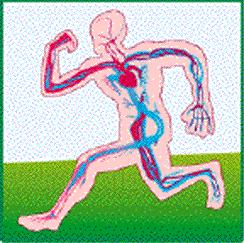
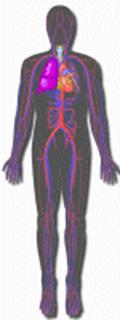
The circulatory system is made up of the vessels and the muscles that help and control the flow of the blood around the body. This process is called circulation. The main parts of the system are the heart, arteries, capillaries and veins.
As blood begins to circulate, it leaves the heart from the left ventricle and goes into the aorta. The aorta is the largest artery in the body. The blood leaving the aorta is full of oxygen. This is important for the cells in the brain and the body to do their work. The oxygen rich blood travels throughout the body in its system of arteries into the smallest arterioles.
On its way back to the heart, the blood travels through a system of veins. As it reaches the lungs, the carbon dioxide (a waste product) is removed from the blood and replace with fresh oxygen that we have inhaled through the lungs.
Vocabulary
1. to make up - составлять
2. vessel - сосуд
3. flow - течь
4. circulation - кровообращение
5. ventricle - желудочек
6. to remove - перемещать
replace - менять to inhale - вдыхатьVeins and Arteries
Arteries
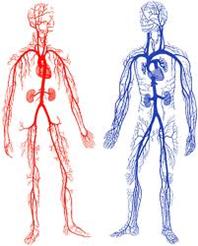
Arteries are tough, elastic tubes that carry blood away from the heart. As the arteries move away from the heart, they divide into smaller vessels. The largest arteries are about as thick as a thumb. The smallest arteries are thinner than hair. These thinner arteries are called arterioles. Arteries carry bright red blood! The color comes from the oxygen that it carries.
Veins
Veins carry the blood to the heart. The smallest veins, also called venules, are very thin. They join larger veins that open into the heart. The veins carry dark red blood that doesn't have much oxygen. Veins have thin walls. They don't need to be as strong as the arteries because as blood is returned to the heart, it is under less pressure.
Vocabulary
tough - жесткий tube - труба join - соединять wall-стенка
Heart
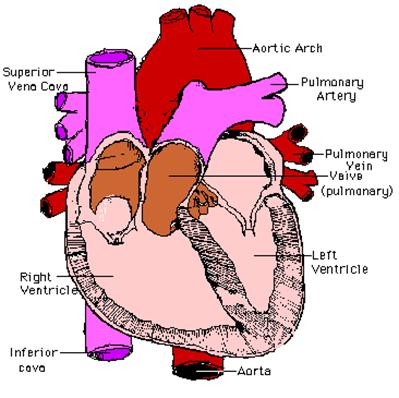
Heart is the strongest muscle? Heart is divided into two sides. The right side pumps blood to your lungs where it picks up oxygen. The left side pumps oxygen-soaked blood out to your body. They do not work on their own, but together as a team. The body's blood is circulated through the heart more than 1,000 times per day. Between five and six thousand quarts of blood are pumped each day. Your heart is about the same size as a fist.
Vocabulary
to pump - качать pick up - собирать oxygen-soaked - кислородосодержащий quart – кварта (единица объема в Великобритании) fist - кулакBlood
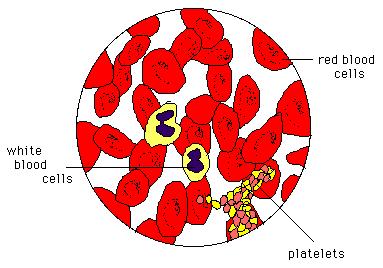
Blood is thicker than water and has a little bit salty taste. In an adults body there is 10.6 pints of blood circulating around. In their blood there is billions of living blood cells floating in a liquid called plasma. If you took a small sample of this blood and liquid it into a test tube and then put it in a machine called a centrifuge, you would be able to see the layers of this blood. This machine spins the blood around so fast that it separates the red blood cells, from the white blood cells, from the platelets. The red blood cells sink to the bottom because they are the heavier, more solid parts, but the plasma remains at the top because it is lighter. The plasma is 95% water and the other 5% is made up of dissolved substances including salt.
Vocabulary
1. thick - толстый
2. little bit - немного
3. adult - взрослый
4. to float - плавать
5. liquid - жидкий
6. to separate - разделять
7. platelet - тромбоцит
8. solid - твердый
9. to remain - пребывать
10. to sink - тонуть
11. dissolved - растворенный
Exercises
1. Answer the following questions.
· What does Circulatory System consist of?
· What is circulation?
· What is the largest artery in the body?
· What do know size of your heart?
· What are the main elements of blood?
· How many liters of blood are in the human body?
2. Use the words in the box to fill in the blanks. | |||
veins arteries nutrients capillaries away | transport oxygen energy dark heat | circulatory lungs carbon dioxide bright to | blood heart pumped intestine atmosphere |
All animals need to ________________ materials around to the different parts of their body. This is the job of the ________________ system. The circulatory system consists of a liquid called _______________, a pump called the ________________ and a series of vessels called _________________ and ________________.
One thing that must be transported around is a gas called _____________. Oxygen enters the blood through the ______________. It is then ____________ through the heart and around the body where it is used along with food to make ______________. The body produces another gas called _______________, which is a waste product. This gas is carried back to the heart and then to the lungs where it is released back into the _______________.
The vessels that transport blood _________ from the heart are called arteries. The blood in arteries is _____________ red because it is rich in oxygen. The vessels that transport blood _______________ the heart are called veins. The blood in veins is ______________ red because it is low in oxygen. ________________ are small vessels that join the arteries and veins.
_______________ from food are also transported around the body by the circulatory system. They enter the blood from the small _________________. The circulatory system also helps to regulate temperature by transporting _________________ around the body.
Crossword | |
|
|
Across 3. The place where nutrients enter the blood. 7. The pump in the circulatory system. 8. A small vessel that connects veins and arteries. 10. The circulatory system ___________ nutrients, gases, liquids, and heat around the body. 11. The circulatory system transports this, which helps regulate temperature. 12. The liquid in the circulatory system. 13. The place where oxygen enters the blood and carbon dioxide leaves the blood. 14. A vessel that moves blood to the heart. 15. A gas that is transported in arteries from the lungs to the rest of the body via the heart. | Down 1. The heart ___________ blood. 2. The heart, blood, and vessels. 4. Blood in arteries is ____________ red because it is rich in oxygen. 5. The largest artery in the body. 6. A waste gas that is transported in veins from the body to the lungs via the heart. 9. A vessel that moves blood away from the heart. |

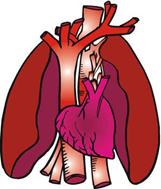
Word Search | |||
|
| ||
aorta artery blood bright red capillary | carbon dioxide circulate dark red four chambers heart | lungs nutrients oxygen pump red blood cells | transport valve vein water white blood cells |

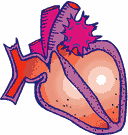
Test #3
Circulatory System
Instructions: Decide whether the following are true or false.
1. The circulatory system is a transport system.
a) True
b) False
2. The circulatory system carries CO2 to all cells in the body.
a) True
b) False
3. The heart is actually a muscle.
a) True
b) False
4. When you play basketball, your body is working harder than when you are at rest.
a) True
b) False
5. Your body uses nutrients and oxygen to give your cells energy.
a) True
b) False
6. The liquid part of blood is called red blood cells.
a) True
b) False
7. Platelets are a part of blood that helps the blood to clot.
a) True
b) False
8. White blood cells help fight off infection.
a) True
b) False
9. Plasma is made of mostly red blood cells.
a) True
b) False
10. The red blood cells give the blood its color.
a) True
b) False
Test #3
Circulatory System
Answers
1-a
2-b
3-a
4-a
5-a
6-b
7-a
8-a
9-b
10-a
The Nervous System
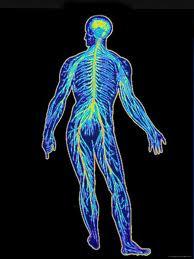
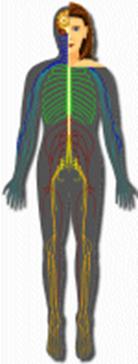
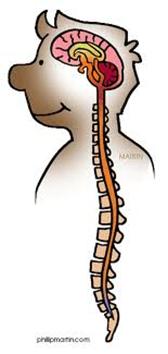
The nervous system is made up of the brain, the spinal cord, and nerves. One of the most important systems in your body, the nervous system is your body's control system. It sends, receives, and processes nerve impulses throughout the body. These nerve impulses tell your muscles and organs what to do and how to respond to the environment. There are three parts of your nervous system that work together: the central nervous system, the peripheral nervous system, and the autonomic nervous system.
Vocabulary
1. spinal cord – спинной мозг
2. to send - посылать
3. to receive - получать
4. to respond - отвечать
5. environment - окружение
Questions
1. What organs are made up nervous system?
2. What is the function of nervous system?
3. What parts of nervous system do you know?
Central Nervous System
Brain
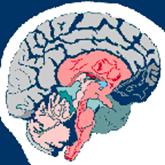
The brain keeps the body in order. It helps to control all of the body systems and organs, keeping them working like they should. The brain also allows us to think, feel, remember and imagine. In general, the brain is what makes us behave as human beings.
The brain communicates with the rest of the body through the spinal cord and the nerves. They tell the brain what is going on in the body at all times. This system also gives instructions to all parts of the body about what to do and when to do it.
Spinal Cord
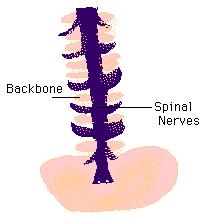
Nerves divide many times as they leave the spinal cord so that they may reach all parts of the body. The thickest nerve is 1 inch thick and the thinnest is thinner than a human hair. Each nerve is a bundle of hundreds or thousands of neurons (nerve cells). The spinal cord runs down a tunnel of holes in your backbone or spine. The bones protect it from damage. The cord is a thick bundle of nerves, connecting your brain to the rest of your body.
Central Nervous
"Senses"
Senses
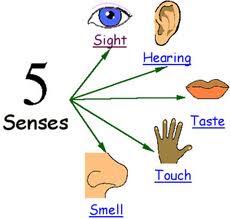
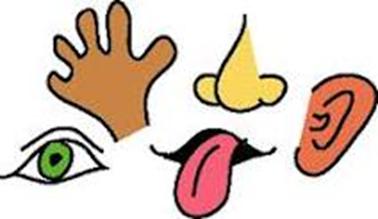
There are five main senses - touch, smell, taste, hearing and sight. These are the external sensory system, because they tell you about the world outside your body. Your senses tell you what is happening in the outside world. Your body's sense organs constantly send signals about what is happening outside and inside it to your control center - the brain.
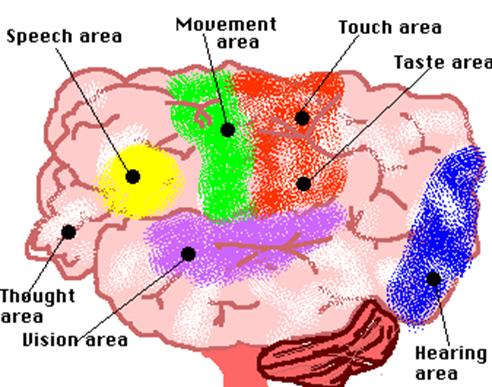
The cerebrum is part of the forebrain. The cerebral cortex is the outer layer of the cerebrum. Certain areas of the cerebral cortex are involved with certain functions.
Sensory areas such as touch, smell, taste, hearing and sight receive messages from the skin, nose, mouth, ears and eyes. We feel, taste, hear and see when these messages are received by the sensory parts of the brain.
The Peripheral Nervous System
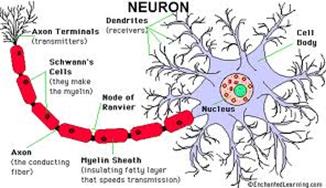
The nervous system is made up of nerve cells or neurons that are "wired" together throughout the body, somewhat like communication system. Neurons carry messages in the form of an electrical impulses. The messages move from one neuron to another to keep the body functioning.
Vocabulary
to keep the body in order – поддерживать тело в порядке to allow – позволять rest – остаток bundle – пучок external – внешний forebrain – передний мозг cerebral cortex – кора involve – вовлекать to wire – связыватьQuestions
1. What is the function of brain?
2. How does the brain communicate with the rest of the body?
3. What senses do you know?
4. What is neuron?
5. What is the function of neuron?
Quiz
Instruction: Fill the blank
· Eyes
· Nose
· Tongue
· Skin
· Ears
· Detect sound
· Detect color and light
· Detects scents
· Detects tastes: sweet, salty, sour and bitter
· Detects pain, pressure, heat and cold
Sense | Organ | Job |
Sight | ||
Hearing | ||
Smell | ||
Taste | ||
Touch |
Quiz
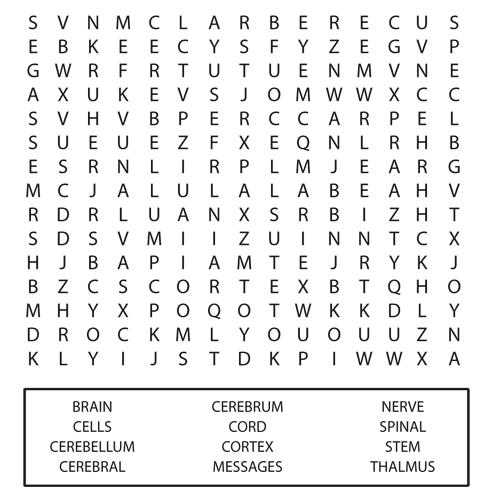
Instruction: Find Words
Test #4
The Brain
Instructions: Select the correct answer from the choices listed.
1. What is the largest part of your brain? Circle Answer
a) cerebrum
b) cerebellum
c) hypothalamus
d) medulla oblongata
2. What does the central nervous system contain? Circle Answer
a) the cerebral cortex
b) the eyes and ears
c) the brain and spinal cord
3. What is found at the base of the brain? Circle Answer
a) the cerebellum
b) the brain stem
c) the hypothalamus
4. Which part of the brain smooths out movement? Circle Answer
a) the cerebellum
b) the hypothalamus
c) the cerbral cortex
5. What part of the brain controls hunger and thirst? Circle Answer
a) cerebellum
b) cerebrum
c) hypothalamus
d) medulla oblongata
6. The __________ are membranes that cover the brain. Circle Answer
a) pons
b) meninges
c) meningitis
d) fissures
7. The cerebrum consists of two halves called the left and right ____________. Circle Answer
a) lobes
b) fissures
c) hemispheres
d) cortex
8. The brain contains: Circle Answer
a) neurons
b) glial cells
c) blood vessels
d) all of the above
9. Very early in life, brain cells stop: Circle Answer
a) functioning
b) increasing in number
c) increasing in size
10. The control center for thinking is the: Circle Answer
a) meninges
b) medulla oblongata
c) cerebellum
d) cerebrum
Test #4
The Brain
Answers
1-a
2-c
3-b
4-a
5-b
6-a
7-b
8-c
9-b
10-c
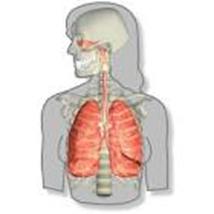
Respiratory System
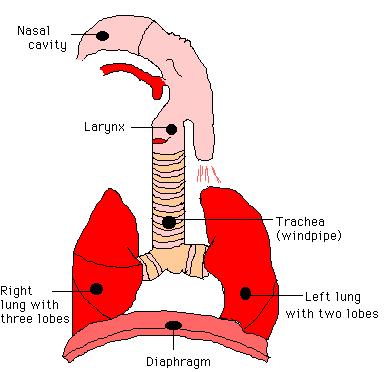
All animals need oxygen to live. Land animals get oxygen from the air. Without the oxygen in the air we cannot survive more than a few minutes. Breathing happens automatically, we do not have to even think about it.
We breathe in order to take oxygen into our bodies and get rid of carbon dioxide. The oxygen is carried in the blood to all the body's cells. The air we breath out has 100 times more carbon dioxide than the air we breath in.
Vocabulary
1. land animals –сухопутные животные
2. to survive - выживать
3. to get rid - избавляться
4. carbon dioxide – углекислый газ
Nose and Nasal Cavity
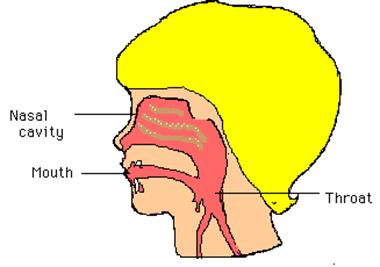
The respiratory system is made of body parts that are in charge of your breathing. It includes your nose and nasal cavity. You air though your nose. As you inhale, small specks of dirt are trapped by many tiny hairs in your nose. This cleans the air. The hairs stop the dirt from going further in your body. The moist inside surface in your nose traps even smaller pieces of dirt. The nasal cavity, the air passage behind the nose, plays an important role in breathing. The nasal cavity is divided into a right and left passageway. The tissue that covers the wall of your nasal cavity contains many blood vessels. Heat from the blood in the vessels helps warm the air as you breath. Moisture is added to the air you breath by special cells in the walls of the nasal cavity. The air is warmed and moistened before it reaches your lungs.
Vocabulary
1. nasal cavity носовая полость
2. to inhale - вдыхать
3. speck - покрывать
4. moist - влажный
5. surface - поверхность
6. to trap - ловить
7. passageway - отверстие
8. moisture - влага
9. to add - добавлять
Windpipe and Bronchial Tree
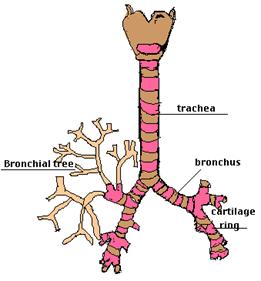
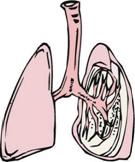
The windpipe (trachea) joins the upper respiratory tract to the lungs. If you gently touch the front of your throat you can feel the trachea. The bottom of the trachea splits into two branches called bronchi. One enters the right lung and one goes to the left lung.
The bronchial tree's job is to spread the air from the trachea over a very wide area as quickly as possible. The air passing through the windpipe divides into two branches. These divide into twigs called bronchioles. These twigs open into little bags called alveoli.
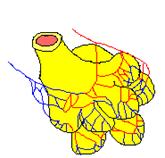
We have about 300 million alveoli (air sacs) in each lung. The alveoli gives our lungs a huge surface for absorbing oxygen from the air.
Lungs
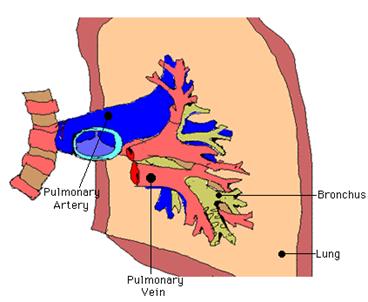
Lungs provide the breath of life. Our lungs are about the size of a pair of footballs. They fill our chest from the neck to the ribs. The lungs are protected by our ribs. The lungs are the pickup place for oxygen and the drop off place for carbon dioxide. The lungs are always working, breathing in oxygen and breathing out carbon dioxide.
Blood is pumped into the lungs from the heart through the pulmonary arteries. Blood with oxygen leaves the lungs through the pulmonary veins and travels to the heart. Oxygen is the fuel that makes all the body processes run.
Vocabulary
1. gently – мягко
2. bottom – низ
3. to split – расщеплять
4. twig – ветка
5. to provide – обеспечивать
6. pickup – перевозка
7. pulmonary arteries – легочные артерии
8. fuel –горючее
Questions
1. What organs are made up respiratory system?
2. What do lungs provide?
3. What protect lungs?
Quiz
 Instruction: Write down organs of respiratory system
Crossword | |
|
|
Across 2. One of two places where air enters your body. 4. When we exhale we breathe this plus carbon dioxide. 7. You do this when something irritates your nose. 8. You do this when you don't get enough oxygen to your blood. 11. A gas that you breathe out. It is a waste gas. 14. The place where oxygen enters the blood. 16. You do this when something irritates your diaphragm. 17. Breathe out. 19. Large muscle that controls the lungs. | Down 1. This prevents food from going down your lungs. 3. All animals need this gas to make energy from food. 5. Scientific name for the windpipe. 6. Inhale and exhale. 9. Common name for the trachea. 10. Fish have these instead of lungs. 11. You do this when something irritates your trachea or bronchi. 12. Two tubes that connect the trachea to the lungs. 13. Breathe in. 15. One of two places where air enters your body. 18. What we breathe. |

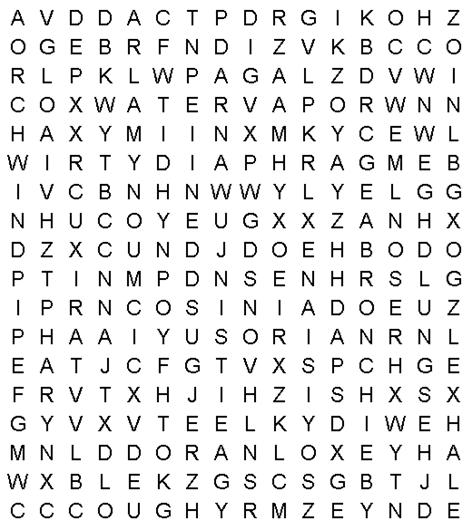
Word Search | |||
|
| ||
air bronchi carbon dioxide cough diaphragm | exhale gills hiccups inhale lungs | mouth nose oxygen pharynx sneeze | trachea water vapor windpipe yawn |
Quiz Instruction: Use the words in the box to fill in the blanks. | |||
air lungs carbon dioxide hiccup mouth | oxygen trachea yawn diaphragm sneeze | inhale respiratory bronchi water vapor blood | exhale cough pharynx nose |
All animals need ________________ to make energy from food. We get this oxygen from the _____________ that we breathe. In order to get the oxygen into the blood where it can be transported to the rest of the body, the air travels through a system of organs called the _______________ system. When you ________________, air enters the body through the _______________ or the ____________. From there it passes through the ______________, which forces air into the _______________ and food into the esophagus. The air travels down the trachea into two branching tubes called ________________ and then on into the ________________. In the lungs oxygen from the air enters the _______________. At the same time, the waste gas ____________________ leaves the blood and then leaves the body when you ___________________. Some __________________ also leaves the body when you exhale, which is why mirrors get foggy when you breathe on them. The ______________ is the muscle that controls the lungs. It is important to keep the respiratory system clear so oxygen can keep flowing into your body. If something gets in your nose and irritates it, you ___________________. If something gets in your trachea or bronchi and irritates it, you _________________. If something irritates your diaphragm, you _________________. Finally, if the brain thinks you are not getting enough oxygen, then it forces you to _________________. |
Test #5

|
Из за большого объема этот материал размещен на нескольких страницах:
1 2 3 |
