


Партнерка на США и Канаду по недвижимости, выплаты в крипто
- 30% recurring commission
- Выплаты в USDT
- Вывод каждую неделю
- Комиссия до 5 лет за каждого referral
charge: charges for some prescriptions, charges for optical and dental services, free of charge
via: to provide primary care via a local GP, via NHS walk-in centres, via dentist, pharmacist and optician, to provide information via the Internet
comprise: comprised, comprising, to comprise all kinds of hospitals, to comprise sanatoria and rehabilitation centres, to comprise maternity homes and children’s hospitals
set up: set up, setting up, to set up the NHS, to set up a hospital, to set up an outpatient clinic, to set up a walk-in centre, to set up a medical insurance company
3. Read and translate the following word-combinations:
1) treatment for coughs and colds, 2) from antenatal screening to end-of-life care, 3) to employ more than 1.5 m people, 4) free of charge, 5) advice and information 24 hours a day, 6) mental hospitals, 7) infant mortality, 8) life expectancy, 9) 35,000 general practitioners (GPs), 10) cardiovascular and respiratory illnesses
4. Match Russian and English equivalents:
1) ambulance staff | |
2) resident | b) врач общей практики |
3) provide advice | c) по телефону |
4) respiratory disease | d) ведение (консультирование) детей |
5) receive from the NHS | e) советы по уходу после рождения ребенка |
6) survey | f) лечение несчастных и неотложных случаев |
7) child guidance | g) дать совет |
8) postnatal advice | h) получить (помощь) через ГСЗ |
9) maternity homes | i) обзор |
10) over the telephone | j) персонал скорой помощи |
11) accidents and emergency treatment | k) заболевание дыхательных путей |
12) general practitioner | l) житель |
13) primary care | m) родильный дом |
5. Translate the following word-combinations:
1) психиатрическая больница, 2) охватывать всё, 3) предоставлять первую помощь через службу врачей общей практики, 4) пользоваться бесплатно, 5) получать информацию через интернет, 6) житель Соединенного Королевства, 7) врачи и медсестры больниц, 8) включать отделение экстренной помощи, 9) основать детскую больницу, 10) оплата за услуги стоматолога.
6. Translate the following sentences:
1. The National Health Service provides free medical treatment both in hospitals and outside. 2. You are free to choose a GP in the area you live in and be registered on his list. 3. From 1948 till 1951 people in Great Britain didn’t pay for drugs. 4. At NHS walk-in centres you can see an experienced nurse without an appointment. 5. Centres at the NHS operate from 8:00 am to 10:00 pm, 7 days a week. 6. Accident and Emergency departments assess and treat patients with serious injuries or illnesses. 7. If an ambulance is needed, call 999, the emergency phone number in England. 8. Free emergency medical treatment is given to any visitors from abroad who become ill while staying in the UK. 9. From April 2008 patients can choose any NHS hospital in the country to be treated. 10. The NHS employs more than 1.5 m people. Only the Chinese People’s Liberation Army, the Wal-Mart supermarket chain and the Indian Railways employ more people.
7. Read and translate the text. Make the plan of the text using key-words.
Text A. The National Health Service
The National Health Service (NHS) was set up in 1948 in the UK. It was born out of an ideal that good health care should be available to all, regardless of wealth.
Nowadays the NHS is the world’s largest publicly funded health service. It covers everything from antenatal screening and routine treatment for coughs and colds to open-heart surgery, accidents and emergency treatment and end-of-life care. Nationwide, the NHS employs more than 1.5 m people, including some 90,000 hospital doctors, 35,000 general practitioners (GPs), 400,000 nurses and 16,000 ambulance staff.
Anyone who is resident in the UK (more than 60 m people) can use its services free of charge, with the exception of charges for some prescriptions and optical and dental services. Primary care is provided via a local GP, NHS walk-in centres, dentist, pharmacist and optician. NHS Direct is also responsible for providing health care advice and information 24 hours a day via the Internet and over the telephone.
The Hospital Service comprises different kinds of hospitals, both general and special (including children’s hospitals, mental hospitals, maternity homes, sanatoria, rehabilitation centres, etc.). Specialized clinics provide treatment for all kinds of diseases: cardiovascular, respiratory, mental, orthopaedic and other illnesses, antenatal and postnatal advice and child guidance are also given.
In the UK life expectancy has been rising and infant mortality has been falling since the NHS was established. Both figures compare favourably with other nations. Surveys also show that patients are generally satisfied with the care they receive from the NHS. Importantly, people who have had recent direct experience of the NHS tend to report being more satisfied than people who have not.
8. Read additional information on the NHS:
Do you know that for the NHS a typical day includes: ■ Over 835,000 people visiting their GP practice or practice nurse ■ Almost 50,000 people visiting accident or emergency departments ■ 49,000 outpatient consultations ■ 94,000 people admitted to hospital as an emergency admission ■ 36,000 people in hospital for planned treatment ■ 28,000 sight tests being carried out ■ 18,000 calls to NHS Direct |
9. Answer the questions using the text:
1. When was the NHS set up?
2. What medical treatment does the NHS cover?
3. How many employees does it comprise?
4. What services provide primary care?
5. What medical institutions are there within the Hospital Service?
6. What kinds of diseases are treated in specialized clinics?
7. Are people satisfied with the care they receive from the NHS?
8. How have life expectancy and infant mortality changed since the establishment of the NHS?
10. Translate the word combinations into English using active vocabulary:
1. государственная служба здравоохранения; 2. независимо от богатства; 3. от лечения кашля и простуды до операции на открытом сердце; 4. круглосуточно; 5. включать различные типы больниц; 6. реабилитационный центр; 7. родильные дома и санатории; 8. служба экстренной медицинской помощи; 9. врач общей практики; 10. прямая линия государственной службы здравоохранения.
11. Replace the word combinations in bold type with active vocabulary. Translate the sentences:
1. Any patient will be able to pre-book an appointment or simply walk in and see a doctor or nurse. 2. You can get the information through the Internet. 3. Not all hospitals have an emergency unit. 4. The NHS was established on 5 July, 19The Hospital Service comprises general and special hospitals. 6. Accident and Emergency departments treat patients with serious injuries or diseases. 7. Nurse-led centres are primary care institutions. 8. Infant death rate has been falling since the NHS was established.
12. Read and translate the following texts about different types of primary care services.
Text 1. NHS GPs
Your local general practitioners’ (GP) surgery provides a wide range of family health services[7]:
■ advice on health problems,
■ vaccinations,
■ examinations and treatment,
■ prescriptions for medicines, and
■ referrals[8] to other health services and social services.
If your condition is not urgent, you can expect to see a doctor within two working days or a health professional, such as a nurse, within one working day.
If you don’t need an appointment within two working days, you can also book in advance if this is more convenient to you.
You are free to choose a GP in the area you live in and be registered on his list. The average GP has a little over 2,000 people on his list. Out of his earnings he must provide a waiting room, a consulting room, a car, and a secretary. It is usual for three or four GPs to work in group practice.
Text 2. A&E Service
Accident and Emergency departments assess[9] and treat patients with serious injuries or illnesses. Generally you should visit A&E or call 999 for emergences, such as:
■ loss of consciousness,
■ pain that is not relieved by simple analgesia,
■ acute confused state
■ persistent, severe chest pain, or
■ breathing difficulties.
If an ambulance is needed, call 999, the emergency phone number in England. You can also dial 112, which is equivalent for the European Union.
Major A&E departments offer access [10]365 days a year and 24 hours a day. Not all hospitals have an A&E department. At A&E a doctor or nurse will assess your condition and decide on further action. These departments try to see, diagnose and treat 98% of people within four hours of arrival.
In addition to A&E departments, other services such as walk-in centres and minor injury units are available. They can treat patients without any appointment. They deal with minor injuries and illnesses.
Text 3. Walk-in centres
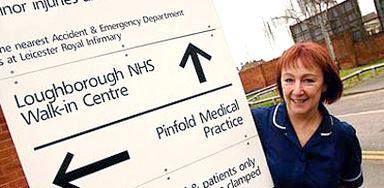
NHS walk-in centres (WiCs) offer convenient access to a range of treatment. There are about 93 centres in England, dealing with minor illnesses and injuries. These include:
■ infection and rashes,
■ fractures and lacerations,
■ emergency contraception and advice,
■ stomach upsets,
■ cuts and bruises[11], and
■ burns and strains.
NHS WiCs are usually managed by a nurse and are available to everyone. They are staffed by specially trained nurse practitioners, staff nurses and healthcare assistants. No doctors work on this unit. Patients don’t need an appointment.
Most centres are open 365 days a year and outside office hours. The Walk-in Centres at the NHS operates from 8:00 am to 10:00 pm, 7 days a week. The WiC is also home to the city’s “Out Of Hours” GP service for patients requiring consultation with a GP or Nurse Practitioner outside of normal GP surgery hours and is available from 6:30pm till midnight Monday to Friday and from 8:00 till midnight on Saturday and Sunday.
NHS WiCs treat around three million patients a year and have proved to be a successful complementary service to traditional GP an A&E services. Some NHS WiCs offer access to doctors as well as nurses. However they are not designed for treating long-term conditions or immediately life-threatening problems.
Remember!
Please note the following conditions CANNOT be assessed in the Walk-in-Centre: · Children under the age of 2 · Children under the age of 6 with injuries · Chest pain · Shortness of breath · Head injuries with neurological symptoms · Back, neck, shoulder, hip or rib injuries · Chemical injuries to the eye Should any of the above apply to you or if urgent, please see your GP or go to A&E. |
13. Listen to a lead nurse’s story about the walk-in centre in her community. Fill in the gaps:
The Milton Keynes Walk-in Centre
My name’s Linda Dawson. I’m the lead nurse at the walk-in centre in Milton Keynes. A walk-in centre is a centre open for everybody. It provides ____ ____ for people in the community. We provide an NHS service ____ ____ minor ailments and minor injuries. This particular walk-in centre is run by an independent company; they’re called Chilvers McCrea Healthcare. It provides easy access for everyone, really, not just people in the local area; we get a lot of overseas visitors here. You don’t need to ______ __ ______, you just turn up. As the name suggest, it’s a walk-in service.
The reason why someone would use a walk-in centre may be they are out of area, they are visiting a relative, they haven’t got easy access to ____ ____ and they know they can walk in here and we will see them. They don’t need to be registered to come to the walk-in centre.
We provide quite __ _____ _____ of NHS services. We are particularly a nurse-led service, so we have _______ nurses to deal with all manner of things, minor______, minor ______. We get lots of children coming in with ______, colds, fevers, rashes. We do wound care, we do suturing, we do minor injuries, anybody with a sprain or a cut, even a possible fracture we can see and, if necessary, refer on.
Patients would prefer to come to us rather than going to their GP for convenience, really. We’re open much longer hours, to ten o’clock at night, and so we can ______ people before and after work. If someone was to arrive at the walk-in centre, they would expect to find _______ atmosphere.
It’s a nurse-led service, as I’ve said. Nurses here can take time to talk to the patients and discuss matters they may not necessarily speak to the GP about. We have nurse _______ here, nurses that are qualified and trained to prescribe certain ________ for patients. We provide lots of other _______. We do phlebotomy, we will do ______ checks, we will offer emergency contraception and ear syringing.
People can find out where their nearest walk-in centre is by either contacting NHS ______ or going online and doing a search. Their GP services will be able to point them in the right direction as well.
14. Give the Russian equivalents:
1. a range of services; 2. prescriptions for medicines; 3. an appointment; 4. a waiting room; 5. to assess and treat patients; 6. breathing difficulties; 7. to offer access; 8. within four hours of arrival; 9. to deal with minor injuries; 11. infection and rashes; 12. stomach upsets; 13. specially trained nurse practitioners; 14. a successful complementary service; 15. to do wound care; 16. to offer ear syringing; 17. to do phlebotomy.
15. Give the English equivalents:
1. направление к другому врачу; 2. в течение пяти рабочих дней; 3. заработанные деньги (заработок); 4. серьёзная травма; 5. порезы и ожоги; 6. вне рабочего времени; 7. оценить состояние больного; 8. позвонить 999; 9. предлагать удобный доступ к чему-либо; 10. состояние, угрожающее жизни; 11. управлять; 12. навещать родственников; 13. обсудит вопросы (дела); 14. медсестра, выписывающая рецепты.
16. Find the synonyms for the following words in the monologue or the texts:
1. pre-book (v); | 6. doctor’s office (n) |
2. partnership (n); | 7. suggest (v) |
3. suitable (adj) | 8. society (n) |
4. breathlessness (n) | 9. estimate (v) |
5. disease (n) | 10. accessible (adj) |
17. From the list below choose the necessary word to fit each blank:
1. If you condition is not …, you can expect to see a doctor within two working hours. 2. At NHS walk-in centres you can see an experienced nurse or doctor without an …. 3. They … advice, assessment and treatment for minor … and injuries such as cuts, …, minor infections, … and skin complaints..4. Over 150 GP-led health centres are opening across England to make it more … for patients to visit their GP. 5. Any patient will be able to … an appointment or simply walk in and see a GP. 6. … dental treatment is also provided. Only dental work considered … that cannot wait until the next working day will be provided. 7. If a person's mental or emotional state gets worse quickly, this can be called a mental health … or mental health crisis.
Ailments; convenient; strains; urgent; out of hours; offer; emergency; pre-book; bruises; appointment; vital. |
18. Agree or disagree. Use the given expressions:
To my mind
I think (suppose, consider)
On the one hand…, on the other hand
If I’m not mistaken
1. A walk-in centre provides easy access for everyone, not just for people in the community. 2. NHS WiCs cover everything from treatment for coughs and rashes to open-heart surgery. 3. Most centres are open outside office hours. I think it’s very convenient for patients. 4. They get lots of children with different medical problems under the age of two. 5. Unfortunately nurses are very busy at WiCs and have no time to talk to the patients and discuss matters. 6. One can find out the location of the nearest WiC very easily. 7. Some NHS WiCs offer access to doctors as well as nurses.
19. Tell about the work of any primary care service within the NHS using the following word combinations:
GP: to provide a wide range of health services, examinations and treatment, vaccinations, prescriptions for medicines, referrals to other health services, to see a doctor within two working days, book in advance, an appointment, to work in group practice.
A&E: to assess and treat patients, to call 999, loss of consciousness, breathing difficulties, severe chest pain, to operate 24 hours a day, to diagnose and treat within four hours of arrival.
WiCs: to be a successful complementary service, to offer a range of treatment, minor illnesses and injuries, specially trained nurse practitioners, staff nurses and healthcare assistants, to be open 365 days a year, from 8:00 am to 10:00 pm, around three million patients.
20. Read and translate the text. Give an abstract.
Text IV. Patient Choice
A dramatic expansion of patient choice in the NHS got under way in April 2008. Surveys have constantly shown that patients want choice. The 2005 British Attitudes survey revealed that 65% of patients said they wanted a choice of treatment, 63% wanted a choice of hospital and 53% welcomed a choice of appointment time.
Traditionally patients were told: “Go to this hospital at this appointment time”, and it was an appointment that was suitable for the NHS, not necessarily for the patient.
The introduction of free choice means that patients are themselves able to choose where they are treated from any hospital that meets NHS standards. The list includes many private hospitals as well as all NHS providers. Between them offered everything from treatment of your cataracts to open-heart surgery.
Under the move to free choice, if you or your GP decide that you need to see a specialist, you’ll be able to choose the hospital that best suits your needs. Perhaps you will want to go somewhere away from home but close to your family? Perhaps good parking facilities are vital for you? Waiting list, cleanliness, reputation … they can all be factored into your thinking. The point is that the choice is now yours.
It may not always be possible for you to choose which hospital you go. In the case of accidents or other emergencies, for example, ambulance crews may have to decide for you. Also, your GP may take the view that – while not an emergency – you need to see a specialist quickly. Here the GP may have to advise you. Finally, there are two areas of healthcare where the location in which you are treated is not subject of free choice – mental health services and maternity. However, you are always free to talk to your GP if you feel the hospital you are being referred to is not right for you.
21. Read the most frequent questions about hospital treatment choice and answers provided on the NHS website:
Is choice offered for all medical conditions?
- A choice of hospital is available for most medical conditions. However, if you need to be seen quickly, for example, your doctor wants you to see a cancer specialist or you have severe chest pain, he will send you where you will be seen most quickly. If you need to see a mental health specialist or someone regarding your pregnancy, you will not be able to choose where you are seen by a specialist.
Which hospital should I choose?
- The hospitals you can choose from will depend on the type of specialist you need to see. You might want to think about how you will get to hospital or who might pick you up when your treatment has finished. If you are going to be in hospital for a while, do you want to be close to family and friends? You may also want to think about how quickly you want to be treated. Would you be willing to travel further away if it meant that you could be treated more quickly? Alternatively, you may have a different priority, for example, a hospital’s cleanliness or its location.
Where can I find information to help me make my choice?
- You can talk to the staff in your GP surgery, your local library or other local support services. You may also want to talk things through with family and friends.
Will I be treated at the same hospital where I had my first appointment?
- In choosing where to have your outpatient appointment, you will be choosing where to receive your full treatment, if you need it. This will include your initial outpatient appointment and any other appointments for treatment (for example, inpatient care) or aftercare. However, if you are not happy with your chosen hospital after your outpatient appointment, your GP can make you an appointment at another hospital.
Will I have to pay?
- No, not as an NHS patient. All the hospitals listed provide services to NHS patients free.
How can I book my appointment?
- You can call the appointments line. Patients referred by their GP through the Choose and Book service will be given a ‘unique booking reference number’ (UBRN) and a patient password. You will book your appointment either in the GP practice, using the national appointments line (0, or in your own home through the HealthSpace website. If you do not have internet access, or need more information and help before you choose your hospital and book your appointment, you can visit your local library. The libraries have access to all the health information through this and other websites and can provide you with all of the information you need to make your choice.
22. Read the text and discuss the meaning of the title “Now I feel tall”. Note information on the following:
■ the current state of patient care within the NHS
■ the emotional experience of the patient
Text V. “Now I Feel Tall” - What a Patient-led NHS Feels Like
Creating a Patient-led NHS
Creating a patient-led NHS requires changes in how the system works and how people behave, and in a culture where everything is measured by its impact on patients and the benefits to people’s health. Changes are beginning to happen. One example of a hospital that has made patient-led changes in South Manchester University Hospital, which trying to improve access for people with learning difficulties. Following these changes, one patient said: “I’m only small, but now I feel tall.” However not all patients “feel tall”, and their emotional needs are not always a high priority for the NHS. Currently, focus is on the practical physical aspects of patient care, and there relatively little understanding to their experiences and little attention is paid to the expectations of patients at an emotional level.
Defining the Emotional Experience of Patients
What do we mean by a patient’s emotional experience? This is about how a patient feels about their experience of using the NHS and what they value. For example, a patient kept waiting for an appointment in an outpatient clinic may have a good emotional experience if they feel someone care about them – that is, if they’re given regular information why they are being kept waiting and an update on how long they will have to wait. The same patient left to wait without any information is likely to have a negative experience because they feel abandoned and neglected. Improving patient’s emotional experience is about treating people as we would want to be treated – with dignity and respect.
(Taken from Good Practice, McCullagh and Wright, 2008)
23. Read through the research carried out by the Department of Health and underline any points that are new or surprised you:
Text IV. The Research
Patients and the public said that they tend to come into contact with the NHS when they are at their most vulnerable and emotional, which makes their emotions, and particularly their negative feelings, stronger. It was felt that the NHS did not always meet these emotional needs. The most commonly identified negative feelings were confusion, disappointment, annoyance and frustration. The main causes were poor communication, waiting times, patronizing staff attitudes and feeling lost in the system. Most patient felt isolated, overwhelmed by the experience, and treated like a number instead of an individual. Numerous people mentioned feeling scared, afraid or anxious.
People involved in the research shared the same opinions about what a positive patient experience at an emotional level should feel like. They said patients want to feel reassured, confident, cared for, informed, safe and relaxed. Being reassured was particularly important; they wish to feel safe and “in good hands”. Central to an ideal experience was feeling that they are important and “special”.
(Taken from Good Practice, McCullagh and Wright, 2008)
Reassuring a child
24. Think of situations where a child patient might need reassurance:
Example: A child might be scared because he/she thinks the illness is much worse
that it really is.
The following expressions may be helpful (be frightened of instruments, give injections, be in pain/ tired/ in shock, etc.).
25. Seven-year-old Jenny has broken her wrist. She thinks it is her fault because she didn’t go to bed when her parents told her. Read what the doctor says to her. How does he reassure her?
- Jenny, you mustn’t think this is your fault. It was an accident. Lots of boys and girls break their wrists.
Language for reassuring a child You shouldn’t blame yourself. I’m sure you didn’t mean to do it. Don’t worry; it’s not your fault. |
26. Look at the two scenarios take turns playing the role of the doctor:
Scenario 1
Doctor: Your patient is nine years old with a chest infection. He/She seems very upset. Find out why he/she is so upset and give reassurance.
Patient: You are a ten-year-old with a chest infection. You went to bed with your hair wet, ignoring your mother’s advice to dry it. You are very upset and think you are ill now as a punishment.
Scenario 2
Doctor: Your patient is eleven-year-old boy. He seems very upset. Find out why he is so upset and reassure him that his arm should be better in time for the match.
Patient: You are eleven-year-old boy. You were doing stunts on your bike and you fell off and hurt your arm. Your parents are annoyed with you because they told you not to do stunts. You are worried and upset because you might not be able to play with the school football team, where you are the highest goal scorer.
27. Look at possible phrases a doctor might use to reassure a child. In what context might these phrases be used? Practise saying the sentences aloud.
1. Don’t look so sad. We’re going to make you better very soon.
2. You’re not to blame for this in any way.
3. Don’t be scared. I promise this won’t hurt.
4. It will be very quick, you’ll hardly feel a thing.
28. What would you say in the following situations to reassure the patient? Work in pairs and take turns playing the role of the doctor and child.
1. A seven-year-old child is very frightened after having a nose bleed during a football match. He thinks he will bleed to death.
2. A ten-year-old child is about to have an injection. The child is terrified of needles.
3. An eight-year-old child has stomach cramps and is very agitated. She ate an apple, including the core, and thinks a tree is going to grow inside her. You need to examine the child.
4. A twelve-year-old girl comes in with the first-degree burn on her hand. She’s worried she’s going to be scarred for life and thinks it’s her own fault because she’d been told not to play with candles.
Unit 3. Respiratory Disorders
1. Read and learn the words by heart:
pneumonia | пневмония |
respiration; respiratory | дыхание; дыхательный, респираторный |
râle | хрип |
chronic | хронический |
cough | кашель |
space | пространство, промежуток |
inflammation, inflammatory | воспаление, воспалительный |
affect, affection | поражать, поражение |
purulent sputum | гнойная мокрота |
dullness | тупость, приглушение |
shadow | тень, затемнять |
severe | резкий, сильный, тяжелый, серьезный (о болезни) |
2. Translate the word combinations with the given key-words:

|
Из за большого объема этот материал размещен на нескольких страницах:
1 2 3 4 5 6 7 |
