


Партнерка на США и Канаду по недвижимости, выплаты в крипто
- 30% recurring commission
- Выплаты в USDT
- Вывод каждую неделю
- Комиссия до 5 лет за каждого referral
2) Two people from different towns meet. They ask each other questions about there towns. Each explains to the other why a visit to his town would be very interesting.
3) Work in groups of 3-4.
You have friends from another city. They are interested in your place and you answer their questions about your city.
Приложение 2.
1)Act out an interview with Pink, the famous singer. Use this information.
 Date of Birth
8 September 1979,
Place of Birth
Doylestown, Pennsylvania, USA
Birth Name
Alecia Beth Moore
Height
5' 4" (1.63 m)
Music was a major part of her childhood
At the age of 13 she was asked by a local DJ to sing back-up for his rap group, Schools Of Thought
By 14 Pink had laid down her first song.
Was influenced by the music of Madonna, Mary J. Blige, 4 Non Blondes, Janis Joplin, Billy Joel and Whitney Houston.
Was a very unique teenager, and went through phases as a skateboarder, hip-hopper and gymnast.
Spent several years as part of the club scene in Philadelphia, singing guest spots and performing for talent shows.
A short time later she joined a female R&B group
In spring 2000 she released her debut, "Can't Take Me Home".
Her debut included the Top 10 hit "There You Go", which was certified a gold single.
Продолжение приложения 2
2)Work in groups of four and act out an interview with 3 famous people. One of the group is a TV journalist.
The TV journalist asks:
1) what his/her age is;
2) where he/she was born;
3) where he/she lived when a child;
4) where he/she went to school;
5) what he/she was interested in;
6) what his/her favourite sport was;
7) if he/she had any hobbies;
8) when he/she finished school;
9) if he/she went to university;
10) when his/her professional career began;
11) if he/she likes the job he/she has;
12) if he/she has a talent for his/her job;
13) if he/she thinks his/her job is easy or difficult;
14) if he/she is a success.
Приложение 3.
SIGHTSEEING TOURS IN OMSK «ON THE WILD BANK OF THE IRTYSH RIVER»
Pupil 1: We offer fascinating sightseeing tours to the most interesting places in Omsk and Omsk region.
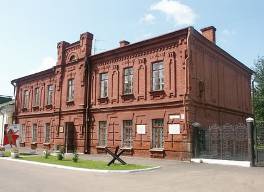
Omsk is one of the oldest cities in Western Siberia. A bus sightseeing tour "On the wild bank of the Irtysh River" offers a brief survey of Omsk history of 18-20th centuries and includes all main attractions of the city.
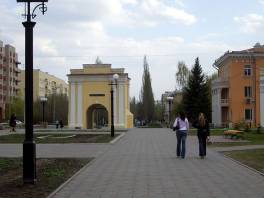
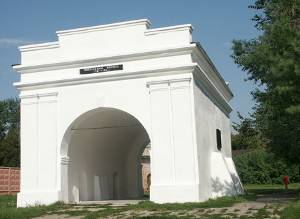
You'll visit the site of the first wooden Omsk fortress built in 1716 in order to guard Russian Southern borders from the nomads; you'll also see Tobolskie and Tarskie gates - one of the first stone buildings in Omsk.
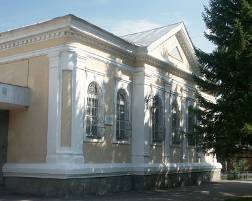
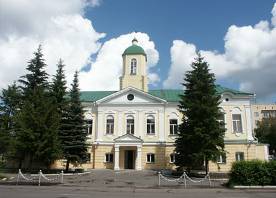
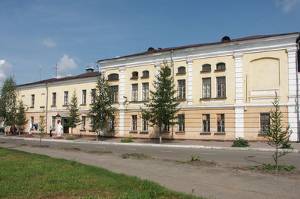
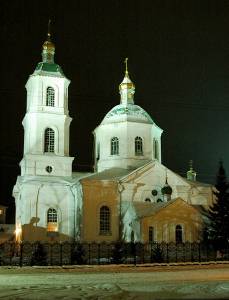
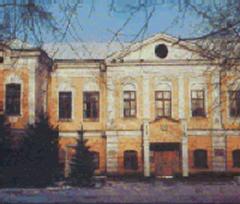
In the beginning of the 19th century Omsk becomes an administrative centre of Western Siberia and the buildings of that period - the Commandant's House, the Cadet School, St. Nicholas Cathedral - convey the atmosphere of the epoch up to the present moment.
Rows of the newly built Moscow commercial offices and shops on Lyubinsky Avenue marked the beginning of the 20th century.
The exposition of the Museum of Local Lore will tell you about the times when first men trod on the Irtysh-side; you'll see ancient staff belonging to the first settlers, objects of their cult and life that reflect Siberian habits and beliefs.
In course of the trip you'll also learn about the celebrities that were born, have lived or ever visited our city.
|
|
|
|
|
| |
| |
|
|
|
|
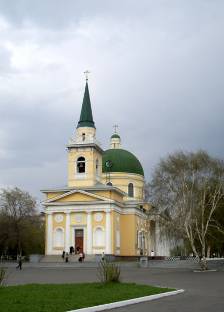
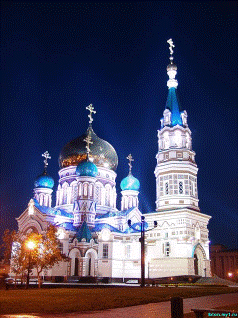 Another area of interest is Nikolsky prospekt/Krasnykh Zor Street, where a line of merchants' wooden houses still stands. The street leads to the Neoclassical Cathedral of St Nicholas, which was commissioned by the Cossacks, designed by Vasily Stasov and consecrated in 1840. It contains various relics of the Siberian Cossacks. The interesting fact is that it was not ruined during Soviet era. It was at first warehouse and then club and the Symphony Orchestra. The Cathedral has got its original appearance by the efforts of the Omsk restorers.
|
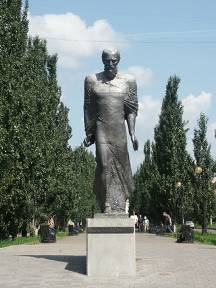 Pupil 4: It was during the mid-1800s that Dostoevsky lived and wrote in exile here. Fate of the world famous writer Fyodor Dostoyevsky is closely connected with our city. Dostoyevsky spent 4 years (1851-1855) in Omsk stockade having been condemned to penal servitude. During the years of his exile Dostoevsky started writing some of his famous novels, including "Notes from the Dead House".
|
|
|
|
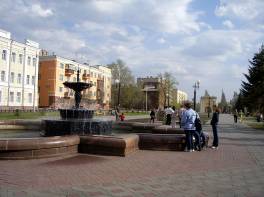
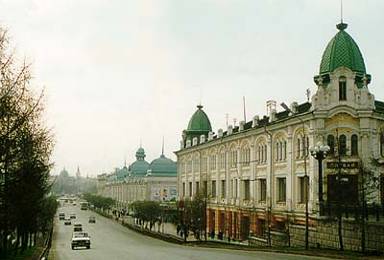 Pupil 5: The new boom began with the construction of the Trans-Siberian railway in 1890s, when the merchants flocked to the city on the rail/river junction. Many trade companies opened stores and offices here, building an elaborately decorated district of the city. Foreign powers, including the British, Dutch and Germans, opened consulates to represent their commercial interests. The pinnacle came with the lavish Siberian Exposition of Agriculture and Industry in 1910, for which a complex of buildings and fountains was constructed. In line with the popularity of World Fairs of the day, the exposition influenced observers to foretell the wonders of the "Chicago of Siberia". Many of the period's buildings survive, and the architecture gives the city center a distinguished historical Siberian town flavor. Among them Lyubinsky the year of 1905 the high street of old Omsk - Lyubinsky Prospect (avenue) had been finally formed. No doubt, the leading role of its architectural complex belonged to the Moscow rows of stalls (designed by O. Dessin). Various Russian manufactory Joint-stock Companies (including P. Ryabushinsky, S. Morozov, the Nosovs) accomodated their goods for wholesale trade there.

|
Из за большого объема этот материал размещен на нескольких страницах:
1 2 3 4 5 6 7 |
