


Партнерка на США и Канаду по недвижимости, выплаты в крипто
- 30% recurring commission
- Выплаты в USDT
- Вывод каждую неделю
- Комиссия до 5 лет за каждого referral
|
|
|
Pupil 2: Omsk is a great cultural center of the West-Siberian Region of Russia. More than one thousand monuments of history, culture and archaeology are on the territory of our region.
|
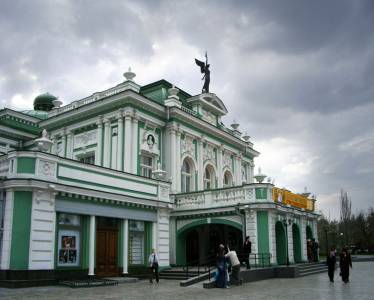 The Omsk State Academic Drama Theatre is one of the oldest theatres. Its building – a pearl of Siberian baroque – was built 1905. The famous Paris Grand-Opera had served as a prototype for a great number of theatre buildings in Russia. The Omsk Drama Theatre was among them. In ten years the edifice was topped by the statue of a "Winged Genius" by sculptor V. Vinkler.
|
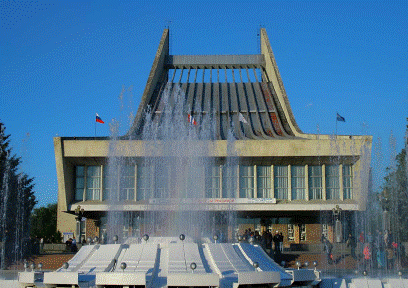 Citizens of Omsk are proud of the Omsk State Music Theatre. In its repertoire all the genres of musical art are represented: opera, ballet, operetta, musical, vaudeville and others. The producers from the USA and Austria realized the opera performances and musicals on its stage.
|
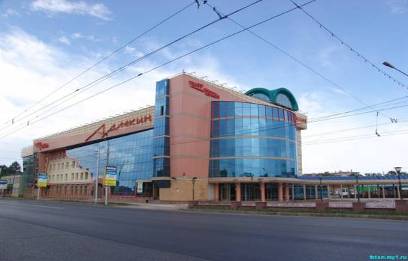 The most outstanding event in cultural life of Omsk in the 21st century was the building of new Puppet Theatre “Arlekin”. The theatre is beloved not only by children but also by grown ups of Omsk and Omsk region
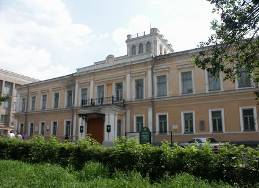
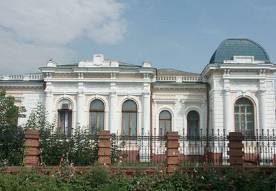
Pupil 3: The major museums in Omsk are the Omsk Vrubel Art Gallery and the State Historical Museum, located in the former bourse building and the governor-general's mansion, respectively.
Omsk State Museum of History and Regional Studies was founded in 1878 on the basis of West Siberian Department of Imperial Russian Geographical Society. The initiators of its creation were: the famous Russian traveler, Central Asia explorer M. V. Pevtzov , local lore expert and the instructor of Siberian Military school I. V .Slovtzov, the traveler, Siberia and Central Asia explorer, ethnographer G. N. Potanin; the prominent expert of local lore and regional separatist N. M. Yadrintzev and many others.
The museum consisted of several sections: historical-archaeological, botanic, zoological, meteorological, forestry and others. During the revolution and the Civil War great efforts of the museum workers helped to keep the collections safe. During the Great Patriotic War numerous valuable collections evacuated from Moscow, Vologda, Novgorod, Voronezh were placed in Omsk Museum.
|
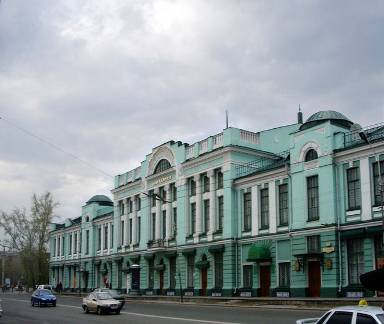 The Omsk Vrubel Art Gallery has one of the greatest collections of art values of Russia. Paintings and sculptures of home and West European authors are represented in its expositions. The museum has one of the biggest collections of the well-known Omsk painter M. Vrubel. The museum has the collection of works by Faberge and also “Golden Siberian Treasure”, which was found by Omsk archeologists in ancient burials.
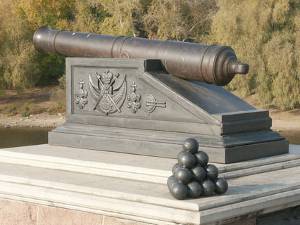
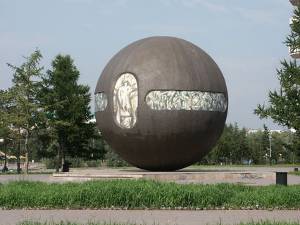
Pupil 4: The other symbols of Omsk are: the Fire Tower which is one of the oldest buildings in Omsk, the tower is now an ancient monument; the monuments to founders of Omsk fortress – Ball and Cannon on Buchholz Square; the Mayakovskij entertainment 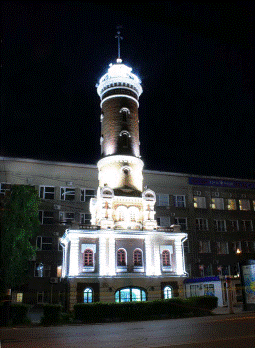 complex; River station. The panorama of the city is enriched by some new large scale erections of the last decades. They are the Shopping Centre (designed by
 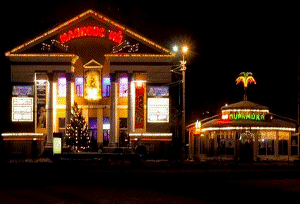 Yuri Zemtsov and others), the Irtysh Complex-Hall for Sports and
|
|
|
Pupil 5: There are places in the worlds that excite people's imagination and evoke unconquerable desire to be there. Siberia is one of these attractive places. Our guests can't stay indifferent to beautiful scenery of Omsk. Omsk has its real individual and inimitable worth which is based, first of all, on the fortunate choice of the site for a new fortress at the confluence of the quiet River of Om and the powerful Irtysh Piver in 1716. A number of constructions erected in different epochs but in concord within also add to the originality of the city.
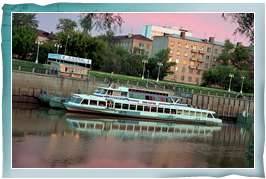
Now you can enjoy the beautiful and magnificent panorama of Omsk from a board of the excursion launch “Moscow”.
Thank you for attention. We hope you were interested in our excursion and liked our city very much.
We wish you a god row!
|
|
Приложение 4.
ПАРАД АНГЛИИСКИХ ТРАДИЦИИ
К параду английских традиций учащиеся готовятся заранее. Каждая команда готовит презентацию одной из традиций. Вместе с учителем школьники подбирают фактический материал и необходимые атрибуты.
Парад традиций начинают двое учащихся.
Pupil 1: Every country has its own traditions and customs.
In Britain traditions play а very important role in the life of people mostly because the British аге very conservative. They аrе proud of their traditions and keep them carefully.
Pupil 2: Today we аге going to present you some of the most popular English traditions.
The pupils of the 1st team will tell you about Pancake Dау which is celebrated оn Shrove Tuesday in Spring at the beginning of Lent. Lent is а period of 40 days before Easter.
(На сцену выходит учащийся первой команды со сковородкой в руке.)
Pupil 3: Well, on this day in England families usually have pancakes for dinner. At schools the children and teachers have pancakes for school dinner and in restaurants customers ask for pancakes too.
Everyone knows that pancakes аrе delicious to eat but do you know how to cook them?
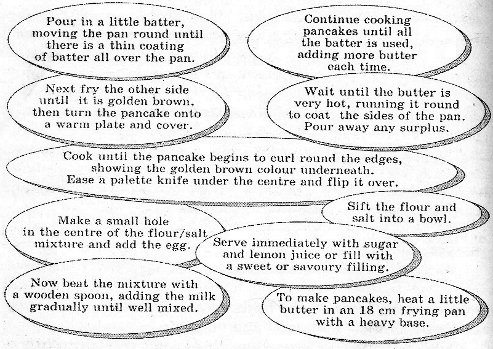
(На плакате возле ведущего прикреплены листы с инструкциями по приготовлению теста для блинчиков. Задание учащимся: составить поэтапный рецепт приготовления блинчиков.)
Pupil 3: Let's arrange the instructions for making pancakes in the right order.
(Учащиеся составляют рецепт приготовления и выпекания блинчиков. На сцену выходит еще один ученик с тарелкой, на которой лежат блинчики.)
Pupil 4: So, let's imagine that we have already made our pancakes. Do you know that in England people not only eat them but race with them? Now we аrе going to have а pancake race at our class. I invite those who will take part in the race to take frying pans with pancakes on them and to take places at the end of the hall. You must run towards me tossing your pancakes 3 times during the race. The winner is а pupil who comes first and doesn't drop his pancake. So, be careful.

|
Из за большого объема этот материал размещен на нескольких страницах:
1 2 3 4 5 6 7 |
