


Партнерка на США и Канаду по недвижимости, выплаты в крипто
- 30% recurring commission
- Выплаты в USDT
- Вывод каждую неделю
- Комиссия до 5 лет за каждого referral
In the software development life cycle after making an analysis in the system requirement the next step is to make analysis of the software requirement. In other words feasibility study is also called as software requirement analysis. In this phase development team has to make communication with customers and make analysis of their requirement and analyze the system.
By making analysis this way it would be possible to make a report of identified area of making a detailed analysis in this area a detailed document or report is prepared in this phase which has details like project plan or schedule of the project, the cost estimated for developing and executing the system, target dates for each phase of delivery of system developed and so on. This phase is the base of software development process since further steps taken in software development life cycle would be based on the analysis made on this phase and so careful analysis has to be made in this phase.
Though the feasibility study cannot be focused on a single area some of the areas or analysis made in feasibility study is given below. But all the steps given below would not be followed by all system developed. The feasibility study varies based on the system that would be developed. Feasibility study is made on the system being developed to analyze whether the system development
process require training of personnel. This help in designing training sessions as required in later stage.
- Is the system developed has scope for expanding or Scope for switching to new technology later if needed in ease. In other study is made to find the portability of the system in future. Is the cost of developing the system high or does it meet the budgeted costs. That is a cost benefit analysis is made. In other words an analysis is made on cost feasibility of the project. This helps in identifying whether the organization would meet the budgeted costs and also helps the organization in making earlier and effective plans for meeting extra costs because of the system development.
- Analysis is made on what software to use for developing the system. This study and analysis would help to choose the best implementation for system and the organization. This feasibility study includes factors like scalability, how to install, how to develop and so on. This feasibility study in short includes the analysis of technical areas. This analysis helps the efficiency of the system developed to get improved. This is because by choosing the correct technology by making analysis on the needs of system helps in improving the efficiency of the system.
- The above feasibilities are analysis which helps in development of the system. But the scope of feasibility study does not end with this. Analysis or feasibility study also includes the analysis of maintenance stage. In other words feasibility study is made to analyze how one would maintain the system during maintenance stage. This helps in planning for this stage
and also helps in risk analysis. Also the analysis helps in making analysis
about what training must be given and how and what all documents must
be prepared to help users and developers to face maintenance phase.
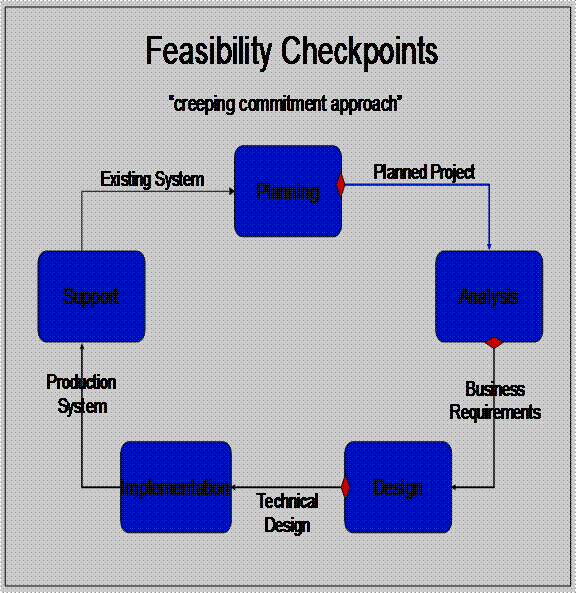
A measure of how beneficial or practical the development of a software system will be to a organization. This analysis recurs throughout the life cycle. A measure of how beneficial or practical the development of a software system will be to an organization. This analysis recurs throughout the life cycle Feasibility analysis are used to present an approach or a series of alternatives and to offer decision-making guidance based on the climate in which the project will evolve. They often defend a single or primary approach, incorporating extensive forecasts on the project’s development, as well as its evolution after implementation. Because a feasibility analysis may focus on one or many aspects of a project, it may be a very short (one - to two-page) or long(multivolume) document. In any case, it generally begins with an executive summary and a description of the project outputs in their as-built condition.
Feasibility study is done in order to find out or Understand the problem the software system is to solved. The emphasis in feasibility study is on identifying what in needed from the system.
By feasibility study we can say that we are on right path. Also it is a brief overview of the product and the result of the product. It also identifies major product risks.
There are two major activities in this phase :
- Problem Understanding
- requirement specification
In problem analysis the aim is to understand the problem and the requirements of the system. In requirement specification the problem must specify in the requirement specification document. The requirement document must specify all functional and performance requirements; the format of inputs and outputs; design constraints that exists due to political, economic, environmental and security reasons or we can say that the functionality required from the system, all the factors that may effect the design and proper functioning of the system should be specified in the requirement document.
Also in Feasibility study we go through:
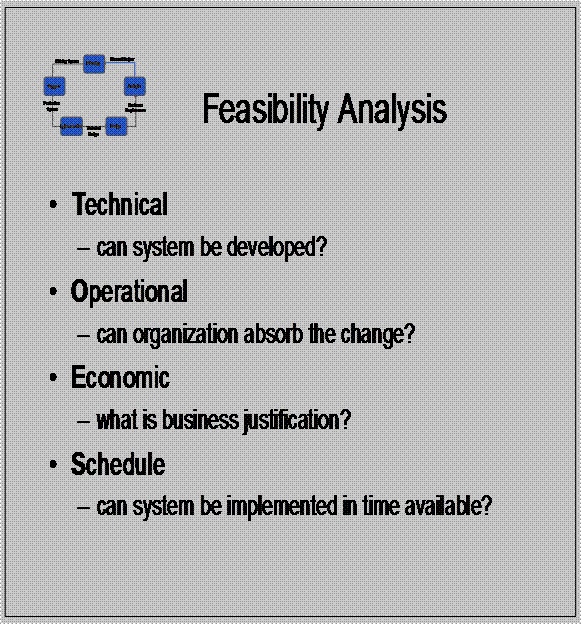
1.Technical Feasibility
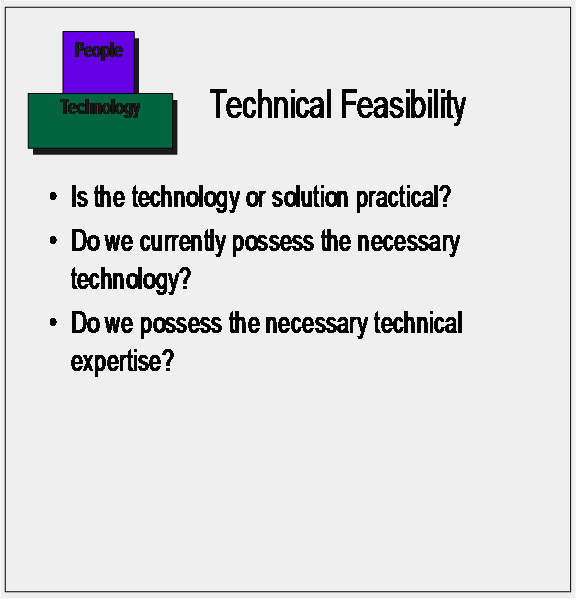
Technical feasibility is composed of estimating:
- Hardware cost (HW). Software cost.
Software cost includes the purchasing of software required to develop the project, such as operating system (OS), server, front end and back end. HW cost includes the purchasing of HW required to develop the project, such as a number of system units, monitors, keyboards, mousses and printers
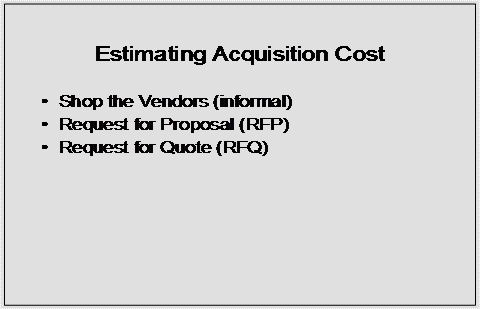
A large part of determining resources has to do with assessing technical feasibility. The analyst must find out whether current technical resources can be upgraded or added to in a manner that fulfills the request under consideration. However, sometimes "add-ons" to existing systems are costly and not worthwhile, simply because they must meet needs inefficiently. If existing systems cannot be added onto, then the next question becomes whether there is technology in existence that meets the specifications.
This is where the expertise of system analysts is beneficial, since using their own experience and their contact with vendors they will be able to answer the question of technical feasibility. Usually the response to whether a particular technology is available and capable of meeting the users' request is "yes," and then the question becomes an economic one.
2. Economical Feasibility
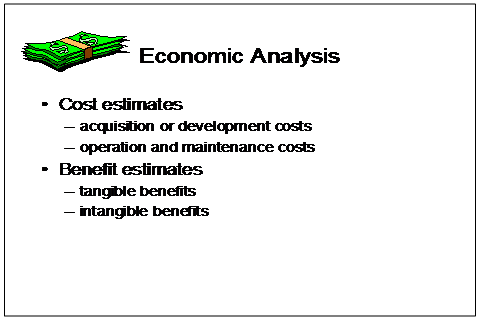
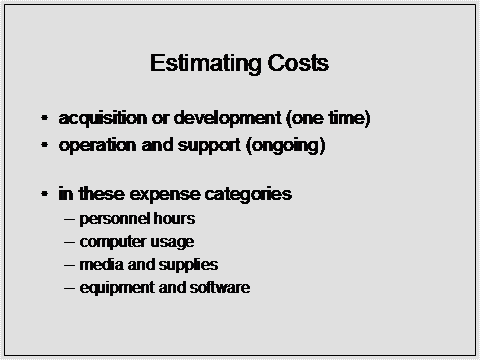
Economic feasibility is the second part of resource determination. The basic resources to consider are: your time and that of the systems analysis team, the cost of doing a full systems study (including time of employees you will be working with), cost of the business employee time, estimated cost of hardware, and estimated cost of the software and/or software development.
Economic analysis is the most frequently used method for evaluating the effectiveness of a candidate system. More commonly known as cost/Benefit analysis, the procedure is to determine the benefits and savings that are expected from a candidate system and compare them with costs. If benefits outweigh costs, then the decision is made to design and implement the system.
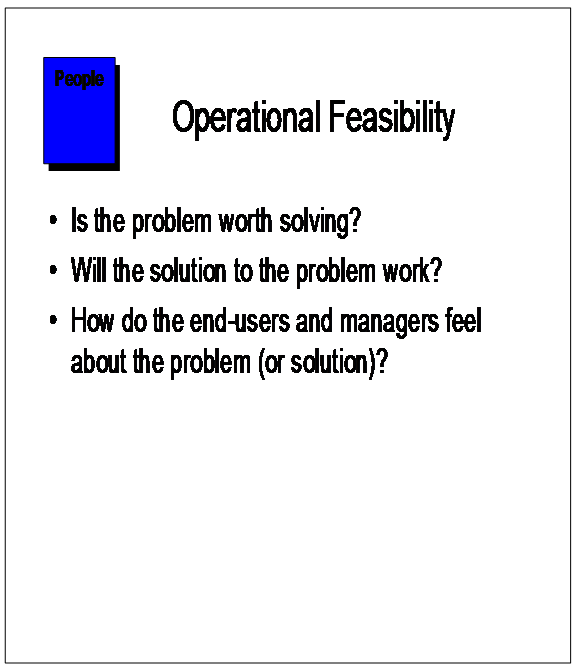
3. Behavioral Feasibility
This involves questions such as how much time is available to build the new system, when it can be built, whether it interferes with normal business operations, type and amount of resources required, dependencies, etc. Contingency and mitigation plans should also be stated here so.
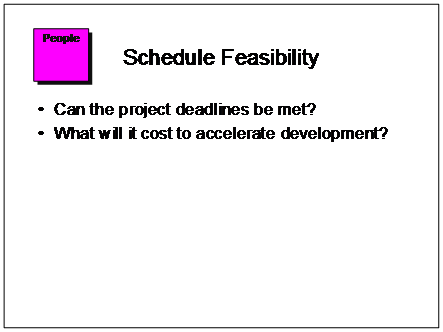
4. Time Feasibility
In this phase the software team will find out the answer of that will the software will be completed on time or no. Although the total cost is also depend in this phase.
Advantages of making Feasibility study
There are many advantages of making feasibility study some of which are summarized below:
This study being made as the initial step of software development life cycle has all the analysis part in it which helps in analyzing the system requirements completely. Helps in identifying the risk factors involved in developing and deploying the system.
- The feasibility study helps in planning for risk analysis
- Feasibility study helps in making cost/benefit analysis which helps the organization and system to run efficiently.
- Feasibility study helps in making plans for training developers for implementing the system.
- So a feasibility study is a report which could be used by the senior or top persons in the organization. This is because based on the report the organization decides about cost estimation, funding and other important decisions which is very essential for an organization to run profitably and for the system to run stable.


|
Из за большого объема этот материал размещен на нескольких страницах:
1 2 3 4 5 6 |
