


Партнерка на США и Канаду по недвижимости, выплаты в крипто
- 30% recurring commission
- Выплаты в USDT
- Вывод каждую неделю
- Комиссия до 5 лет за каждого referral
SOFTWARE APPROACH FOLLOWS TO DEVELOP THE SOFTWARE
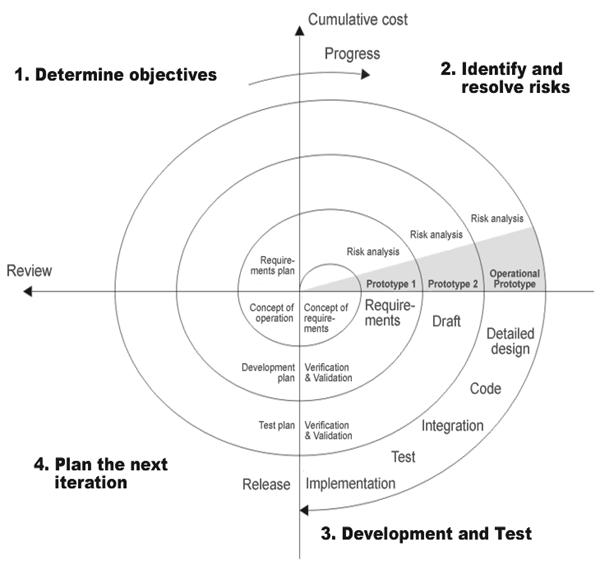
The software approach that we follow in developing this software is Spiral Model as it is an Iterative Model. In Iterative Model first we go for Analysis Phase than Design of 1st Module after that we will go for testing the module if any problem is found it is easily resolved at same stage which is not available in Water Fall Model. And if no Errors are found than we go for next phase. Here we will repeat the same process again, the same process will continue until the complete Software is completed. The Spiral Model is another Iterative Model that has been proposed. As the name suggest the activities in this model can be organized in a like a Spiral that has many cycles.
Each cycle in spiral model begins with the identification of objectives for that cycle, the different alternatives that are possible for archiving the goal, objectives and the constraints that exists. The next step will evaluate these alternatives based on the objectives. The main focus of evaluation in this step is based on the risk perception for the project. The next step is to develop strategies that resolve the uncertainties and risk. The next step may involve activities such as benchmarking, simulation and prototyping. Next the software is developed, keeping in mind the risks. Finally the next stage is planned
SPIRAL MODEL
The spiral model is a software development process combining elements of both design and prototyping-in-stages, in an effort to combine advantages of top-down and bottom-up concepts. Also known as the spiral lifecycle model, it is a systems development method (SDM) used in information technology (IT). This model of development combines the features of the prototyping model and the waterfall model. The spiral model is intended for large, expensive and complicated projects
The Spiral Model
The steps in the Spiral Model can be generalized as follows:
The new system requirements are defined in as much detail as possible. This usually involves interviewing a number of users representing all the external or internal users and other aspects of the existing system. A preliminary design is created for the new system. A first prototype of the new system is constructed from the preliminary design. This is usually a scaled-down system, and represents an approximation of the characteristics of the final product. A second prototype is evolved by a fourfold procedure:- evaluating the first prototype in terms of its strengths, weaknesses, and risks;
- defining the requirements of the second prototype;
- planning and designing the second prototype;
- constructing and testing the second prototype.
THE SPIRAL MODEL
Advantages
The spiral model promotes quality assurance through prototyping at each stage in systems development. This is the main advantage of Spiral Model
Minimum system requirements
The 'Minimum system requirements' must be satisfied for the software to be usable at puters with lower specifications than the minimum requirements may sometimes also run the software. It is suggested, however, that the user will not have a representative experience of the software this way. Generally this set is regarded more of a rule than a guideline. A system meeting this requirement will provide basic performance of a software application.
Recommended system requirements
Recommended system requirements are often suggested by software vendors for optimal performance of a software. Although not a necessity, this set of requirements is often sought after by power users who expect to gain a better experience of software usability. Recommended System Requirements do not promise best possible performance of a software and are treated as more of a guideline than a rule. Almost always a better system is available, or will be in future, to provide better performance. Also, exceeding by far these requirements does not guarantee to the user that everything will run with absolute smoothness and look its best. More often than not, games are a bit disappointing in this respect, presenting issues that may or may not be corrected with future modifications.
Programming Language and Development Tools used are mention below:
- Platform Used : .Net Technologies Language Used : C#.Net
Development Tools Used are:
- MS Access 2003 for Database. Crystal Reports used for report generations.
Developing Environment:
About the developing environment:
In our software product we use C#.Net as a Front End because as we know that C#.Net is a Object Oriented Language. And in our project we have to deal with Objects and Classes. More on Developing Environment.
The Developing environment.
What Is Microsoft dot NET?
Microsoft .NET is software that connects information, people, systems, and devices. It spans clients, servers, and developer tools, and consists of:
Framework programming model that enables developers to build Web-based applications, smart client applications, and XML Web services applications which expose their functionality programmatically over a network using standard protocols such as SOAP and HTTP. Developer tools, such as Microsoft , which provide a rapid application integrated development environment for programming with Framework. A set of servers, including Microsoft Windows 2000,Microsoft SQL Server and Microsoft BizTalk Server, that integrates, runs, operates, and manages XML Web services and applications. Client software, such as Windows XP, Windows CE, and Microsoft Office XP, that helps developers deliver a deep and compelling user experience across a family of devices and existing products.
What Is the dot NET Framework
The .NET Framework is the programming model of environment for building, deploying, and running Web-based applications, smart client applications, and XML Web services. It manages much of the plumbing, enabling developers to focus on writing the business logic code for their applications. Framework includes the common language runtime and class libraries.
Common Language Runtime
The common language runtime is responsible for run time services such as language integration, security enforcement, memory, process, and thread management. In addition, it has a role at development time when features such as life-cycle management, strong type naming, cross-language exception handling, dynamic binding, and so on, reduce the amount of code that a developer must write to turn business logic into a reusable component.
Class Libraries
Base classes provide standard functionality such as input/output, string manipulation, security management, network communications, thread management, text management, user interface design features, and other functions. The Microsoft data classes support persistent data management and include SQL classes for manipulating persistent data stores
through a standard SQL interface. XML classes enable XML data manipulation and XML searching and translations.
The Microsoft classes support the Development of Web-based applications and XML Web services. The Windows Forms classes support the development of “Windows-based” smart client applications. Together, the class libraries provide a common, consistent development interface across all languages supported by Framework
Database Use
The database we use in our product is MS ACCESS 2003. Microsoft Access is a powerful program to create and manage our databases. It has many built in features to assist us in constructing and viewing our information. Access is much more involved and is a more genuine database application than other programs such as Microsoft Works.
Keywords involved in this process are:
Database File, Table, Record, Field, Data-type. Here is the Hierarchy that Microsoft Access uses in breaking down a database.
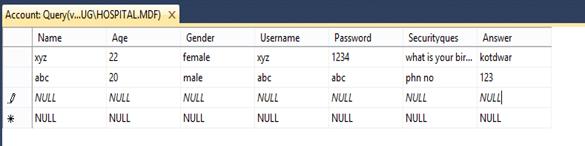
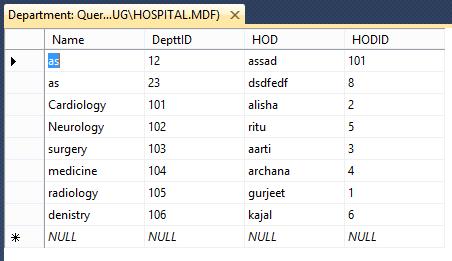
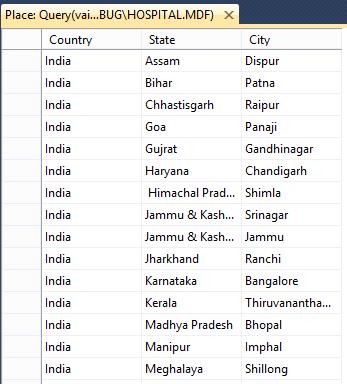
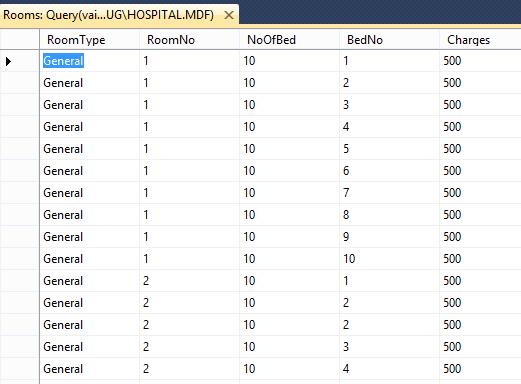
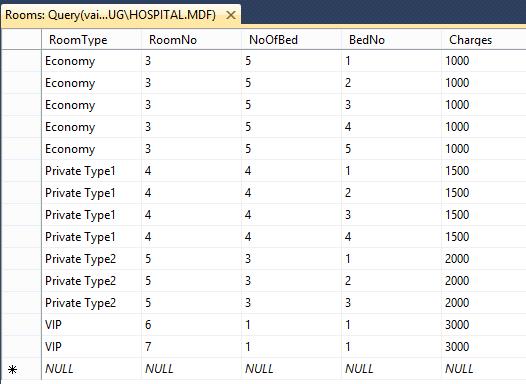
Admin Login Table




Crystal Report

|
Из за большого объема этот материал размещен на нескольких страницах:
1 2 3 4 5 6 |
